A faded accessible symbol, an access aisle that was never painted, a fire lane nobody can find under the old paint. Those are the calls we get, and they usually come from an owner who has just noticed the problem or been told about it. Leland Pavement Care lays out and repaints the pavement markings on retail and medical lots, church lots, HOA amenity lots and property-managed sites across Leland and Brunswick County.
Most of the work is line striping that has to be done with some thought. The accessible spaces, the aisles beside them, the crosswalks, the fire lane and the arrows all have to read clearly and sit where they belong. We sequence that work with the rest of the lot. A lot that needs parking lot sealcoating gets it first, so the new paint goes on a clean, fresh surface. Cracks get crack sealing before either one. All of it is ordinary parking lot maintenance done in the right order.
We set parking signs and wheel stops alongside the markings when a lot needs them. They are add-ons, not the job. One more thing up front. We describe and lay out markings to the standard dimensions and layouts the rules call for, but we do not certify anything. Final compliance rests with your design professionals and the authority having jurisdiction over your property.
Who calls us about markings
Retail owners call when the paint has worn to ghosts and customers are parking anywhere. Medical offices call because their patients need the accessible spaces to be obvious and usable. Churches call before a big weekend, or after a visitor points out that the van space has no room beside it. HOA boards and property managers call when an amenity lot, clubhouse lot or pool lot has been repainted over the years without anyone checking the layout against what it should be.
Some of these are simple repaints of a layout that was right and has faded. Others are lots where the old layout was wrong from the start, and repainting it faithfully would only repeat the mistake. Telling those two cases apart is the first thing we do on site.
What the markings are
Each marking on a lot has a job. Here is what we lay out and what each one does.
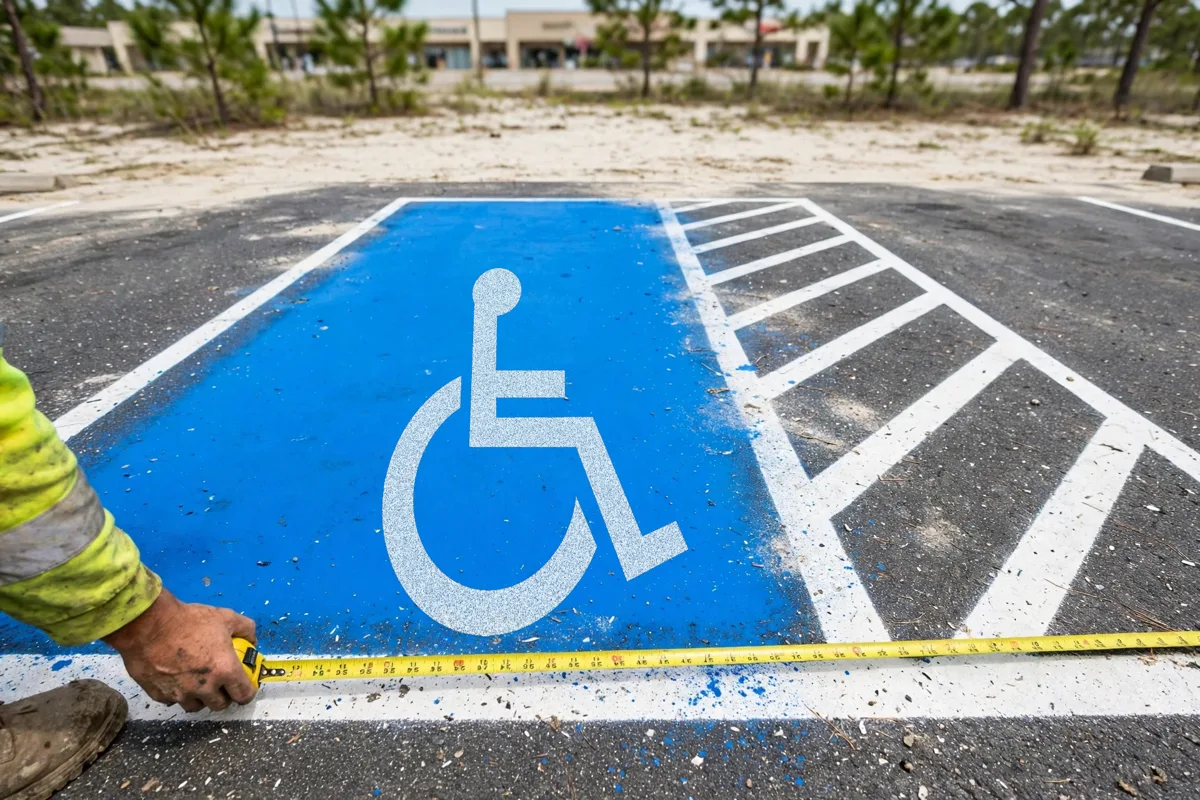
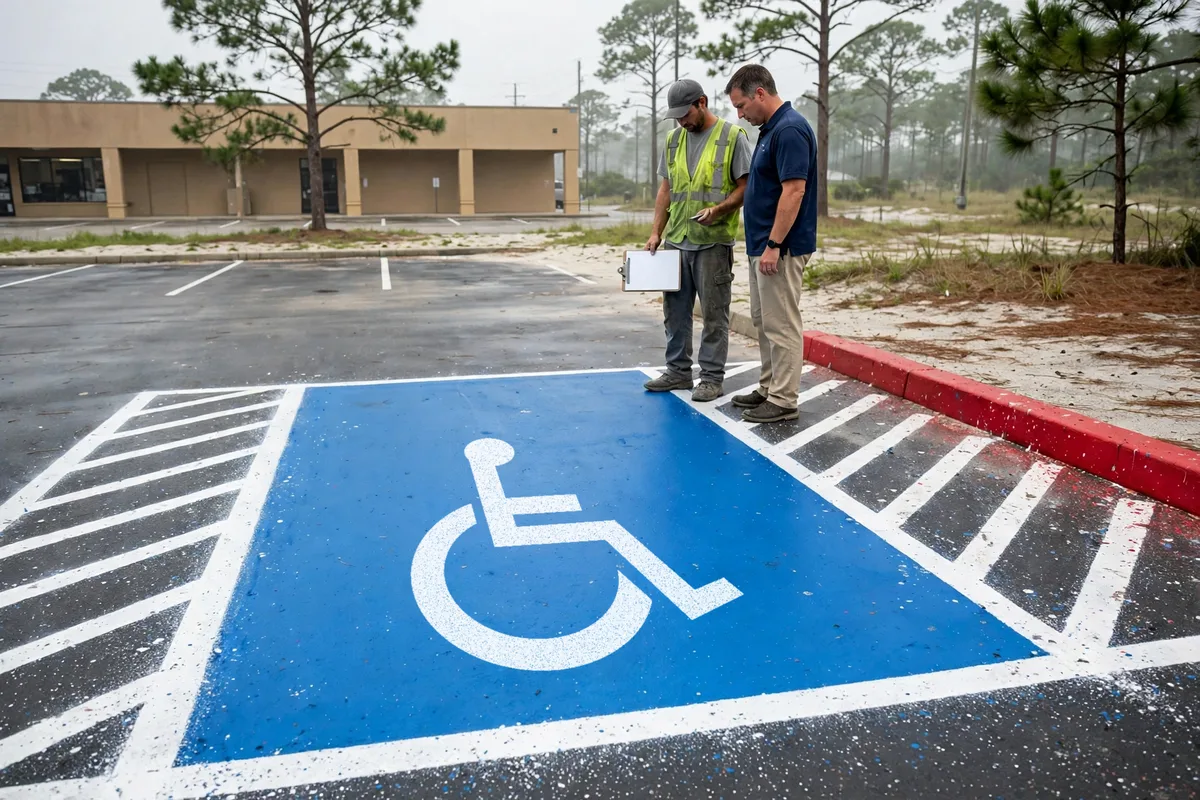
Accessible spaces and access aisles. An accessible space carries the symbol and sits where the route to the entrance is shortest and level. Beside it goes an access aisle, the striped zone where a driver or passenger gets out and where a ramp or lift can deploy. A van-accessible space needs a layout that leaves a van room to unload. The aisle is the piece most often missing or squeezed. A space with a symbol but no real aisle is the most common fix we see.
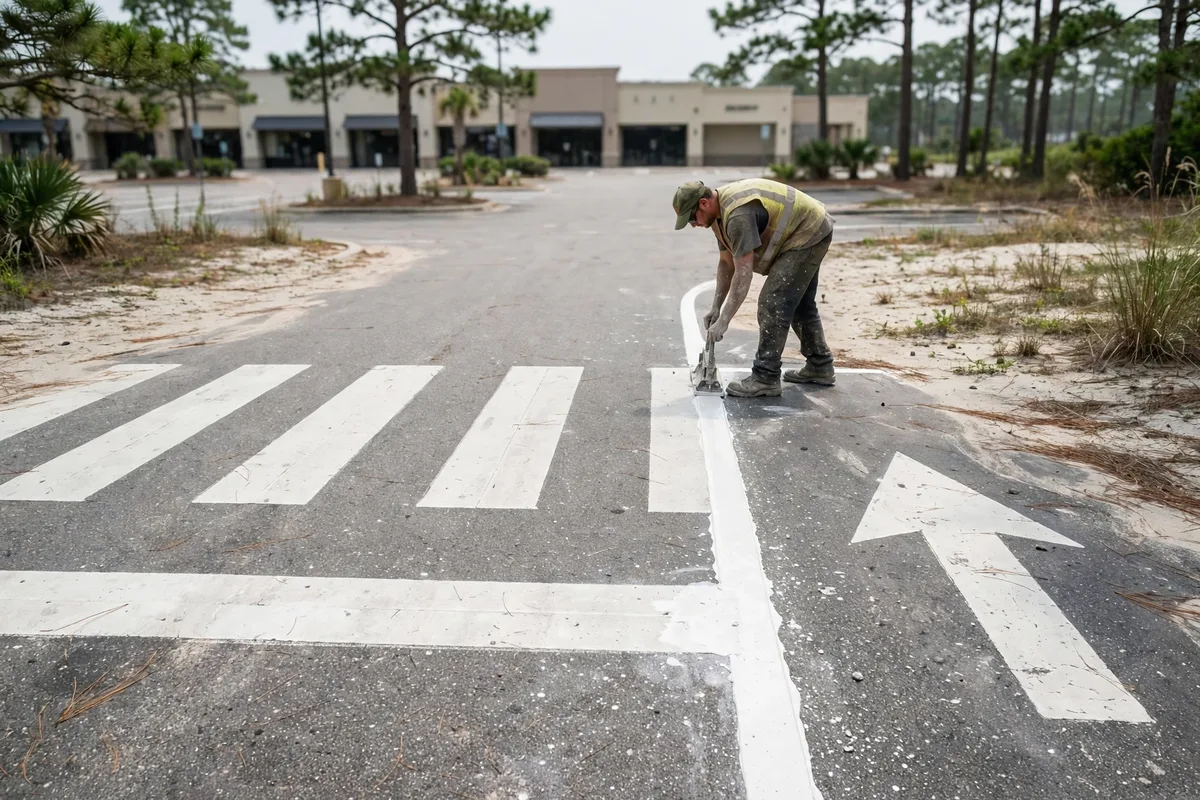
Crosswalks. Crosswalks tell drivers where people will be crossing, usually from a parking field to the entrance. On a busy lot we often suggest thermoplastic for crosswalks, the long-wear option, because tires hit them all day. On a lighter lot, standard waterborne paint is fine.
Fire lanes. A fire lane is marked where the fire marshal or the authority having jurisdiction says it goes, with the wording and color they specify. We paint what they require. We do not decide where the lane runs.
Stop bars and directional arrows. Stop bars hold traffic back at an entrance, an exit or a crosswalk. Arrows keep a one-way drive aisle working and stop people entering the wrong way at a drive-through lane or a tight turn.
Curb markings. Painted curbs mark no-parking zones near entrances, hydrants and fire lanes. They are a quick fix that does a lot of work, and they wear fast where tires ride up on them.
Where compliance sits
Owners ask whether our work makes a lot compliant. The honest answer is that no striping contractor can sign that for you. Whether a lot meets the accessibility rules, and whether the fire lane is where it has to be, is decided by your design professional and by the authority having jurisdiction, such as the local building or fire official. We bring the paint, the layout skill and the tape measure. We lay out spaces, aisles and lanes to the standard dimensions and layouts the rules call for, and we work from your plans or your authority's direction when you have them.
If you are unsure whether your lot's layout is right, ask your design professional or the local authority before the paint goes down. We are glad to work from what they tell you.
How markings fit with sealcoating and striping visits
Paint goes on a surface that is ready for it. If a lot needs sealcoating, the sealcoat goes first, cures, and the new layout goes down on top of it. Painting markings first and sealing after would bury them or smear them. If cracks are open, they are sealed before sealcoat for the same reason, since sealer will not bridge a moving crack.
On a lot that is only getting a restripe, the order is simpler. Clean, mark out, paint. When a lot has all three needs, we plan the visits together so the owner is not closing the lot three times for three small jobs.
Markings audit walk
- Spot it: the blue symbol is ghosted, patchy or gone, and a driver has to look twice to know the space is reserved. What it needs: the symbol repainted, usually with a fresh stencil, and the space outline repainted with it. If the surface has oxidized or cracked, crack sealing and sealcoat come before the paint.
- Spot it: the space has a symbol but no hatched zone beside it, or the zone is too narrow for a van to unload. What it needs: the layout re-measured and re-laid out with a proper access aisle, with the neighboring spaces adjusted if the width has to come from somewhere. Your design professional and the authority having jurisdiction confirm the final layout.
- Spot it: the lane has no visible marking, the wording is faded, or cars park along it because nothing says not to. What it needs: the lane re-marked with the wording and color the fire marshal or authority specifies, curb painted where required, and signs added if you want them. We paint what the authority calls for.
- Spot it: the bars have worn to patches, or the crosswalk is visible only from one direction. What it needs: the crosswalk repainted at its existing position, or in thermoplastic where traffic is heavy, with stop bars and arrows refreshed at the same visit.

How the work goes
Every job runs in the same order. The steps are below, each with what you would see.
Step 1: Walk the lot with you
We walk the lot with the owner or manager, and with a plan if there is one. We look at every accessible space, every aisle, every crosswalk and the fire lane, and write down what is faded, missing or wrong.
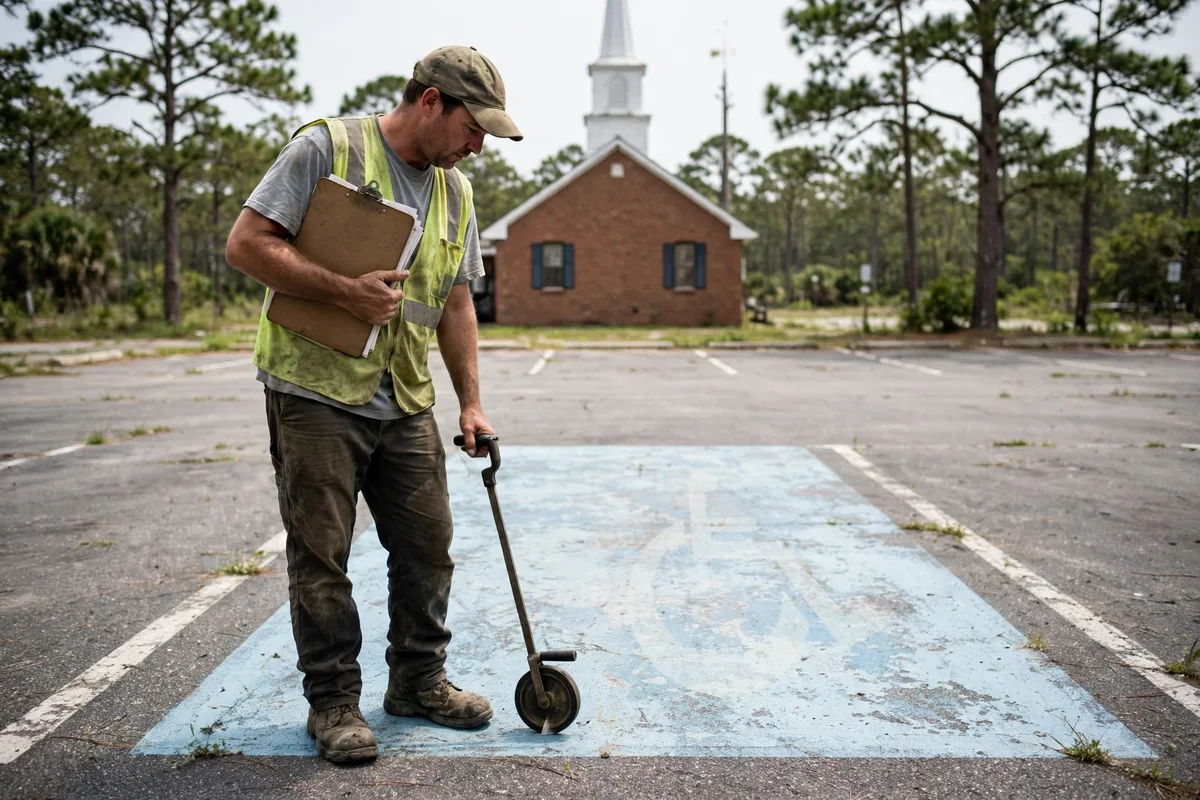
Step 2: Measure what is actually there
We measure space widths, aisle widths and the distance from the accessible spaces to the entrance. We compare them to the standard layouts and note where they fall short. Then we flag anything for your design professional or the authority.
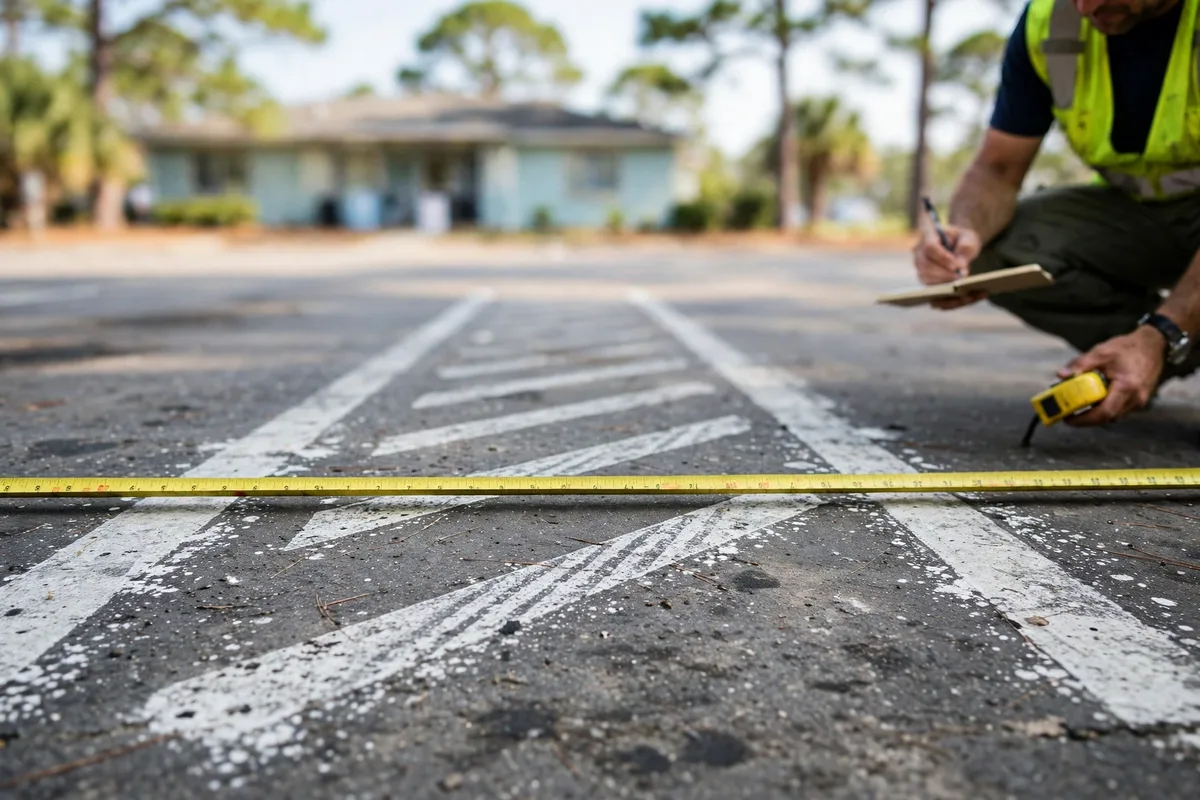
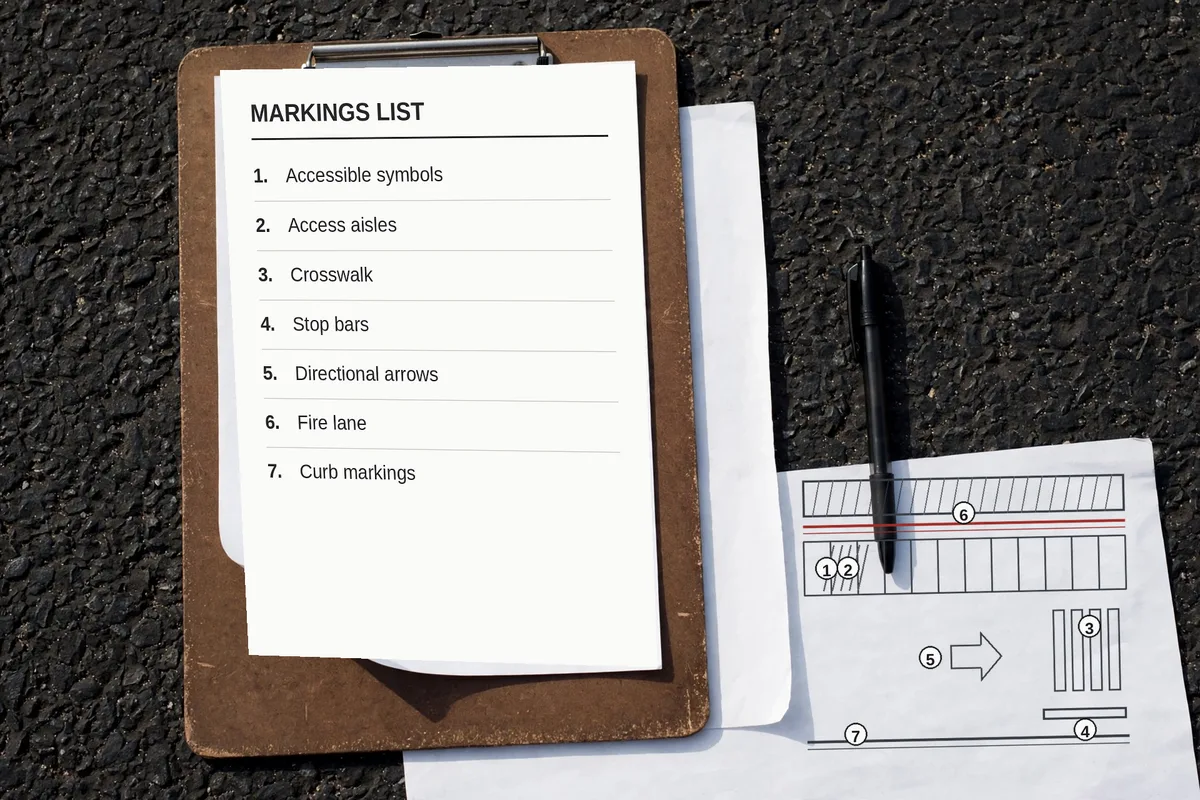
Step 3: Write the markings list and the price
You get a written markings list covering every symbol, aisle, crosswalk, lane, arrow and curb we will paint, with a price. The price follows the list and the layout work, not a flat fee. If the layout is changing, the new layout is priced differently from a restripe over the existing one.
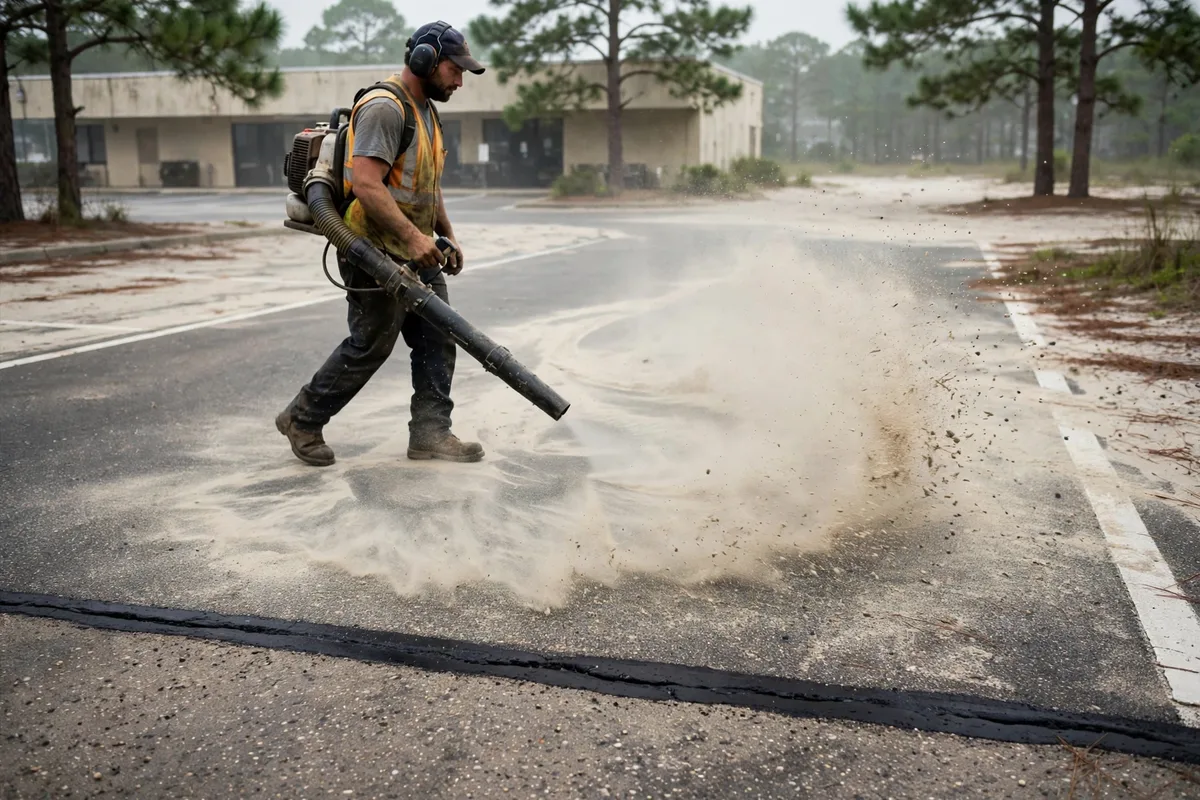
Step 4: Prepare the surface
Cracks get sealed, oil spots get primed, and the surface is swept and blown clean. If the lot is also getting sealcoat, that goes down first and cures before any layout. Markings only last as well as what they are stuck to.
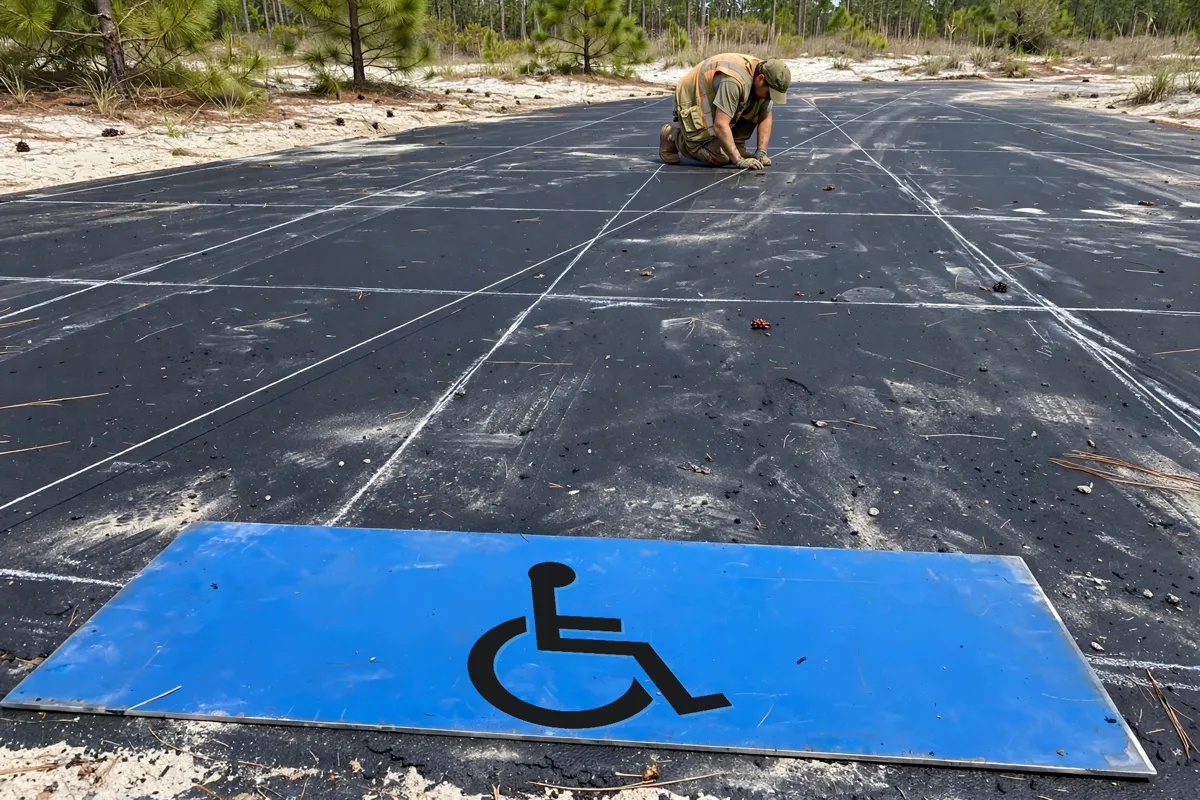
Step 5: Lay out the new markings
We mark out every line, space and symbol with chalk, string and stencils before any paint is sprayed. We check the layout against the written list. Where an access aisle is being added or widened, the layout is checked twice here.
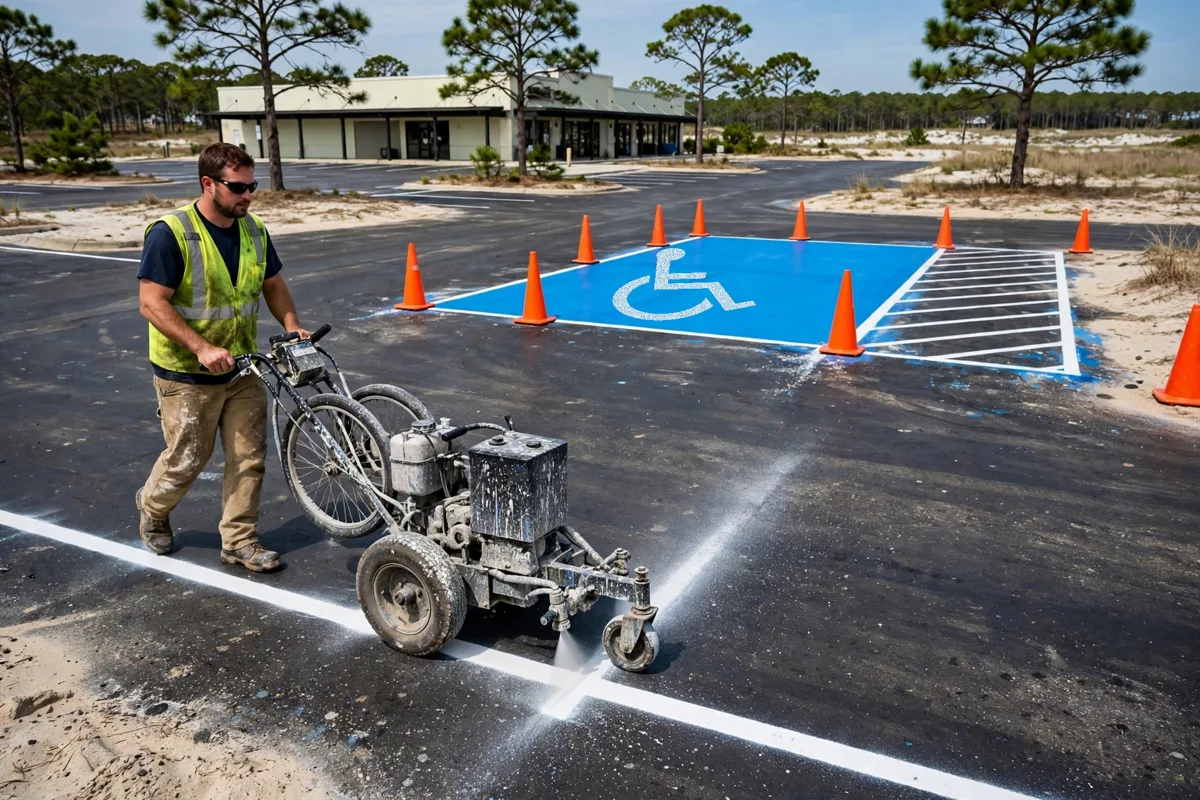
Step 5b: Paint
Waterborne traffic paint is our standard. For crosswalks and other high-traffic markings, we offer thermoplastic, the long-wear option. We paint in a planned order and cone off the work so nobody drives across wet lines.
Step 6: Walk it again
After the paint, we walk the lot against the markings list and the sketch, space by space. Anything missed or off is corrected. If you ordered parking signs or wheel stops, we set them now.
What it costs
Markings are priced with the lot's striping work. Jobs in the same $600 to $3,600 band depending on the markings list: a few symbols and a fire lane refresh sit toward the lower end, and a full layout with crosswalks, arrows, stop bars and curb work sits toward the upper end. The drivers are how many markings are on the list, how much of the layout is changing, whether any crosswalks go in thermoplastic, and what prep the surface needs first.
There is no separate certification fee, because no certification is sold. Sealcoating and crack sealing are priced on their own pages when the lot needs them. Parking signs and wheel stops, when added, are priced on top of the markings work. When you have the list, we give you the number. Call (910) 370-1121 or use the form below.
A church lot on Village Road
A church on Village Road in Leland called us because their lot was a mix of problems. The accessible spaces had faded symbols and almost no aisle beside them, so a van could not unload in the space. The fire lane in front of the sanctuary had faded to a few patches of paint, and on busy weekends cars were parking along it. The surface was also oxidized and cracked in places, so a repaint alone would not have lasted.
Here is what the crew did, in order. We walked the lot with the church's property committee and measured every accessible space against the aisle it needed. The aisle took width from a neighboring space, so we settled the space count with the committee before any paint went down. Cracks were sealed first, oil spots primed, and the lot swept clean. Then the lot was sealcoated and left to cure. After that, the new layout went down: accessible spaces re-laid out with a proper access aisle, the fire lane re-marked to the wording the authority specified, and the standard bays restriped around them.
The markings and restriping fell in the same $600 to $3,600 band described above, and the sealcoat was priced on the lot's square footage as its own line. The church asked its design professional to review the final layout, and that review is the step we recommend on every job of this kind.
What to watch for on a lot like this: a new layout that shrinks the parking count should be talked through before the work, not discovered afterward. And if cars still park in a fire lane after it is repainted, add curb paint or signs so the lane reads from a driver's seat.
Questions
Do you certify that a lot meets the ADA?
No. We do not certify anything, and we do not sell a certification. We lay out and paint markings to the standard dimensions and layouts the rules call for. Final compliance rests with your design professionals and the authority having jurisdiction over your property.
Will the work guarantee my lot passes inspection?
We cannot promise an inspection outcome. We can describe what we are laying out and measure it carefully, but approval is the authority's call. If you have an inspection pending, ask your design professional to review the layout before the paint goes down.
My lot's accessible spaces have no real aisle. Can you fix that?
Usually yes. We measure the existing layout, find where the width can come from, and re-lay out the space with an access aisle beside it. The neighboring spaces may have to shift, so we agree the space count with you first.
What is a van-accessible layout?
It is a space and aisle arranged to leave a van room to unload, including a lift or ramp. We lay out spaces to the standard layouts for it. Your design professional confirms how many your lot needs and where they go.
Who decides where the fire lane goes?
The fire marshal or the authority having jurisdiction does. They specify the location, the wording and the color. We paint what they call for and can add curb paint and signs if you want them.
What if my existing layout was wrong from the start?
Then repainting it as-is repeats the mistake. We flag that on the walk and tell you the layout needs to change. A new layout is priced differently from a restripe over the existing one, and we say so up front.
How much do markings cost?
Markings are priced with the lot's striping work, in the same $600 to $3,600 band depending on the markings list. The drivers are the number of markings, how much of the layout is changing, whether crosswalks go in thermoplastic, and the prep the surface needs. There is no certification fee.
Do you sealcoat before you paint the markings?
Yes, when the lot needs sealcoating. Sealcoat goes down and cures first, then the layout goes on top. Cracks get sealed before either one.
What paint do you use?
Waterborne traffic paint is our standard. For crosswalks and other high-traffic markings we offer thermoplastic, the long-wear option. Neither is a guarantee of how long a marking will last, since traffic and weather decide that.
Can you add parking signs and wheel stops?
Yes, as add-ons alongside the markings. They are priced on top of the markings work. Where signs are required for an accessible space or a fire lane, your authority specifies what is needed.
Do you work on church and HOA lots?
Yes. Churches, HOA amenity lots, clubhouse lots, medical offices, retail centers and property-managed sites are the lots we mark most often across Leland and Brunswick County. We also serve Wilmington across the river.
How do I know what my lot needs?
Walk it using the markings audit above, or call and we will walk it with you. The audit covers faded accessible symbols, missing access aisles, blocked fire lanes and worn crosswalks, and what each one needs.
Do you do new paving or add parking spaces?
No. We maintain and repair existing asphalt and mark what is there. We do not lay new lots, mill, pour concrete or do drainage work. A new layout redraws spaces on the pavement you already have.
Will the lot be closed while you work?
Parts of it will be, for the time the paint needs to dry. We plan the order of work so the lot stays as open as it can, and we tell you which rows are coned off and when they reopen. When sealcoat, crack sealing and striping are all needed, we plan the visits together.
Call about your lot's markings
If your accessible spaces, crosswalks or fire lane need attention, call (910) 370-1121 or send the form below. Tell us what you see on the lot and we will walk it with you and give you a price from the markings list.
The more details you give, the better we are able to help you.