Leland Pavement Care looks after asphalt for homes, businesses, HOAs and churches in Leland and across Brunswick County. If something on your property is wearing out, the quickest way to get it looked at is to call (910) 370-1121 or fill in the form below.
A lot of calls begin with asphalt sealcoating, because a drive or lot has gone gray and rough under the Carolina sun. Homeowners ask about driveway sealcoating once the black has faded and small stones start loosening at the surface. Others call because cracks are opening up and they want crack sealing done before the next heavy rain gets under the pavement. Some have a pothole repair that can't wait, or a lot where the bays have faded so far that drivers park wherever they like. Property managers and HOA boards often want line striping and parking lot maintenance handled on a schedule, not as a string of surprises.
You don't need to know the right name for the job. Tell us what you see and we will work out what it takes.
How to reach us
Leland Pavement Care Phone: (910) 370-1121 Office: 2021 Mount Misery NE Pkwy, Leland, NC 28451 Hours: Monday to Friday, 9:00 AM to 5:30 PM
The phone and the form are the two ways to reach us. The call is answered during office hours. The form asks for your name, your phone number and your OK to be contacted, and we use that number to reach you.
What happens after you call or send the form
Every job follows the same order. Nobody quotes a number over the phone for pavement they haven't seen.
1. We take down the job
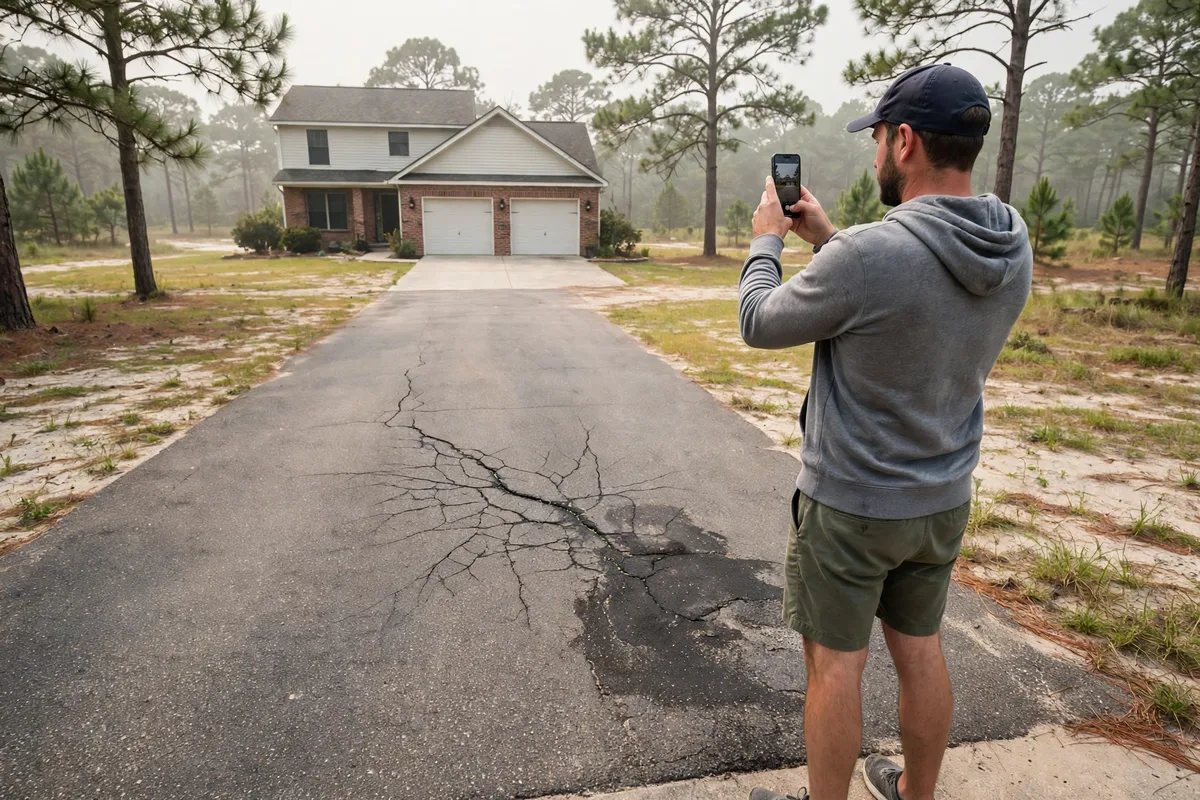
Someone in the office writes down where the property is, what you think the work is, and the best number to reach you. If you describe a drive with cracks and oil spots by the garage, that goes in the notes exactly as you said it. Those notes go with the crew to the site.

2. We walk the site
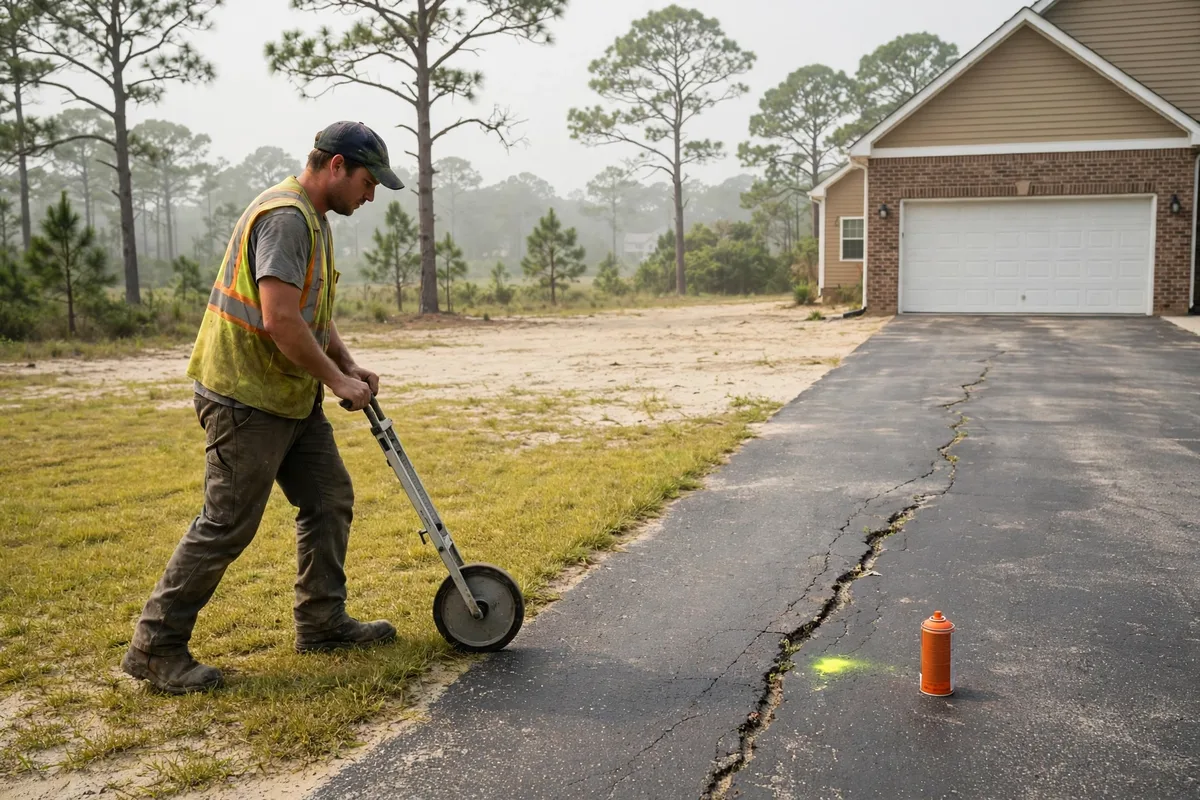
Before any price is given, the property gets walked. The crew measures the area with a wheel, counts the linear feet of cracking, and looks for oil and fuel spots where the surface has softened. They check the low spots where water stands after rain and the edges where the asphalt is breaking away. On this coast the soil is sand, so they pay close attention to the base. A drive can look fine on top and still be soft underneath, and that changes the repair.
3. The price is written and itemized
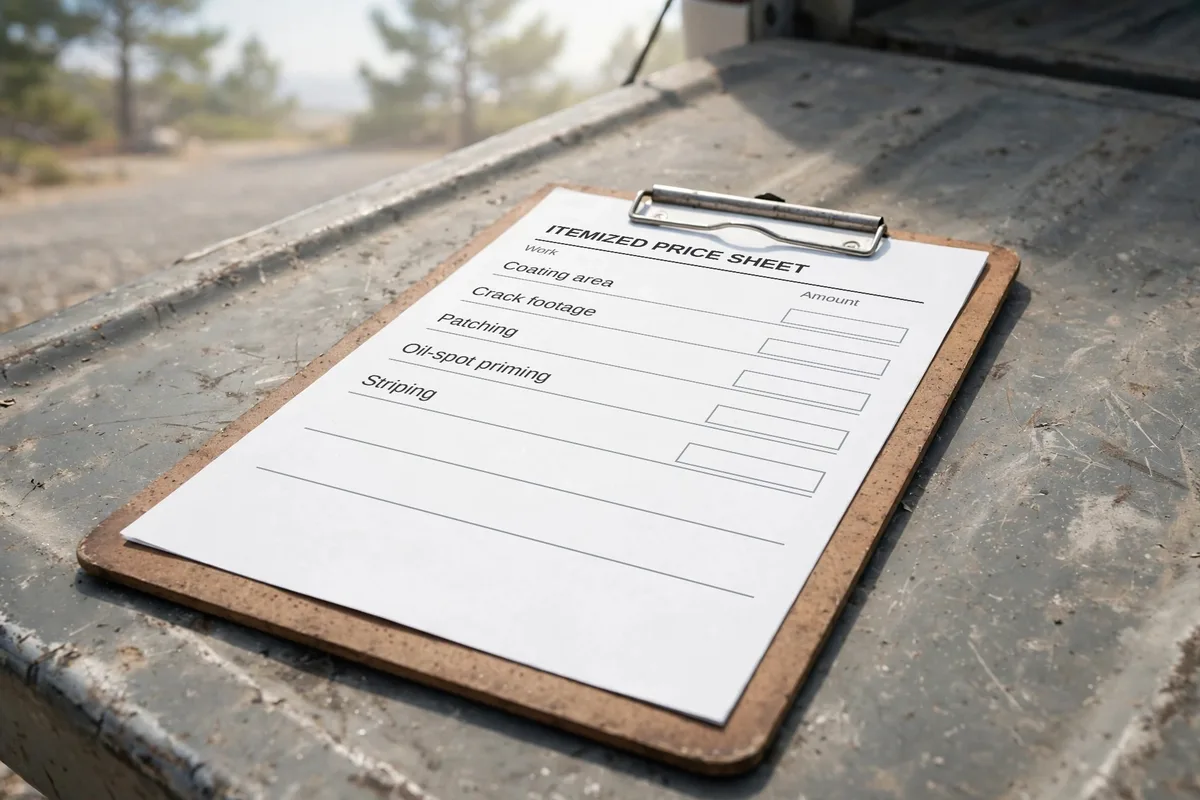
After the walk you get the price in writing, broken into lines. Coating area is one line. Crack filling by the foot is another. Patching, oil-spot priming and striping each get their own line if the job needs them. Size, condition and prep are what move the numbers, and you can see which line is which. You decide what to do from there.
What to have ready
You can call with almost nothing. A few details make the first conversation shorter and the walk more useful.
- The property. A home, a business, an HOA or amenity lot, or a church. Tell us the street and the part of Leland or Brunswick County it is in.
- The service you think you need. Sealcoating, crack work, patching, striping, markings or a maintenance program. If you aren't sure, say what you see. "It's cracked and the edges are crumbling" is enough.
- The size, if you know it. For a drive, a rough length and width. For a lot, the number of parking bays or a rough footprint. If you don't know, leave it out. We measure it ourselves.
- What worries you. Standing water, oil spots, a soft area, faded bays, a gate or tight entrance the crew should know about.
A few phone photos of the problem areas help, though they don't replace the walk.
Where we work
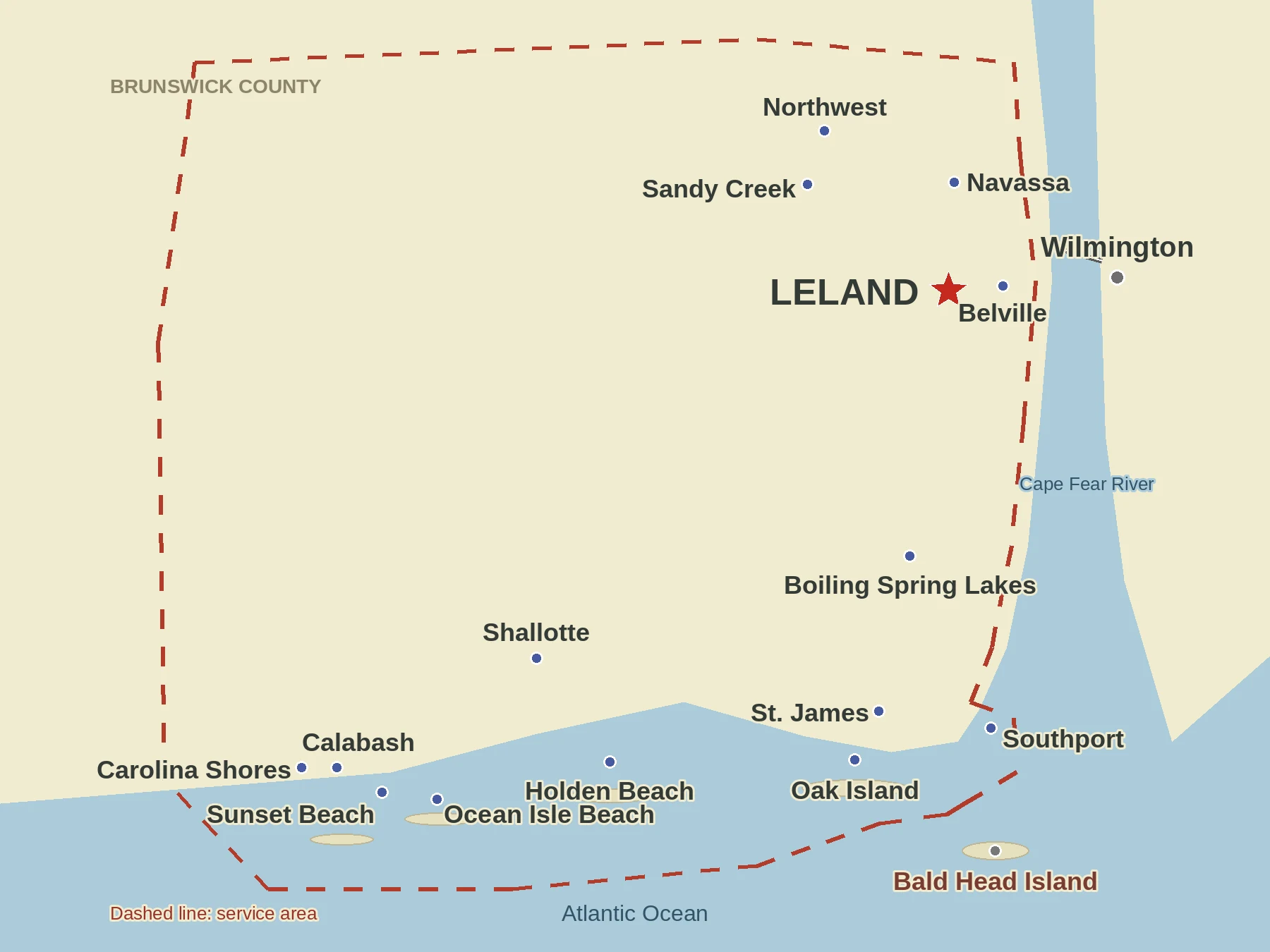
Leland is the center of our ground. From there we cover road-connected Brunswick County: Belville, Navassa, Northwest, Sandy Creek, Boiling Spring Lakes, St. James, Southport, Shallotte, Oak Island, Holden Beach, Ocean Isle Beach, Sunset Beach, Calabash and Carolina Shores. The beach towns and the far end of the county take longer to reach than Leland, and we say so when we schedule. Wilmington is served too, ground across the Cape Fear Memorial Bridge from Leland.
Bald Head Island is not served.
We care for existing asphalt. We don't lay new lots or roads, mill, pour concrete or do drainage work. If your job is one of those, the call will tell you quickly, and you won't have waited on a walk.
Tell us about the job
Call (910) 370-1121 Monday to Friday between 9:00 AM and 5:30 PM, or fill in the form below. Only your name, your phone number and your OK to be contacted are required. Add whatever else you know about the pavement and we will take it from there.
The more details you give, the better we are able to help you.