Leland Pavement Care does parking lot sealcoating for retail centers, offices, churches, medical buildings and HOA lots in Leland and across Brunswick County. We do it in sections, so customers, patients and members can still get in and park while the work goes on. On a commercial lot, asphalt sealcoating is as much a scheduling job as a paving-care job. The sealer is the easy part. Working around your doors, your tenants and your busiest days is the real work.
Before any sealer goes down, the lot gets its prep: crack sealing, cleaning, and priming of the oil spots at the drive lanes and the dumpster pad. Once the sealer has cured, line striping and pavement markings go back on the fresh black surface, and that is the finishing step. We tell you the order and the day for each of those steps before the first cone goes out.
Most owners who call us are after steady parking lot maintenance, not a one-time coat. Where the base has failed in a spot, asphalt patching comes ahead of the sealer. Signs and wheel stops are an add-on when a lot needs them, and we can set them in the same visit as the striping.
Is this the right job for your lot?
Sealcoating is for lots that are structurally sound but showing their age. The surface has gone gray and dry, and oil has stained the drive lanes. Hairline cracks are starting to open. It is protection for pavement that still has its base under it.
Four things wear out asphalt on this coast. UV oxidation dries the surface out. Water gets down through open cracks. Oil and fuel soften the asphalt where cars sit and idle. In sandy Brunswick County soil, the base can fail under a lot. Sealer works on the first and third. Crack sealing handles the second, and patching handles the fourth. A good job takes care of all of them in the right order, and that is why prep is part of the price.
We maintain and repair asphalt. We do not lay new lots, mill, pour concrete or do drainage work. If a lot has failed past what patching and sealing can handle, we will say so plainly when we walk it.
How the work goes
Here is the order of a commercial sealcoat job on a working lot, step by step.
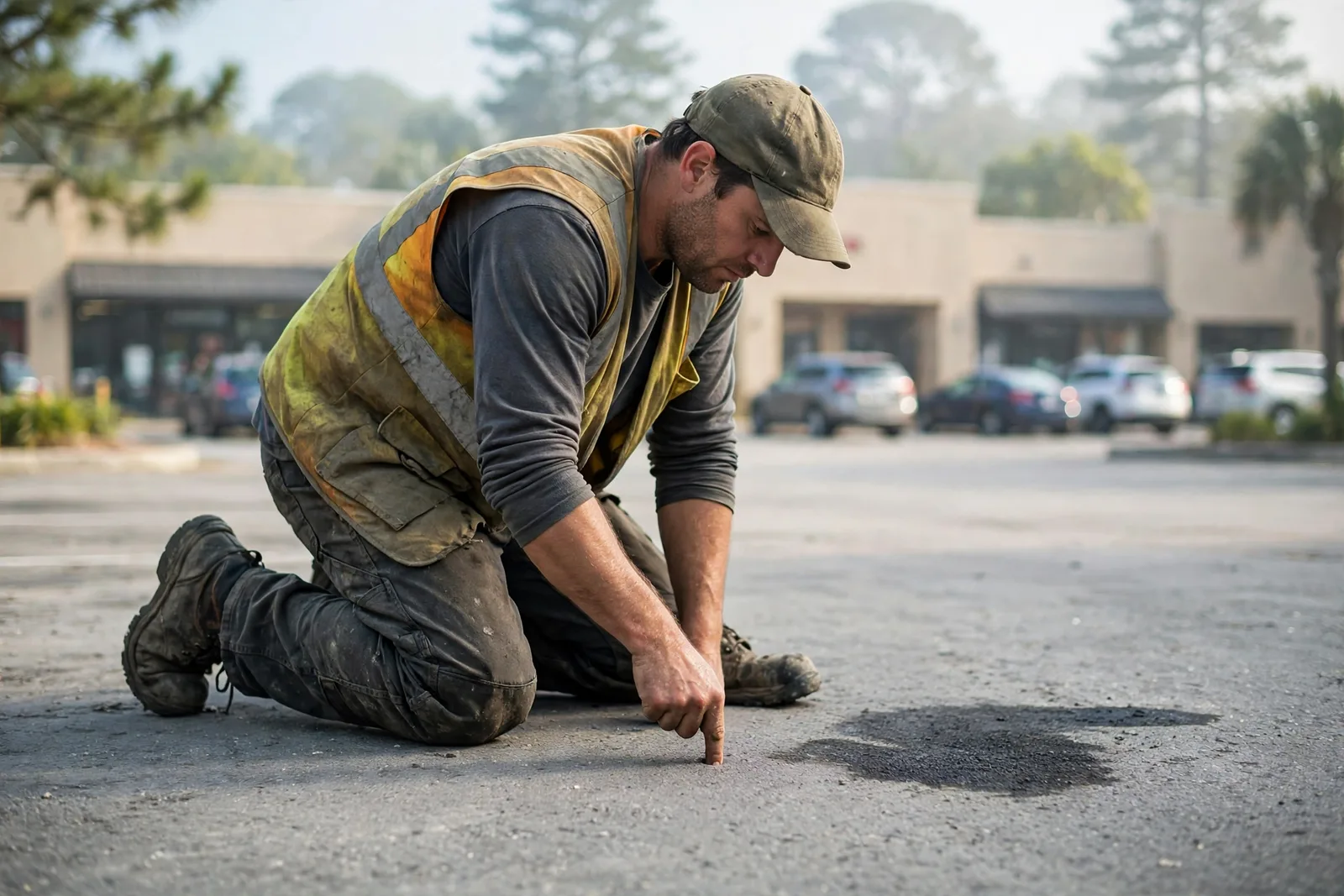
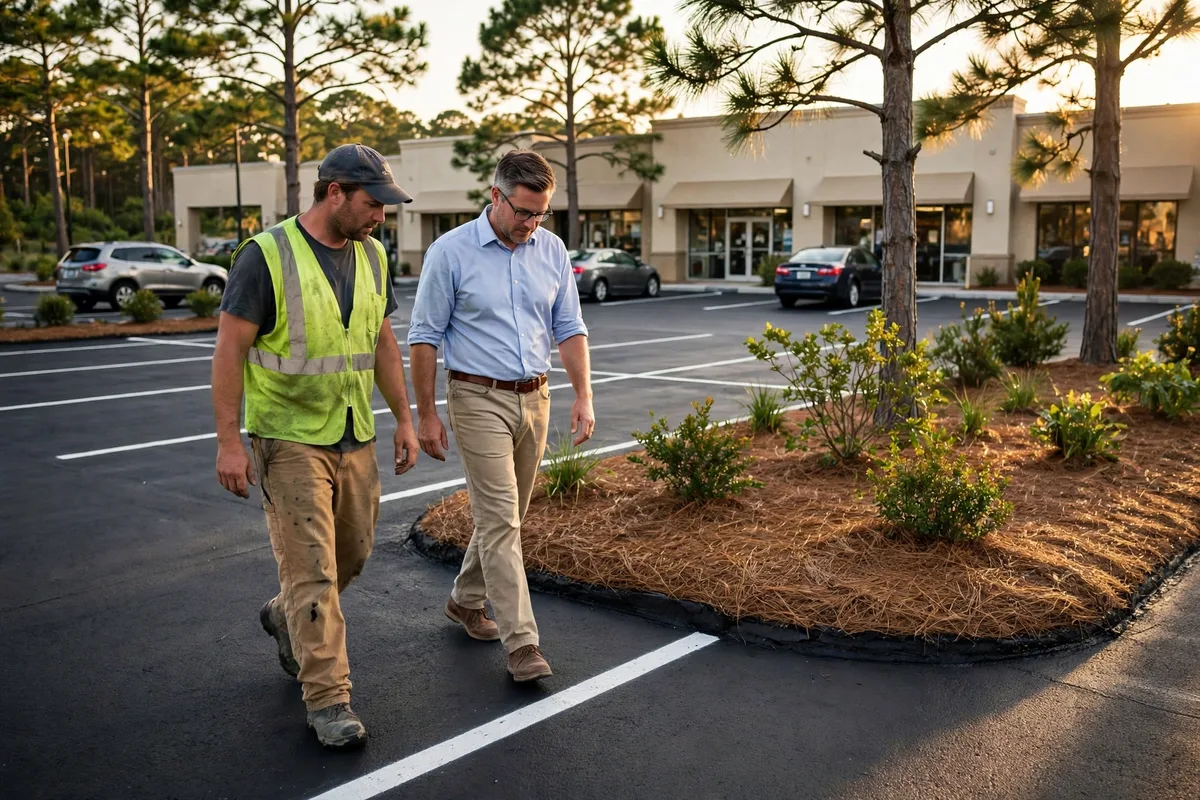
1. Walk and measure the lot. We walk the whole lot with you or your manager, measure it, and mark every crack, oil spot and soft area. We also ask who uses which door and when, because that decides the phases.
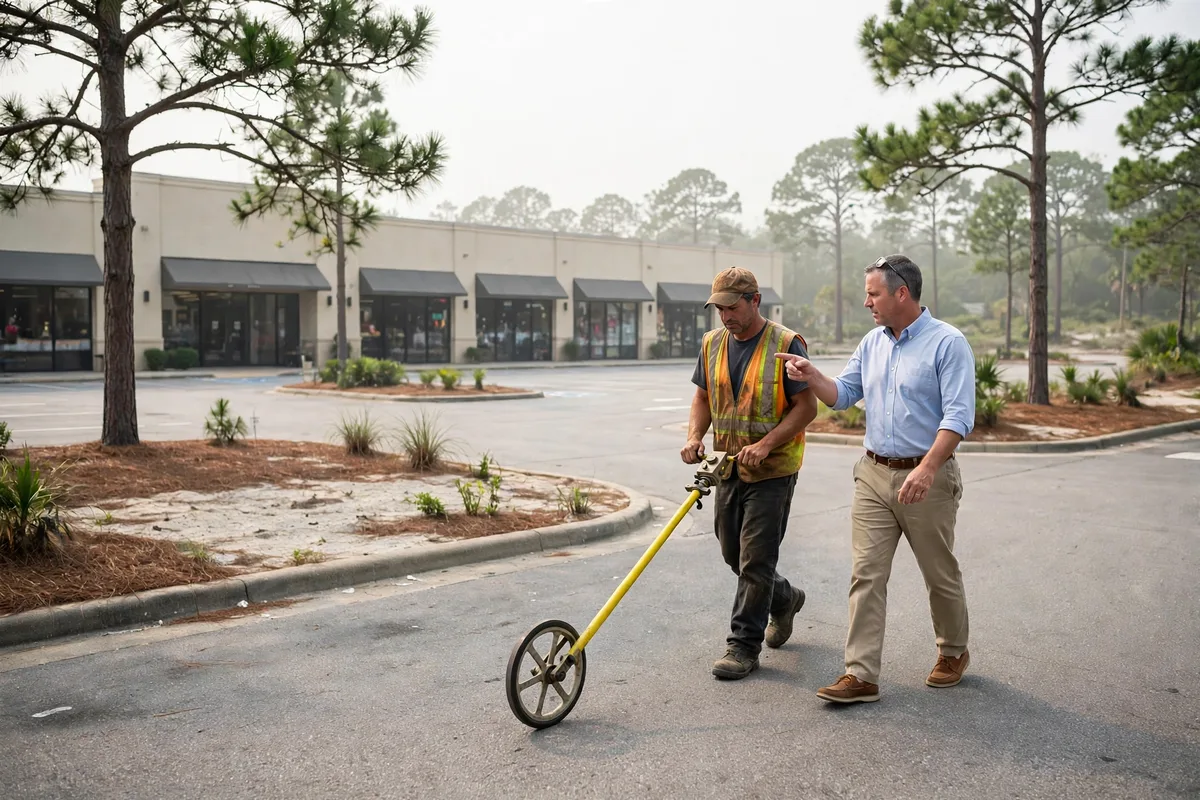
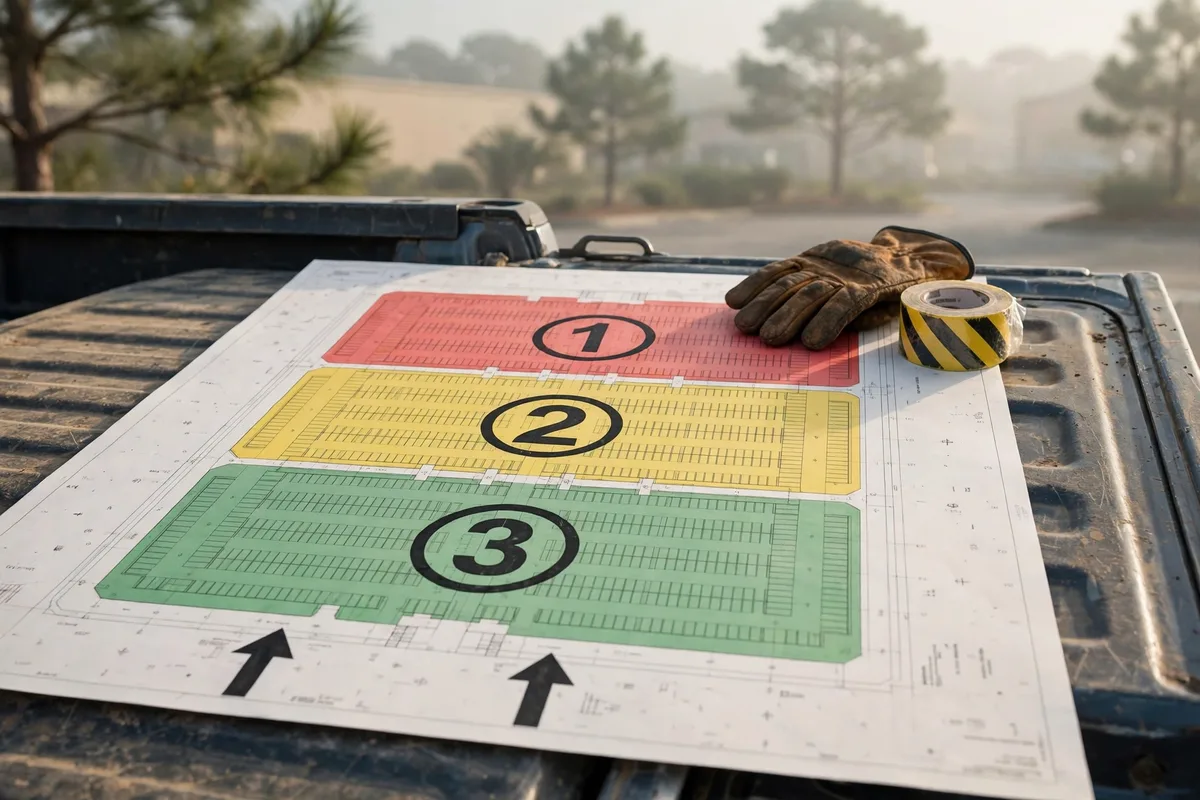
2. Plan the phases. We split the lot into sections so at least one entrance and a block of parking stay open at all times. You get a phase map showing which section is closed on which day, and notice goes to tenants.
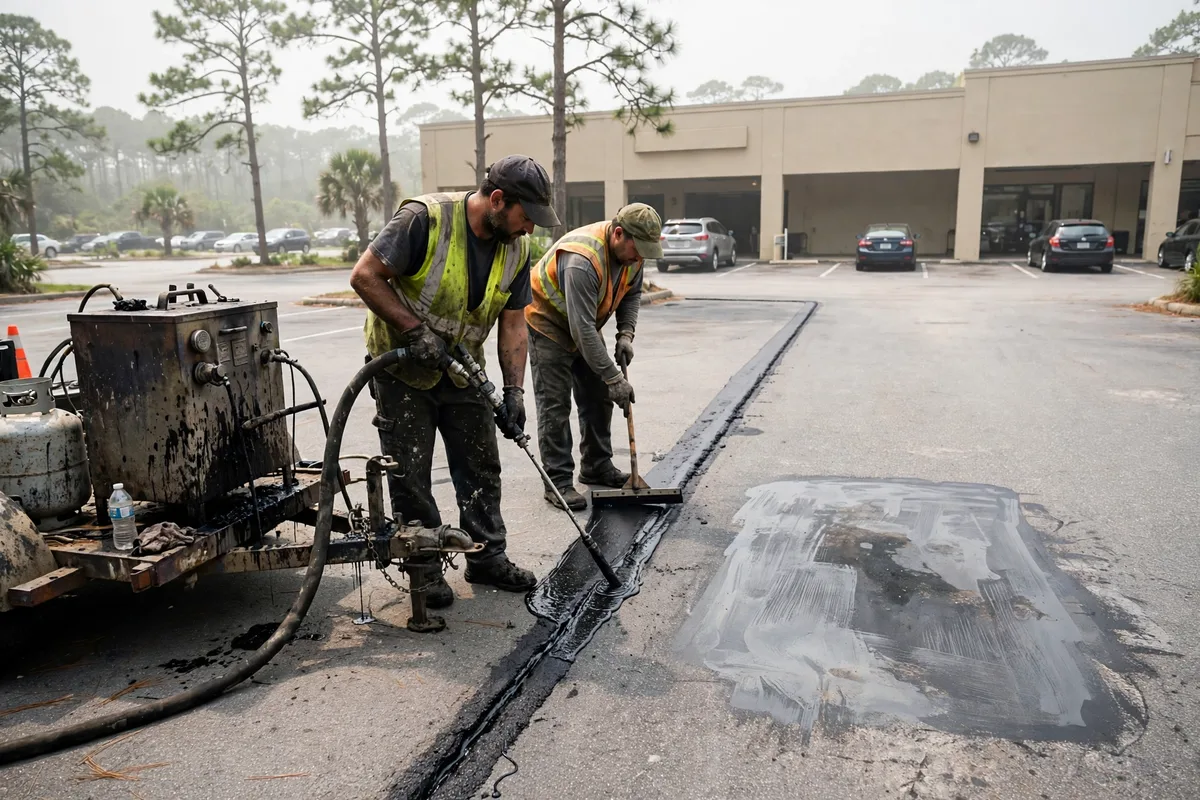
3. Prep the section. Cracks get hot-pour rubberized sealant, and failed spots get cut out and patched with hot-mix. The crew clears the surface with blowers and brooms, then primes the oil spots at drive lanes and dumpster pads so the sealer can grip.
4. Barricade and mark the section. Cones, barricades and signs close the working section and point customers to the open one. A crew member stays at the edge to wave people to the open section.
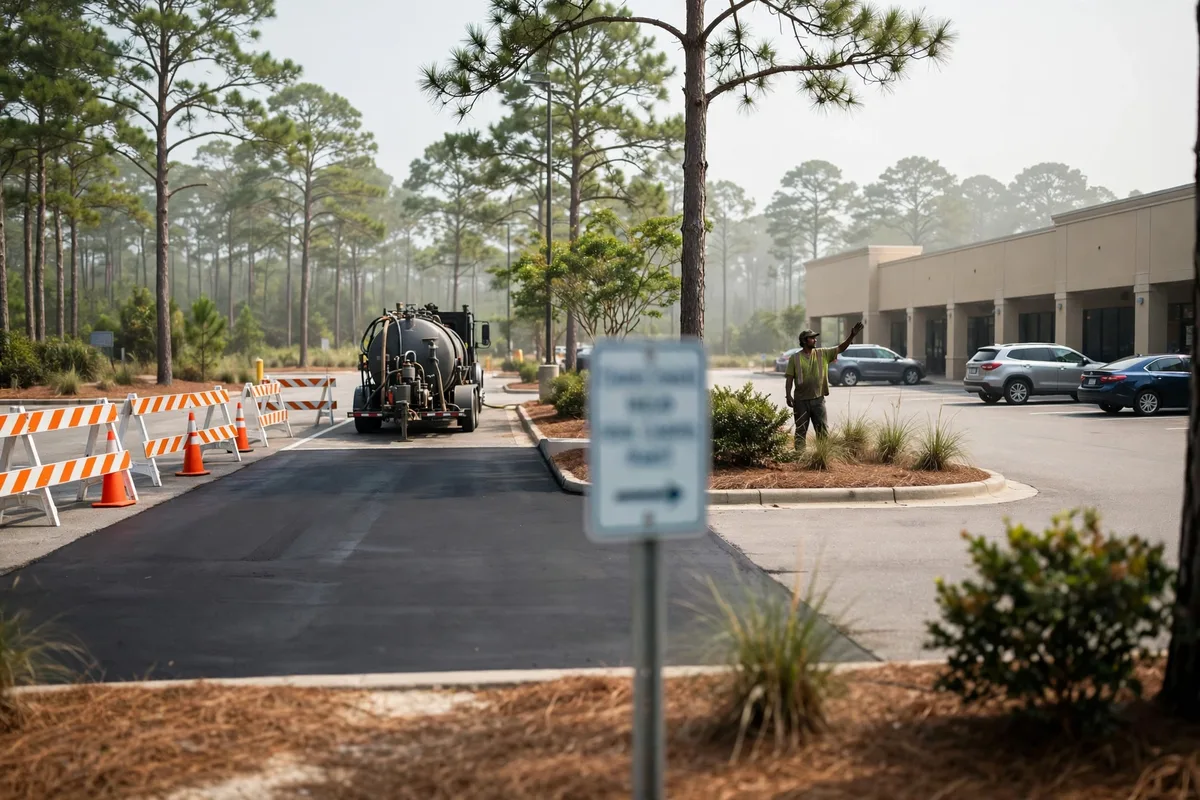
5. Apply the first coat. The crew sprays or squeegees the first coat, edge to edge, working in a set pattern so no one walks through wet material. We use asphalt-emulsion sealer as standard and polymer-modified sealer on high-traffic lanes.
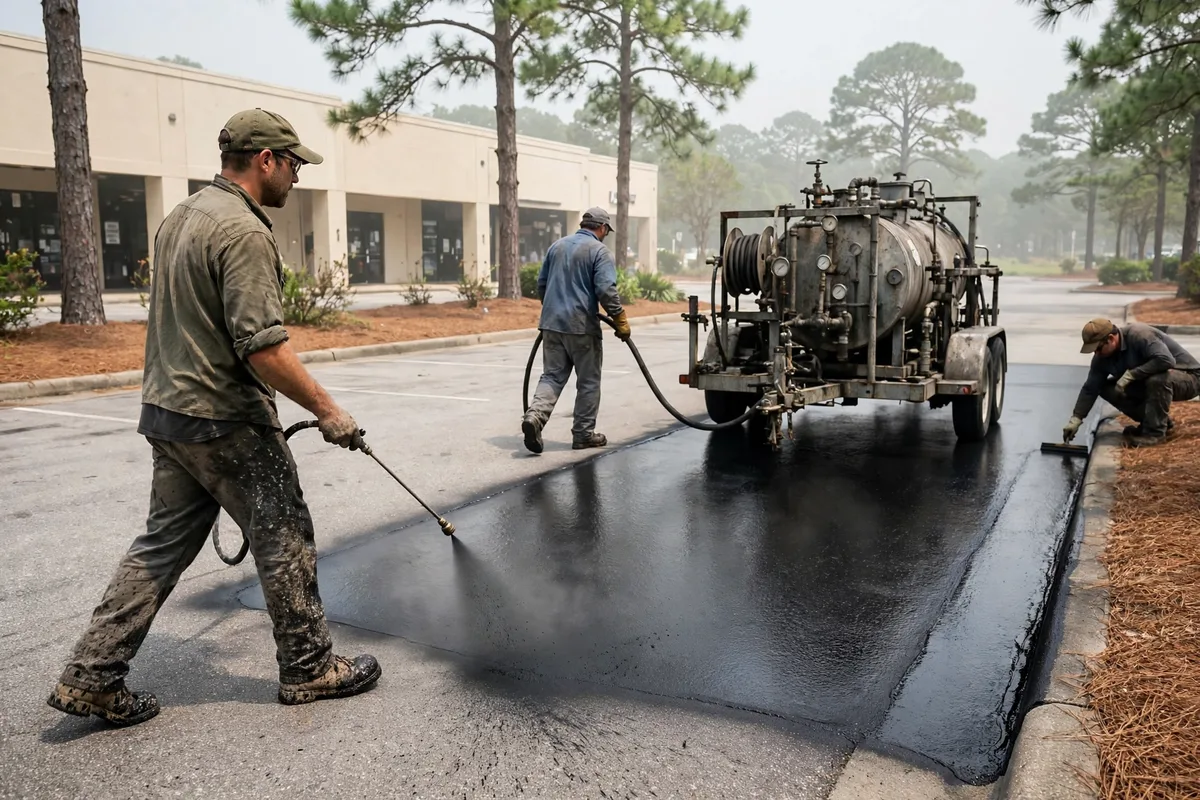
6. Apply the second coat. Two coats is the commercial norm. The second goes on after the first has set, and it builds the wear surface that takes the turning tires and delivery trucks.
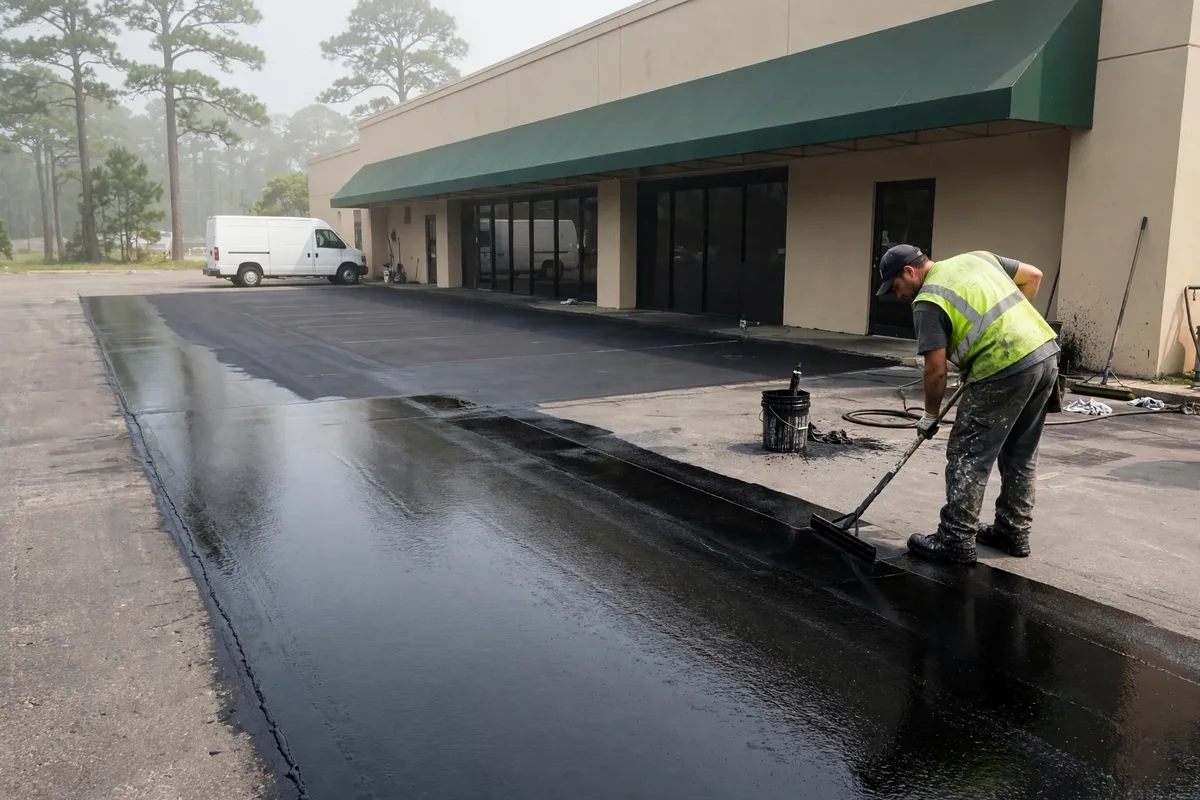
7. Cure and reopen. The section stays closed until the sealer has set up enough to take traffic, and cure time depends on temperature, humidity and sun. We check by hand and boot before taking the barricades down, then move to the next phase.
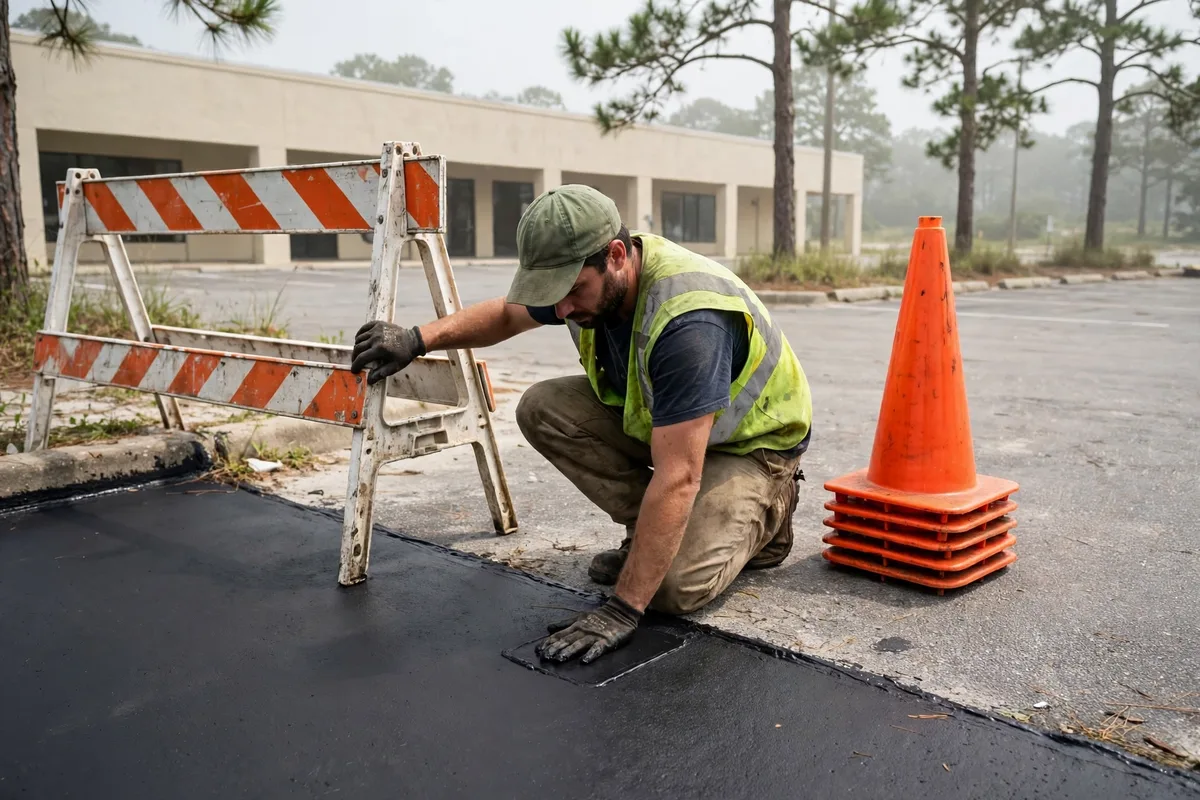
8. Stripe after cure. Stripes only go down after the sealer is fully cured, because paint over soft sealer will not hold. We re-lay your bays, drive arrows, accessible spaces, crosswalks and fire lanes over the existing layout, or put in a new layout if you want one.
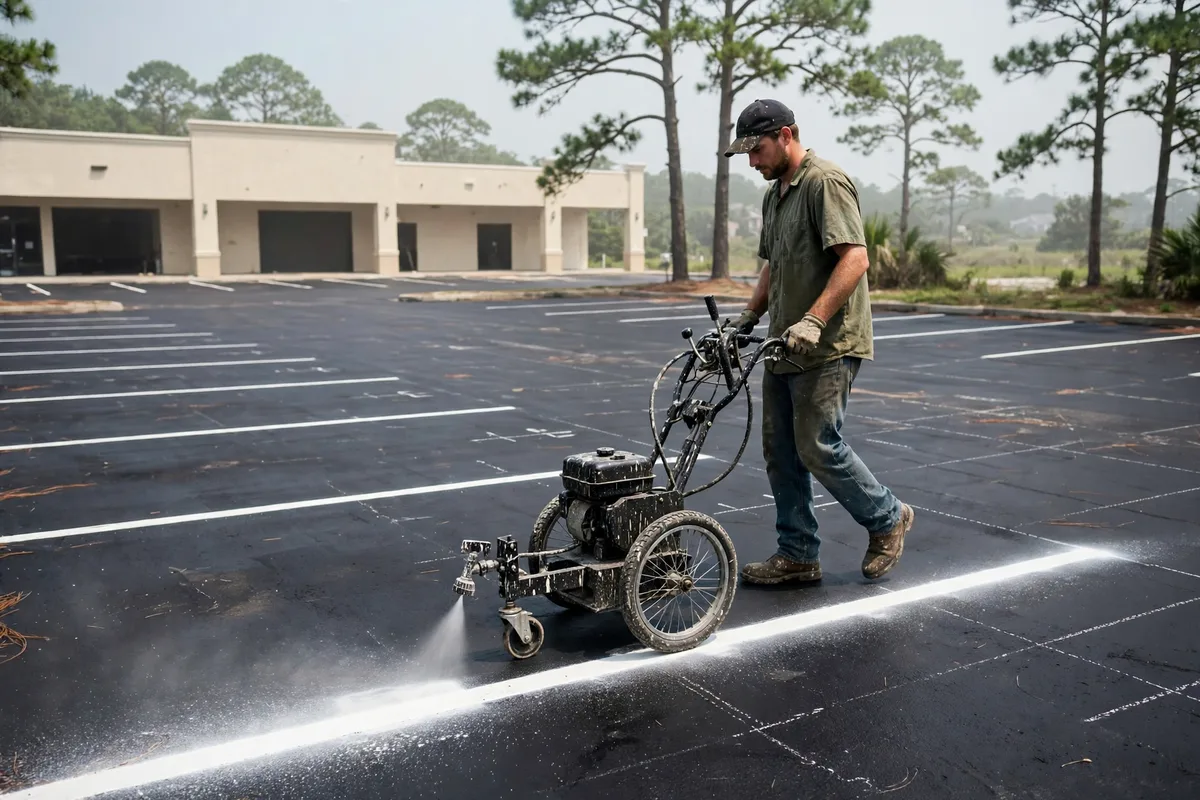
9. Final walk-through. We walk the finished lot with you and check edges, coverage, sealed cracks and the striping. Anything we missed gets noted and fixed.
Plan your phasing
Phasing planner
- Small lot (a single-tenant or small office lot): sealed in one or two phases. One half is closed while the other stays open for parking.
- Mid-size lot (a strip center or church lot): sealed in three phases, as on the Village Road job below.
- Large lot (a big retail center or amenity lot): sealed in several phases by drive lane and bay row. Larger lots price toward the lower end per square foot.
Three or more entrances, or shared cross-access with a neighbor: sections follow the entrances, and shared lanes are coordinated with the neighboring owner before the work starts.
Weekdays are busiest (offices, medical): phases run at night and on Sunday.
Every day is busy (restaurants, mixed use): phases run at night, section by section.
Single tenant: one decision-maker, one notice, the simplest schedule.

Two coats, and the sealer that goes in the traffic lanes
On a commercial lot, two coats is the norm. The first coat bonds to the prepared surface, and the second builds a wear layer that carries delivery trucks and turning tires. Asphalt-emulsion sealer is the standard product, applied by spray, squeegee or a combination of the two, depending on the surface and the lot layout.
For the lanes that take the hardest traffic, such as the entrance, the drive aisle in front of the stores and the drive-through lane, we offer polymer-modified sealer. It costs more per foot than standard emulsion, and we put it where the wear is. Many owners use standard emulsion across the bays and polymer-modified in the lanes.
Night and Sunday scheduling
A lot that cannot lose parking on a weekday afternoon does not have to. For offices, medical buildings and restaurants, we set phases at night. For retail strips and churches, Sunday is often the quietest day. A job can run across several nights or several Sundays, and the phase map tells you which section is closed on which date.
Weather decides the final schedule. Sealer needs dry pavement and good cure conditions, and Brunswick County thunderstorms and tropical systems can move a date. We will call you and reset the phase rather than apply sealer into a storm.
What it costs
Our price for parking lot sealcoating is $0.20 to $0.40 per square foot. Larger lots price toward the lower end per foot, because the crew and equipment spread across more area. Prep is priced on top of the per-foot rate: crack sealing, cleaning, oil-spot priming and any patching.
Four things move the number:
- Size. Square footage sets the base price, and bigger lots get a lower rate per foot.
- Coats. Two coats is the commercial norm. Changing the coat count changes the price, as does using polymer-modified sealer in the traffic lanes.
- Phasing. More phases mean more mobilizations. A lot sealed in four phases over four nights costs more to run than one sealed in two.
- Striping after. New striping, or a restripe over the existing layout, is priced as its own line. A restripe of 18 single bays comes to $1,925.78.
Village Road: a retail lot in three phases
A small retail center on Village Road had a lot that had gone gray and rough. The drive lane in front of the stores was stained with oil, and the dumpster pad at the back was soft and black with it. Cracks ran across the bays, and the stripes had worn down to ghosts. The tenants could not lose their weekday parking, so the owner asked for the work to be done without closing the lot.
The lot measured 14,030 square feet. The crew walked it first and marked 840 linear feet of cracks. The entrance lane and the drive aisle in front of the storefronts took the heaviest traffic, so those lanes were set for polymer-modified sealer at $0.28 per square foot, which sits inside our $0.20 to $0.40 band. The sealcoat came to $3,928.40.
We split the lot into three phases across two Sundays. On the first Sunday, we did the back section, then the middle section. In each section the crew cleaned the pavement, sealed the cracks with hot-pour rubberized sealant, primed the oil spots, and applied two coats. On the second Sunday, we sealed the front section by the road entrance, keeping the other section's parking open the whole time. Crack sealing on the 840 linear feet came to $2,394.00, at $2.85 per linear foot.
The third visit was the striping, after the sealer had cured. The crew restriped 18 single bays over the existing layout for $1,925.78. Those three lines add up to $8,248.18, before the cleaning and oil-spot priming, which are priced on top.
What the owner should watch for afterward: tire marks at the entrance turn in the first days, new cracks opening along old seams, and oil returning at the dumpster pad where the trucks sit. Catching those early keeps the maintenance job small.
Who this is for
We seal lots for retail and strip centers, offices and medical buildings, churches, and HOA and amenity lots such as clubhouses, pools and gated entrances. Leland is our home ground, and we work across road-connected Brunswick County, from the US-17 and Village Road corridor to the master-planned communities and the beach towns. Wilmington, ten minutes across the river, is on our route too.
Questions
How much does parking lot sealcoating cost?
Our price is $0.20 to $0.40 per square foot. Larger lots price toward the lower end per foot. Prep (crack sealing, cleaning, oil-spot priming and any patching) is priced on top, and so is striping after the sealer cures. Size, coats, phasing and striping decide where your lot lands in the band.
Do I have to close my lot to have it sealed?
No. We seal in sections so at least one entrance and a block of parking stay open. The phase map shows you which section is closed on which day.
How many coats do you apply?
Two coats is the commercial norm, and that is what we plan for. The first coat bonds to the prepared surface, and the second builds the wear layer.
What is polymer-modified sealer, and do I need it?
It is a premium sealer we use in high-traffic lanes such as entrances, drive aisles and drive-through lanes. It costs more per foot than standard asphalt-emulsion sealer. Most lots use standard sealer on the bays and polymer-modified sealer in the lanes.
Can you work at night or on Sundays?
Yes. Night and Sunday scheduling is how we seal lots that cannot lose parking on a weekday. Churches and retail strips often choose Sunday, and offices, medical buildings and restaurants often choose night phases.
What prep do you do before sealing?
Cracks are filled with hot-pour rubberized sealant and failed spots are cut out and patched. The surface is cleaned, and oil spots at drive lanes and dumpster pads are primed. Sealer will not hold over oil or open cracks, so prep comes first.
What if the weather turns?
Sealer needs dry pavement and good cure conditions. If a storm is coming, we reset the phase and call you with the new date. We do not apply sealer into rain.
How long before customers can park on the sealed section?
It depends on temperature, humidity and sun. The crew checks the section by hand before the barricades come down, and we tell you when it reopens. Striping goes on after cure, as its own visit.
How often should a commercial lot be resealed?
Most owners reseal every two to three years. That is typical practice, not a guarantee, and the right interval depends on traffic, sun exposure and the condition of the surface. We check your lot's condition at each visit.
Do you do the striping too?
Yes. Striping is the finishing step, and we put down bays, arrows, accessible spaces, crosswalks and fire lanes after the sealer cures. A restripe over your existing layout is priced differently from a new layout. A restripe of 18 single bays is $1,925.78.
Do you handle accessible spaces and traffic markings?
We paint accessible spaces, access aisles, crosswalks and fire lanes as part of the pavement markings work, following your existing layout or the layout you give us. We do the marking work. We do not certify that a lot meets any legal code.
Can you add signs and wheel stops?
Yes, as an add-on to a striping or sealing job. We can set signs and wheel stops in the same visit as the striping.
Does sealcoating fix a lot with a failed base?
No. Sealer protects the surface. Where the base has failed, usually from water in sandy soil, we cut out and patch the spot first. If a lot has failed beyond what patching and sealing can handle, we will tell you plainly.
Do you work on HOA and church lots?
Yes. HOA amenity lots, clubhouse lots, gated entrances and church lots are a regular part of our work, and we plan the phases around your events calendar.
Do you pave new lots or do concrete and drainage?
No. We maintain and repair asphalt: sealcoating, crack sealing, patching, striping and markings, and maintenance programs. We do not lay new lots, mill, pour concrete or do drainage work.
Start your lot's sealcoat
Call us at (910) 370-1121, or send the form below. Tell us the lot's size if you know it, how many entrances it has, and which days are your busiest. We will talk through the phasing and give you the price.
The more details you give, the better we are able to help you.