A faded, cracked driveway looks finished, but most of the ones we walk in Leland are not. Before anyone talks about tearing a drive out or laying new asphalt over it, the real question is whether driveway repair would bring it back. In most cases it will, and for a good deal less money.
Leland Pavement Care works through the repair in a set order. Broken or settled spots get asphalt patching, cut out down to the base and rebuilt. Hairline cracks get crack sealing with hot rubberized sealant, and the wider ones get crack filling before they are sealed over. Potholes get pothole repair, which means a proper cut-out and not a shovel of cold mix. When the surface is sound again, asphalt sealcoating goes on to protect it.
Many Leland drives went in with the subdivisions built since the 2000s, and they are reaching repair age together. The job finishes with driveway sealcoating, but only after the damage underneath has been dealt with. This page shows how to read your own drive, what each repair involves, what it costs, and where repair stops making sense.
What you can tell by walking your driveway
You do not need equipment to make the first read. Walk the drive slowly, in daylight, ideally after a rain, and look at five things. Each one points to a different answer.
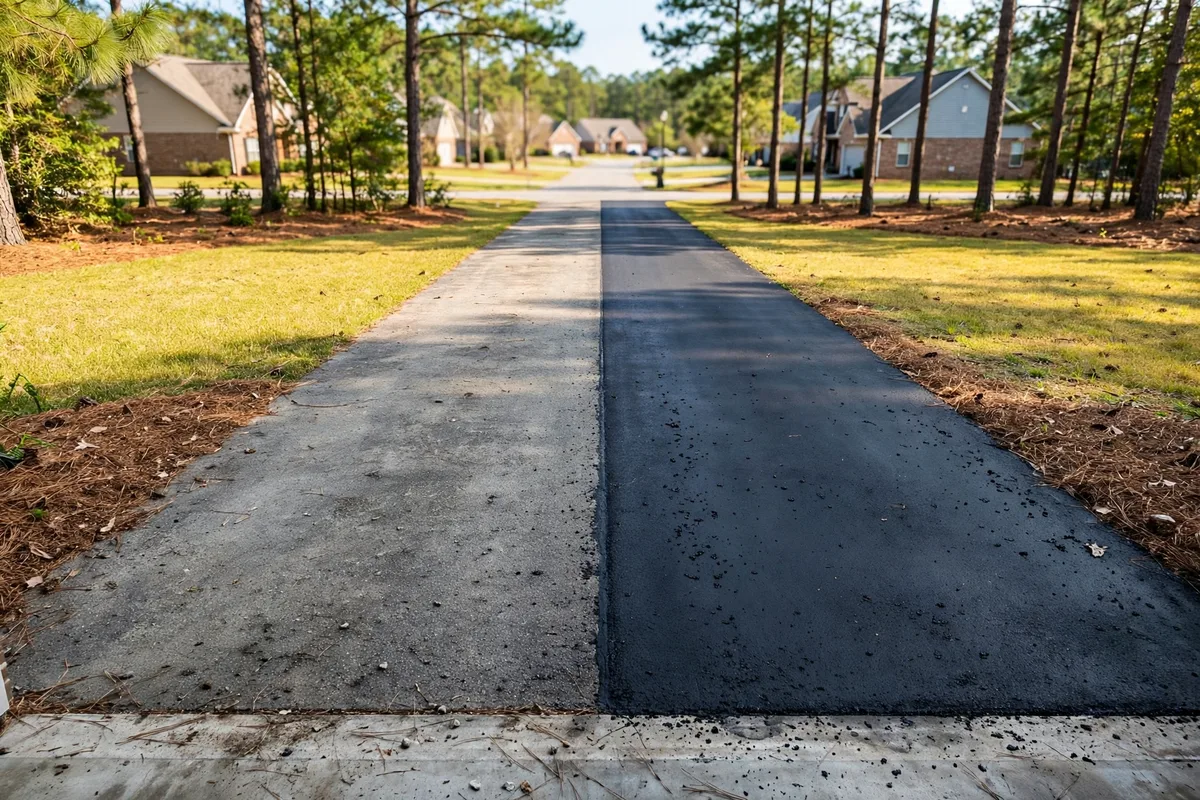
Fading and surface wear
Asphalt starts out black and turns gray as UV and heat oxidize the binder. Fine stone starts to show at the surface and the drive feels rough under your shoe. This is surface wear and nothing more. It is a sealcoat question, and a drive that only looks like this is the easiest one to help.
Working cracks
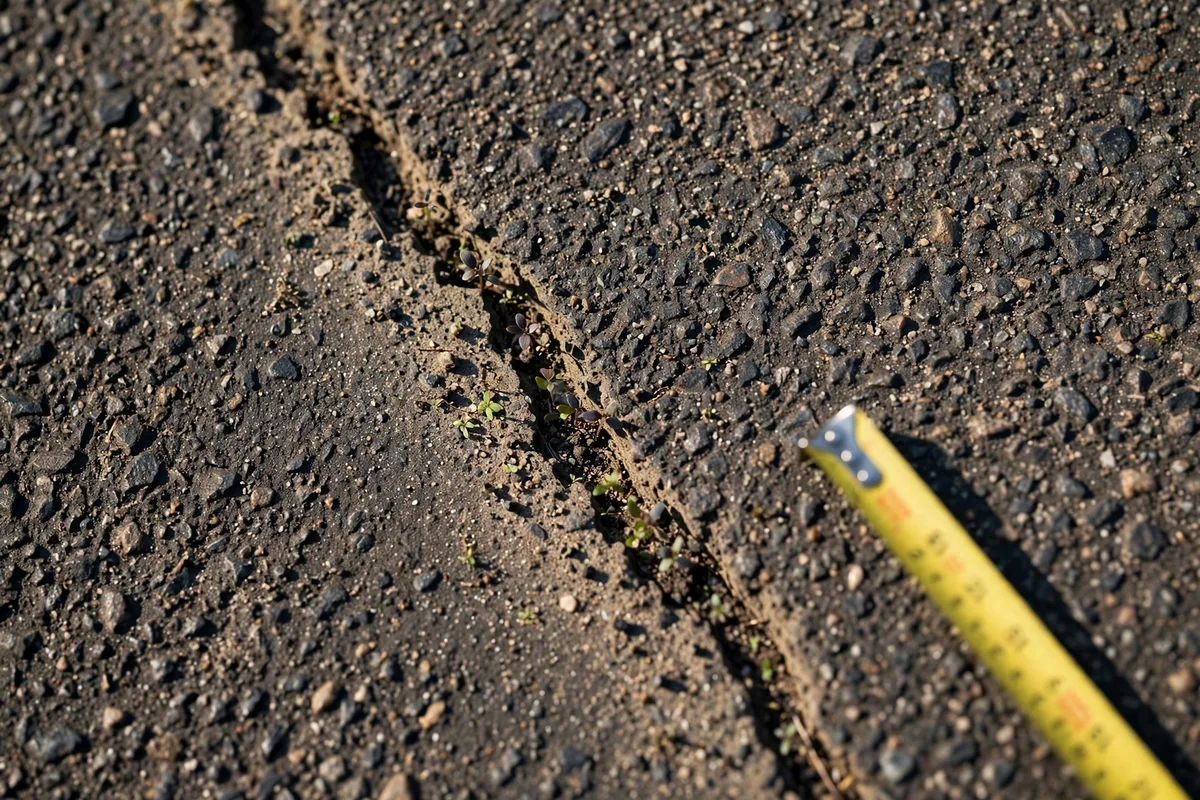
A hairline crack on a young drive is cosmetic. A crack you can fit a pencil tip into, or one that has a lip, is working. Coastal storms drop inches of rain at once, and water that gets through an open crack softens the base below. Cracks are a sealing question, and the sooner they are closed the better.
Settled or broken areas
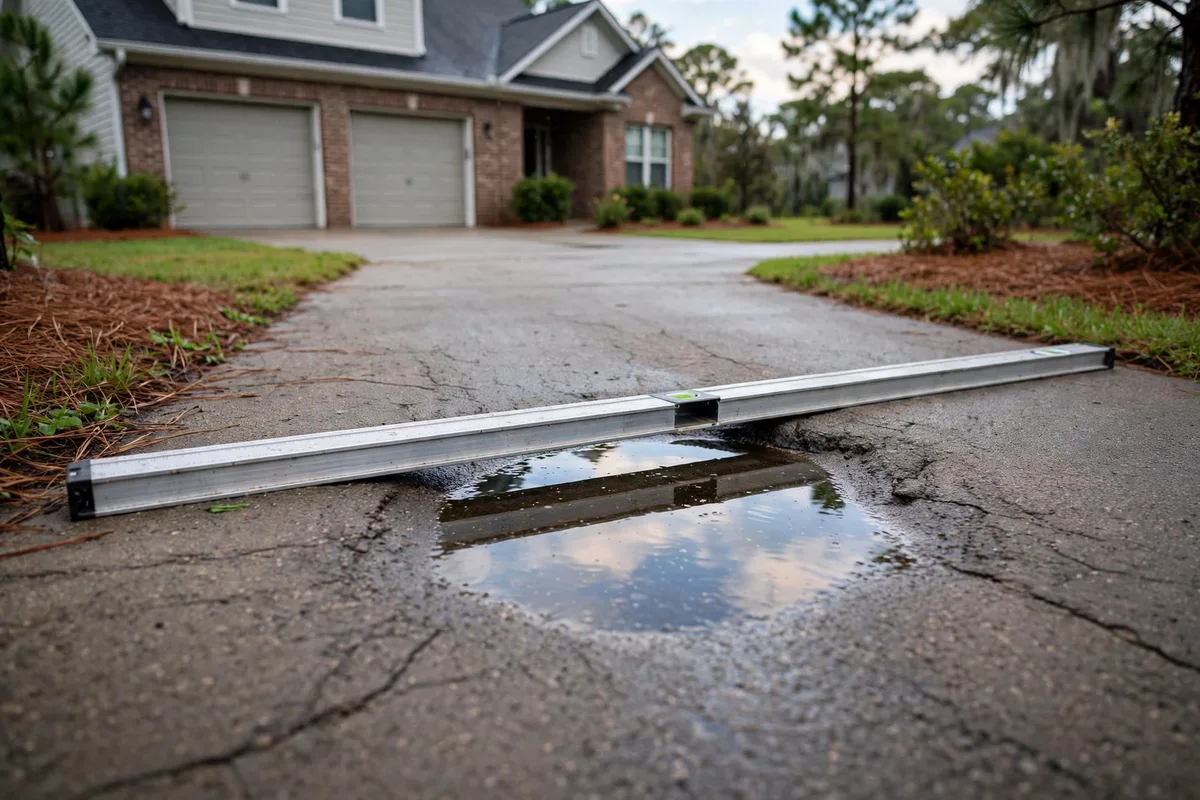
A dip where water puddles, a patch that has sunk, or a chunk of broken edge points below the surface, usually to the base. Brunswick County soil is sand with a high water table, and what is under a drive decides whether it holds up. Re-coating a settled area only hides it for a season. This is a patching question, and the fix is a cut-out down to the base.
Alligator cracking across wide areas
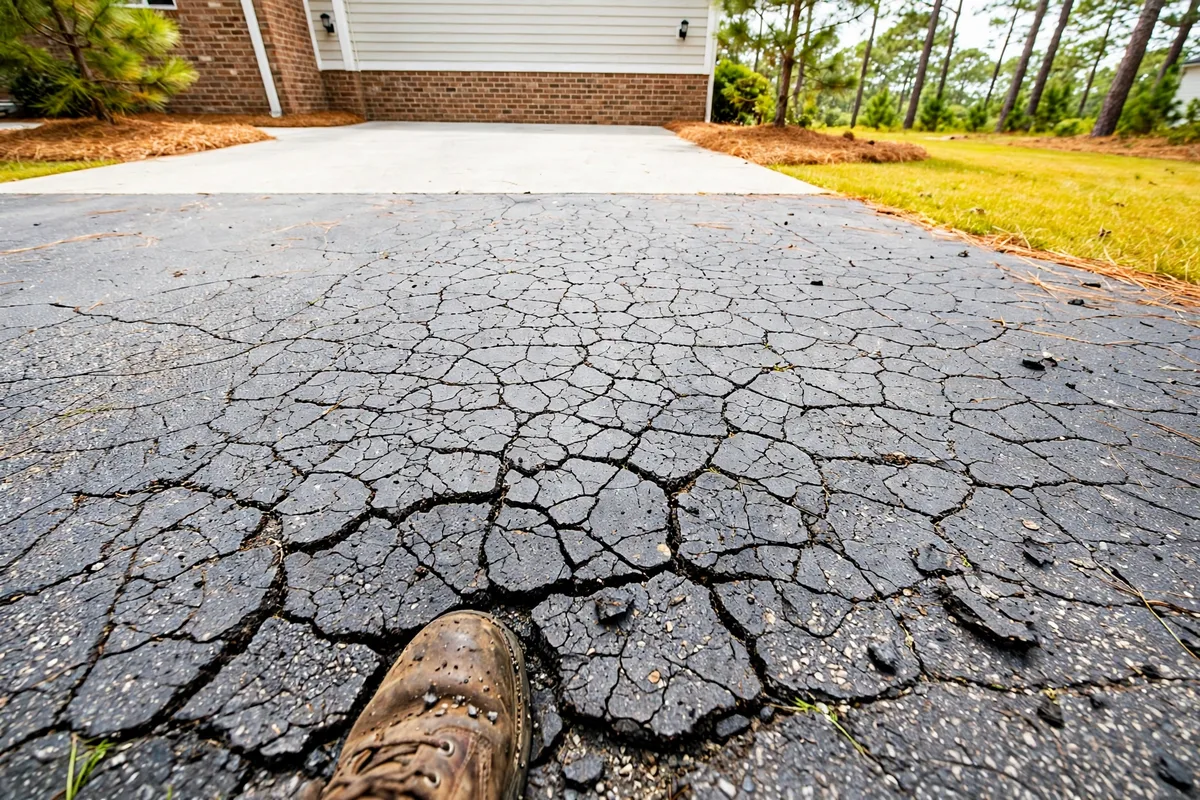
When cracks link into a pattern like reptile skin, and that pattern covers a wide area and not a patch, the pavement is flexing over a base that has failed. One small alligatored spot can be cut out and rebuilt. Alligator cracking across much of the drive cannot be sealed or patched back to health, and that is where the replacement conversation starts.
A driveway at the end of its structural life
Some drives have simply used up their pavement. You will see wide alligator cracking, repeated patches that keep failing, and settled areas across most of the drive. Repair here only spends money on a surface that will not hold. An overlay or full replacement is the honest answer, and we will tell you so.
Repair or replace?
Gray color, rough surface, exposed stone, no cracks or low spots. Next step: sealcoat. Most owners reseal every two to three years, as typical practice and not a guarantee. Driveway sealcoating runs $600 to $2,000 for typical jobs, driven by size, condition, crack filling and oil-spot priming. Minimum fees apply on small drives.
Cracks about a quarter inch or wider, with lips or weeds, letting water through. Next step: clean and seal the cracks with hot-pour rubberized sealant, then sealcoat once the cracks are closed. Crack sealing runs $0.50 to $3.00 per linear foot.
Dips that hold water, sunken patches, broken edges. Usually a base problem. Next step: saw-cut, remove, re-base and hot-mix patch. Patching runs $150 to $400 per pothole-class repair and by the square foot on area work, driven by size, depth and base condition.
Interlocking cracks over much of the drive, pavement flexing underfoot. A small isolated spot can be cut out and rebuilt. Wide-area cracking means the base is failing broadly, and this is the replacement side of the conversation. An overlay is priced at $4 to $8 per square foot.
Wide cracking, patches that keep failing, settling across most of the drive. Repair will not hold. Next step: overlay or replacement by a paving contractor, priced at $4 to $8 per square foot. Leland Pavement Care does not lay overlays or new pavement, and says so plainly.

Why most worn driveways are repair candidates
Most drives that look bad have a few problems, and those are local. A drive can have two soft spots, a run of open cracks and a faded surface while the base under the rest of it is still firm. Fixing those three things deals with the cause. A new surface laid over the same problems would crack and sink in the same places.
Four things wear asphalt on this coast. UV and heat oxidize the surface. Water gets in through cracks. Oil and fuel soften the pavement under parked cars. In sandy soil, the base fails where water has worked on it. Sealcoating answers the first and third, crack sealing answers the second, and patching answers the fourth. That is why the repair path runs in the order it does, and why repair handles most of what we see.
The exception is the drive that fails across its whole footprint. That is a different situation, and we treat it that way.
How the repair goes, step by step
1. Walk and mark
We walk the drive with you and mark what we find: settled spots, cracks by width, broken edges, oil stains. We check dips with a straightedge and probe soft spots. By the end of the walk you know the scope and what each part costs.
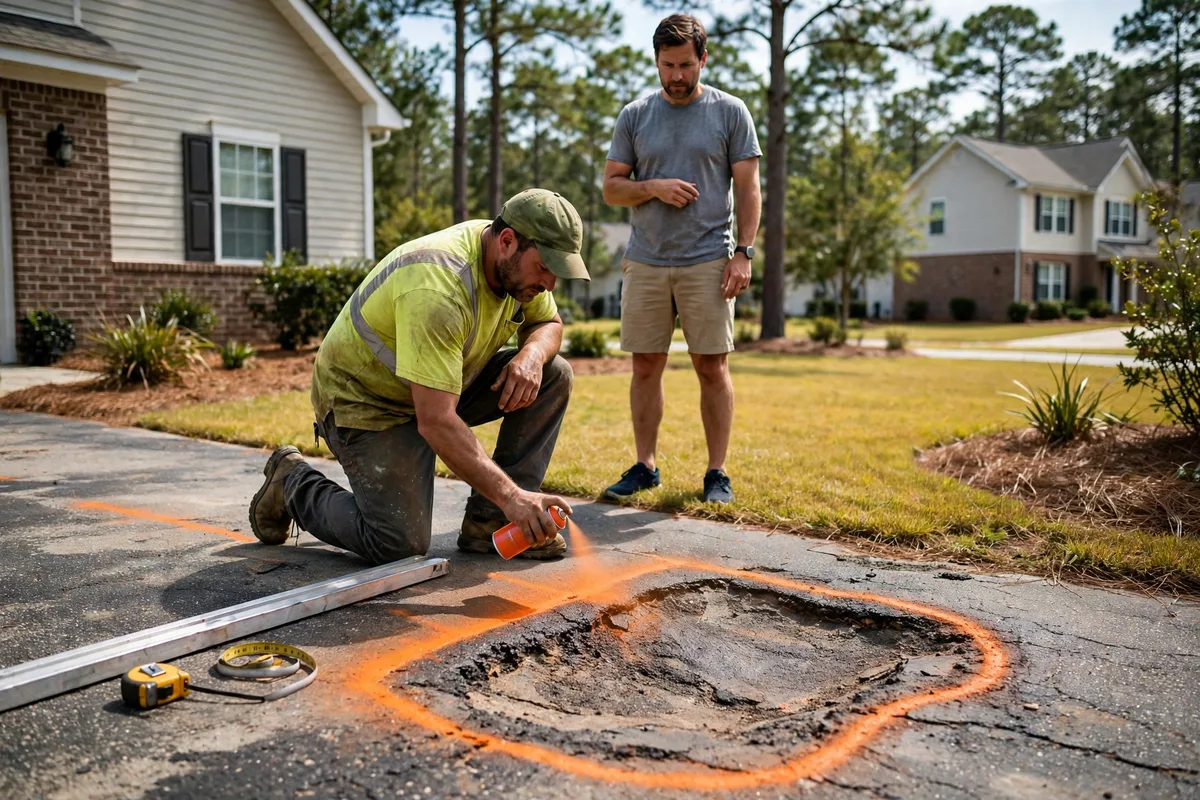
2. Cut out and patch the base
Patching comes first because it changes the surface the other work sits on. A saw cuts clean edges around each failed area. The broken asphalt comes out, the base is re-built and compacted, and hot-mix asphalt goes in and is rolled tight to the surrounding grade. A skin patch or cold-patch fill over a soft base will fail again, and this is the reason why.
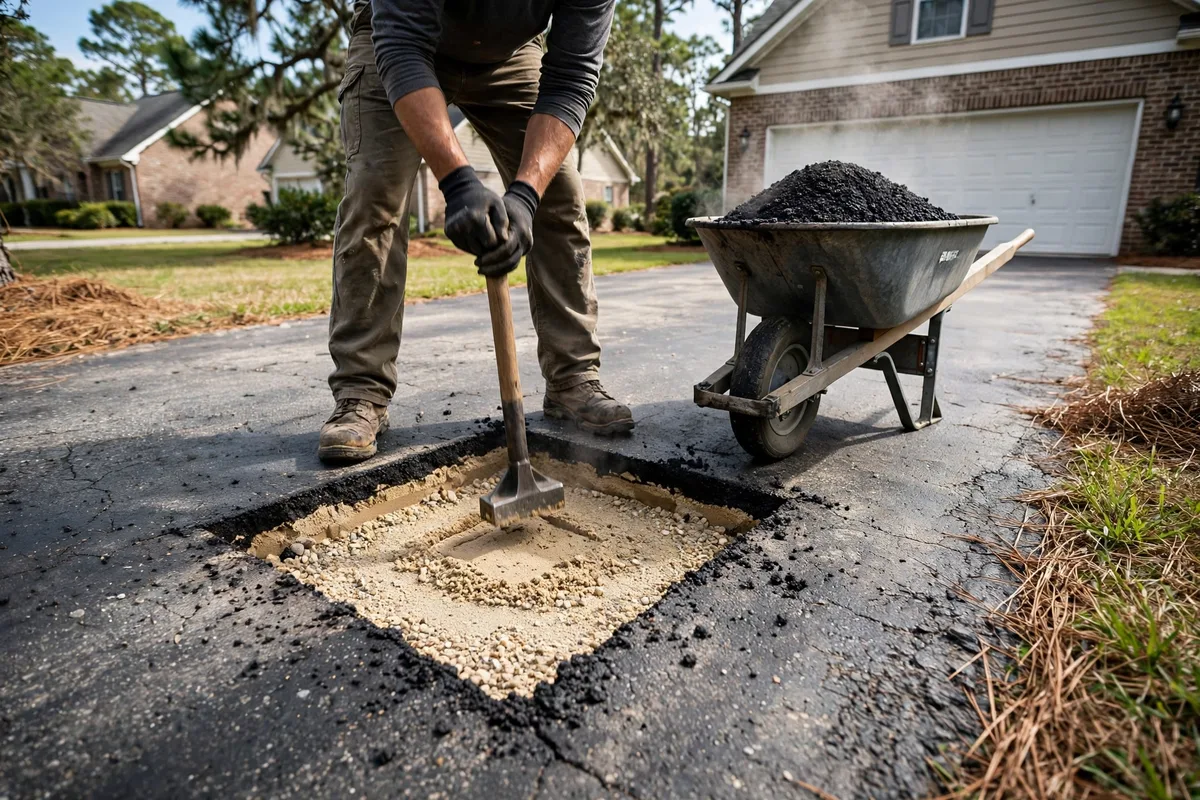
3. Clean and seal the cracks
Next come the cracks. Each one is cleaned of dirt, loose material and vegetation, and dried. Hot-pour rubberized sealant goes in and is leveled flush. It stays flexible as the pavement moves with heat and cold, which cold-pour and store-bought filler do not do for long.
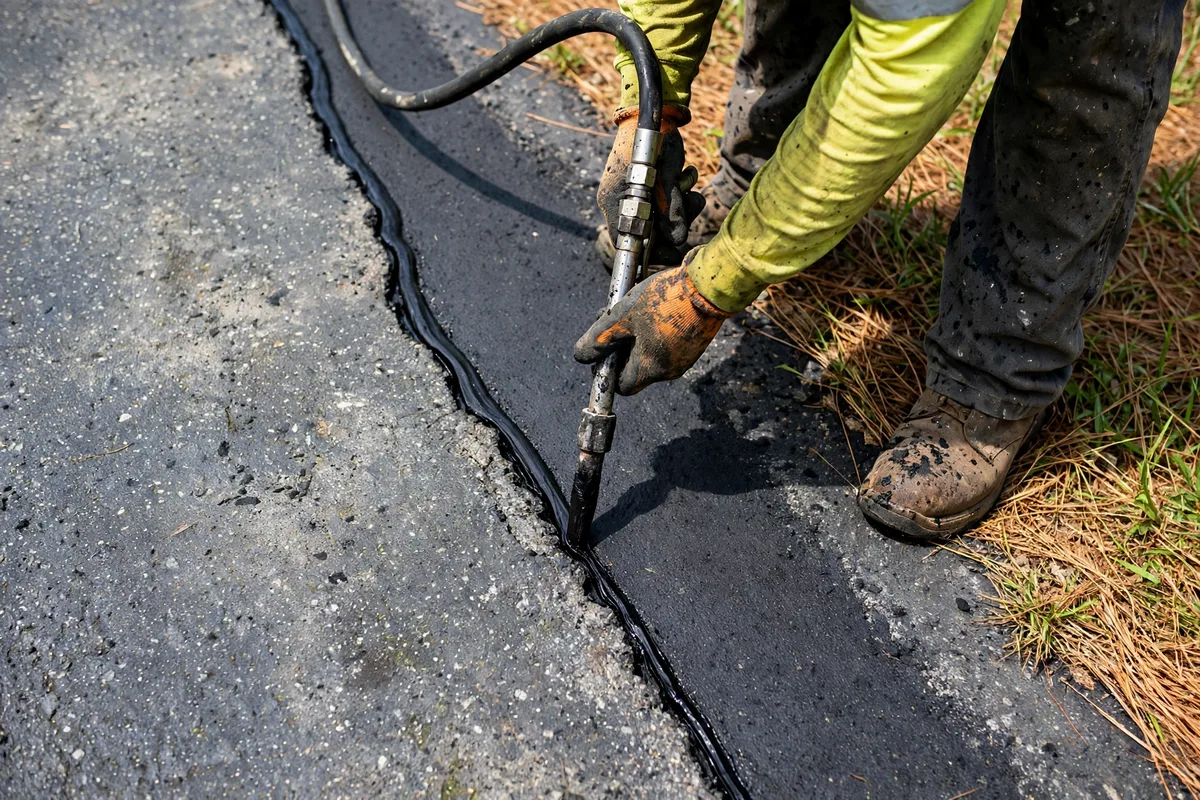
4. Repair the edges
The edges are where a drive breaks first, because tires drop off them and soil washes out underneath. Crumbled edges are cut back to solid pavement and rebuilt with hot mix, and the shoulder behind is supported so the edge has something to sit on.
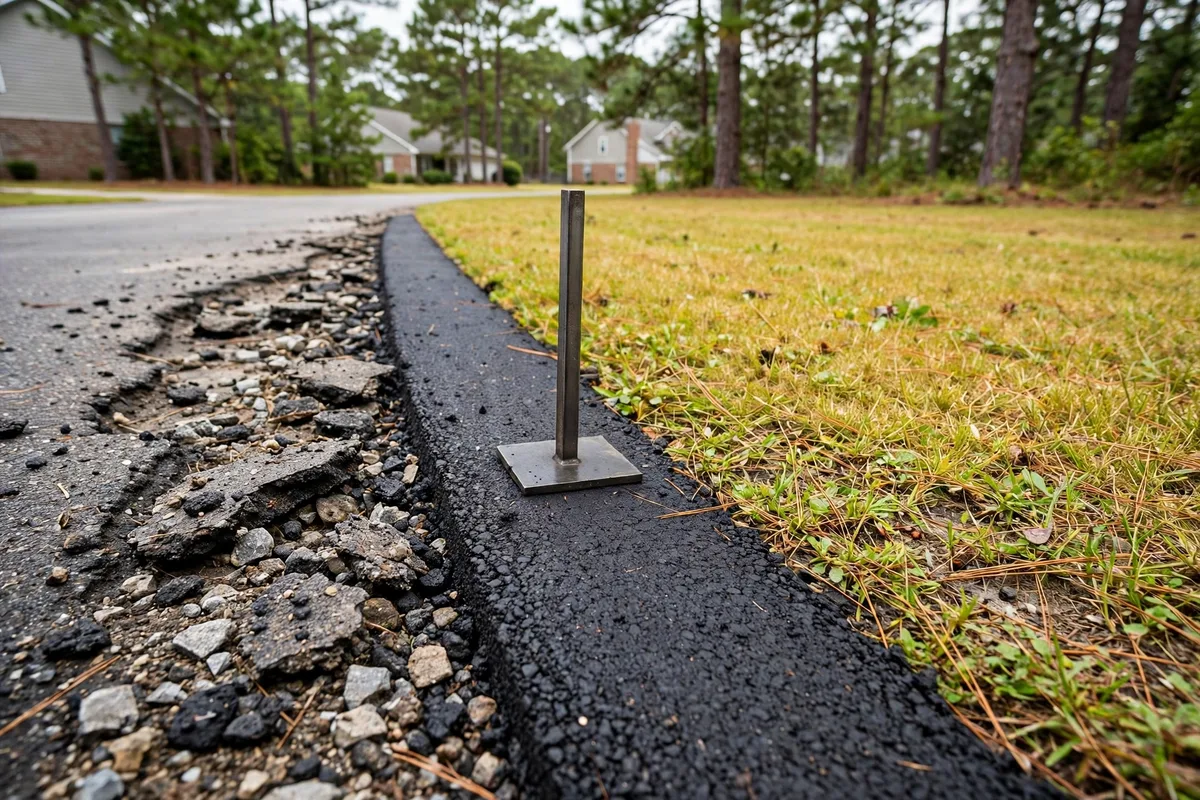
5. Clean and prime oil spots
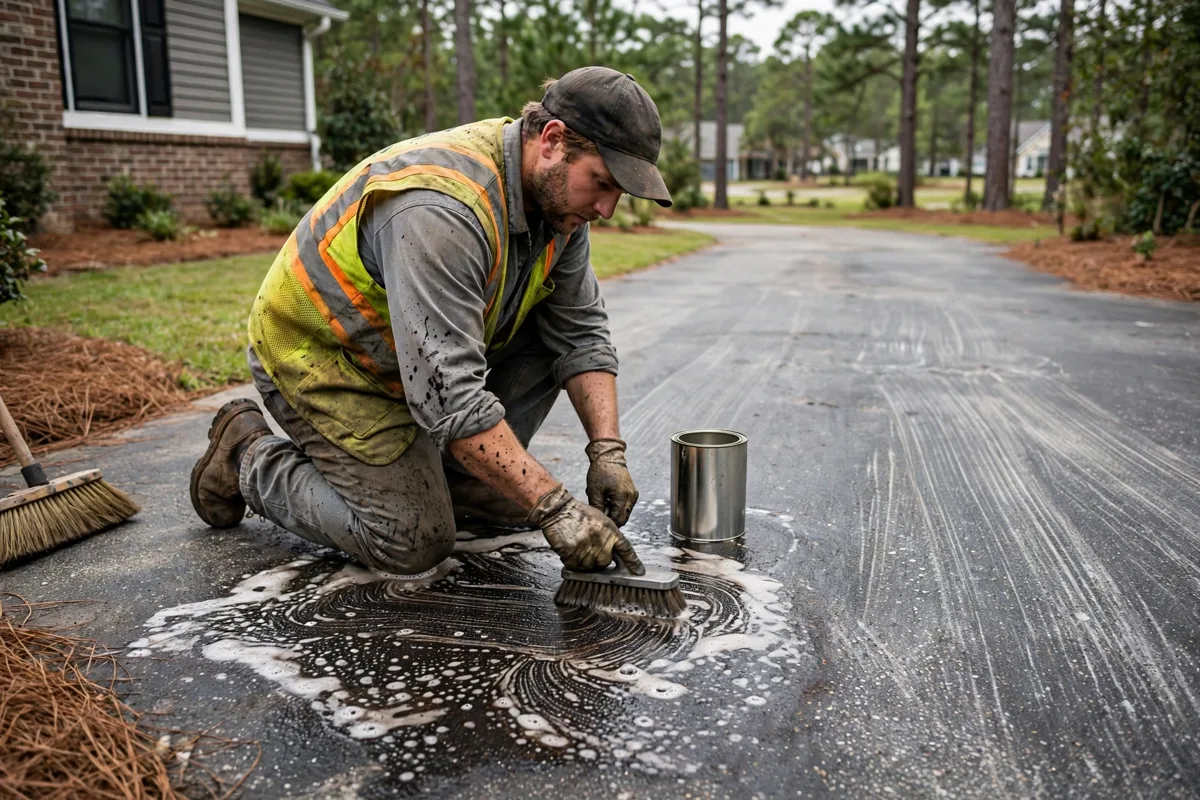
Before any coating, the surface is cleaned of dirt and debris. Oil spots from parking areas are treated with a primer, because sealer will not stick to oil and the stain would show through.
6. Sealcoat to finish
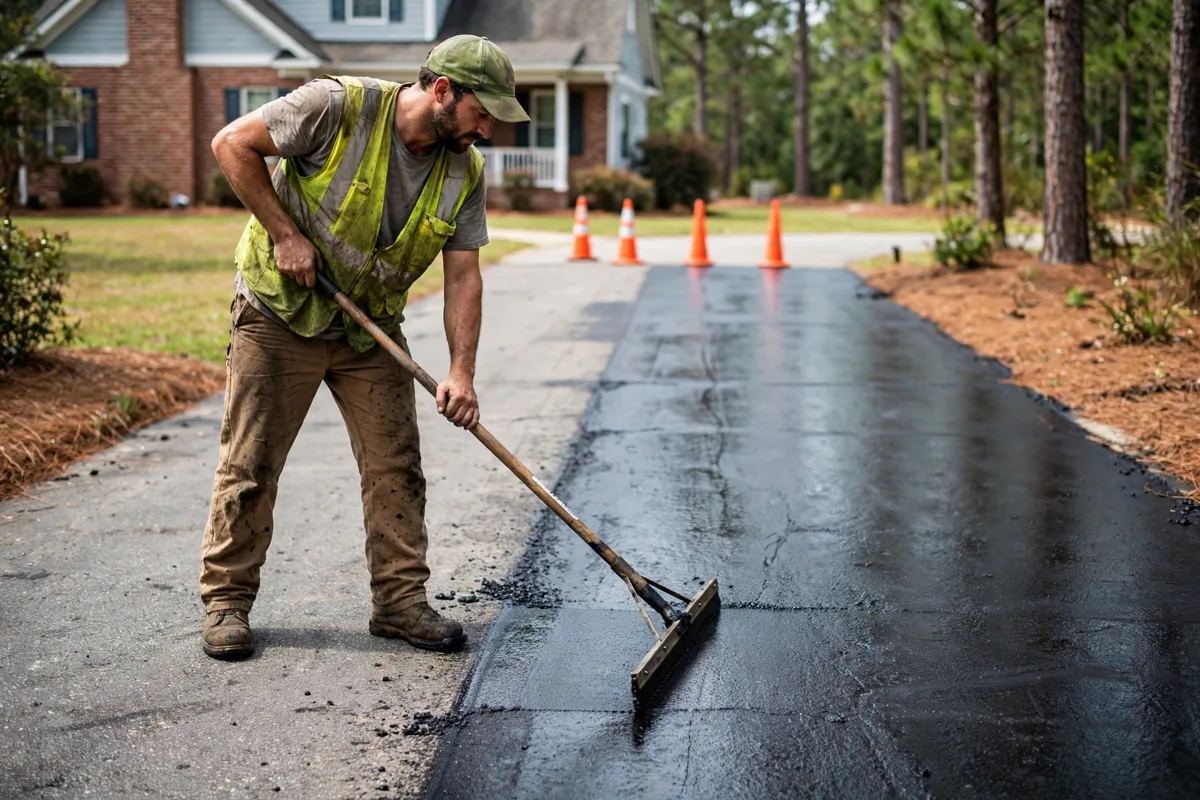
Asphalt-emulsion sealer goes on last, over a surface that has been patched, sealed and cleaned. Applied with a squeegee or sprayer, it closes the surface against UV, water and oil and covers the repair marks. Cones or barriers keep traffic off until the crew says it is ready.
What it costs
These are our prices for the repair path. Each is driven by size, condition and how much prep the drive needs.
- Patching: $150 to $400 per pothole-class repair. Larger areas of failed pavement are priced by the square foot on the area cut out. The drivers are size, depth and the condition of the base.
- Crack sealing: $0.50 to $3.00 per linear foot. Wider, deeper or routed cracks sit toward the top of that range.
- Sealcoat to finish: $600 to $2,000 for typical driveway jobs. Size, condition, crack filling and oil-spot priming set where a drive falls. Minimum fees apply on small drives.
- Overlay, the replacement side: $4 to $8 per square foot. We do not lay overlays, but this is the figure to hold the repair path against.
The comparison goes like this. Repair prices the problems the drive actually has. An overlay prices the whole surface, every square foot of it, whether or not it was failing. On a drive with a few soft spots and open cracks, the repair path usually comes in well under the overlay. On a drive that is failing everywhere, the overlay figure is the honest one, and spending on repairs would be wasted.
Most owners reseal every two to three years. That is typical practice and not a guarantee for any coating or pavement.
A Magnolia Greens driveway that did not need replacing
The owner called expecting bad news. His drive in Magnolia Greens looked tired: faded, cracked across the middle, and sunk in two places near the garage. He had already been quoted an overlay at the $4 to $8 per square foot range and was ready to go ahead with it.
We walked the drive and probed it. The dips were real, and a straightedge confirmed it. The base under two areas had softened, which in sandy soil usually means water got in through the cracks above. But the rest of the drive was firm, and the cracking elsewhere was linear, not alligatored. The pavement had problems, but it was not at the end of its life.
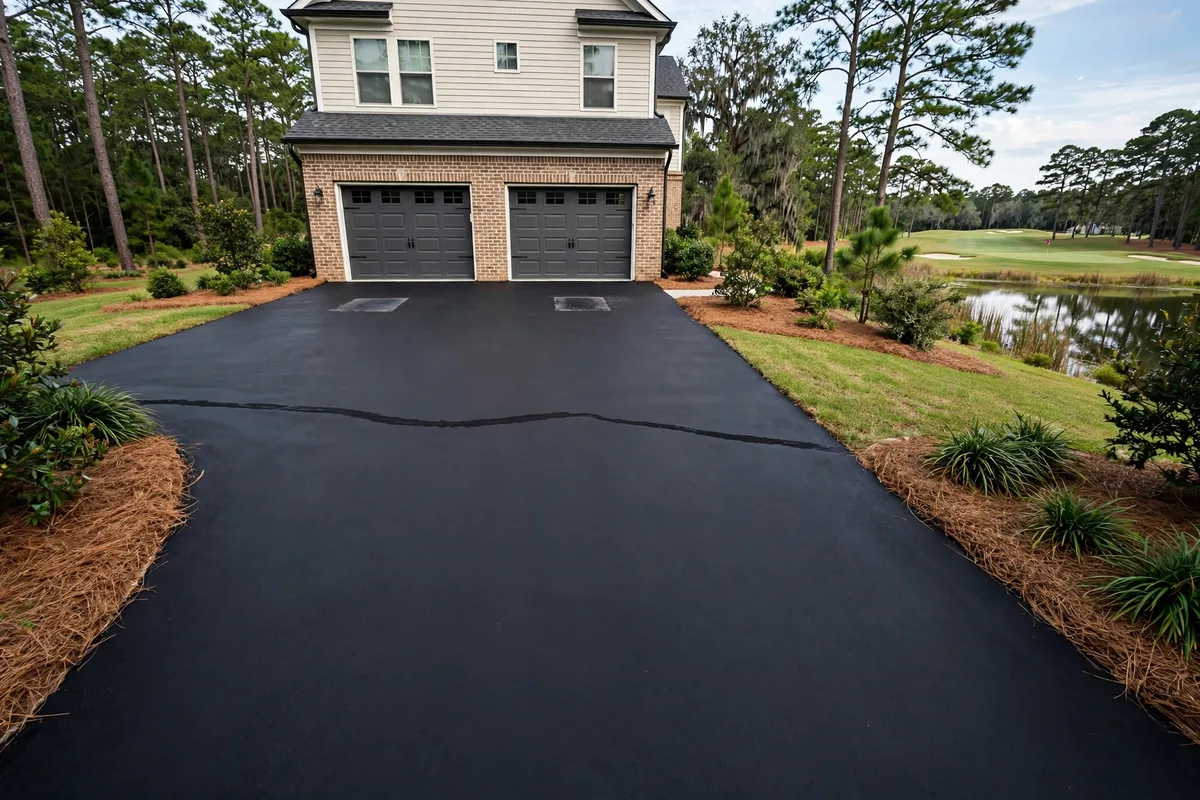
The crew went in order. They saw-cut and removed the two failed areas, rebuilt the base, and set hot-mix patches rolled flush. Then they cleaned the cracks and sealed them with hot-pour rubberized sealant. Last, they cleaned the surface, primed the oil spots and sealed the whole drive with a coat.
The cost followed the repair prices above. The two base patches were in the $150 to $400 class, the crack sealing was priced per linear foot within $0.50 to $3.00, and the finishing coat fell within the $600 to $2,000 band for typical driveways. The total came in well under the overlay figure he had been quoted. He kept the drive he had and put the difference elsewhere.
What to watch for on a drive like this: check the patched areas after heavy rain for new settling, and look along the sealed cracks for any that open again at the edges. Plan on resealing in the typical two-to-three-year range.
Questions
Should I repair or replace my driveway?
Repair if the damage is local: fading, open cracks, a few settled spots or broken edges. Replace if cracking and settling cover most of the drive and patches keep failing. Most worn driveways we walk are repair candidates, and we will say so, or tell you plainly when they are not.
How can I tell if the base has failed?
A dip that holds water after the rest of the drive has dried, a patch that has sunk again, or pavement that flexes under your boot all point to the base. A straightedge laid across a low spot shows how far it has moved. Local base failure is a patching job. Base failure across most of the drive is the replacement side.
What does patching cost?
Patching runs $150 to $400 per pothole-class repair. Larger areas are priced by the square foot on the area cut out. Size, depth and base condition set the price.
What does crack sealing cost?
Crack sealing runs $0.50 to $3.00 per linear foot. Where a crack falls in that range depends on its width and depth and how much cleaning it needs before the sealant goes in.
What does sealcoating a driveway cost?
Typical driveway jobs run $600 to $2,000. Drivers are size, condition, how much crack filling the drive needs and how many oil spots need priming. Minimum fees apply on small drives.
What does an overlay or replacement cost?
An overlay is priced at $4 to $8 per square foot. We do not lay overlays or new pavement. We give the figure so you can compare it with the repair path, and if your drive needs that route, we will tell you.
Do you do overlays or new driveways?
No. We maintain and repair asphalt. When a drive has reached the end of its structural life, we say so, and the replacement is a paving contractor's work. Our walk-through tells you which side of the line your drive is on.
Can you sealcoat over cracks and potholes?
Not as a fix. Sealer coats the surface but does not close a working crack or rebuild a failed base, and the damage returns through the coat. Patching and crack sealing go first, and the coat goes on last.
What is the difference between hot-pour sealant and the filler from a hardware store?
Hot-pour rubberized sealant bonds to a clean, dry crack and stays flexible as the pavement moves. Cold-pour and DIY filler are short-lived by comparison, and they often pull out within a season or two.
Why not just fill a pothole with cold patch?
Cold patch is a temporary fill. It sits on a soft base without being tied into solid pavement, so it works loose. A durable repair is saw-cut, removed, re-based and filled with hot mix, rolled flush.
Why do driveways fail so fast here?
Heat and UV oxidize the surface, summer storms and tropical systems drop inches of rain at once, and the sandy soil with its high water table makes the base the weak point. Water that gets through open cracks softens the base from below. Closing the cracks and keeping the surface sealed deals with most of it.
How often should a repaired driveway be resealed?
Most owners reseal every two to three years. That is typical practice, not a promise about any coating or pavement. Check the patches and sealed cracks after heavy rain and reseal when the surface turns gray and rough.
How long before I can drive on it?
It depends on what was done and the weather that day. The crew sets cones or barriers and tells you when it is ready. Keep cars off until they do.
Do you serve Wilmington and the beach towns?
Our work is centered in Leland, and we serve road-connected Brunswick County, including Wilmington across the river and the beach towns to the south. Bald Head Island is not served.
Do you do concrete driveways or drainage work?
No. We care for asphalt only. If water is pooling because of a drainage problem and not a settled base, we will tell you what we see, but the drainage fix itself is not our work.
How do I get a price on my driveway?
Call or send the form. Describe what you see, and we will tell you which repairs fit and what each costs within the figures above. The walk-through settles the scope and the final price.
Call or send the form about your driveway
If your driveway looks tired, we can tell you whether it needs repair or replacement. Call (910) 370-1121 Monday to Friday, 9:00 AM to 5:30 PM, or send the form below. Tell us what you see on the drive and where you are, and we will take it from there.
The more details you give, the better we are able to help you.