Leland Pavement Care coats and protects asphalt for homeowners, businesses, churches and HOAs across Leland and Brunswick County, and asphalt sealcoating is the job most people call us about first. It is a thin protective layer over pavement that is still in decent shape. Done at the right time, it slows the sun and fuel damage that turn black asphalt gray, dry and brittle.
The coat goes on two kinds of ground. On a home drive it is driveway sealcoating, a job that usually wraps up in a day. On a church, retail or amenity lot it is parking lot sealcoating, with more square footage, more traffic to route around and usually two coats.
Sealcoat is not a repair, though. Open cracks get crack sealing before anything is sprayed, and wider gaps that have opened up get crack filling so water has no way in. Soft, sunken spots need pothole repair, which means cutting out and rebuilding, not coating over. When the coat has cured, line striping goes back on, and owners who would rather have all of it on one schedule can fold the work into a parking lot maintenance program.
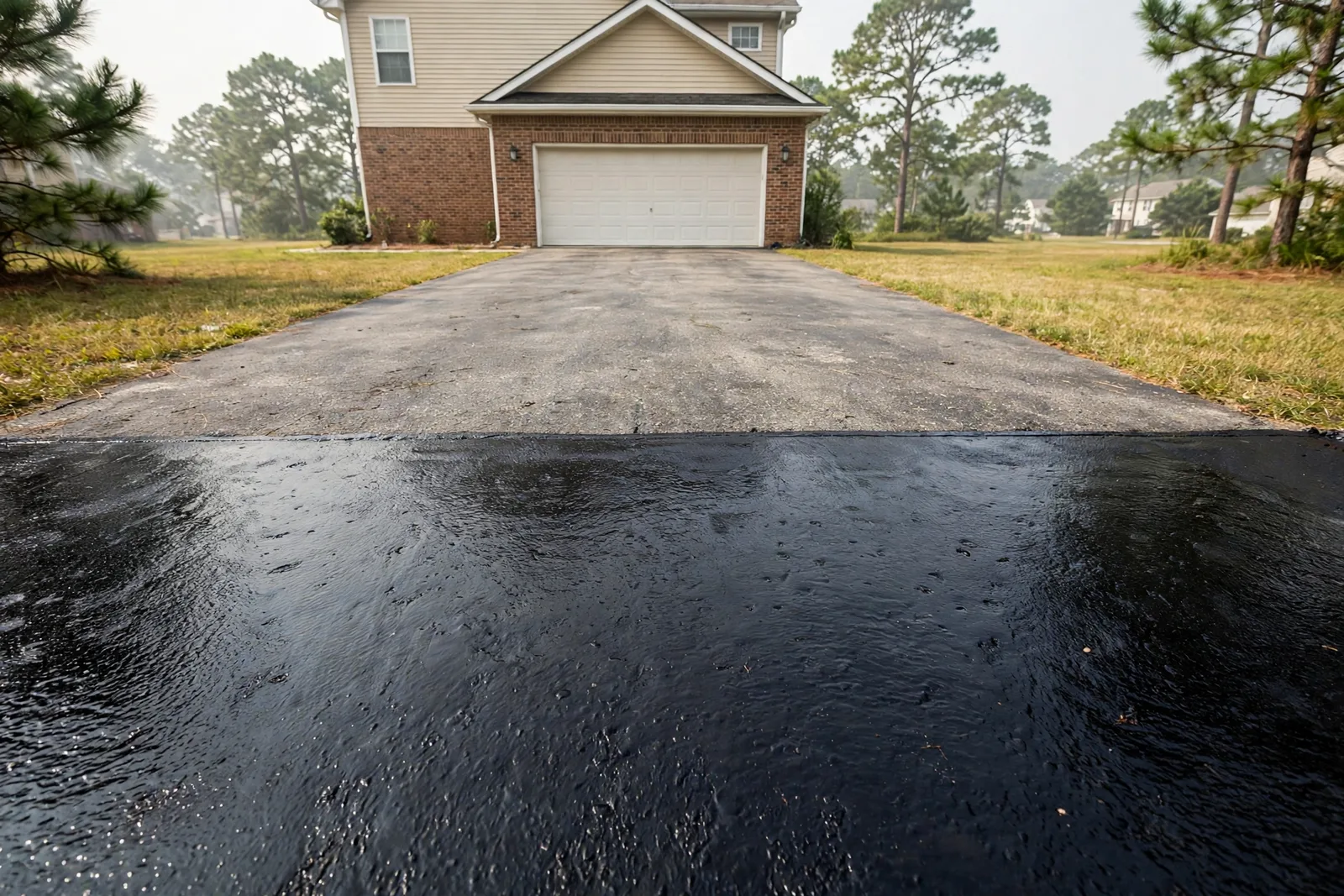
What sealcoating does, and what it does not
Asphalt is a maintained surface. It is not a permanent one. On this coast four things work on it: ultraviolet light oxidizing the surface, water getting in through cracks, oil and fuel softening the binder, and a failing base underneath. Sealcoat deals with the first and the third. It shields the surface from the sun and from drips, and it gives rain something to shed off of.
It does not fix the second or the fourth. Sealcoat will not close a crack, and it will not hold up a base that has gone soft. If we coat over those problems, they are still there under the coating and the coating will not last. That is why a good share of our sealcoat jobs begin with other work.
Brunswick County makes this matter more. Heat, humidity and hard sun oxidize asphalt fast. Salt air blows in off the water. Summer thunderstorms and tropical systems can drop inches of rain in a short time, and the soil here is sand over a high water table. Water that gets through an open crack goes straight to the base. A coat on the surface keeps the pavement from getting to that point, but only if the cracks were dealt with first.
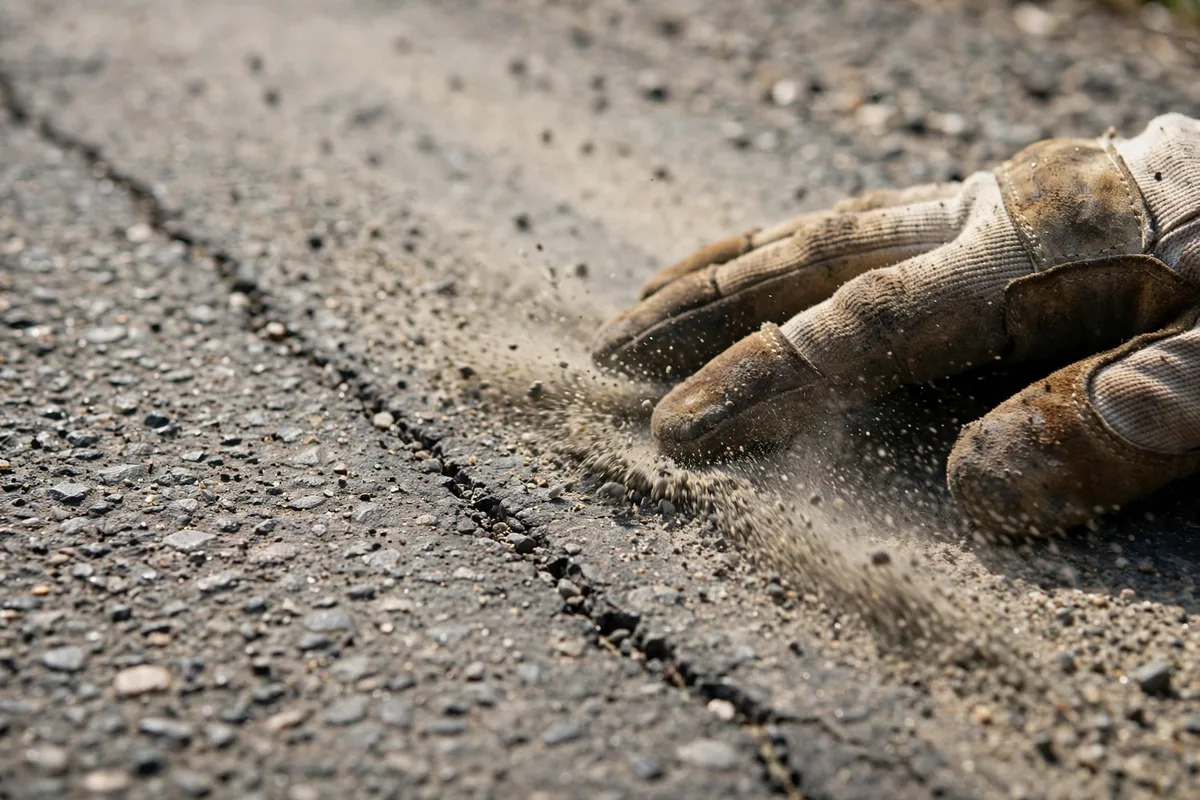
Is your pavement ready, or not yet?
Not every drive or lot that looks tired should be coated. Walk through the five checks below. The same ones are what our crew does on the first visit.
Is my pavement ready for sealcoat, or not yet?
Fresh asphalt is black. Sun and weather turn it gray and dry over time. If your surface has faded to gray, feels rough, and the cracks are not opening up, it is a good candidate for sealcoat. Sealcoat protects pavement that is still sound.
Sealcoat does not fill cracks. Any crack you can see open, with a dark gap or water getting in, gets crack sealing with hot-pour rubberized sealant before any coat goes on. Coat over an open crack and water still gets in.
Oil and fuel soften asphalt, and sealcoat does not bond well to a stained spot. Oil spots are cleaned and primed before the coat goes down, so the coating sticks where the drips have been.
Sunken areas, soft spots, potholes and cracking in a connected pattern mean the base underneath is failing. Sealcoat cannot hold that up. The failed section is cut out and patched first, then coated.
New or freshly patched asphalt needs time to weather and cure before it takes a coat. Sealing too soon is not worth it. If your surface is recent, we look at it and tell you when it is ready.
If every panel clears, the job is a straight sealcoat. If one does not, the job is that step first, then sealcoat. Call (910) 370-1121 and we will walk it with you.

The sealers we use
The standard product here is asphalt-emulsion sealer. It is water-based, it is what most NC contractors put down, and it suits both home drives and ordinary commercial lots. For commercial owners who want more from the coat, we offer polymer-modified (PMM) grades. They cost more per square foot, and they are the premium choice for lots with heavy traffic or owners who want the best finish.
We do not use coal-tar sealer and we do not offer it. Coal tar is prohibited by law in Mecklenburg County, North Carolina, and it is not the direction this region is going.
How the sealer goes on
Sealer is applied by spray, by squeegee, or by a combination of the two. Spray moves quickly across open ground and gives an even coat on big lots. Squeegee works the sealer in by hand along edges, around structures and into rough texture where a spray pattern would skip. Many jobs use both, spray on the open areas and squeegee at the edges.
Residential drives usually get one coat. On commercial lots, two coats is the norm. The first coat soaks into the surface and the second builds the finish, and on a lot that takes truck turns, delivery traffic and daily wear, the second coat is what makes it worth doing.
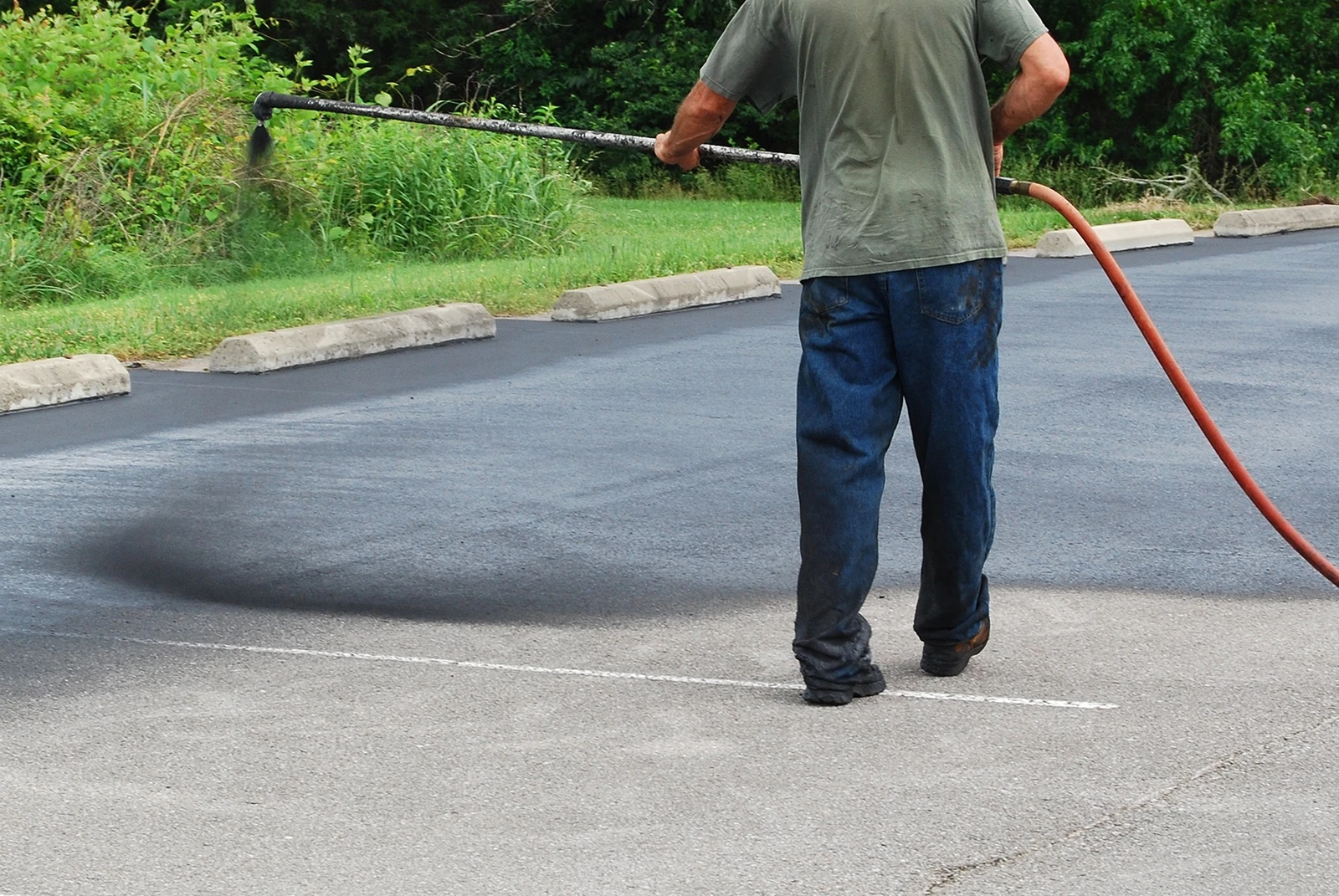
What happens before the coat
Most of the work in a sealcoat job happens before any sealer is mixed. The pavement has to be clean, sound and sealed against water, or the coat will not bond and will not hold.
Cleaning is first. Dirt, sand, leaves and loose debris are blown and broomed off. Sealer sticks to asphalt, not to dust. Cracks are sealed next, using hot-pour rubberized sealant, which is the professional method and a very different thing from the cold-pour tubes and DIY fillers that tend to shrink and pull out. Oil and fuel spots are cleaned and primed so the sealer has something to grab. Where a section of base has failed, it is cut out and patched with hot mix before anything else.
Prep is priced on top of the sealcoat itself. A lot with few cracks and clean stalls needs little. A lot with a lot of cracking and oil staining needs more, and that shows up in the price.
Weather, cure and the coast
Sealer needs a dry surface and dry hours to cure. On the Brunswick County coast that is more of a scheduling fight than it sounds. Afternoon thunderstorms build fast in summer, humidity slows the cure, and a tropical system can wipe out a week. We watch the forecast, plan the pour around it, and push a job back when the sky says to. Sealer that gets rained on before it sets is a failed coat, and we would rather reschedule than redo it.
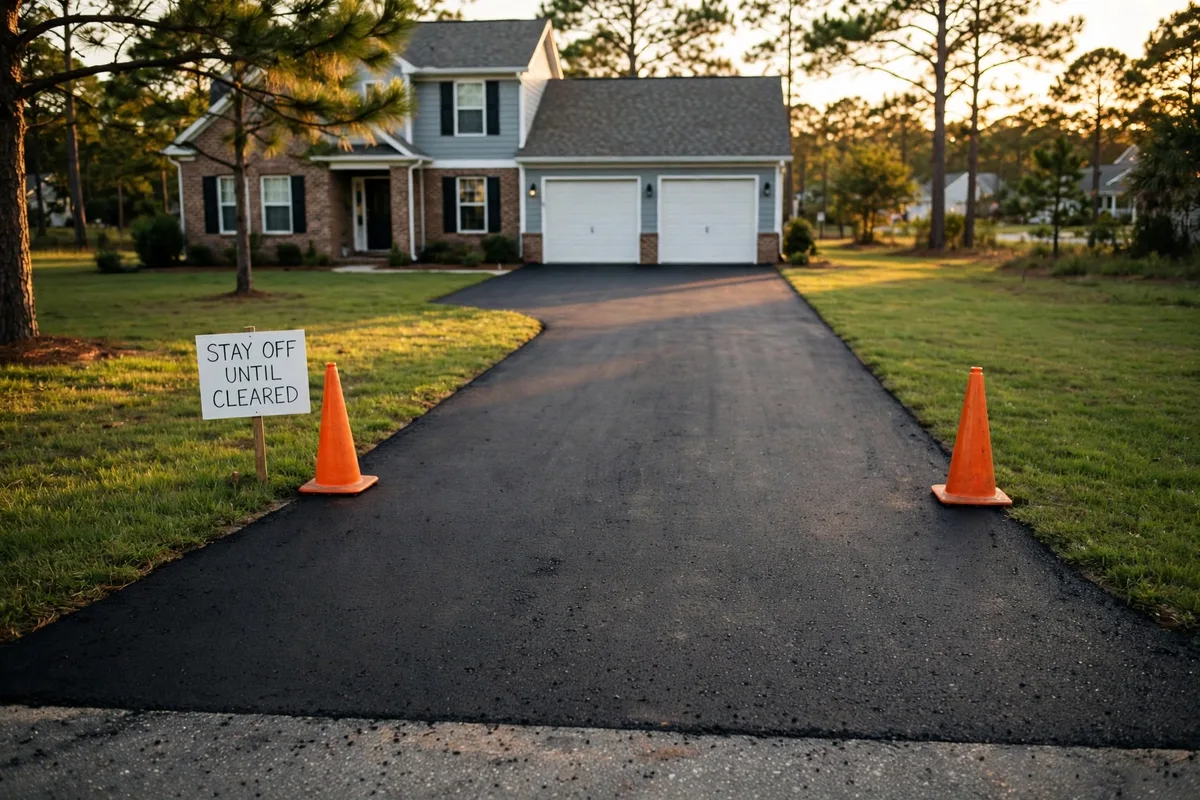
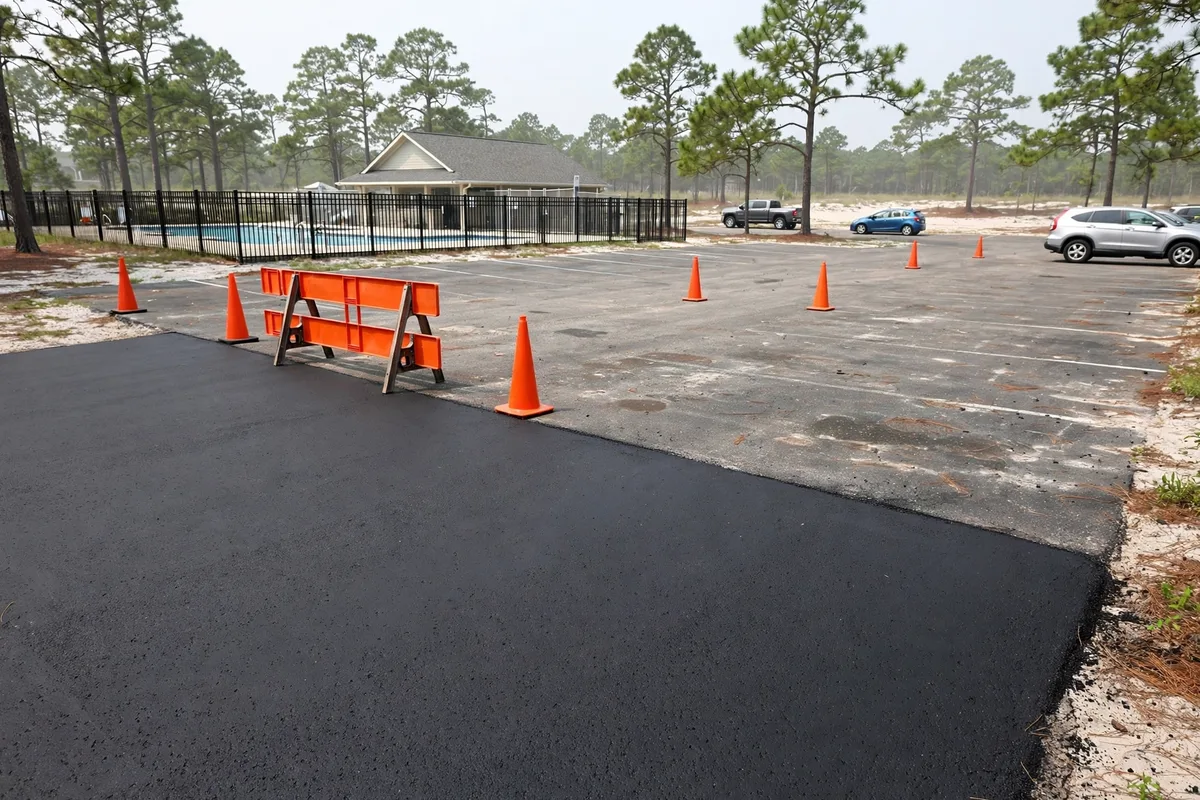
After the coat goes down, keep traffic off it until we tell you it is ready. How long that is depends on the heat, the humidity and how many coats are on. We give you the word the day we finish, and barricades or cones stay up until then. Driveways stay clear of cars, bikes, hoses and pets. Lots get closed off in sections where we can manage it.
The interval between coats is something owners ask about. Most owners reseal every two to three years. That is typical practice, not a promise on any coating or any pavement, since traffic, shade, sun and how well the cracks have been kept sealed all change it.
How the job goes, step by step
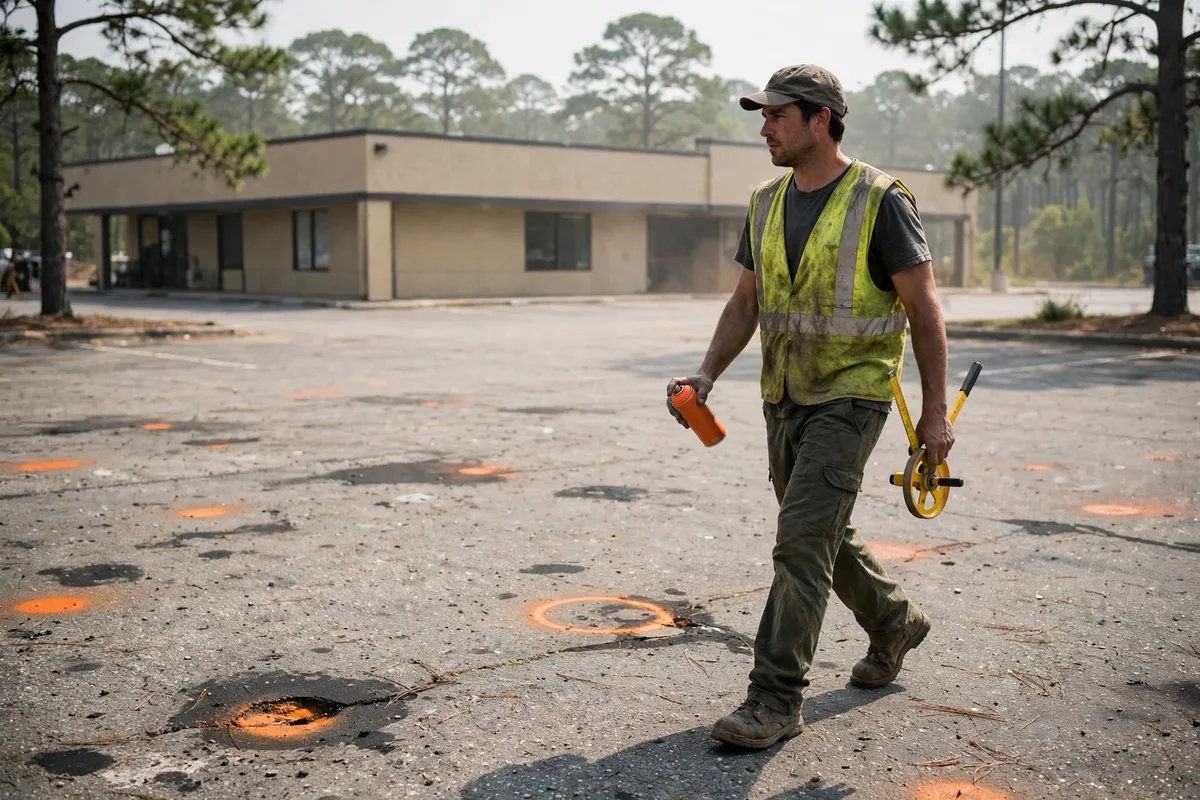
1. We walk the surface. Before quoting anything we look at the whole pavement. We mark cracks, oil spots, low spots and any soft areas, and we measure the square footage. The measurements and what we see decide the price and the order of work.
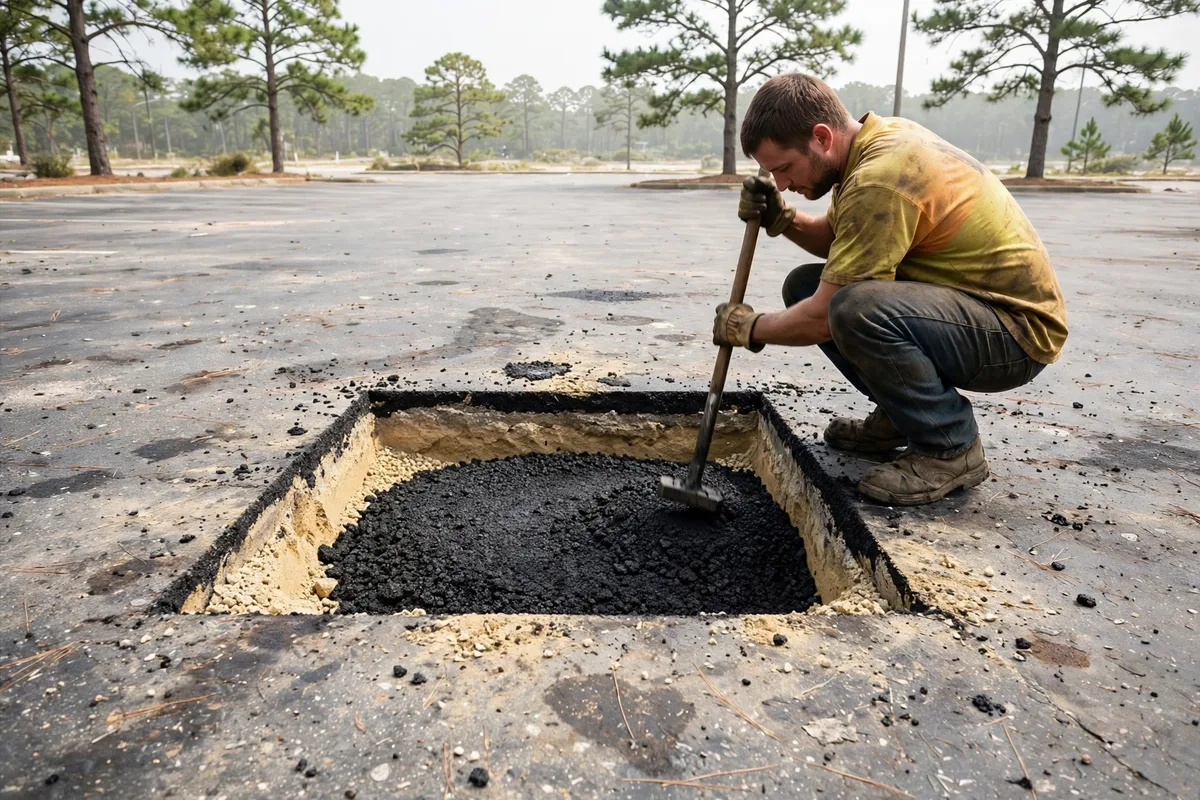
2. We repair failed base. If the walk found soft or sunken ground, the section is saw-cut, removed, re-based and filled with hot-mix patch. Skin patches and cold-patch fills only hide the problem, so we don't use them here.
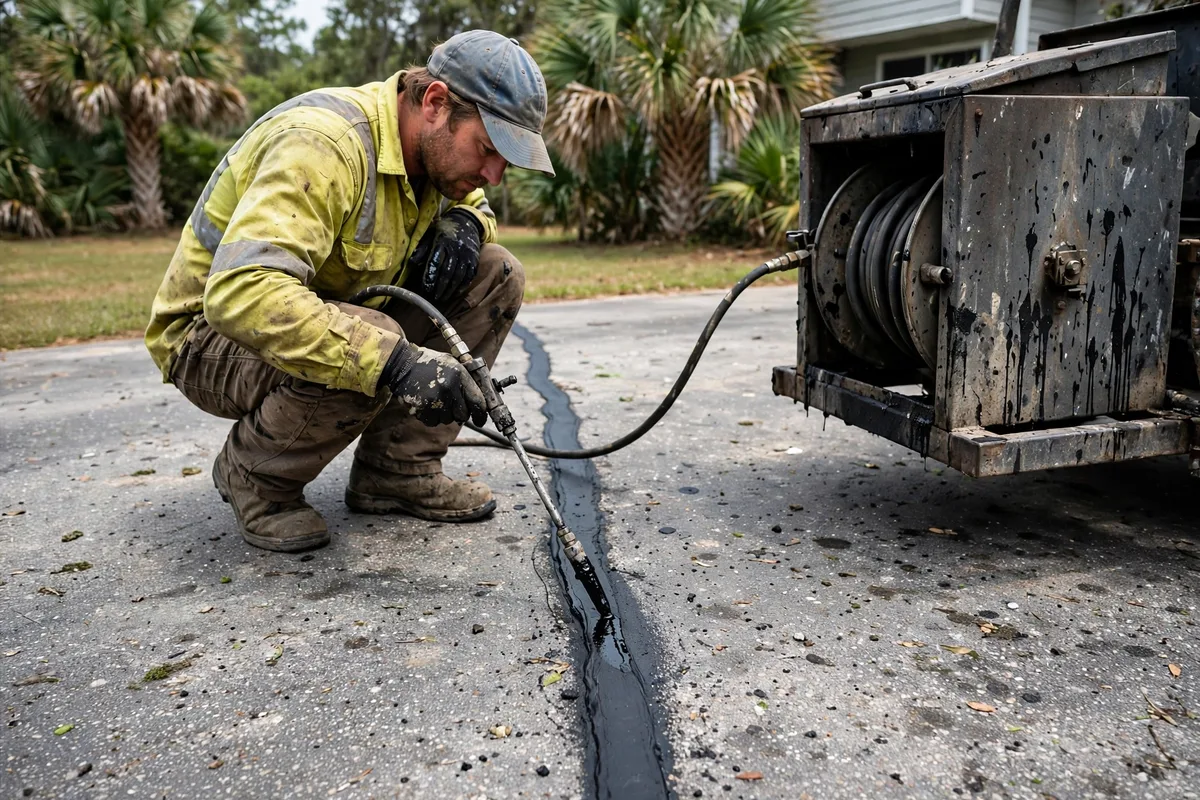
3. We seal the cracks. Cracks are cleaned out and filled with hot-pour rubberized sealant, which stays flexible as the pavement moves with heat and cold. The filled crack sits flush or just proud of the surface.
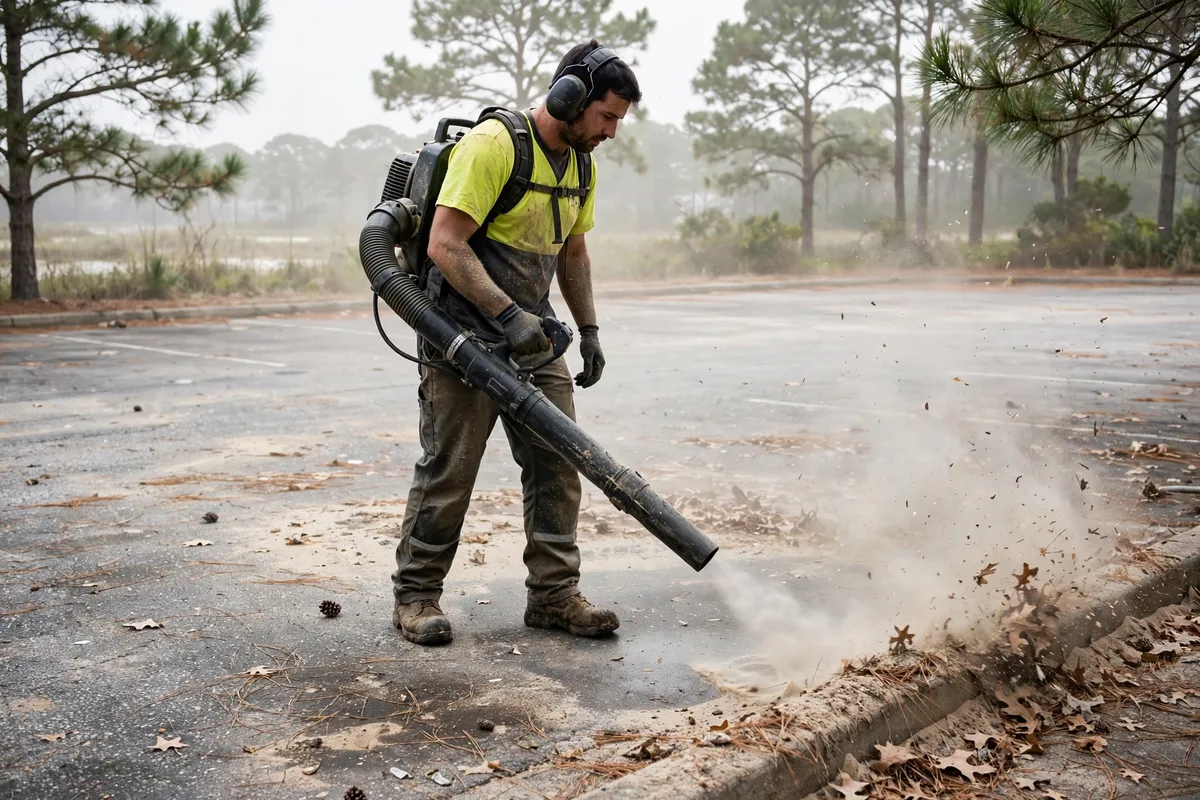
4. We clean the surface. Blowers and brooms clear the sand, dirt and loose stone off the whole pavement and out of the crack lines. This is the step owners tend to skip when they do it themselves.
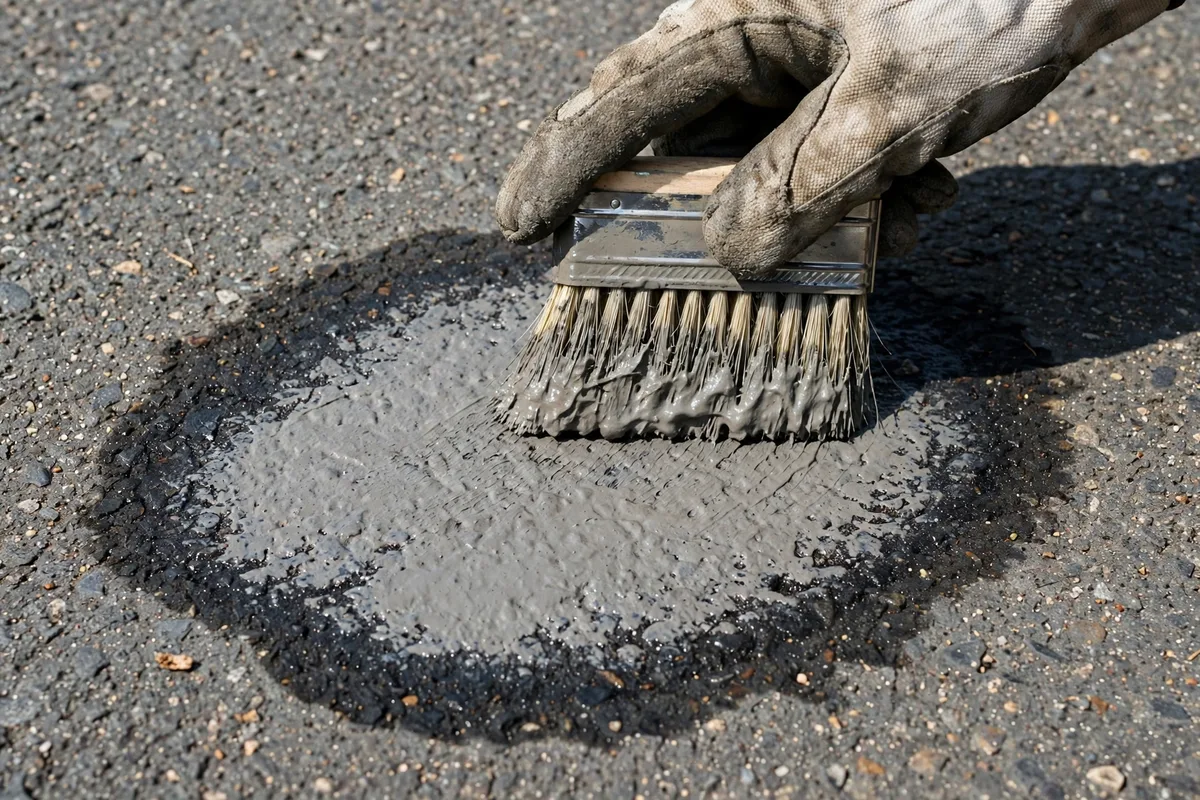
5. We prime oil spots. Stains are scrubbed or treated and then painted with a primer so the sealer has a surface it can hold to. Without that, the coat lifts over the spot within a season.
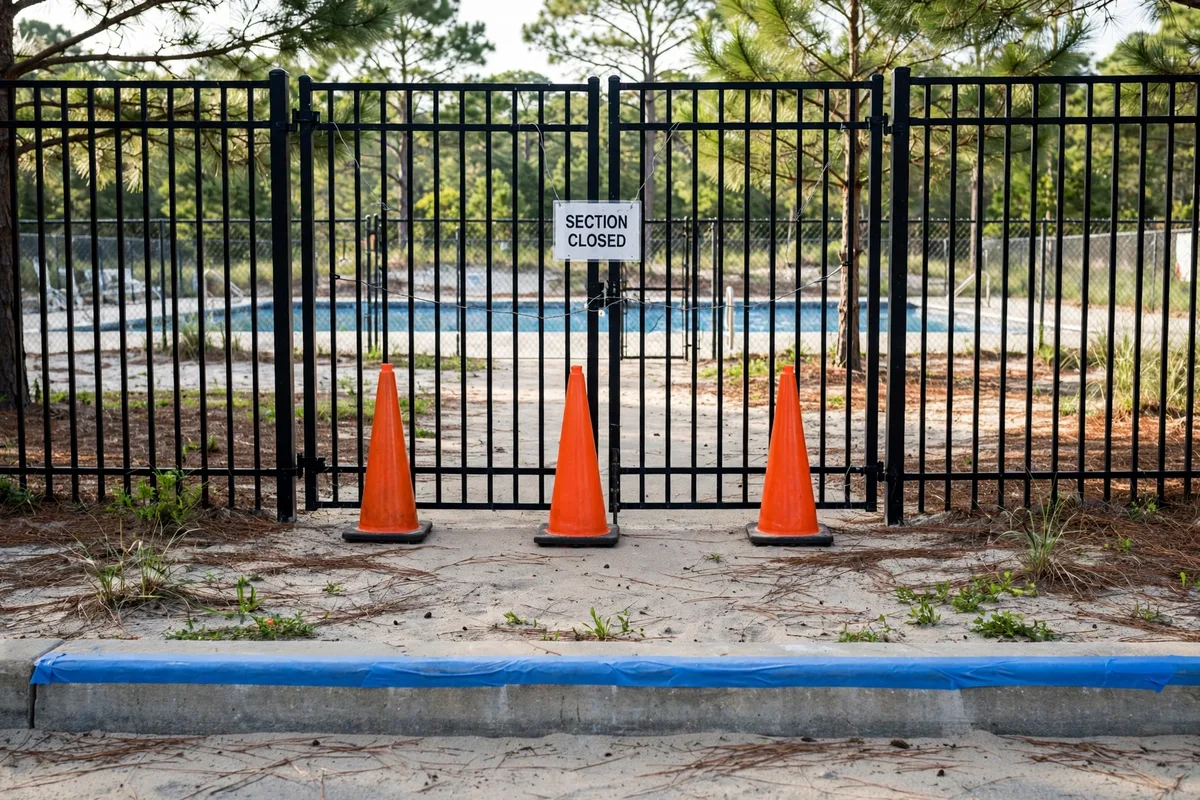
6. We protect and set up. Edges, curbs, gate posts, pool fences and anything that shouldn't be coated get masked or shielded. Cones and barricades go out, and access for the owner is planned: which section closes first, where cars can sit and when.
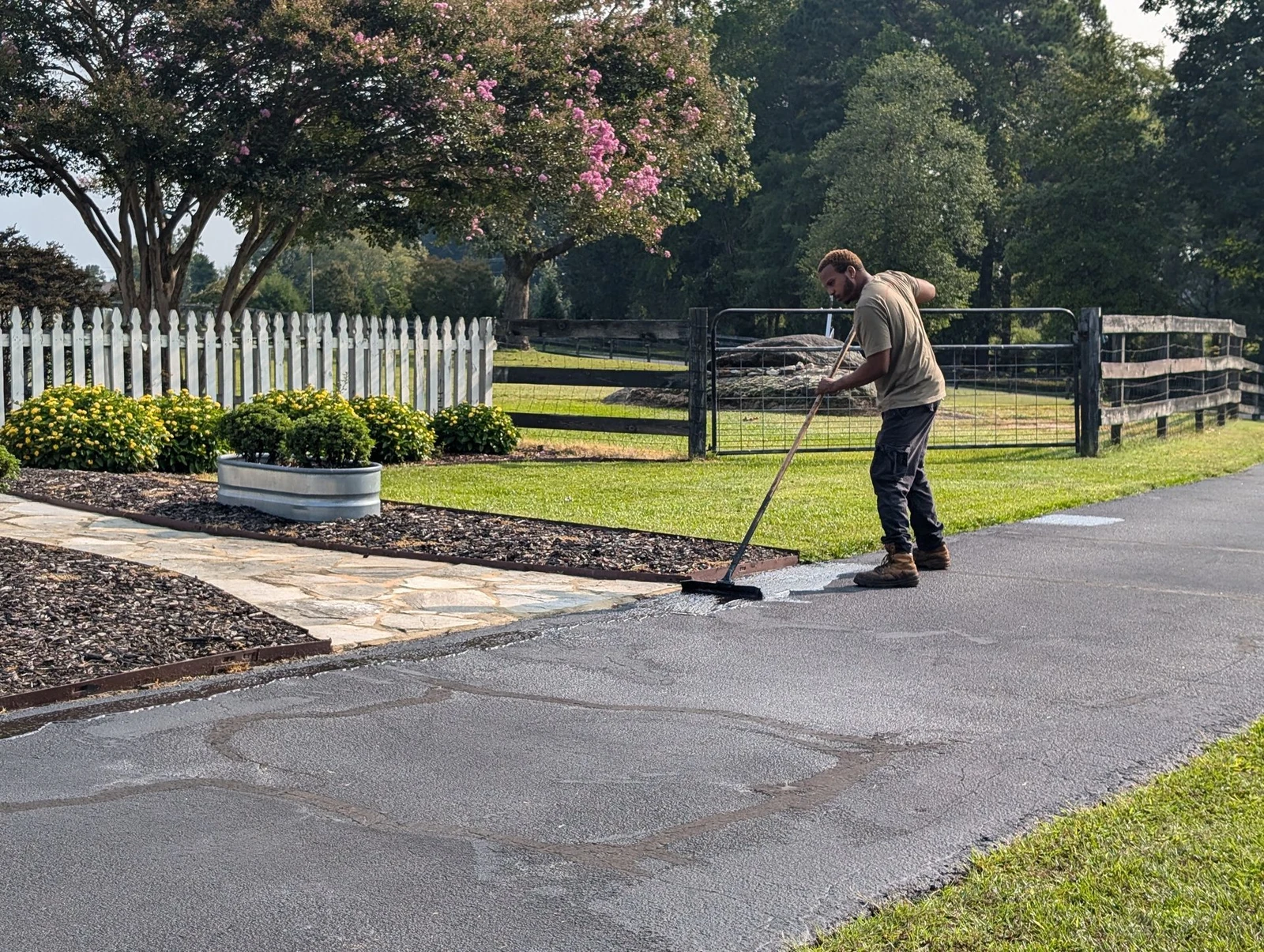
7. We apply the first coat. Sealer goes down by spray, squeegee or both, working from the far end back toward the exit so no one has to cross the wet coat.
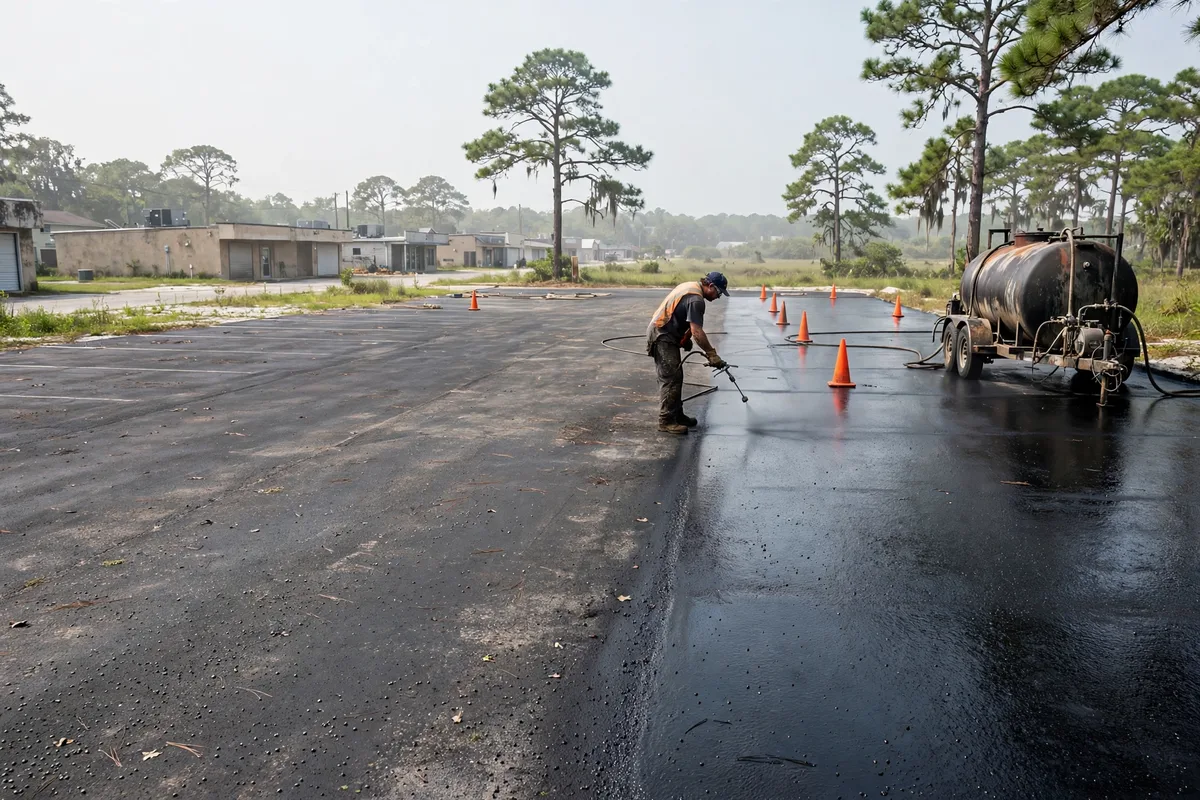
8. We apply the second coat where it is called for. Commercial lots get two coats. The second goes on once the first has set enough to take it, and it builds an even, durable finish across the lot.
9. We cure, clear and reopen. Barricades stay until the sealer has set. We tell you when traffic can return, pick up cones and masking, and walk the finished surface with you. Striping goes back on once the coat is ready for it.
What it costs
These are our prices for sealcoating, by the square foot.
| Job | Price |
|---|---|
| Residential sealcoating | $0.15 to $0.25 per square foot |
| Commercial sealcoating | $0.20 to $0.40 per square foot |
| Polymer-modified (PMM) commercial grades | Priced higher than the commercial range above |
Four things move the number inside those ranges. Size comes first, since larger lots price toward the lower end per square foot and small drives carry a minimum fee. Condition is next, because pavement that is clean and tight costs less to get ready than pavement that is stained and cracked. Prep, meaning crack sealing, cleaning and oil-spot priming, is priced on top of the sealcoat itself. And the number of coats counts, since a two-coat commercial job costs more than a one-coat drive.
When we walk your pavement, we measure it and give you the figure for your job. If you want a number before that, call and tell us the approximate size and what you see. We can tell you where it falls in the range.
A pool-side lot on Brunswick Forest Parkway
Brunswick Forest is a big master-planned community, 4,500 acres with golf, a wellness center and a town center, and its amenity lots are busy. One HOA amenity lot on Brunswick Forest Parkway had been through several summers of sun and had gone gray and dry. Cracks had opened across the stalls and along the drive aisle, and there were dark oil drips where cars had parked. The base was sound. The surface was ready for sealcoat, but not yet, because the cracks were open and water was getting in.
The first job was scheduling. A pool lot is not a lot you can close for a week. The HOA manager gave us the pool schedule, and we planned the work in sections so members always had somewhere to park and nothing was coated on a day with heavy use. Barricades and signs went up the day before each section so no one pulled into wet sealer.
Then the work went in order. The crew cleaned the lot first, blowing sand out of every crack. Hot-pour rubberized sealant went into each crack. Oil spots were cleaned and primed. Sealer went down by spray across the open stalls and by squeegee along the curbs, planters and pool fence. Because it was a commercial lot, it got two coats, with the second going on after the first had set.
On cost, the sealcoating was priced in our commercial range of $0.20 to $0.40 per square foot, and the crack sealing and oil-spot priming were priced on top of it, since prep is separate from the coat. The two coats were part of the commercial price, not an add-on.
What to watch for on a lot like this: keep vehicles off until the barricades come down, and keep an eye on the traffic lanes near the pool entrance, where delivery trucks and pool-service vehicles drip oil. New drips are easier to deal with early. Cracks that reopen along the seam lines should be sealed again before the next rainy season. Most owners reseal every two to three years, and a lot like this one is reviewed on that kind of schedule.
Questions
Do you do sealcoating for both homes and businesses?
Yes. We seal residential driveways and commercial lots, including HOA, church, retail and office lots across Leland and Brunswick County. Residential work runs $0.15 to $0.25 per square foot and commercial work runs $0.20 to $0.40 per square foot.
What does sealcoat actually do for asphalt?
It puts a protective coat on the surface against UV oxidation and oil and fuel softening. It keeps the pavement from drying out and turning gray, and it gives the surface a uniform finish. It is protection, not repair.
Will sealcoat fix cracks or potholes?
No. Sealcoat does not close cracks and cannot fix a failed base. Cracks get sealed first with hot-pour rubberized sealant, and soft or sunken areas get cut out and patched with hot mix. Then the coat goes over sound pavement.
How much does driveway sealcoating cost?
Our residential price is $0.15 to $0.25 per square foot. Where you land in that range depends on the size of the drive, how much crack filling and oil-spot priming it needs, and small drives carry a minimum fee. When we measure it, you get the price for your drive.
How much does parking lot sealcoating cost?
Our commercial price is $0.20 to $0.40 per square foot. Larger lots price toward the lower end. Crack sealing, cleaning and oil-spot priming are priced on top, and two coats is the commercial norm.
What is polymer-modified sealer and is it worth it?
Polymer-modified (PMM) sealer is the premium commercial grade. It costs more than the standard asphalt-emulsion sealer, so it is priced higher than our commercial range. It makes the most sense on lots that carry heavy traffic or where the owner wants the best finish available.
Do you use coal-tar sealer?
No. We use asphalt-emulsion sealers as the standard, with polymer-modified grades for commercial customers who want the premium product. Coal tar is not offered. It is prohibited by law in Mecklenburg County, North Carolina.
How often should I reseal?
Most owners reseal every two to three years. That is typical practice, not a guarantee, because shade, traffic, sun exposure and how well the cracks have been kept sealed all change the timing. We can look at your pavement and tell you where it stands.
How long until I can drive on it?
We tell you the day we finish. It depends on heat, humidity and how many coats went down, and the barricades stay up until the sealer has set. Keep cars, bikes, pets and foot traffic off until we give the word.
Can you sealcoat in the rain or during summer storms?
No. Sealer needs a dry surface and dry hours to cure, and coastal afternoon storms can build fast. We plan around the forecast and move the job when the weather calls for it. A coat that gets rained on before it sets has to be redone.
Is my new driveway ready for sealcoat?
Probably not yet. Fresh asphalt needs time to weather and cure before it takes a coat, and sealing too early is a mistake. Call us with an idea of how new it is, or let us look at it, and we will tell you when it is ready.
Do you do crack sealing and patching before the coat?
Yes. Open cracks are sealed with hot-pour rubberized sealant and failed sections are saw-cut and patched with hot mix before any sealer goes on. That prep is priced on top of the sealcoat, and it is why the coat holds.
Can you work around my business hours or an amenity schedule?
Yes, that is how we plan it. On lots that cannot close, we work in sections, put up barricades and signs ahead of time, and keep part of the lot open. Tell us your busy days and we build the schedule around them.
Do you pave new driveways or parking lots?
No. We maintain and repair asphalt. We do not lay new lots or roads, mill, pour concrete or do drainage work.
Where do you work?
Leland is our center, and we work across road-connected Brunswick County. We also serve Wilmington across the river. Bald Head Island is not part of our routine service.
Do you do the striping after the sealcoat?
Yes. Once the coat has cured, we restripe the lot. Sealing and striping together keep the lot looking finished, and owners who want regular upkeep can set up a maintenance program.
Call us about your pavement
If your drive or lot has gone gray and rough, and you want to know whether it is ready for a coat or needs something first, call us at (910) 370-1121. You can also send the form below. We are in Monday to Friday, 9:00 to 5:30.
Tell us what kind of property it is, roughly how big, and what you see on the surface: cracks, oil stains, soft spots. We will walk it, measure it and give you the price for the work.
The more details you give, the better we are able to help you.