The small hardware of a lot is parking signs and wheel stops, and we treat them that way. Leland Pavement Care adds them to a visit that is already on the books for your property in Leland, not as a job we drive out for on its own.
The visit they ride with is usually line striping, because the stops have to sit in the bays the lines define and the signs have to agree with the pavement markings painted beneath them. It can just as easily be parking lot sealcoating, or a regular parking lot maintenance round for a retail, church or HOA lot.
A stop that has pulled its pins often leaves broken asphalt around the holes, and that gets fixed with asphalt patching before the stop goes back down. Since the crew, the truck and the layout are already there, a stop or a sign added at that point costs a fraction of what a separate trip would.
What we add to a lot visit
The list is short on purpose. These are the things we do on this side of the work:
- Replacing wheel stops that are broken, cracked or leaning, in concrete or recycled rubber.
- Resetting stops that have pulled their pins and walked out of the bay.
- Stop signs and directional signs.
- Accessible parking signs, on posts or mounted to walls.
- Fire-lane and no-parking signs.
- Sign posts set new or replaced.
We do not sell these as a project by themselves, and we do not do new lots, drainage or concrete work to go with them. They are an add-on to striping, sealing, patching and maintenance, and they are priced that way.
Wheel stops: concrete and recycled rubber
A wheel stop does two jobs. It keeps a bumper off a wall, a fence, a sidewalk or a planting bed, and it tells a driver where the front of the space is. When one shifts or breaks, both jobs go.
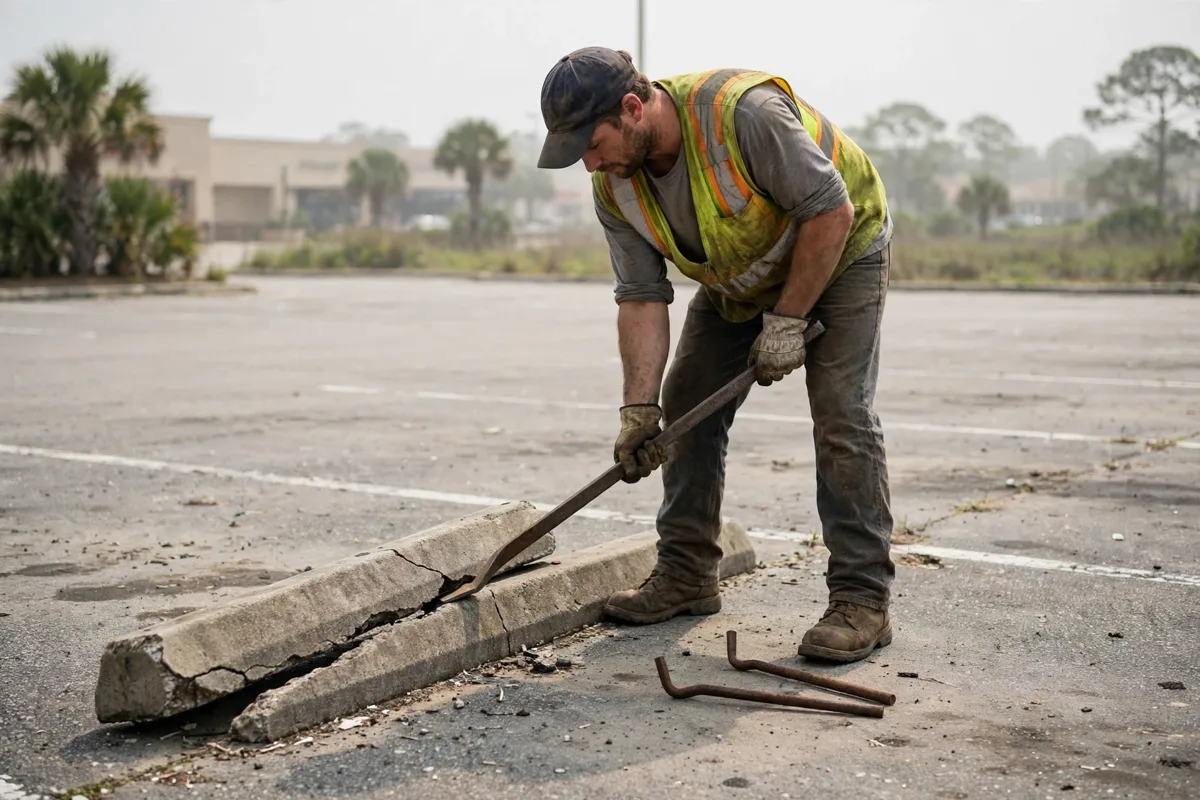
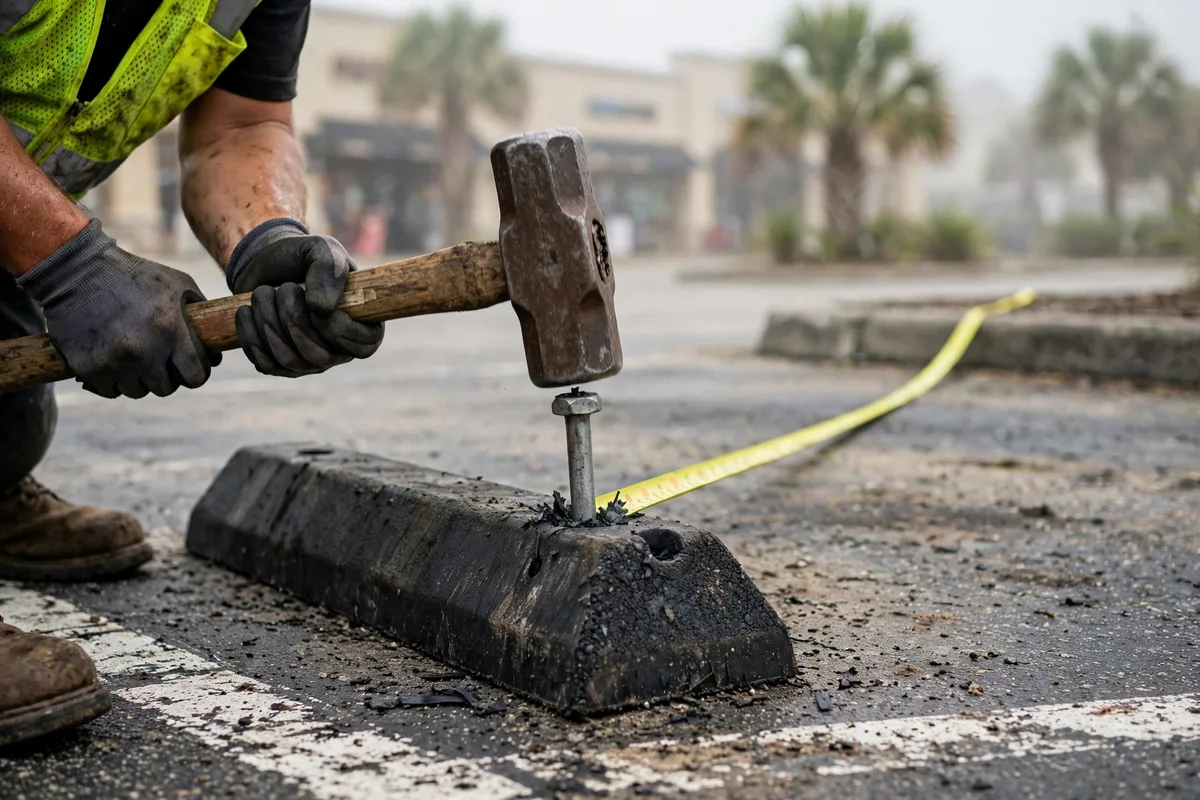
Concrete stops are heavy and have been the standard for a long time. They hold their place well, but they crack at the ends when a truck hits them, and a cracked stop can leave sharp edges. Recycled-rubber stops are lighter, do not shatter, and are easier to handle on a lot where the crew is resetting many of them. Either one is held down with pins driven through the stop into the pavement, and the pins are where most failures start.
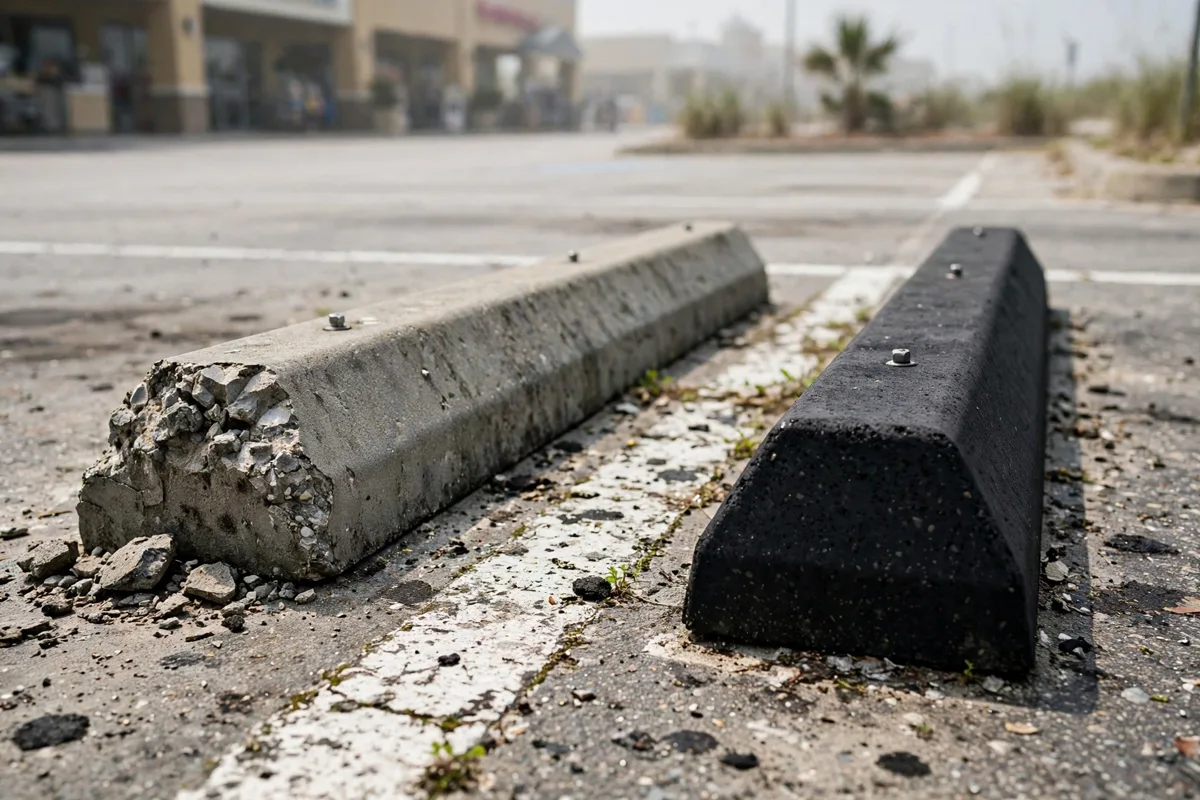
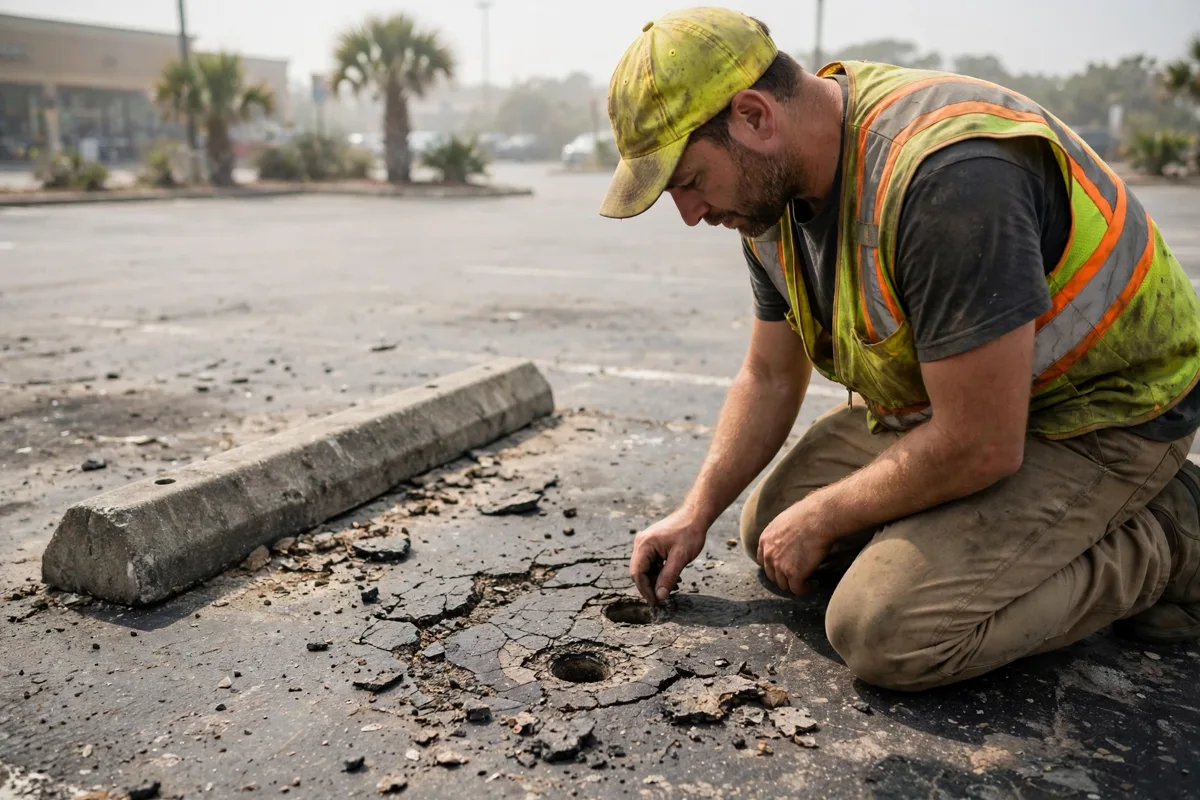
On this coast the ground matters. Brunswick County sits on sand, and a pin driven into a soft or broken edge of pavement does not hold the way it does in sound asphalt. When we find a stop that has walked, we look at what is under it before we decide whether to reset it or replace it.
Signs and posts
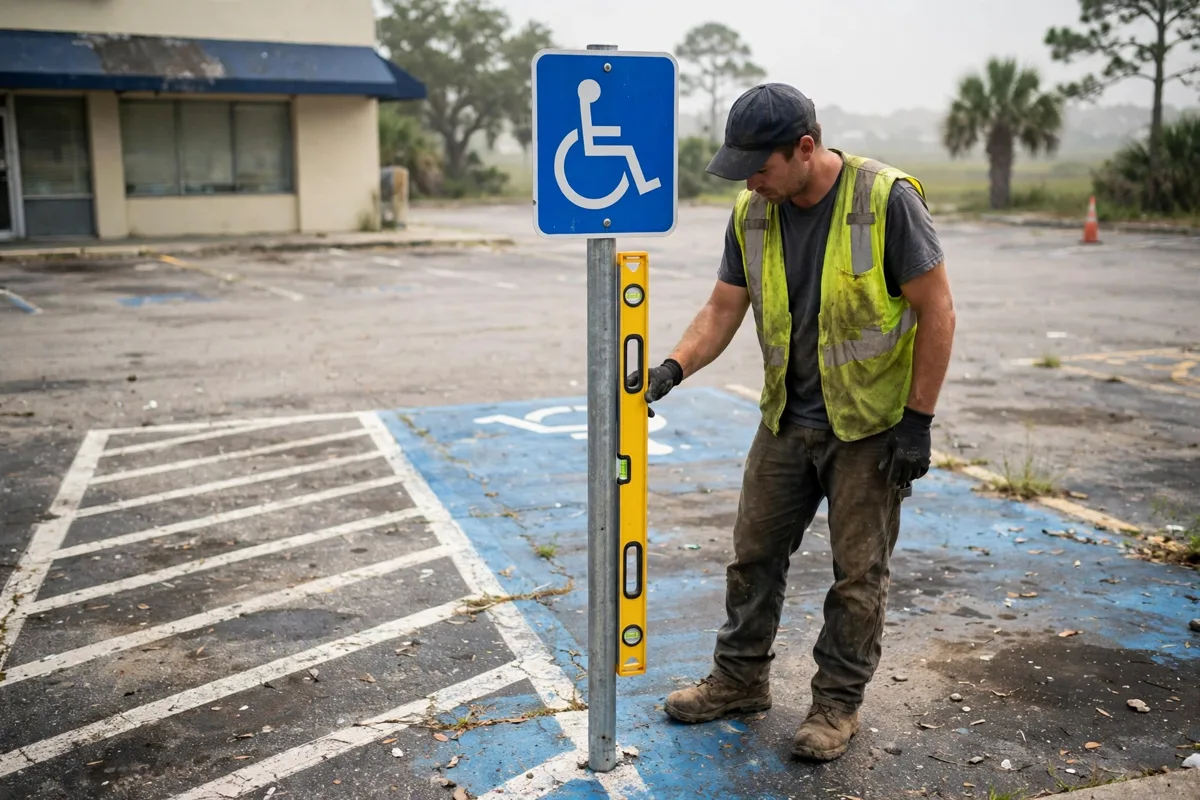
Most lot signs fall into a few kinds: stop and directional signs for traffic flow, accessible parking signs at the designated spaces, and fire-lane and no-parking signs along curbs and building fronts. They belong with the markings. An accessible space has paint on the ground and a sign at the head of it, and the two should line up. A fire lane has paint on the curb or pavement and signs along its length.
We set signs where the layout calls for them. The owner or manager decides what the lot needs, and any question about what the rules require for a given lot goes to the authority that enforces them. We do not certify that a lot meets any legal standard.
Posts are where signs fail. A leaning or loose post in sandy soil is common, and a sign that tilts or has been knocked down is not doing its job. We set new posts and replace bent or loose ones so the sign faces traffic squarely and stays that way.
How the work goes
The process is short, because most of the work was already planned with the visit.
1. Walk the lot and count. The crew goes through the lot with the layout in hand and notes every stop that is broken, leaning or out of its bay, and every sign or post that is missing, loose or leaning. The count is what gets priced.
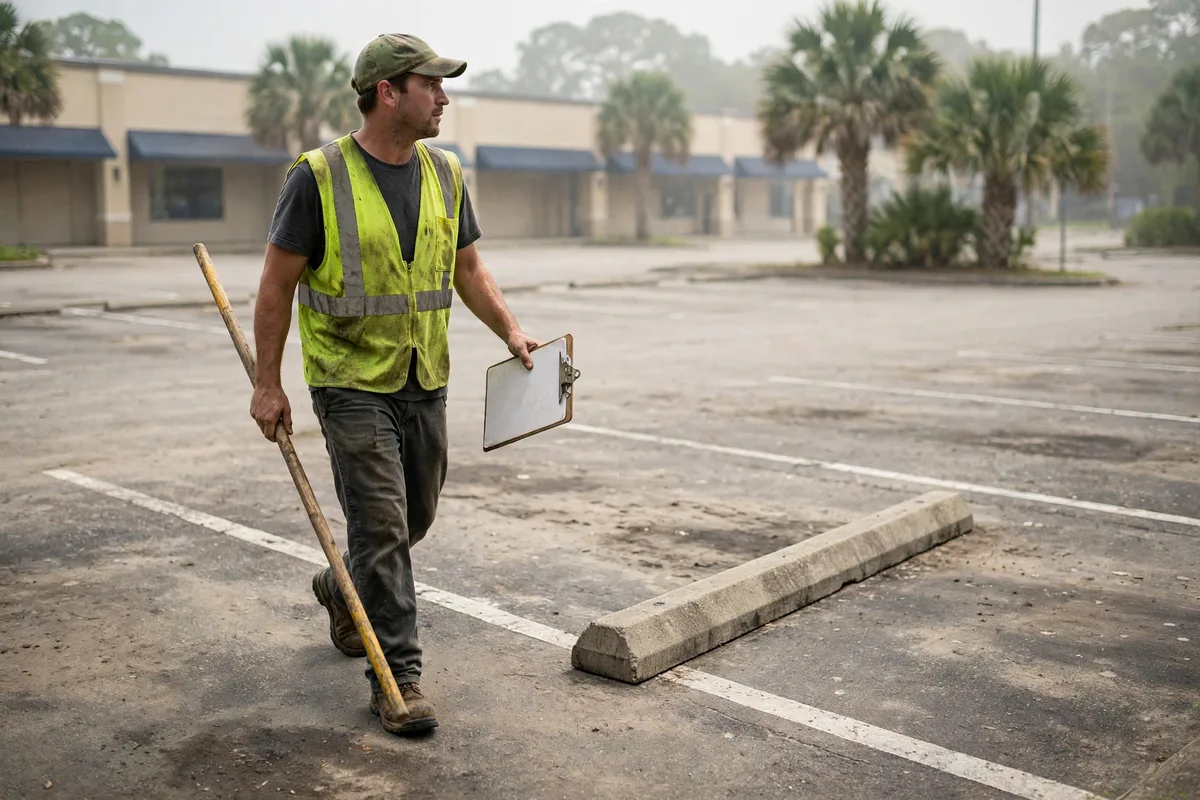
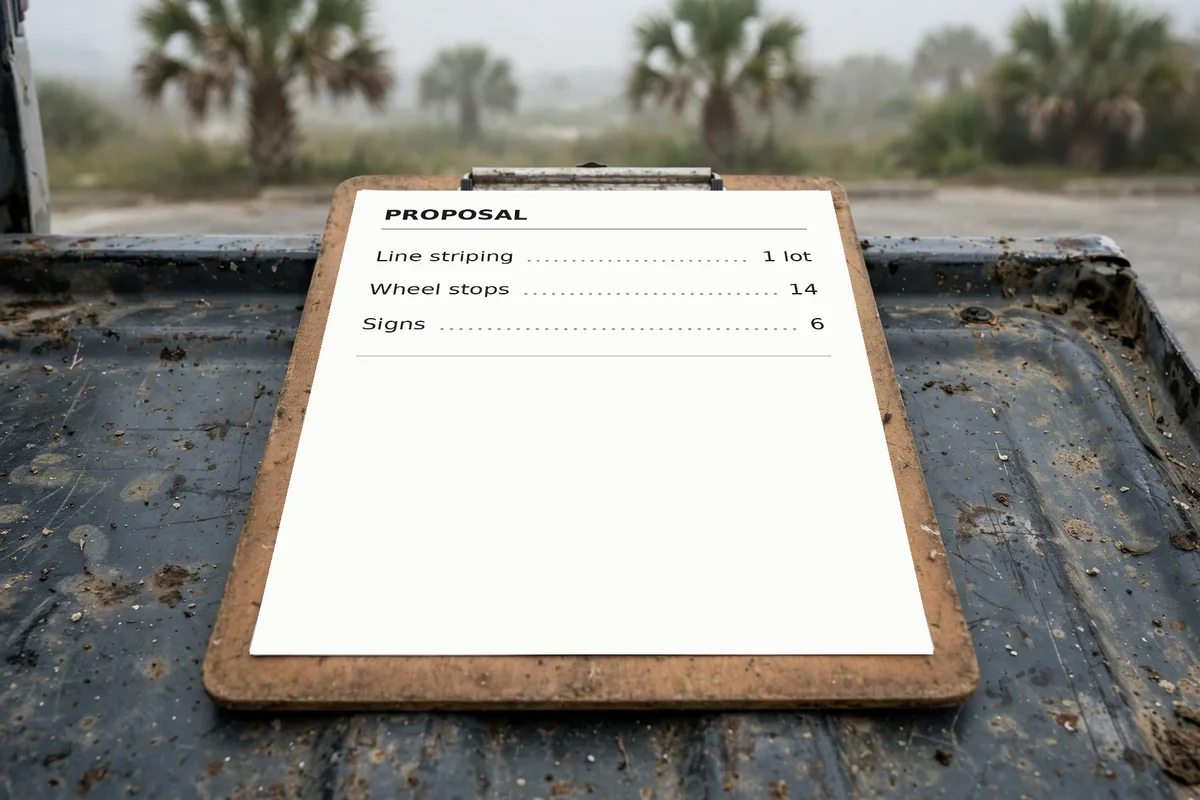
2. Add the count to the written proposal. Signs and stops go on the same proposal as the striping, sealing or maintenance visit, each counted and priced with its hardware. Nothing is added later without your say.
3. Pull what has failed. Cracked or loose stops come up, bent posts come out, and the spots underneath are cleaned out. Broken pavement around old pin holes is marked for patching.
4. Set the stops and signs. Stops are located against the bay lines, pinned into sound pavement and checked for level and position. Posts are set plumb, and signs are mounted at the head of their spaces or along the fire lane.
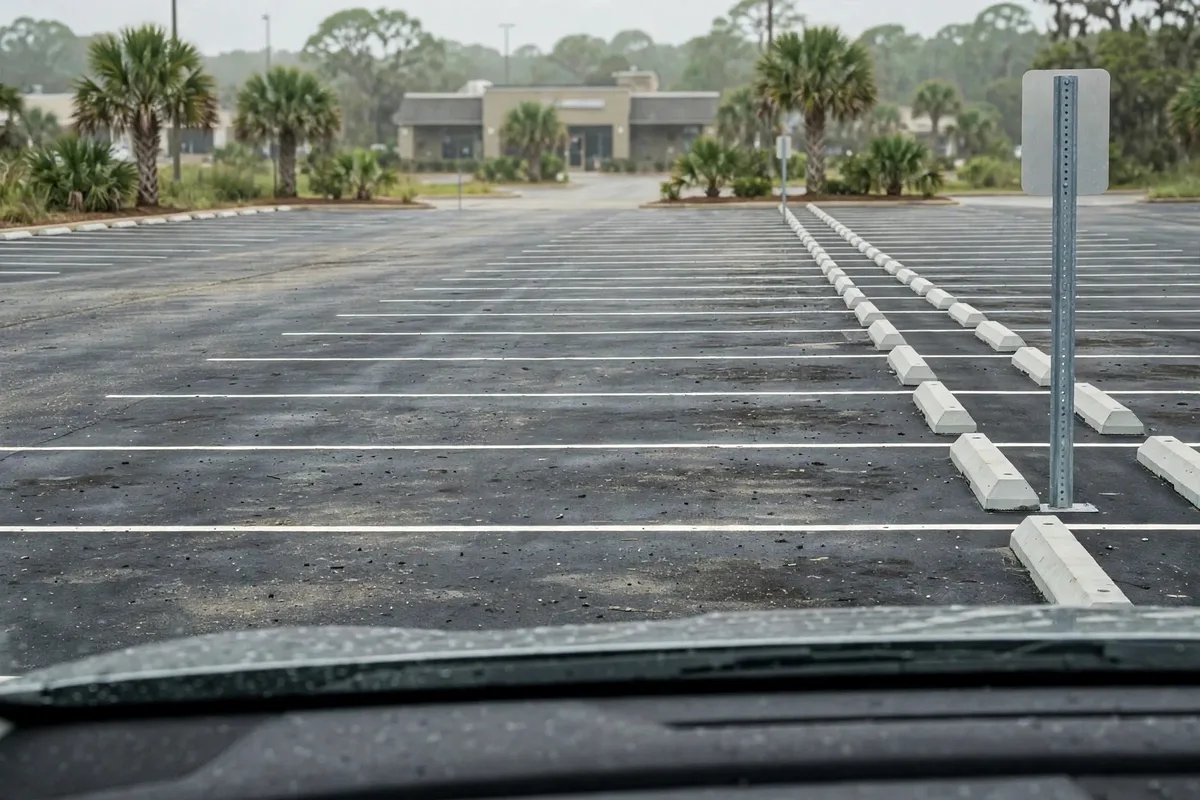
5. Walk it again. Before leaving, the crew walks the finished lot against the layout, tries each stop by hand, and looks down each row of signs from the driver's side.
What it costs
There is no standalone price list for signs and stops, and that is deliberate. They are counted on the same written proposal as the visit they ride with, and each one is priced per sign and per stop, hardware included. What moves the number is how many there are, whether a stop can be reset or has to be replaced, whether the pavement around it needs patching first, and what kind of sign and post are called for.
Because the crew and the layout are already on your lot for the striping, sealing or maintenance, the added stop or sign does not carry the cost of a separate trip. That is the saving, and it is why we add them to a visit rather than sell them alone. To price them, send us the lot and the count, or let us walk it and count for you, and we will add the line to the quote for your striping or maintenance visit.
Wheel stops reset across a retail lot off Village Road
The lot was already scheduled for a restripe. When the crew walked it to mark the layout, they found a row of stops that had walked out of their bays. Several had pulled their pins and sat crooked, one was cracked at the end, and a few were sitting partly over the lines that were about to be repainted.
The crew marked each stop's proper position against the bay lines, lifted the loose ones, and patched the broken asphalt around the old pin holes. They reset the sound stops on new pins and replaced the cracked one. The stops went back in as the lines were repainted, so each one sits where the fresh striping says it should.
On the proposal, the stops were counted per stop with their hardware, on the same document as the restripe. There was no separate trip and no second mobilization.
What to watch for on your own lot: stops that sit crooked or have crept toward a sidewalk, pins that stand proud or are missing, and any stop with a chipped or broken end. A stop that moves a little each month is telling you the pavement beneath it has gone soft.
Questions
Do you do wheel stops and signs on their own?
We add them to a visit, most often line striping, parking lot sealcoating, patching or a maintenance round. That is how the work is priced and scheduled, and it is why it costs less. If you only have a few stops or signs to deal with, call (910) 370-1121 and tell us about the lot, and we will say how it can ride with other work.
How much does it cost?
Signs and stops are priced per sign and per stop, hardware included, and counted on the same written proposal as the visit they ride with. There is no separate price list. The count, the kind of stop or sign, and whether the pavement around a stop needs patching are what set the total.
Why does adding them to a visit cost less?
The crew, the truck, the tools and the layout are already on your lot. A stop or sign added then does not carry the cost of coming back out. That is the fraction of a standalone trip we mean.
Should I choose concrete or recycled-rubber wheel stops?
Concrete is heavy and holds position well, but it cracks at the ends when hit. Recycled rubber does not shatter and is lighter to handle. Which one suits your lot depends on the traffic, the size of the vehicles using it and what you already have. We can talk it through when we count.
Why did my wheel stop come loose?
Usually the pins pulled. Impact, soft sandy ground under the pavement, or broken asphalt around the pin holes all let a stop walk. Pushing the same stop back onto the same holes will not hold, so the edge is repaired first and the stop is pinned into sound pavement.
Can you reset a stop, or does it have to be replaced?
If the stop itself is sound, with no cracks or broken ends, it can be reset on new pins once the pavement is repaired. A cracked or crumbling concrete stop, or a rubber stop that has torn through at the pin holes, is replaced.
Do you set accessible parking signs?
Yes, on posts or on walls, at the head of the space, lined up with the markings on the ground. We set signs where your layout calls for them. We do not certify legal compliance, and questions about what is required for your lot go to the authority that enforces the rules.
Can you add fire-lane and no-parking signs?
We set them along the lane or curb that you or your manager designate. Where the lane is marked, the sign and the paint should agree, so we usually add the signs while the markings are being done.
What if a sign post is leaning or loose?
We reset or replace it so the sign faces traffic squarely. In sandy ground a post can work loose over time, and a leaning sign is easy to read wrong from a driver's seat.
Which kinds of sign do you do?
Stop signs, directional signs, accessible parking signs, and fire-lane and no-parking signs, along with the posts they mount on.
Do you work on HOA, church and business lots?
Yes. Retail, office, church, HOA and amenity lots in Leland and across Brunswick County are the lots this work rides with. We do not bid municipal or public-road work.
Do you come to Wilmington or the beaches?
We are centered in Leland and cover road-connected Brunswick County, with Wilmington served across the river. We do not serve Bald Head Island.
Add them to your next visit
If you have a stop that is broken or leaning, or a sign that is missing or down, call (910) 370-1121 or send the form. Tell us about the lot and what you have seen, and we will add the count to your striping, sealing or maintenance quote.
The more details you give, the better we are able to help you.