Leland Pavement Care does asphalt sealcoating for homeowners in Boiling Spring Lakes, about 25 minutes down the road from Leland. Most of what we do here is driveway sealcoating, because most of what this city has is asphalt drives. Many of them have gone from new to a few seasons old, and from a few seasons old to faded and open at the edges.
A coat of sealer only holds on a sound surface, so the cracks come first. That means crack sealing with hot-pour rubberized sealant, and on drives with wider or longer runs, careful crack filling before any sealer goes down. If the base has failed and a hole has opened, that is pothole repair and patching, and it gets done before anything is coated over it. We also handle parking lot sealcoating and line striping for the occasional church or business lot, but this page is about your drive.
Why drives in Boiling Spring Lakes wear the way they do
Boiling Spring Lakes has 5,943 residents at the 2020 census, and it is still filling in street by street. That matters for pavement. A lot of the drives here are reaching their first sealing and their second sealing at the same time, because the homes around them went in over a spread of years and nobody went back to the asphalt.
Four things work on a coastal drive. Sun and heat oxidize the surface until it turns grey and dry. Water gets in through cracks. Oil and fuel from a parked truck or a boat trailer soften the spots under them. And the base underneath can give way. Sealcoating answers the first and third of those. Crack work answers the second, and patching answers the fourth. A seal coat will not fix a failed base, and we will say so before we start.
Water is the one people here take personally. Hurricane Florence flooded Brunswick County in 2018, and the dams at Boiling Spring Lakes failed. Anyone who lived through it knows what standing water does to ground. The soil here is sand and the water table is high, so the base is what a drive stands on. Rain from a summer thunderstorm or a tropical system comes in by the inch, and if it finds an open crack it goes straight down into that sand. Keeping the surface closed is the cheapest protection a drive has.
What a drive due for sealing looks like
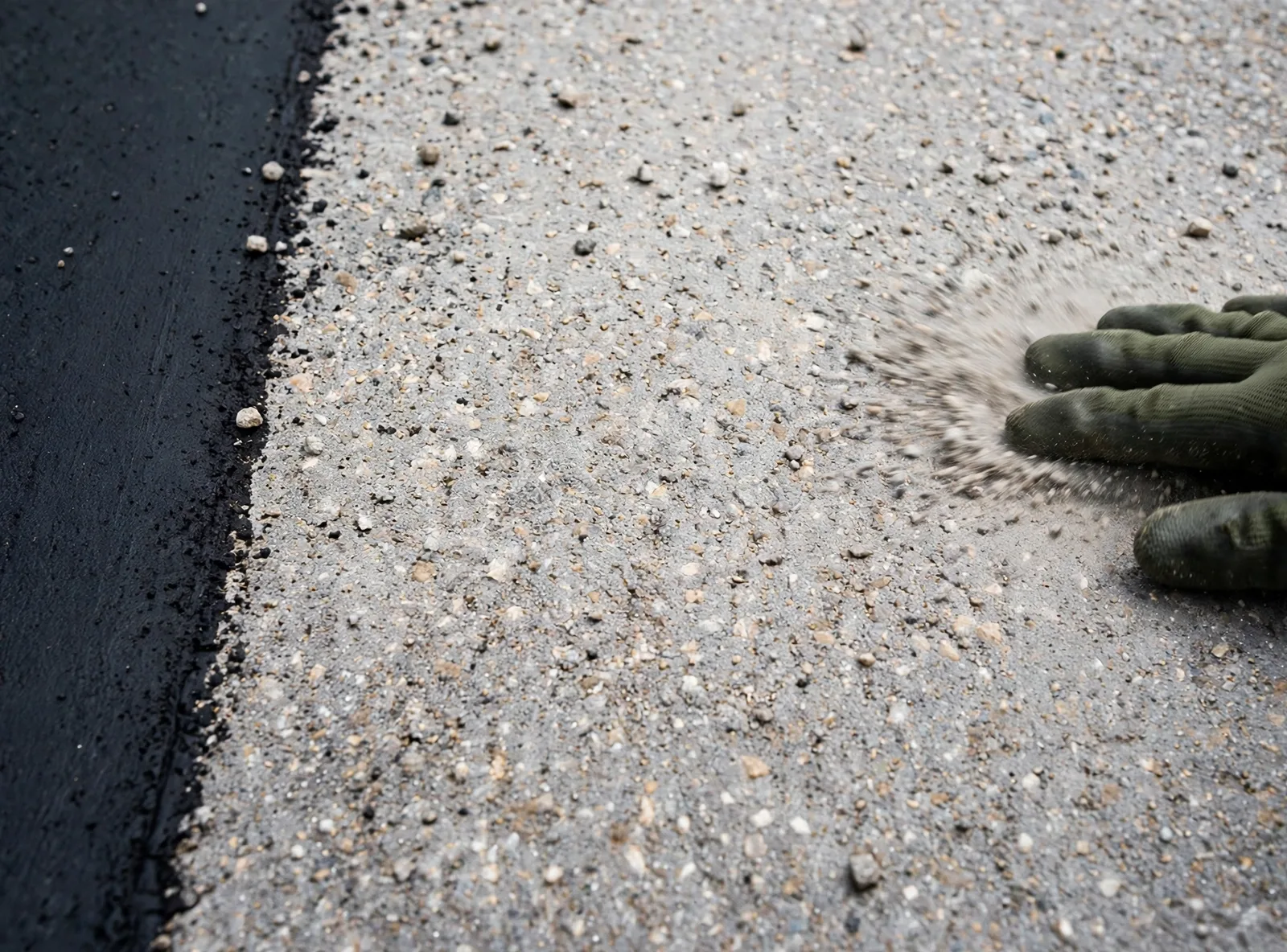
Fresh asphalt is black. As it ages it goes dark grey, then pale grey, and the small stones in the mix start to show. Run your hand across it. If grit comes off on your palm, the binder that holds the surface together is wearing out.
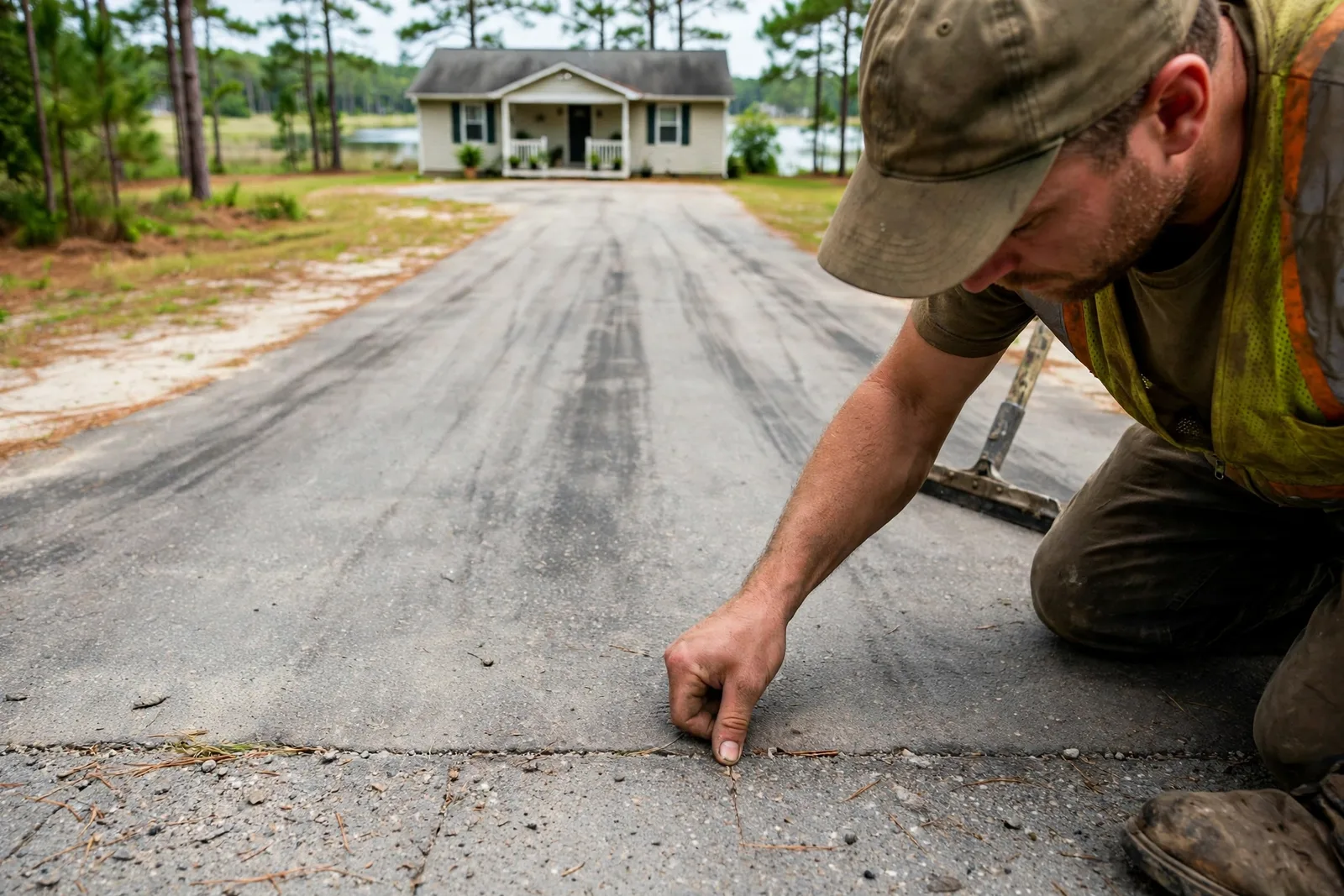
Next look at the edges and the apron, where the drive meets the street. That is where the first cracks open, because it takes the most turning weight and the most water running off the lawn. Then look under where the cars sit. Dark, soft, shiny patches mean oil has been working on the surface.
Drives close to the lakes take extra sun, with the water throwing light back at the pavement all afternoon. They fade faster on that side.
How the work goes
Every sealcoating job we do here goes in the same order, because the order is what makes the coat stick.
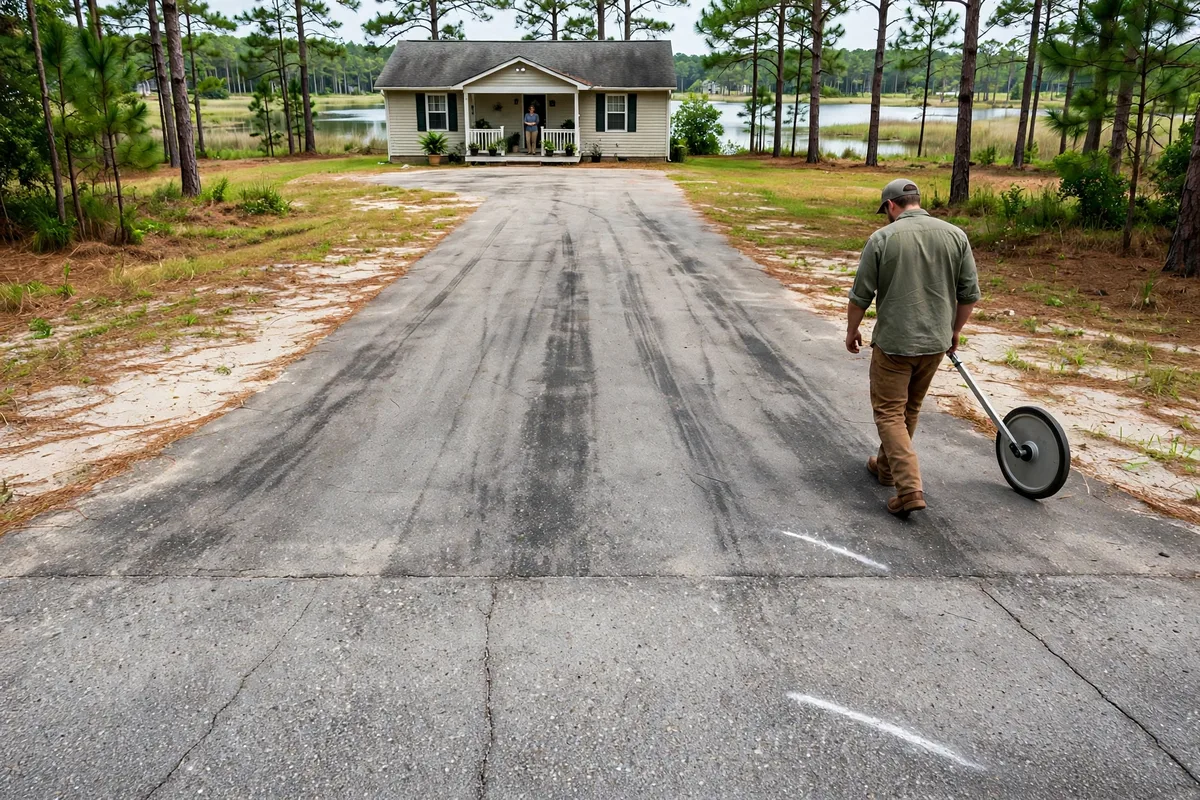
1. Walk and measure. We walk the whole drive with you, measure it, and mark every crack, oil spot and low area. If something needs more than a coating, that comes up here, not halfway through.
2. Clean. Blowers and stiff brooms clear sand, leaves and loose grit. Boiling Spring Lakes drives collect a lot of fine sand, and sealer that goes over dust peels off with the dust.
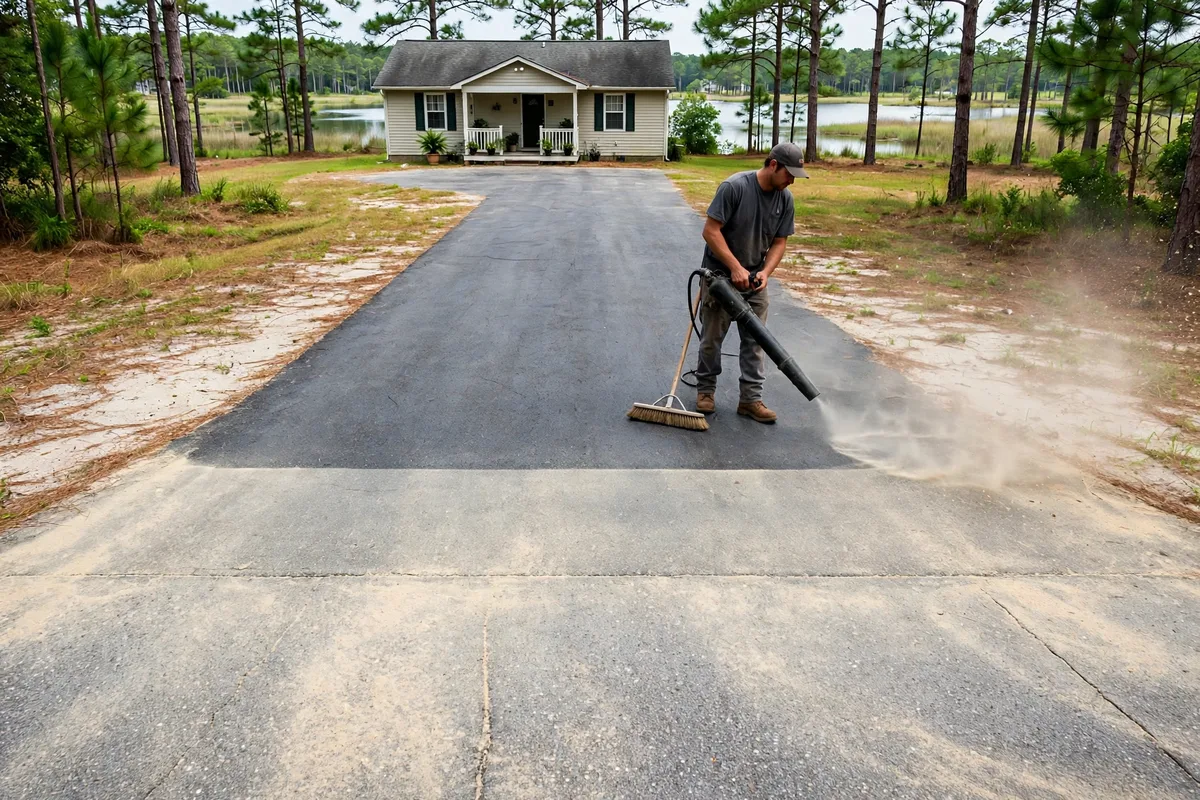
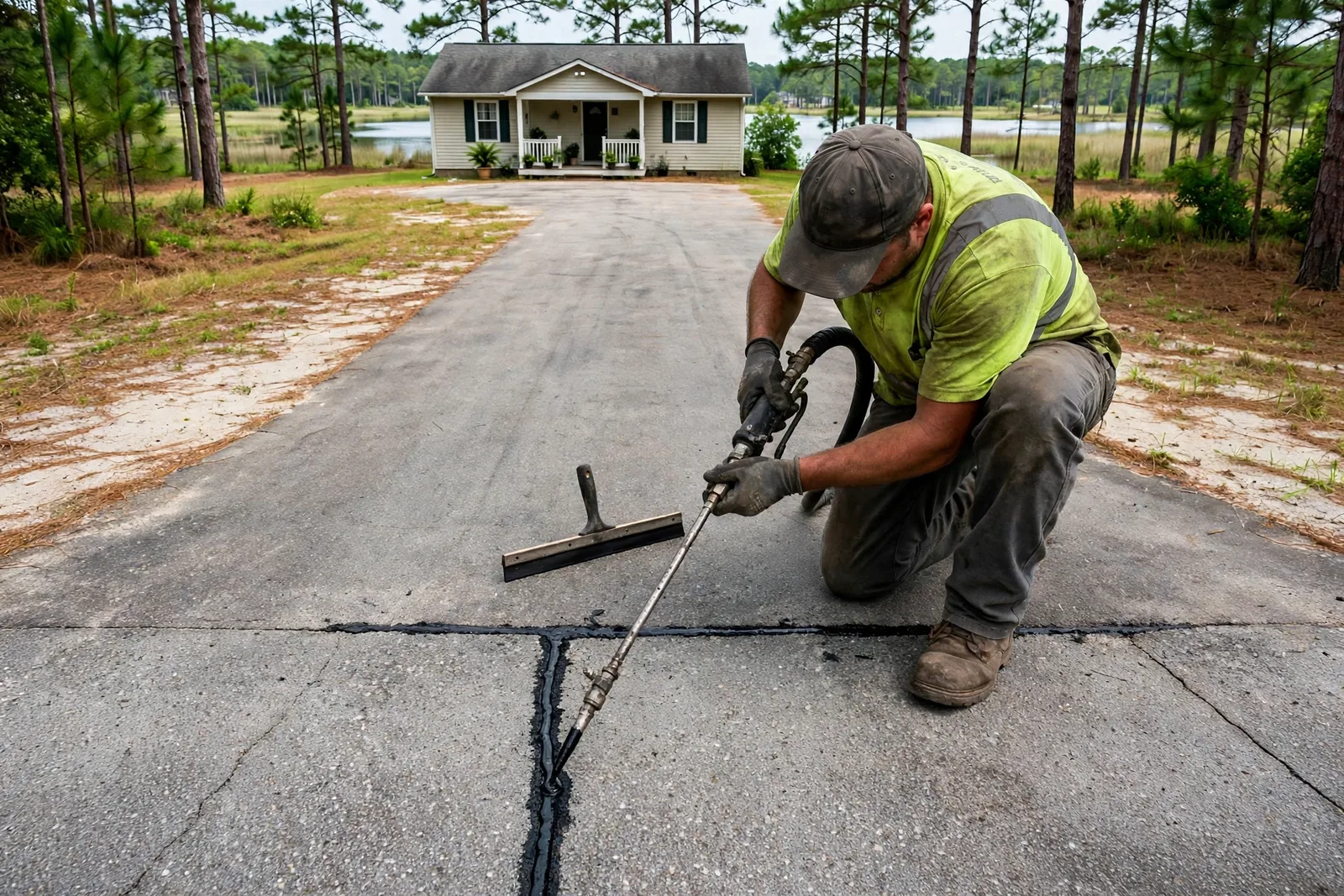
3. Seal cracks and prime oil spots. Cracks are cleaned out and filled with hot-pour rubberized sealant. Oil spots are scraped, then primed so the sealer does not slide off them.
4. First coat. The sealer is mixed and spread by squeegee, which works the material into the surface and leaves a thick, even film. We cut in at the edges and the garage line first, then work back toward the street so no one walks on wet work.
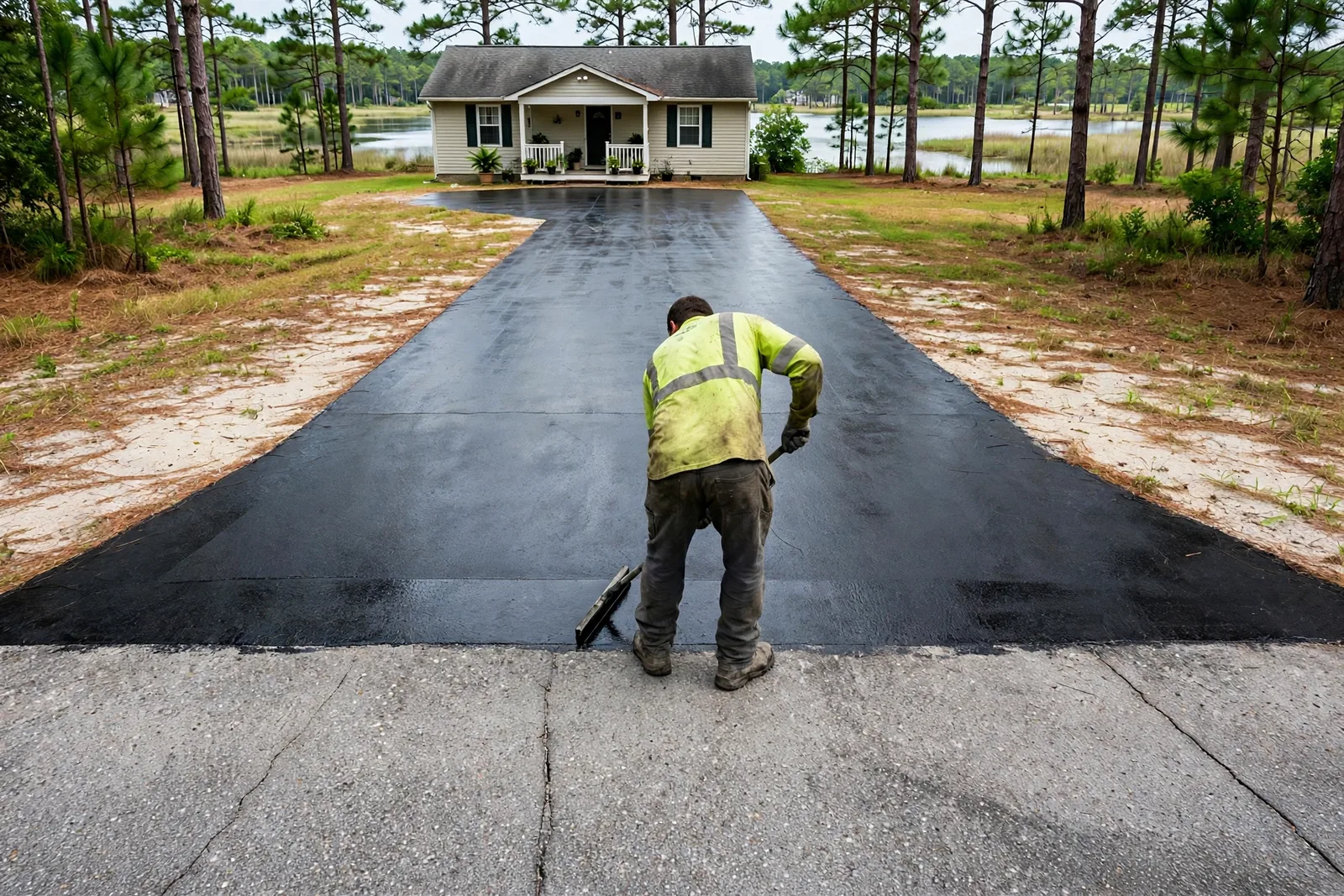
5. Second coat where the drive needs it. A drive in full sun, or one with a lot of wear, gets a second coat once the first has set up. On lakeside lots, where the sun hits all afternoon, we usually plan for it.
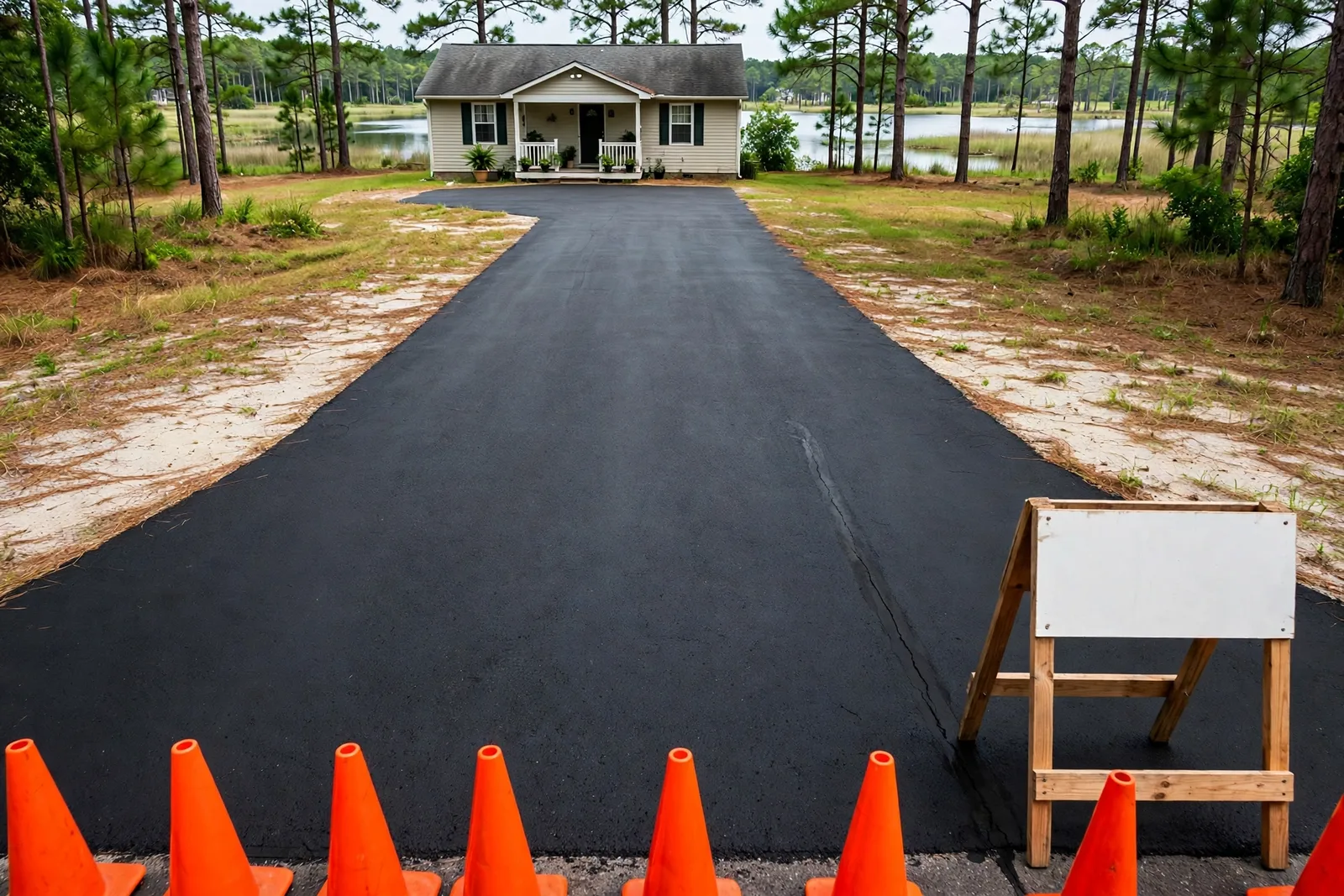
6. Cure and barricade. The drive is coned off and the crew tells you when it can be walked on and when it can take vehicles. The cure depends on weather, so the time is given on the day, not promised in advance.
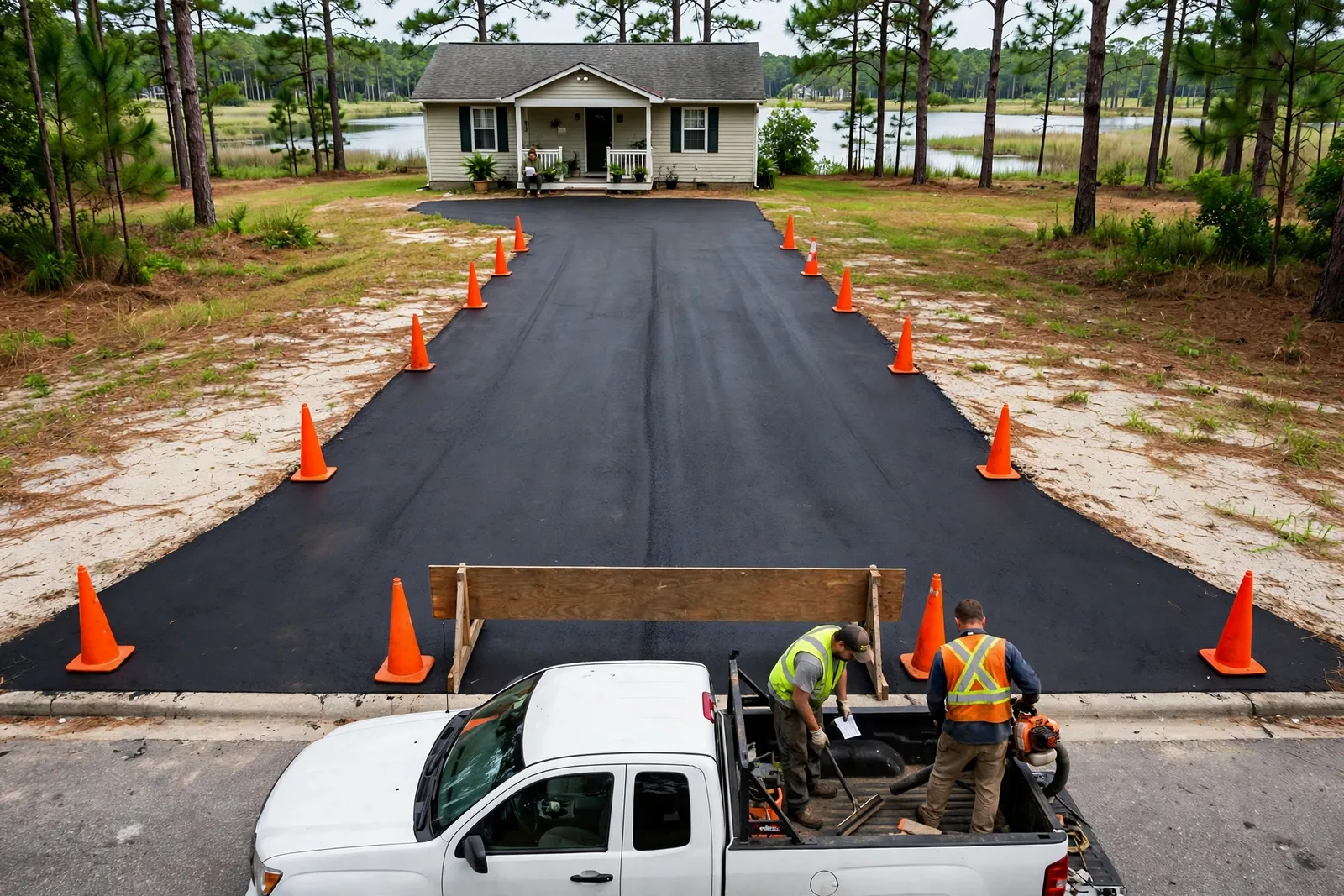
A lakeside driveway on Boiling Spring Road
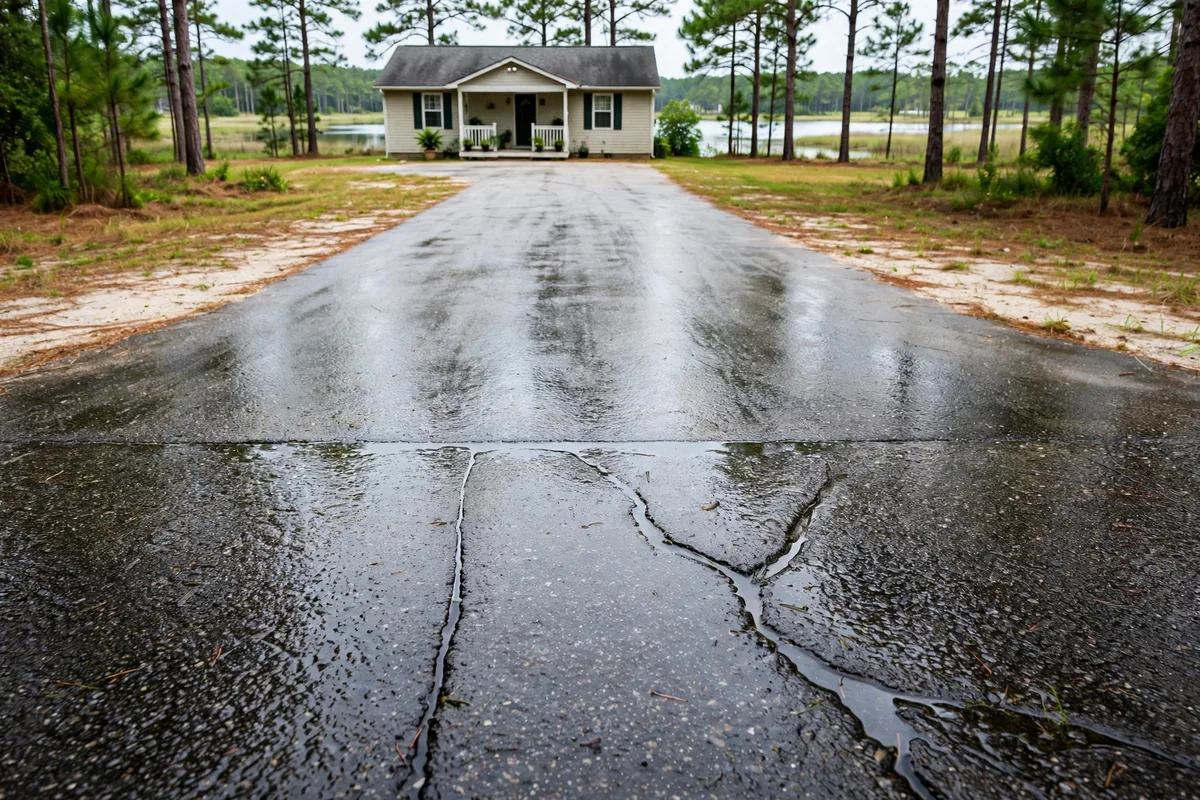
This one is typical of what we see near the water. The drive was storm-worn and had faded to a flat grey. The surface was dry to the hand, and there were open cracks at the apron where the drive meets the road. It was a good candidate for sealing, though not in the state it came in.
Tap through the chapters below to see what the crew checked, what they did and why.
Work the Boiling Spring Road drive
The drive had faded to a flat grey and was storm-worn. Sun and heat oxidize asphalt until the surface dries out, and a drive that sits by open water takes more of it. Sealcoating answers oxidation and oil softening. The crew cleaned the whole drive first, because sealer only bonds to clean asphalt.
Cracks had opened where the drive meets Boiling Spring Road. Water that gets into a crack goes into the base, and in sandy ground the base is what holds a drive up. The crew cleaned each crack and filled it with hot-pour rubberized sealant. Crack sealing is priced at $0.50 to $3.00 per linear foot.
Before coating, the crew pressed along the drive for soft or sunken spots. A soft spot means the base is failing, and no coat of sealer fixes that. This drive was firm, so it stayed a sealing job. If yours has sunken or crumbling areas, those are patched first.
Because of the sun exposure off the lake, the drive got two squeegee coats. The first coat is worked into the surface. The second goes on once the first has set, for a thicker, more even film.
Sealcoating is $0.15 to $0.25 per square foot for residential drives. Driveway jobs typically run $600 to $2,000. This job came in inside that band, with the sealcoat priced by the square foot and the apron cracks priced by the linear foot. Size, condition, crack filling and oil-spot priming set where a drive lands. Minimum fees apply on small drives.

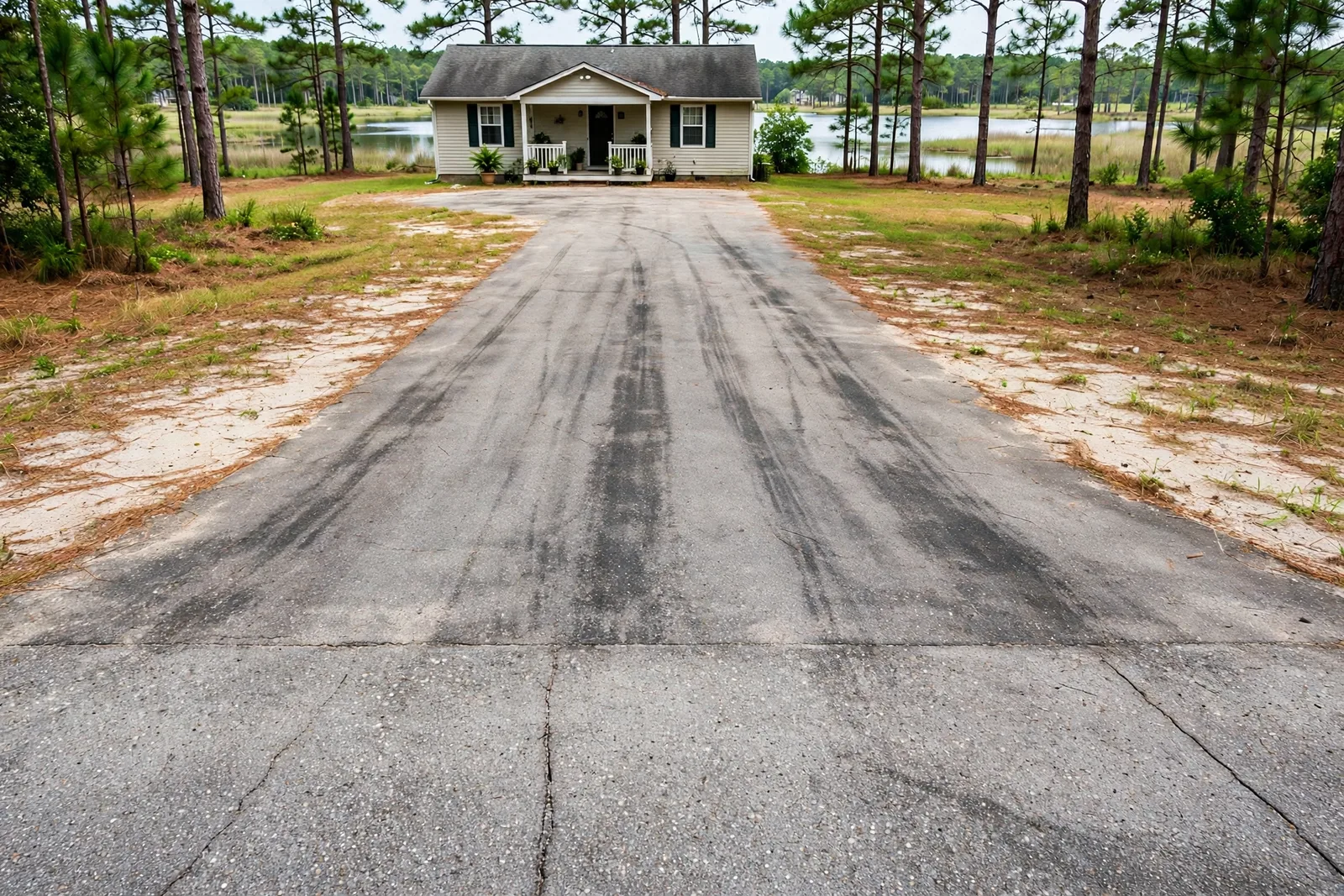
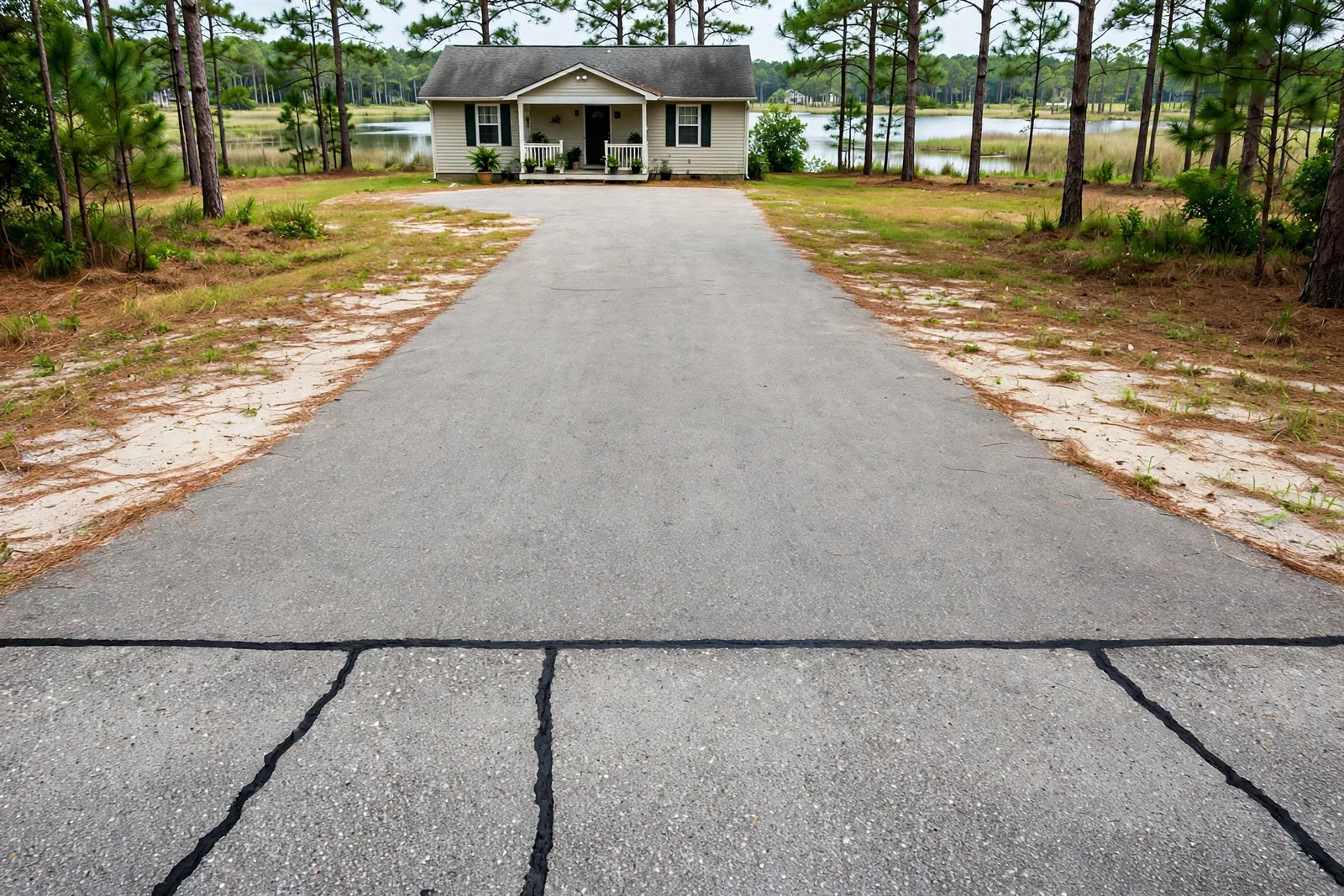
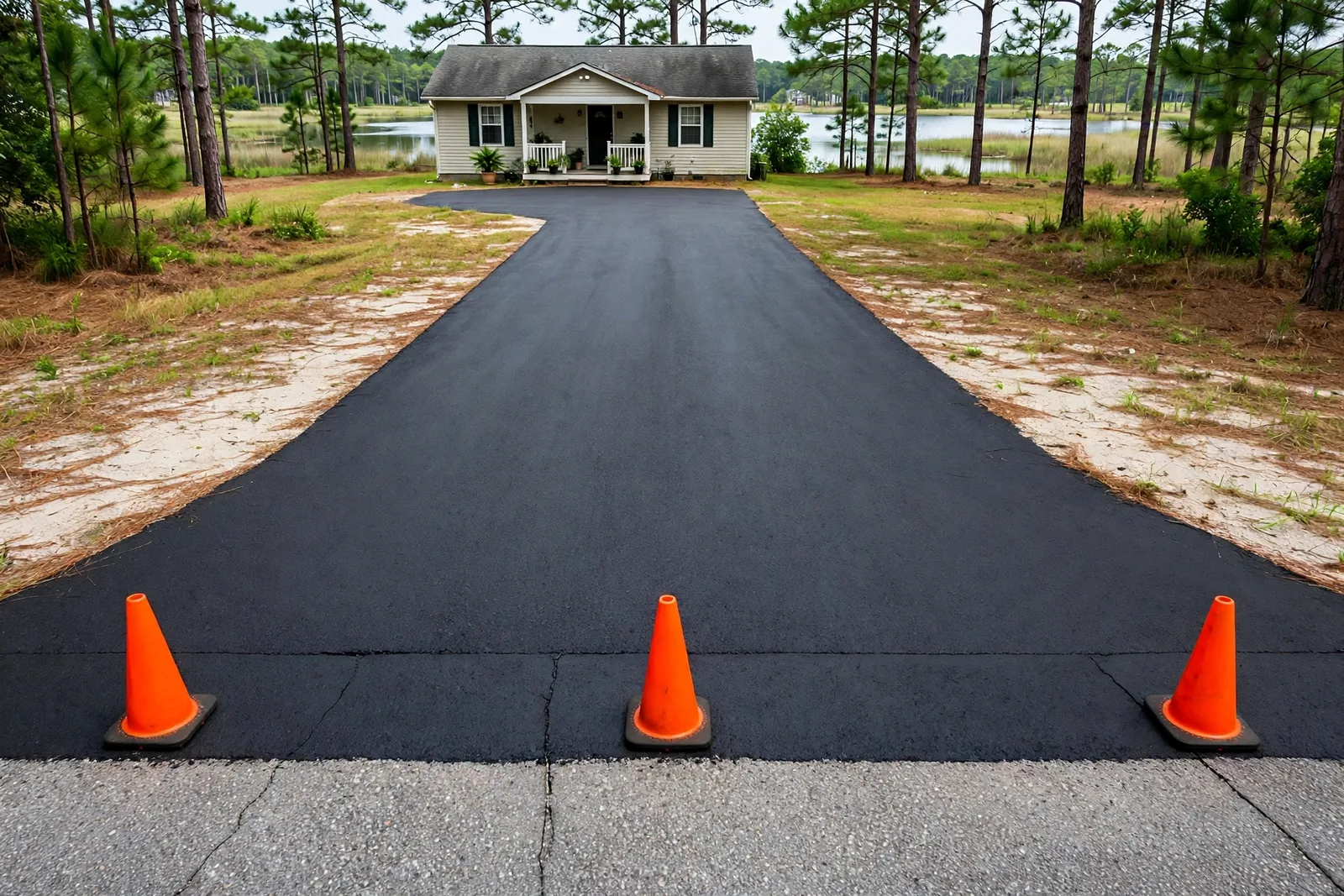
What to watch for on a drive like this one: keep irrigation heads from soaking the apron edge, and look again at the cracks after the first big storm of the season. If a crack reopens, it is cheaper to fill it early than to let it widen.
What sealcoating costs in Boiling Spring Lakes
Our residential sealcoating price is $0.15 to $0.25 per square foot. That is the number for the coating itself. Most driveway jobs here run $600 to $2,000, and where yours lands depends on four things.
Size. More square feet cost more, though larger drives often sit toward the lower per-foot end. Small drives carry a minimum fee, so a short drive is priced at the minimum rather than by the foot.
Condition. A drive in decent shape needs less prep than one with years of wear.
Crack filling. Cracks are priced separately from the coating, at $0.50 to $3.00 per linear foot. A drive with a few cracks at the apron adds little. A drive with many long cracks adds more.
Oil-spot priming. Spots under parked vehicles get scraped and primed before the sealer goes on, and the work is added to the job.
To get a rough figure of your own, multiply your drive's square footage by 0.15 and by 0.25 for the sealcoat range, then add the cracks by length. We measure on site and give you a firm price before we begin. Most owners reseal every two to three years, which is typical practice and not a promise on any coating.
Straight answers before you book
We tell you when a drive does not need sealing yet and when it needs something else first. A drive with a failing base gets patched before it gets coated, because sealer over bad base fails quickly and covers the evidence. We would rather say that than coat it.
Sealcoating is one part of caring for asphalt, and it works only when cracks are closed and the base is sound. Coating alone will not stop water if the cracks are open.
Questions
How much does it cost to seal a driveway in Boiling Spring Lakes?
Residential sealcoating is $0.15 to $0.25 per square foot, and driveway jobs typically run $600 to $2,000. Size, condition, crack filling and oil-spot priming set the final number. Small drives carry a minimum fee.
What does crack work cost on top of the sealing?
Cracks are priced at $0.50 to $3.00 per linear foot. We measure the cracks when we walk the drive and add them to the sealcoat price so you see one total before the work starts.
Do you come out to Boiling Spring Lakes from Leland?
Yes. It is about 25 minutes from Leland, and it is well inside the ground we cover.
How do I know if my drive needs sealing or something else?
Check the color, the grit and the cracks. A faded grey surface that sheds grit on your palm is ready for a coat. Open cracks get filled first. Soft, sunken or crumbling spots mean the base needs patching, and that comes before any coating.
Why do my cracks matter so much here?
The soil is sand and the water table is high. Rain that gets into an open crack goes into the base, and a drive is only as good as what is under it. After Florence in 2018, most people here already know what standing water does to ground.
How often should a drive be sealed?
Most owners reseal every two to three years. That is typical practice, not a guarantee, and a drive in full sun by the lake may want attention sooner than one in the shade.
Why two coats on some drives and not others?
A drive in strong sun or with heavy wear gets a second coat for a thicker, more even film. The lakeside drive on Boiling Spring Road got two squeegee coats because of the sun exposure off the water.
How long before I can drive on it?
It depends on heat, humidity and shade, so the crew gives you the time on the day and coning marks the drive off. Do not guess. Tire marks and scuffs on fresh sealer are hard to fix.
Can I just fill the cracks myself and skip the sealing?
You can fill them, but store-bought and cold-pour filler tends to be short-lived. Hot-pour rubberized sealant is the professional method because it stays flexible. Sealing over cracks that are still open lets water in under the coat.
What if my drive has potholes or sunken spots?
Those are base problems, and sealer will not fix them. The failed area is cut out, rebuilt and patched with hot mix first. After that the drive can be coated. A patch does not need to be a reason to replace the whole drive.
What kind of sealer do you use?
Asphalt-emulsion sealer, applied by squeegee on drives. Spray application is also used in the trade, but squeegee works the material into the surface and is what we use on the drives in this town.
Will sealing stop oil stains?
Oil and fuel soften asphalt, so spots are scraped and primed before the coating so the sealer can bond. Primed spots are part of the price. A fresh coat helps protect a clean surface from new oil.
How do I get a price?
Call (910) 370-1121 or use the form below. Tell us roughly how big the drive is, where it is, and what you see. We will come out, measure, and give you the number.
Call or send the form
If your drive has gone grey, opened up at the apron, or taken a few storms too many, we will come out and look at it. Call (910) 370-1121 or fill in the short form below. We walk the drive with you, measure it, and give you a price before any work starts.
The more details you give, the better we are able to help you.