In Calabash the parking lot is what a customer sees first, and on a Friday night in season it is where they stand while they wait for a table. Cracks, gray oxidized asphalt and faded stalls are right in front of them. Leland Pavement Care handles parking lot sealcoating for Calabash restaurants, churches and small businesses. We drive down from Leland, about 50 minutes, and Calabash sits at the far edge of the ground we cover.
The center of the job is asphalt sealcoating, but a lot that has gone gray rarely needs only a coat. First comes crack sealing, so rain stops getting into the base. Where the base has already given way, asphalt patching comes before any sealer. When the sealer has cured, line striping and pavement markings bring the stalls, arrows and lanes back.
Sealing, repairing and restriping on a plan, instead of one emergency fix after another, is what we mean by parking lot maintenance. In a town of 1,949 people that fills many times over in season, it keeps your lot looking cared for while the dining room is full.
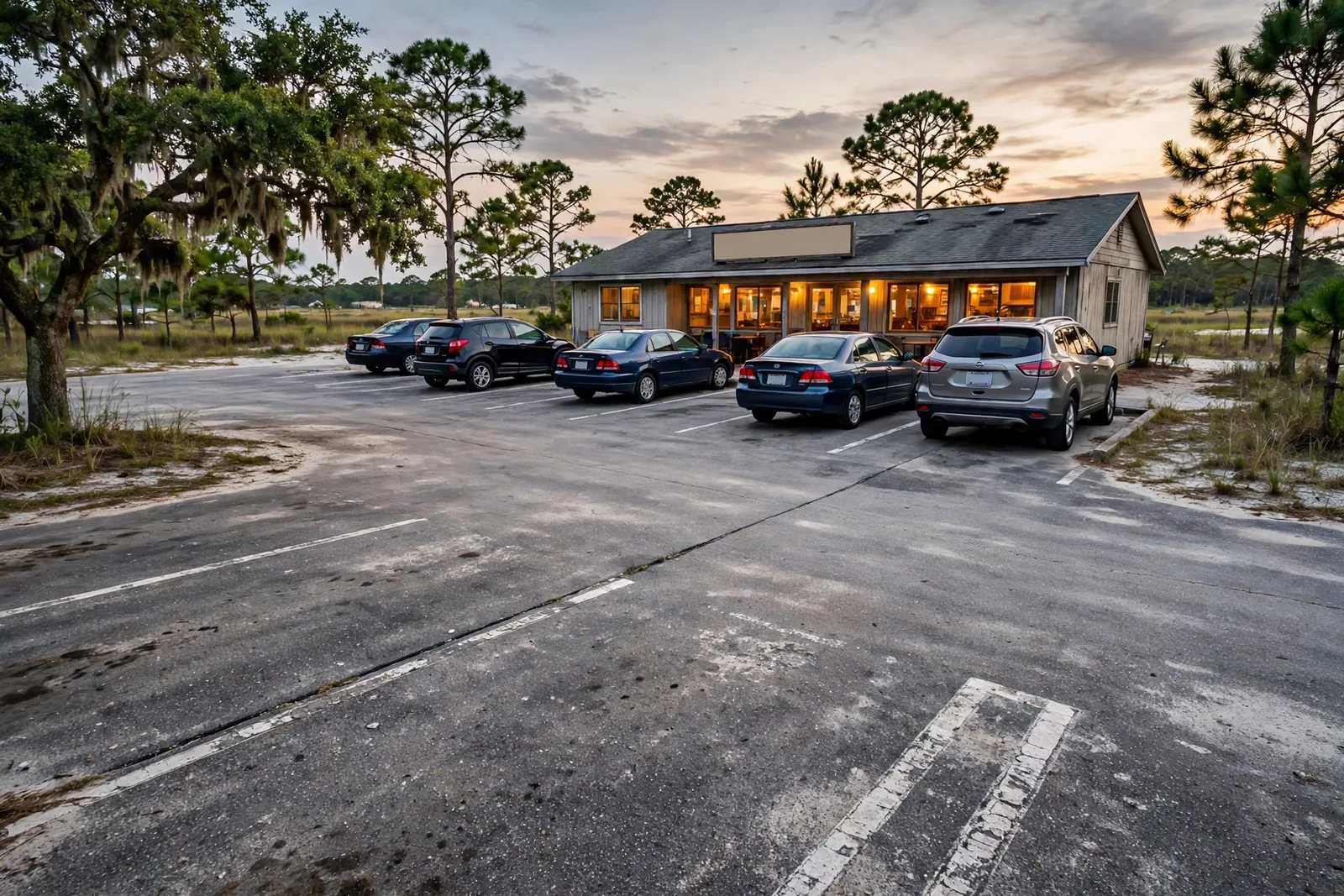
Why Calabash lots wear the way they do
Calabash lots live in a hard climate. Heat and hard sun oxidize asphalt until it turns from black to gray and begins to ravel. Salt air rides in off the water. Summer thunderstorms and tropical systems drop inches of rain in a short time, and the ground under this coast is sand. Sand drains, but it also moves, and when water gets in through an open crack it carries fine material out from under the surface. That is how a small crack becomes a soft spot, and a soft spot becomes a pothole.
Restaurant lots add their own wear. Kitchen doors and dumpster pads collect grease, and delivery trucks leave oil and fuel. Oil and grease soften asphalt. They also keep sealer from bonding, so those spots are handled before any coating goes down. Then there is the traffic: nightly turnover in season, cars turning tight in the same stalls, and trucks pulling in early in the morning.
Sealcoating deals with sun oxidation and oil and fuel softening. It does not close cracks and it does not fix a failed base. That is why the work goes in order: sound the lot, patch what has failed, seal the cracks, prime the oil, coat, then stripe.
What a lot that needs work looks like
You do not need a pavement background to see it. Walk the lot in daylight and look for these:
- Surface gone from black to gray, with loose stone sitting in the low spots.
- Cracks you can fit a pencil into, especially running along the stall ends or out from the drains.
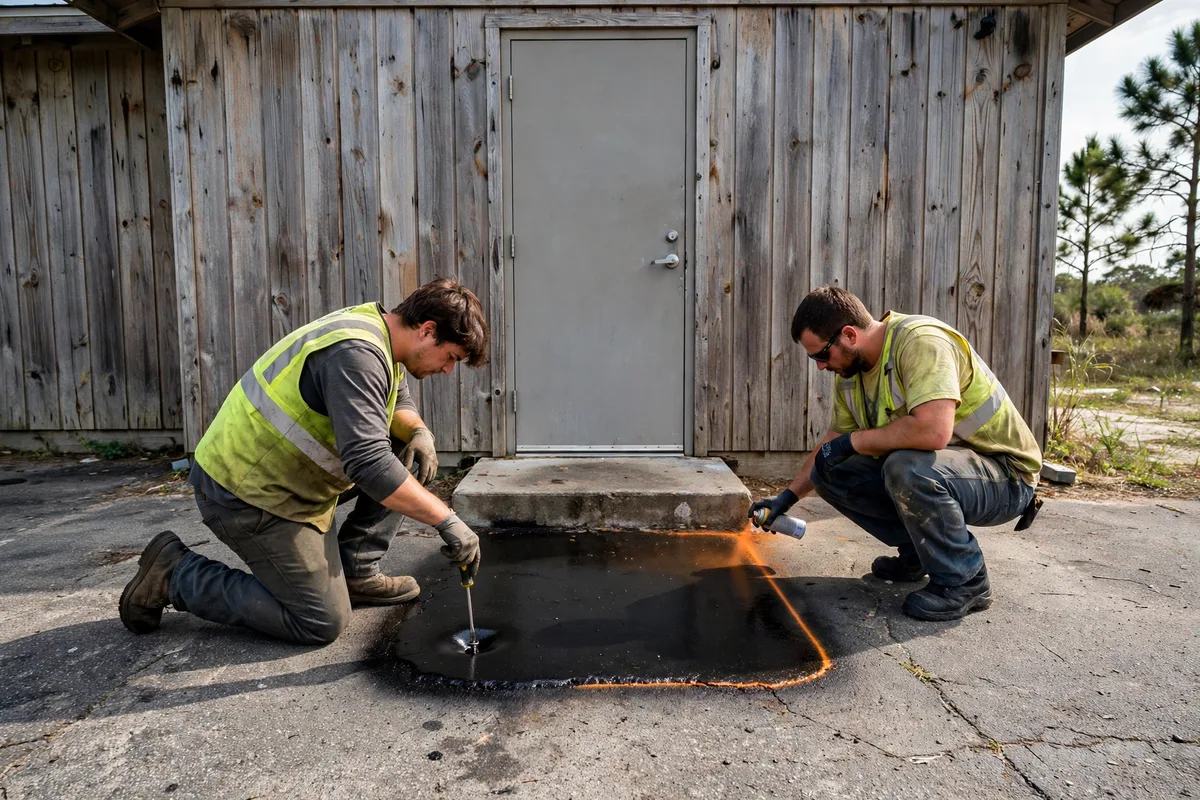
- Dark, shiny or tacky patches by the kitchen door or the dumpster. Press a screwdriver tip into one. If it dents, the asphalt is soft.
- Stall lines worn to a ghost, or arrows and crosswalks you have to guess at.
- Puddles that stay long after the rain stops, a sign the surface or base has sunk.
How the work goes
This is the sequence on every lot, in the order it happens. Each step has to be finished before the next can be done right.
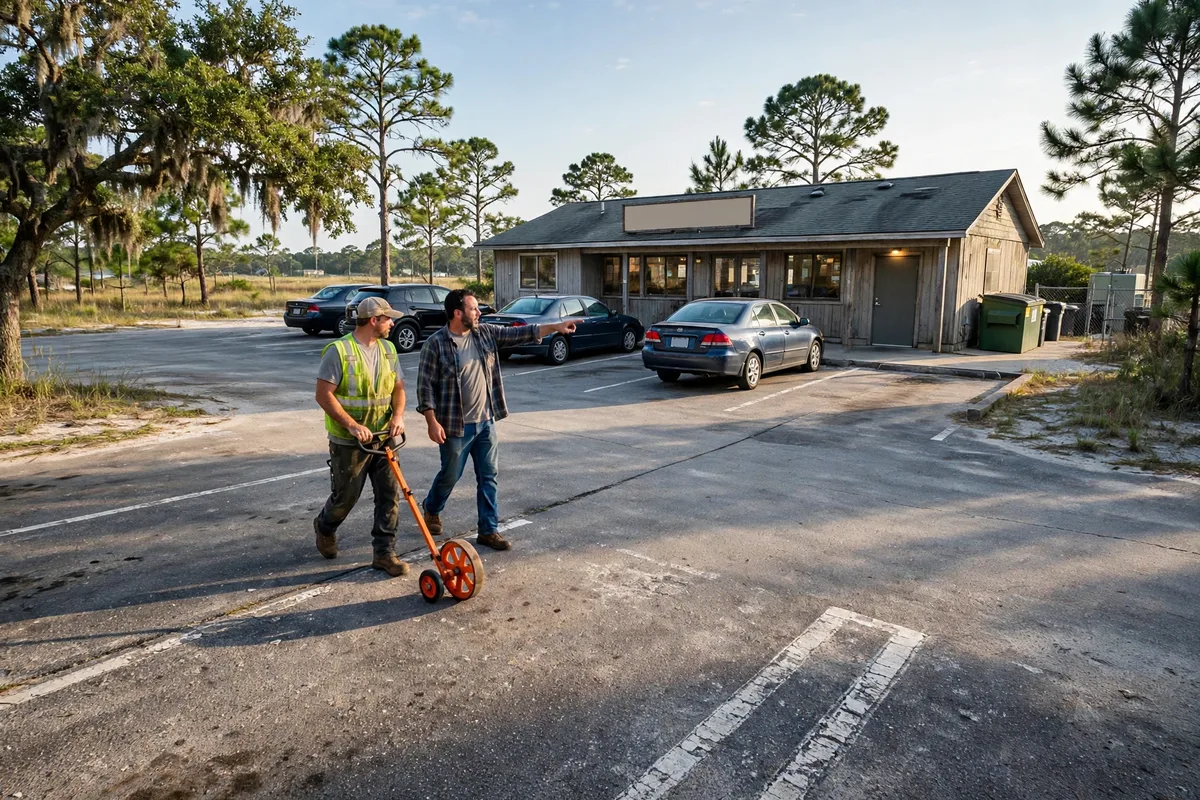
1. Walk and measure
The crew walks the lot with you, measures the square footage of the surface and the linear feet of cracks, counts the stalls, and notes the kitchen door, dumpster area and drains. You tell us when you are busiest and which hours you cannot lose. The price comes from those measurements.
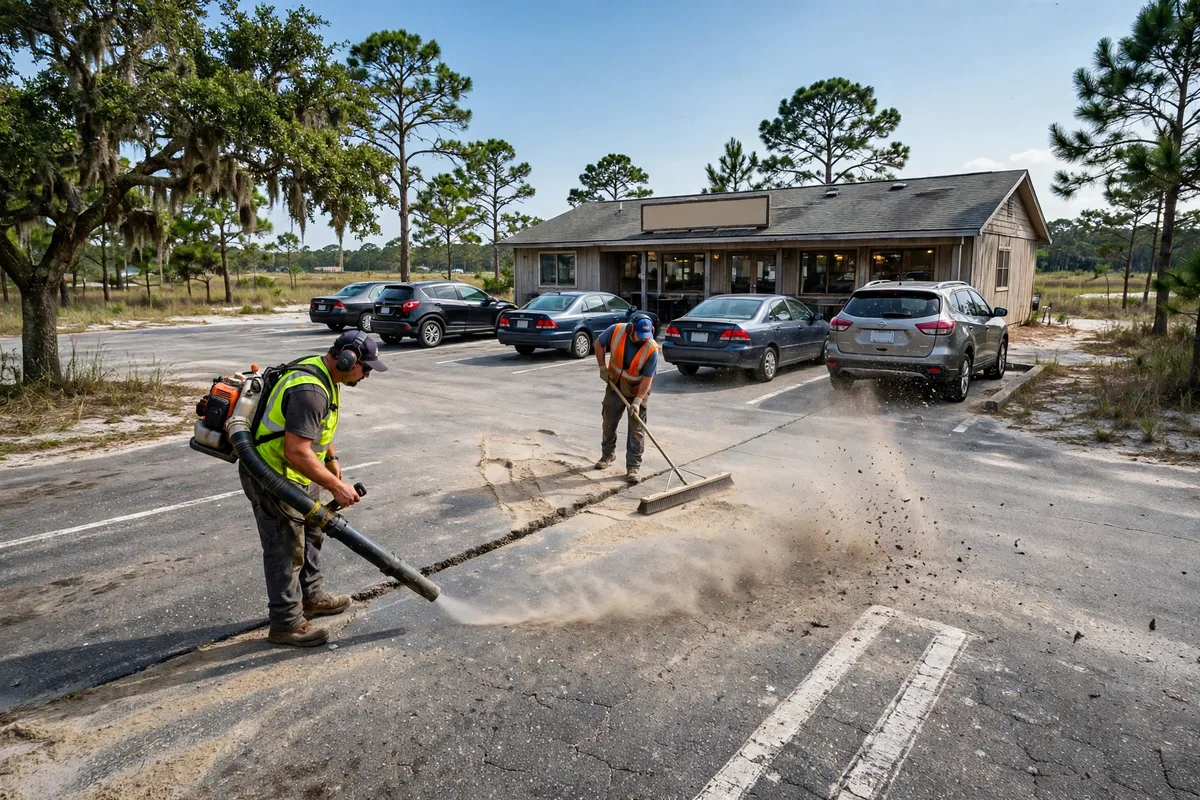
2. Clean the surface
Loose stone, sand, leaves and dirt come off with power blowers and brooms. Sealer bonds to clean asphalt, not to a layer of dust, and a lot near the coast collects more sand than most.
3. Patch the failures
Where the base has given way, a surface fill will not hold. The durable repair is to saw-cut the failed section, remove it, re-base it and patch with hot mix. Patching is priced on the area. We point out these spots on the walk-through so you know about them before the day.
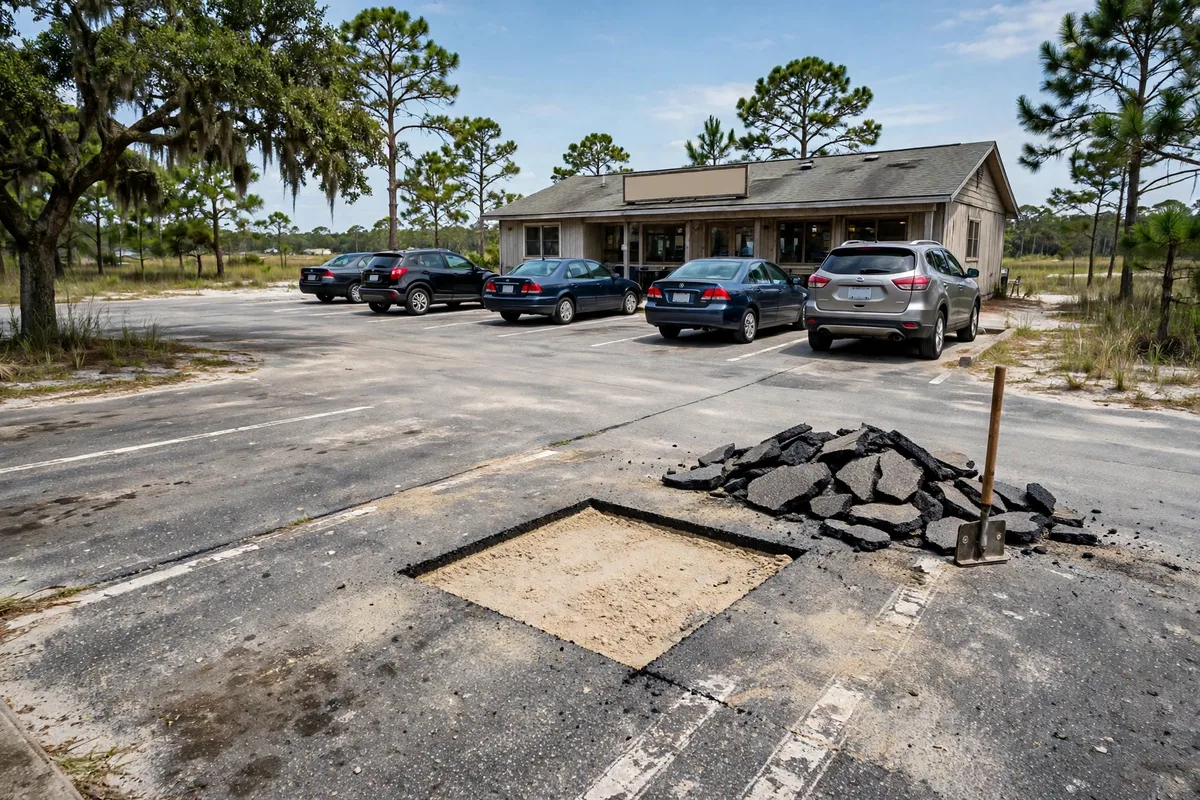
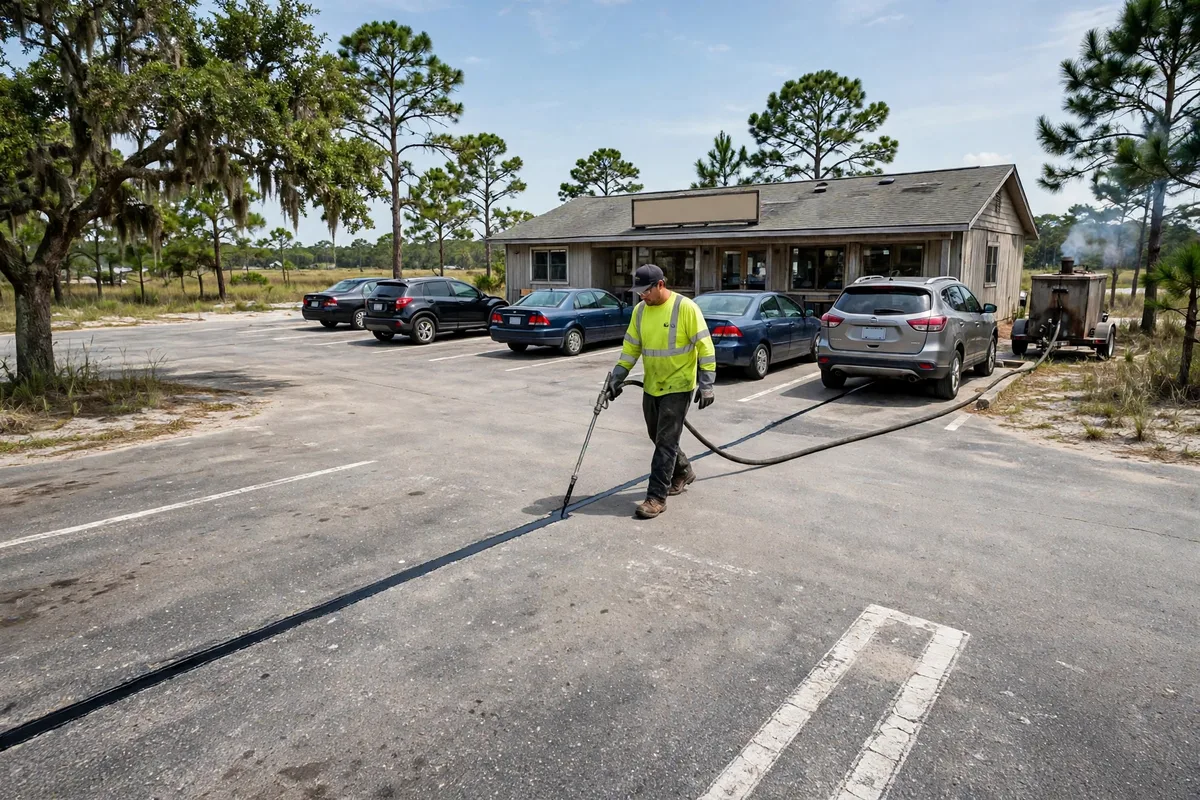
4. Seal the cracks
Hot-pour rubberized sealant goes into the cracks, which are cleaned first. That is the professional method, and it flexes as the pavement moves with heat and cold. Cold-pour and store-bought filler are the short-lived alternatives. Sealed cracks keep rain from reaching the sand base.
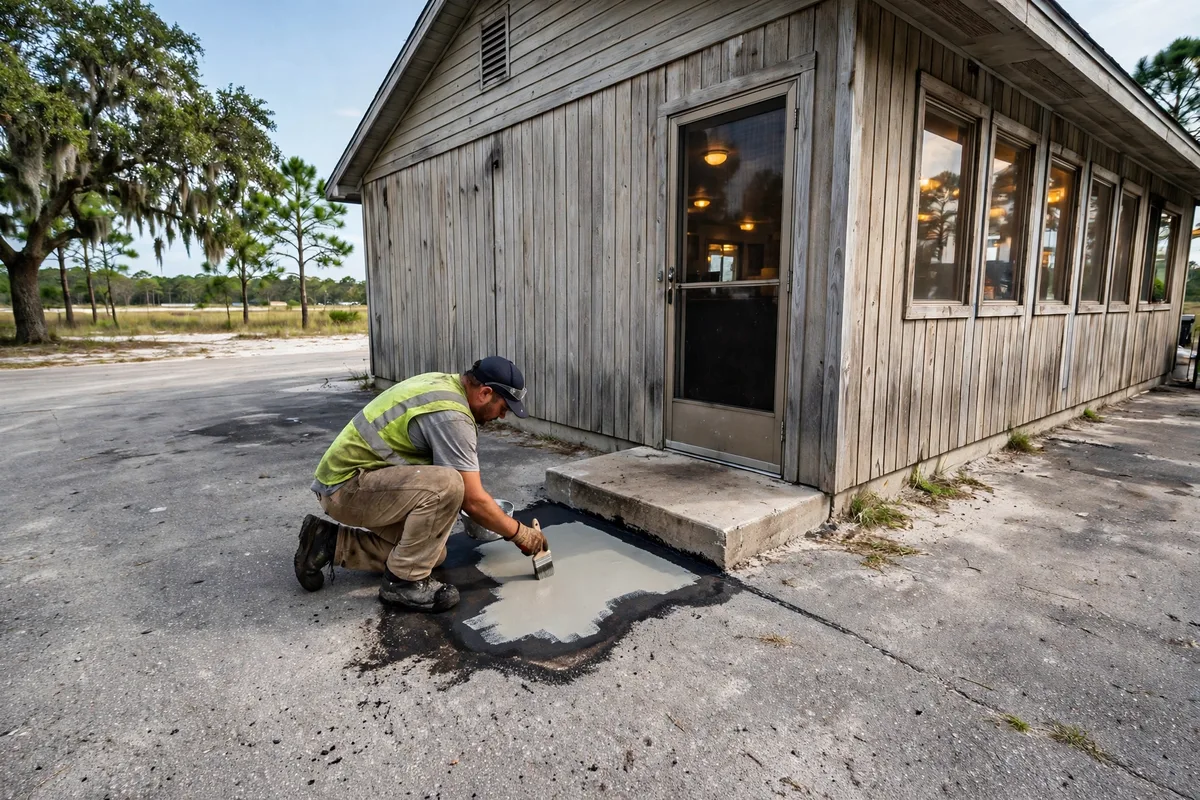
5. Prime the oil spots
Oil and grease spots are cleaned and treated with a primer that lets the sealer grip. This is the step that matters most at a restaurant kitchen door, and it is why the dark patches get marked in the first place.
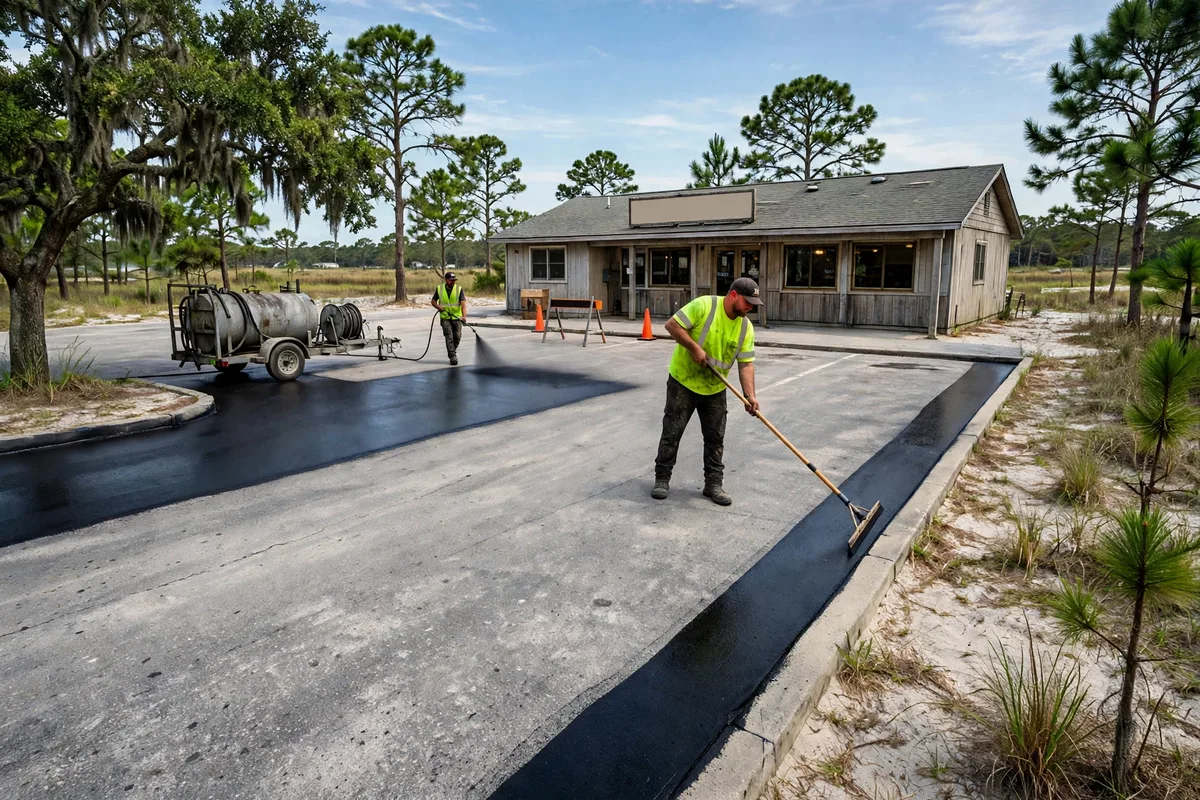
6. Apply the sealer, two coats
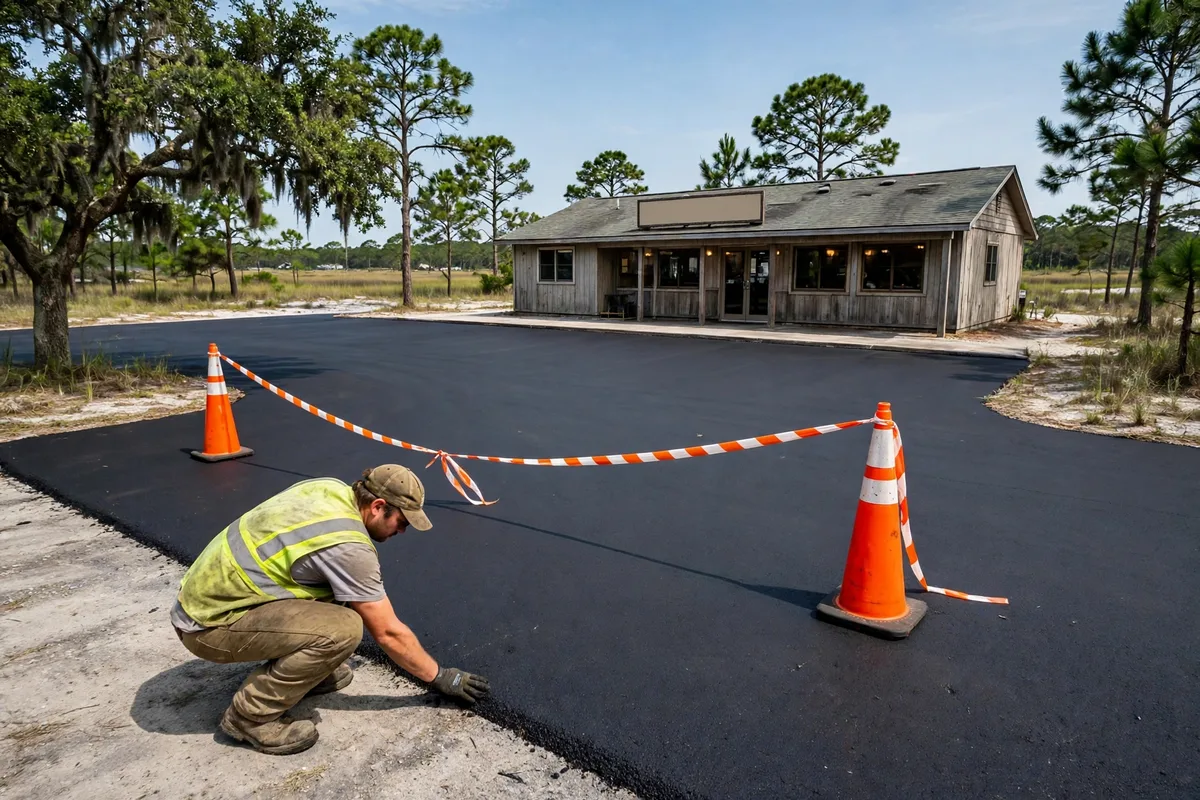
Asphalt-emulsion sealer goes on by spray, squeegee or both, in thin even coats. On commercial lots, two coats is the norm. The crew works in sections so deliveries and staff still get in and out, and barricades and cones mark what is wet. We agree with you beforehand when the lot can be open to cars again.
7. Cure and open
Sealer needs time to cure before cars turn their wheels on it. How long depends on the weather and the coat. The crew holds the barricades until the surface is ready, and tells you plainly when it is.
8. Stripe it back
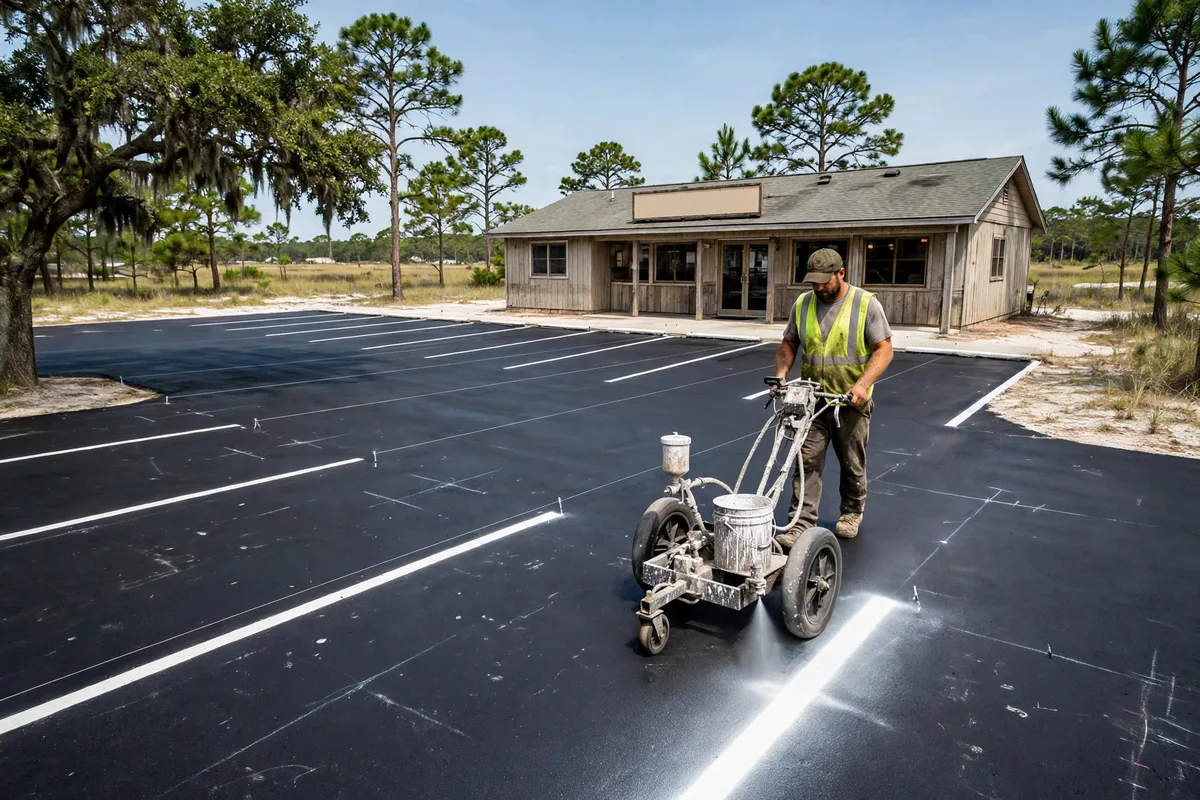
Stalls, arrows, fire lanes and any accessible spaces go back on after the sealer cures, laid over the existing layout. Waterborne traffic paint is the standard, and a restripe over what was already there is priced differently from laying out a new pattern.
A River Road seafood restaurant lot
This is the job in the order it happened. A seafood restaurant on River Road had a lot that looked tired for the season ahead. The owner said the lot looked like the building had stopped caring. He was right, but the surface was only part of it.
What was wrong
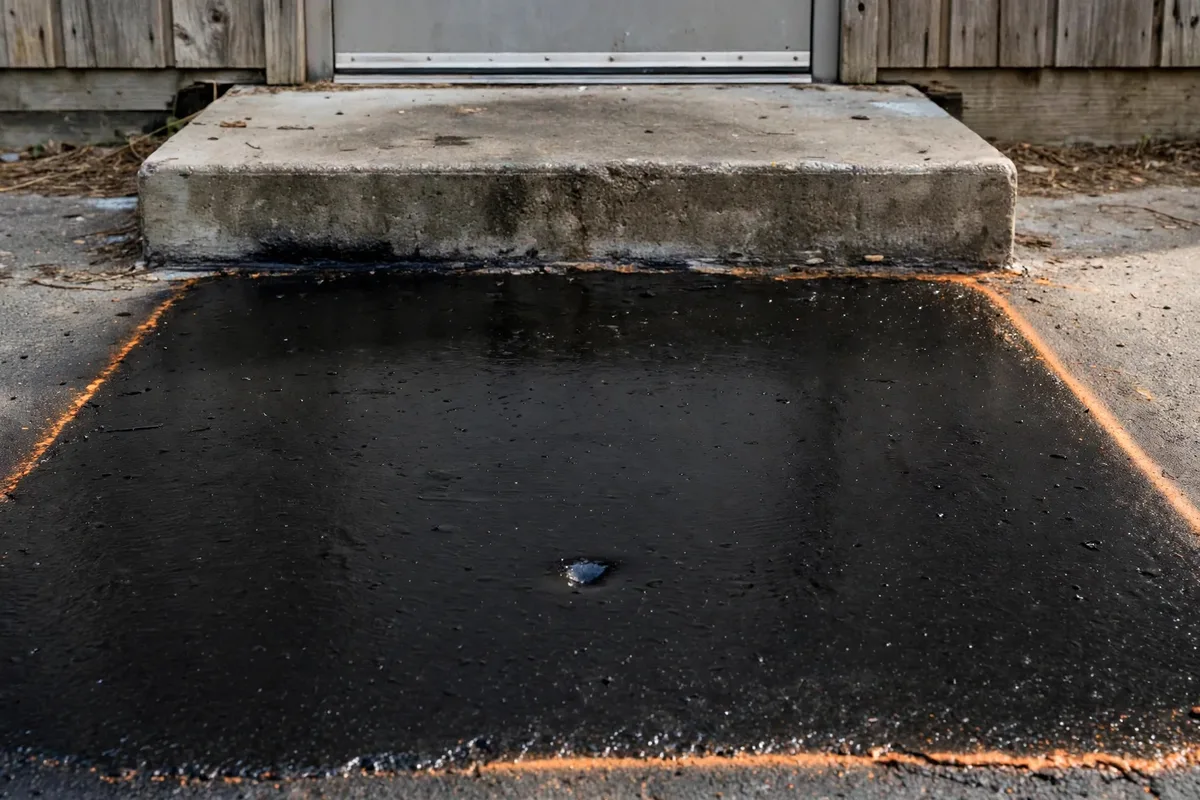
The asphalt was gray and chalky across the whole lot. Cracks ran along the stall ends, and a few opened out toward the drain. The worst part was at the kitchen door, where grease and fuel from deliveries had left a dark, glossy area that gave under a screwdriver. The stall lines had faded to the point where cars were parking crooked, and so were the people in line.
What the crew did, in order
The crew measured the lot and the cracks and marked the soft area. They cleaned the whole surface, sealed the cracks with hot-pour rubberized sealant, and cleaned and primed the oil-softened asphalt at the kitchen door. Then the owner and crew laid out the schedule around dinner service.
Plan the two mornings
Before any work, the crew walks the lot with the owner, measures the square footage and the linear feet of cracks, and marks the soft asphalt at the kitchen door. The price is built from those measurements.
Oil and grease soften asphalt, and sealer will not bond to a greasy surface. The crew cleans the kitchen door area and primes the oil spots before any sealer goes down.
Open cracks let rain into the base, and the sandy ground under Calabash lots does not forgive standing water. The crew seals the cracks with hot-pour rubberized sealant before the coats. Crack sealing is priced from $0.50 to $3.00 per linear foot.
Coat one goes down on the first weekday morning. The crew works in sections so staff and deliveries keep a way in, and the schedule is set with the owner so the lot is ready when dinner service needs it. Parking lot sealcoating is priced from $0.20 to $0.40 per square foot commercial.
Coat two goes down on the second weekday morning, again timed around dinner service. Two coats is the commercial norm.
Once the sealer has cured, the stalls are restriped over the existing layout. Striping jobs are priced from $600 to $3,600.

The two mornings
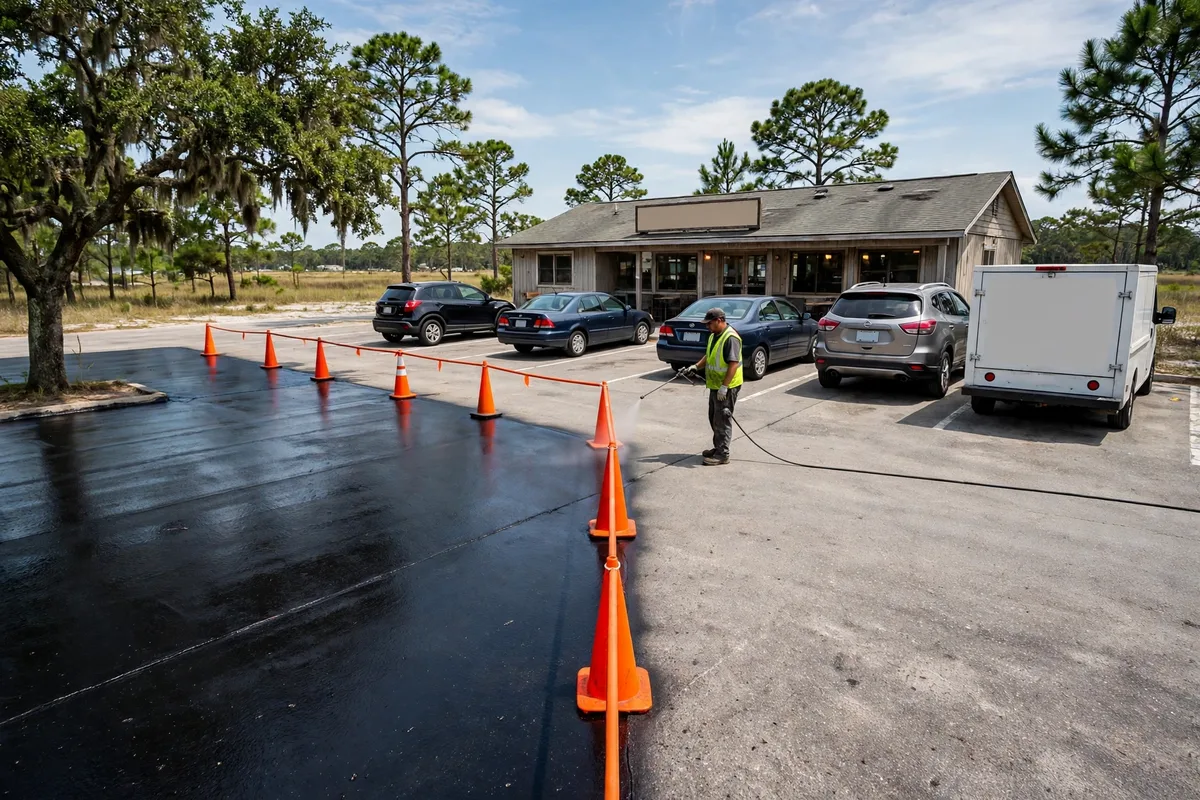
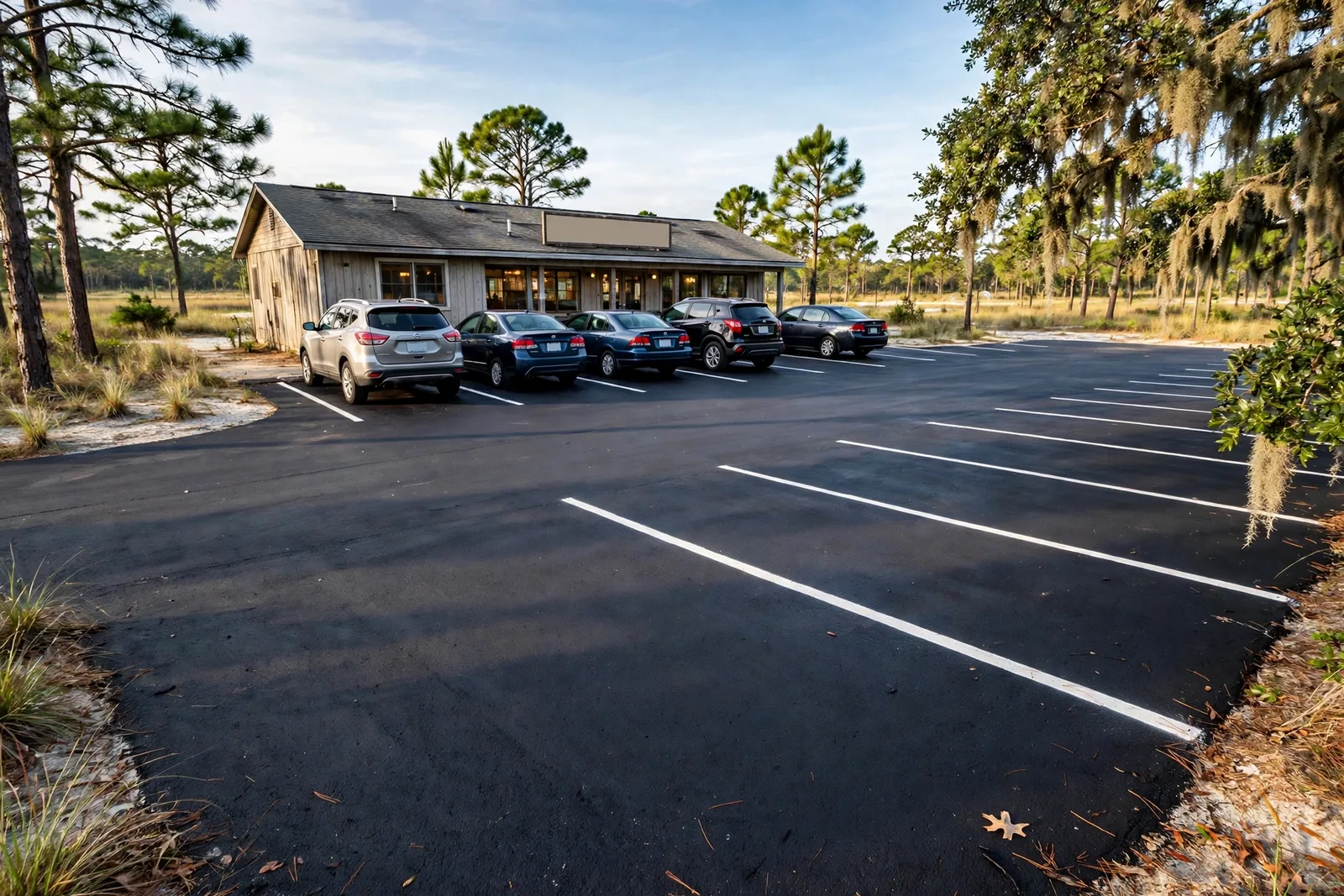
Coat one went on the first weekday morning and coat two on the second, each timed so the lot was ready for the evening. The crew sealed in sections, kept a path open for the kitchen deliveries and staff, and left barricades around anything still wet. The primed area at the kitchen door took the sealer like the rest of the lot.
The stalls
After the sealer cured, the crew restriped the stalls over the existing layout. The lot looked like it belonged to the restaurant again, and the stalls kept cars parked straight.
What it cost and what to watch for
The sealcoating was priced from the commercial band, $0.20 to $0.40 per square foot, on the lot's measured square footage. The crack sealing was priced per linear foot, within $0.50 to $3.00, on the cracks measured at the walk-through. The restriping fell within the $600 to $3,600 band for striping jobs. The oil priming was part of the prep, priced on top of the sealcoat as prep is on any lot.
For the owner, what to watch is the kitchen door. Grease comes back whenever deliveries and cleaning do. Check that spot after a busy season, and call about new cracks before the next heavy rain.
What it costs
These are our prices, and what moves them is the lot.
- Parking lot sealcoating: $0.20 to $0.40 per square foot commercial. Big lots price toward the lower end per square foot. Small lots, tight layouts and heavy staining price toward the higher end.
- Crack sealing: $0.50 to $3.00 per linear foot. The drivers are how wide the cracks are, whether they need cleaning or routing first, and how many there are.
- Line striping: $600 to $3,600 per striping job. The drivers are stall count, whether we restripe over the existing layout or lay out something new, and any arrows, fire lanes or other markings.
- Prep: oil-spot priming, cleaning and patching are priced on top. Patching is priced on the area, depending on size, depth and the condition of the base.
Multiply the lot's square footage by the rate and you have the sealcoat number. Add cracks by the linear foot, then the stripe job. The walk-through puts real measurements on those, and the price you hear is the price for your lot.
Most owners reseal every two to three years. That is typical practice, not a promise on any coating or pavement. A lot's age, traffic and how well its cracks have been kept tell us more than any calendar.
Questions
Can you work around our dinner service?
Yes. That is how the River Road job was done: coat one on a weekday morning, coat two on the next, in sections, with a way kept open for staff and deliveries. Tell us your busiest hours on the walk-through and we plan the two coats around them.
Do you really come all the way to Calabash from Leland?
We do. Calabash is about 50 minutes from our base in Leland, and it sits at the far edge of the ground we cover. Our hours are Monday to Friday, 9:00 AM to 5:30 PM, and the number is (910) 370-1121.
What does parking lot sealcoating cost?
Commercial sealcoating runs $0.20 to $0.40 per square foot. Big lots land toward the lower end, small or heavily stained lots toward the higher end. Prep such as cleaning, priming oil spots and patching is priced on top.
What does it cost to seal the cracks?
Crack sealing runs $0.50 to $3.00 per linear foot. Width, cleaning, whether the crack needs routing and the total footage move the number.
What does it cost to restripe the stalls?
Striping jobs run $600 to $3,600. The stall count and whether we restripe over your existing layout or lay out something new are the main drivers.
How often should a restaurant lot be sealed?
Most owners reseal every two to three years. That is typical practice, not a guarantee. A busy lot with grease at the kitchen door or heavy delivery traffic may want a closer look sooner.
What do you do about the grease and oil by the kitchen door?
We clean it, prime it, and only then coat over it. Oil softens asphalt and keeps sealer from bonding. If the asphalt is soft all the way through, we say so, and the fix may be a cut-and-patch repair priced on the area.
Do the cracks really need to be sealed before the coats?
Yes. Sealcoating does not close cracks. Rain gets through them into a sand base, and the base is what fails. We seal with hot-pour rubberized sealant first.
Does the salt air matter?
Salt air and hard sun are part of what a coastal lot lives with. Sealcoating protects against sun oxidation and oil softening. Keeping cracks sealed matters most for the water that comes in storms.
How long before customers can park on it?
That depends on the weather and the coats. We barricade the wet sections, agree the plan with you ahead of time, and tell you plainly when the lot is ready.
Do you pave new lots?
No. We care for asphalt that is already down: sealcoating, crack sealing, patching and striping. We do not lay new lots or roads, mill, pour concrete or do drainage work.
Can you also redo our accessible spaces and signs?
We repaint accessible space and aisle markings with the rest of the striping. We describe that work only. We do not certify legal compliance. Signs and wheel stops can be added to a striping job.
We are a church, not a restaurant. Is it the same work?
The same steps apply, and the same prices. A church lot gets heavy traffic on certain days, so we plan around your services the way we plan around a dinner rush.
Start with a call
If your lot is gray, cracked or hard to park in, call us at (910) 370-1121 or send the form below. We will set up a walk-through, measure the lot and give you the numbers for your job.
The more details you give, the better we are able to help you.