Carolina Shores grew out of a development begun in the 1970s, and many of its driveways went down in the 1980s. Decades of sun, coastal rain and sandy ground show up in that asphalt as cracks. At that age, cracking comes before coating. Leland Pavement Care does crack sealing in Carolina Shores with hot-pour rubberized sealant, run into the cracks before the next big rain gets under the surface.
On most of these drives the first call is crack filling, because water is what finishes asphalt on this coast. A summer downpour goes through an open crack into sand, and sand under a driveway does not hold up once it is wet and moving. Once the cracks are sealed, asphalt sealcoating and driveway sealcoating make sense as the next step. A coat over open cracks does very little to keep the water out.
Where the base has already gone soft, sealant is the wrong tool. That is pothole repair and asphalt patching: saw cut, new base, hot mix. We tell you which one your drive needs. On an older drive, driveway repair often comes in two parts, seal what is sound and patch what is not. We drive down from Leland, about 50 minutes, and Carolina Shores sits at the far edge of our ground.
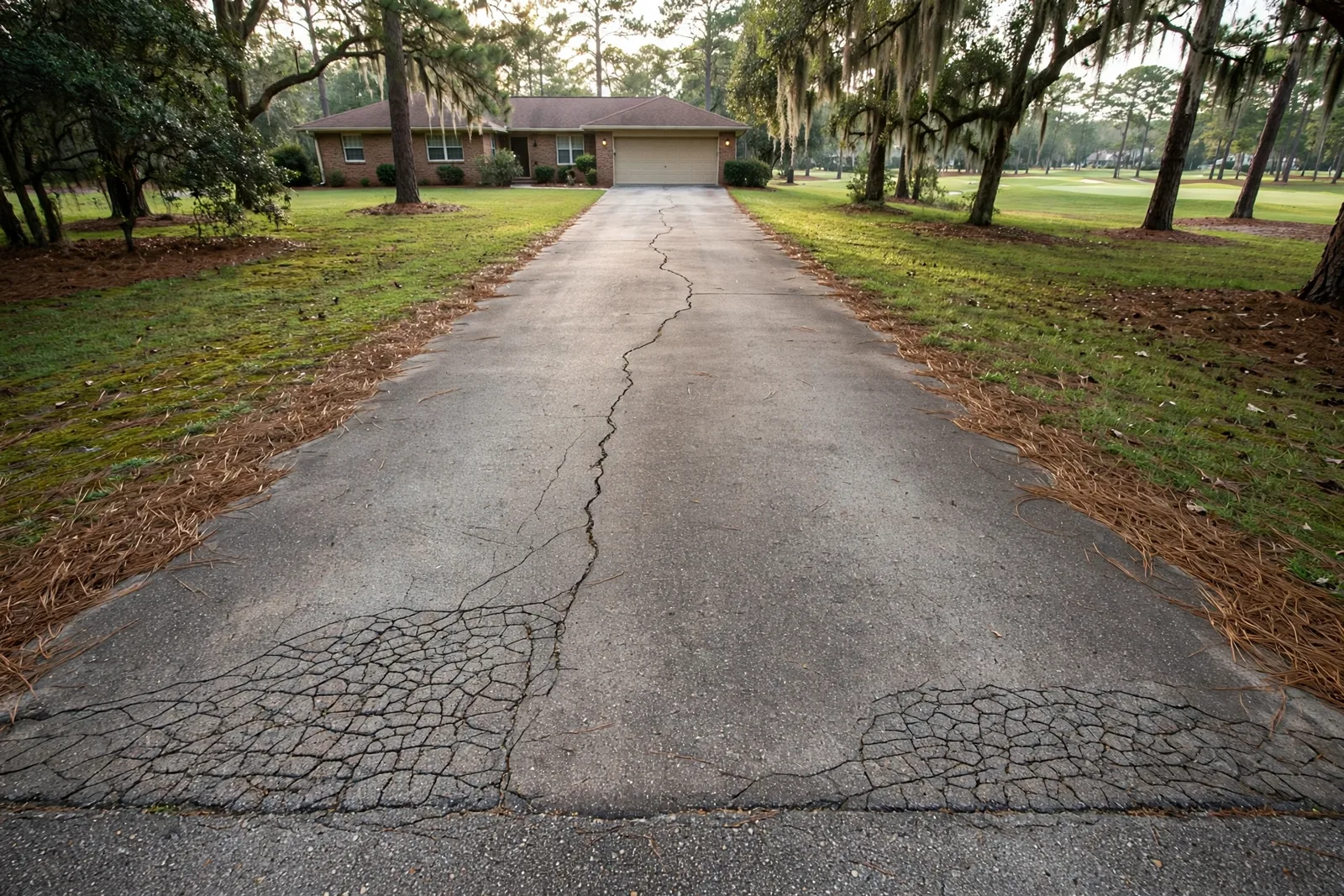
What old Carolina Shores asphalt looks like
Carolina Shores had 4,588 residents at the 2020 census, and a good share of its pavement is the oldest residential asphalt in our territory. Most of the neighborhoods nearby went in over the last two decades. A drive from the 1980s has been through a lot more weather.
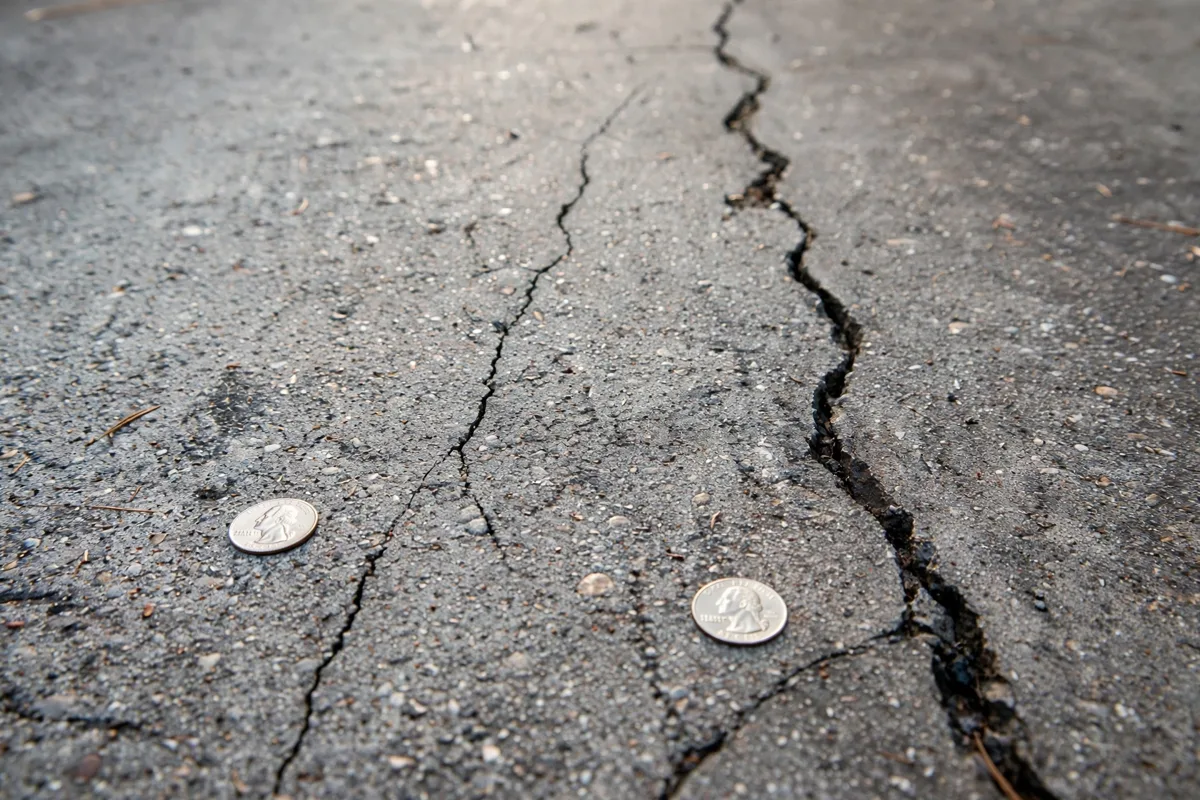
Age leaves a few signs. The surface is gray and dry, with the dark binder gone from the top. Cracks start thin and tight, then widen as the pavement moves with heat and with the wet-and-dry swings of the soil. Edges start to crumble. Grass finds a seam and roots in it. By the time a crack is a quarter inch wide, it is a working crack: it opens and closes through the year, and anything you push into it has to flex with it.
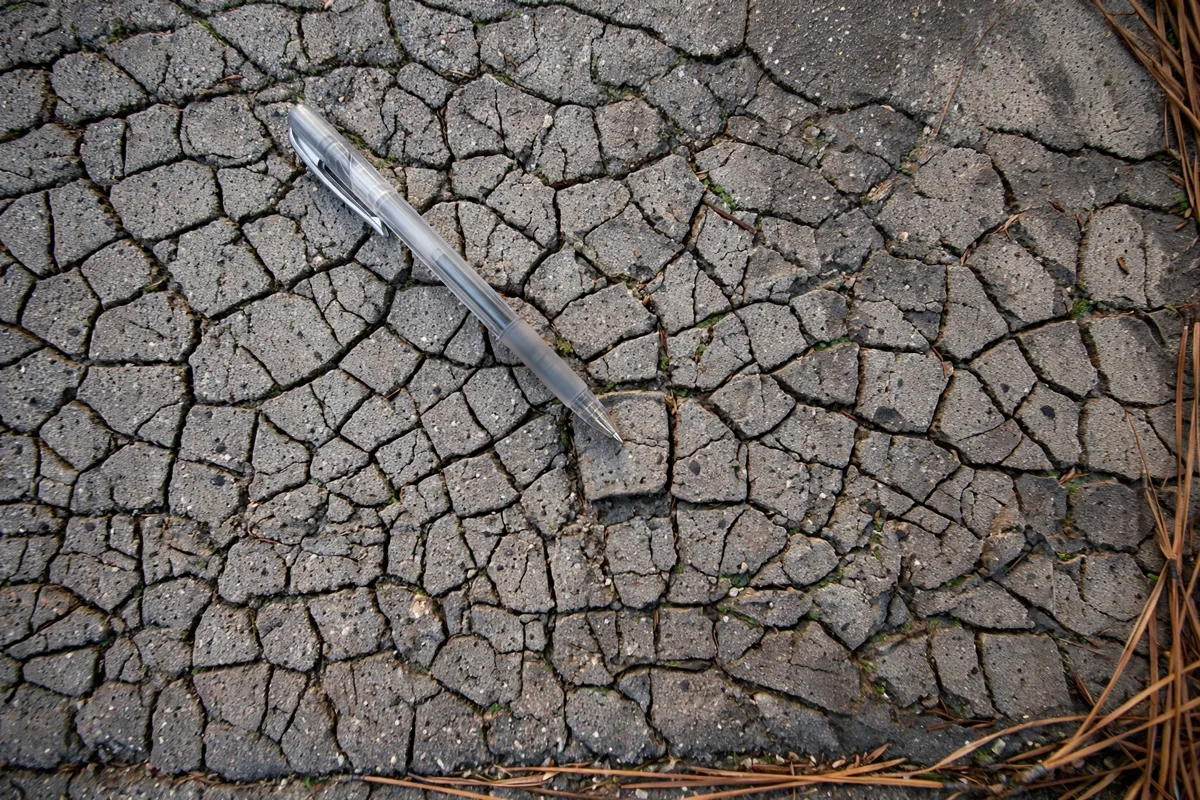
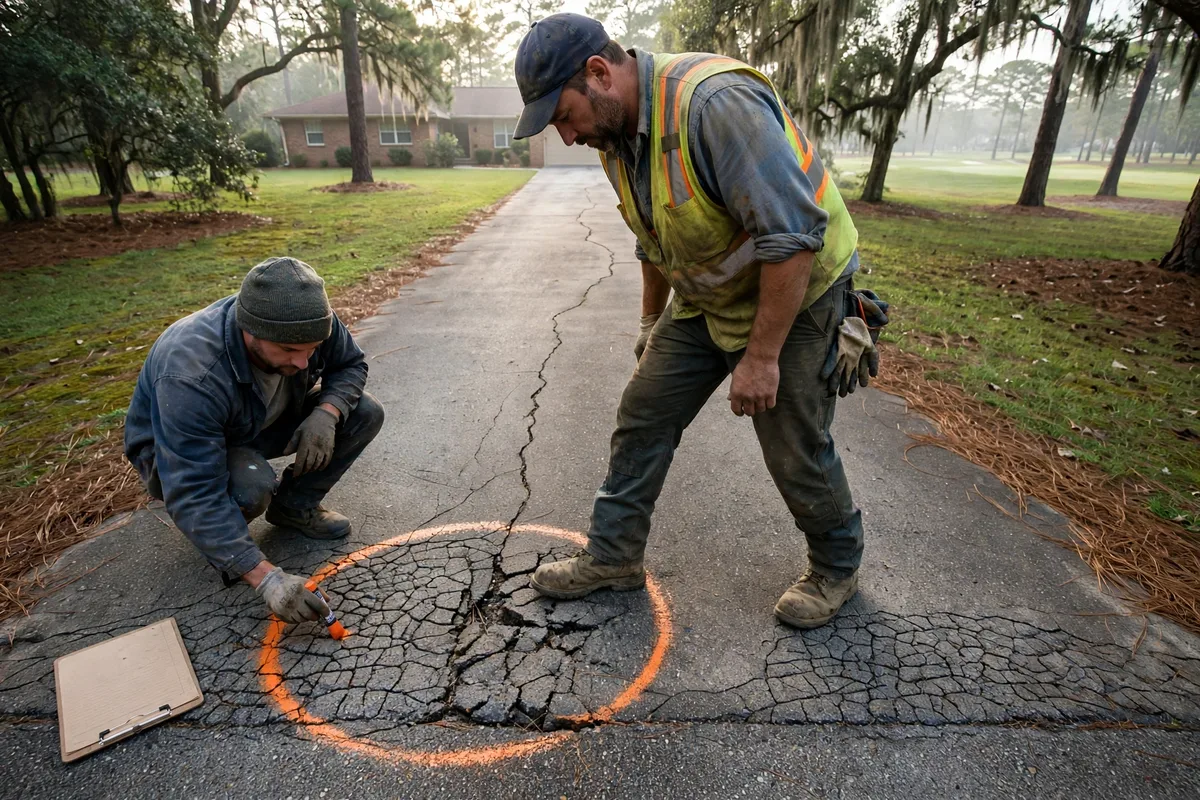
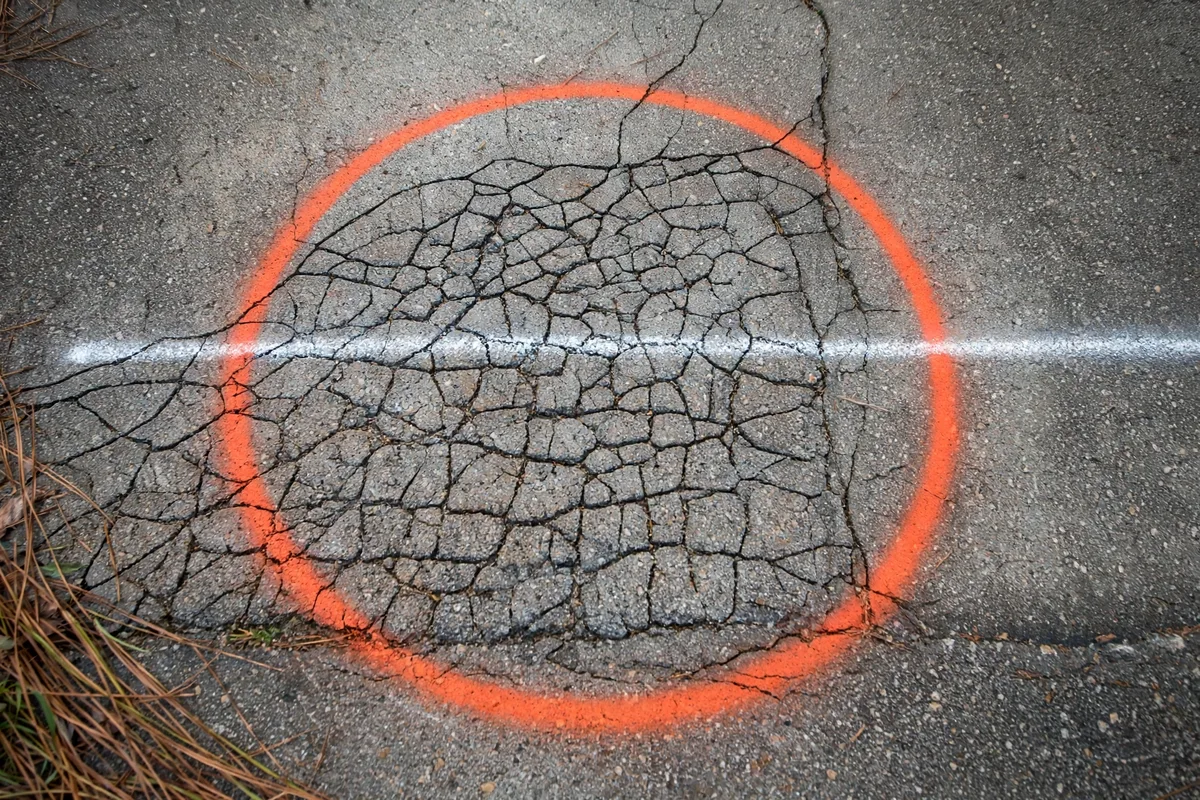
Then there is the pattern that is not a crack at all. When cracks connect into a block pattern like the back of an alligator, and the surface gives slightly underfoot, the base underneath has failed. That needs a patch, and sealant over it only buries the problem.
Why cracks come first on this coast
Four things wear asphalt here. UV oxidation dries out the surface. Water gets in through cracks. Oil and fuel soften it. And in sandy soil the base fails. Coat work, meaning sealcoating, handles the sun and the oil. Crack work handles the water. Patching handles the base.
Brunswick County's soil is sand, and the water table is high. Here, a drive holds up only as well as the base under it. Summer thunderstorms and tropical systems can drop inches of rain at once, and Hurricane Florence in 2018 showed what that does to this county. When that water finds an open crack, it goes straight down to the sand, softens it and carries some of it away. Salt air and long humid summers do the rest of the work on the surface. Sealing the crack before the wet season is far cheaper than rebuilding the base after it.
That is why we start with the cracks on an older drive and not with the coat.
Sealant and method: what goes in the crack
The professional standard is hot-pour rubberized sealant. It goes in hot, bonds to the crack walls and stays elastic enough to move with the pavement. It is the right material for cracks from ¼" up to 1" wide.
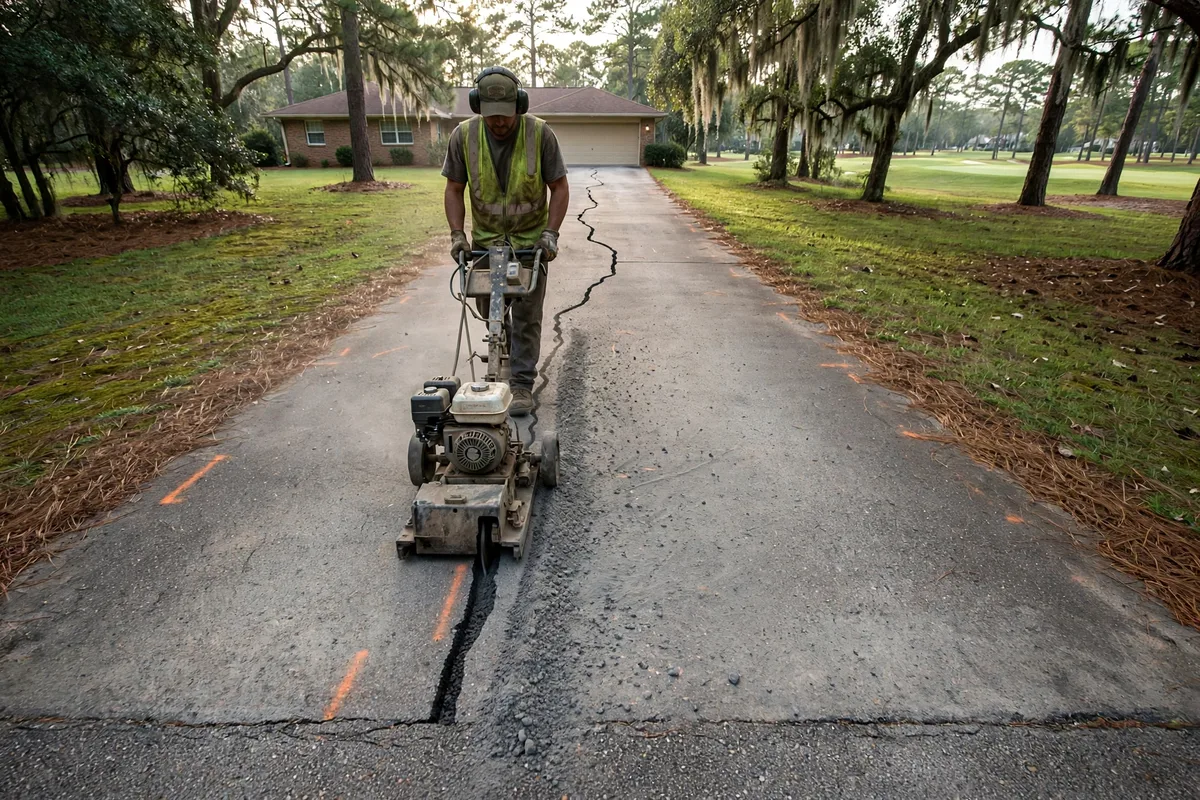
There is a real choice in how it goes in. On a crack that is moving and wide, we route it, cutting a clean channel so the sealant sits in a reservoir with enough depth to flex. On tighter cracks that are already clean, we can fill without routing. Routing adds a step, so routed cracks cost more per foot.
Cold-pour products and the filler from the hardware store are the short-lived alternative. They go in easily and they pop out of a moving crack. Plenty of drives in Carolina Shores have a line of old filler along them that did not hold, and we clean that out before we seal.
How the crack work goes
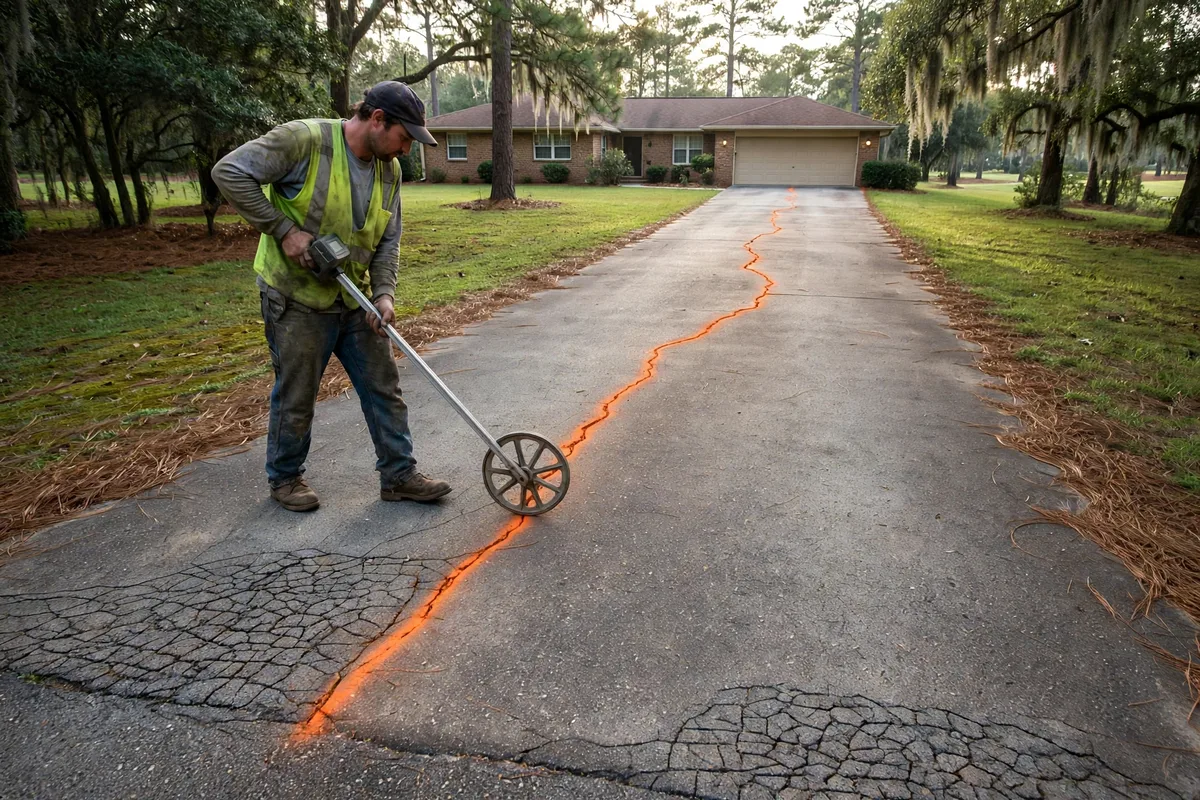
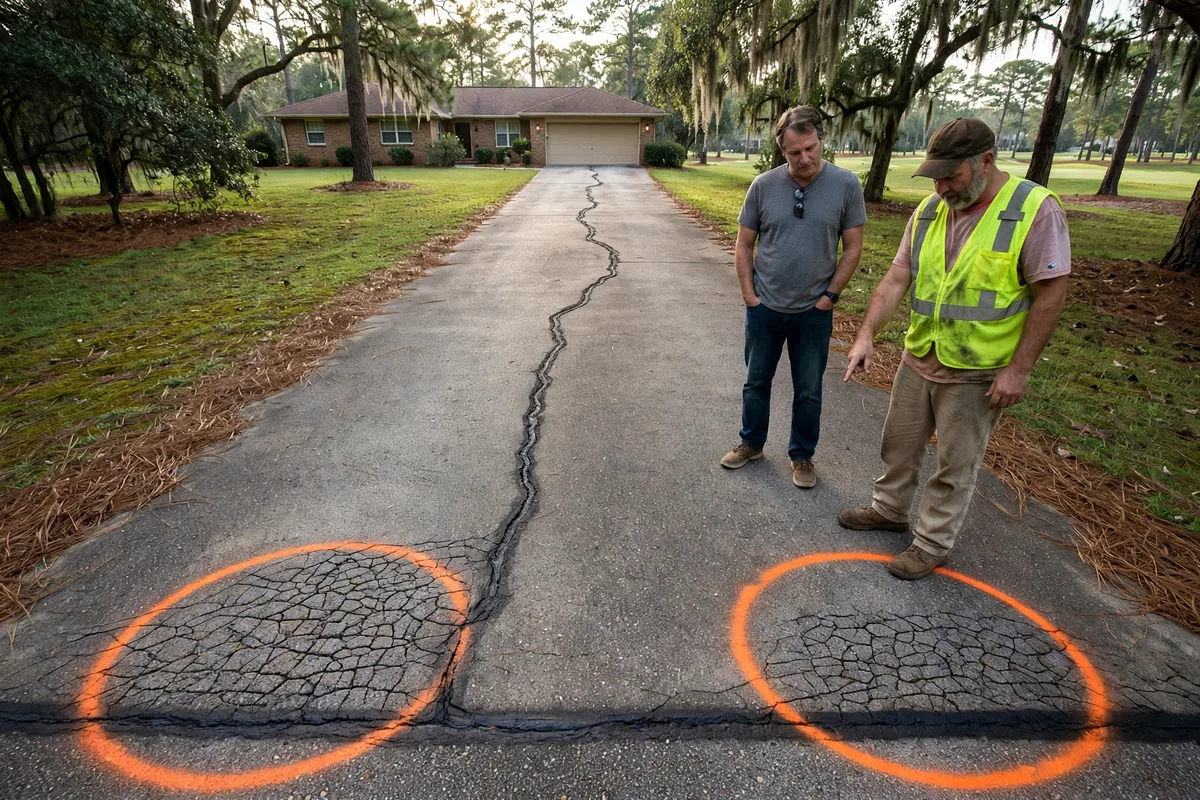
Step 1: Walk the drive and mark every crack. We walk the whole surface, edge to edge, and mark each crack with paint. A crack we do not mark does not get sealed.
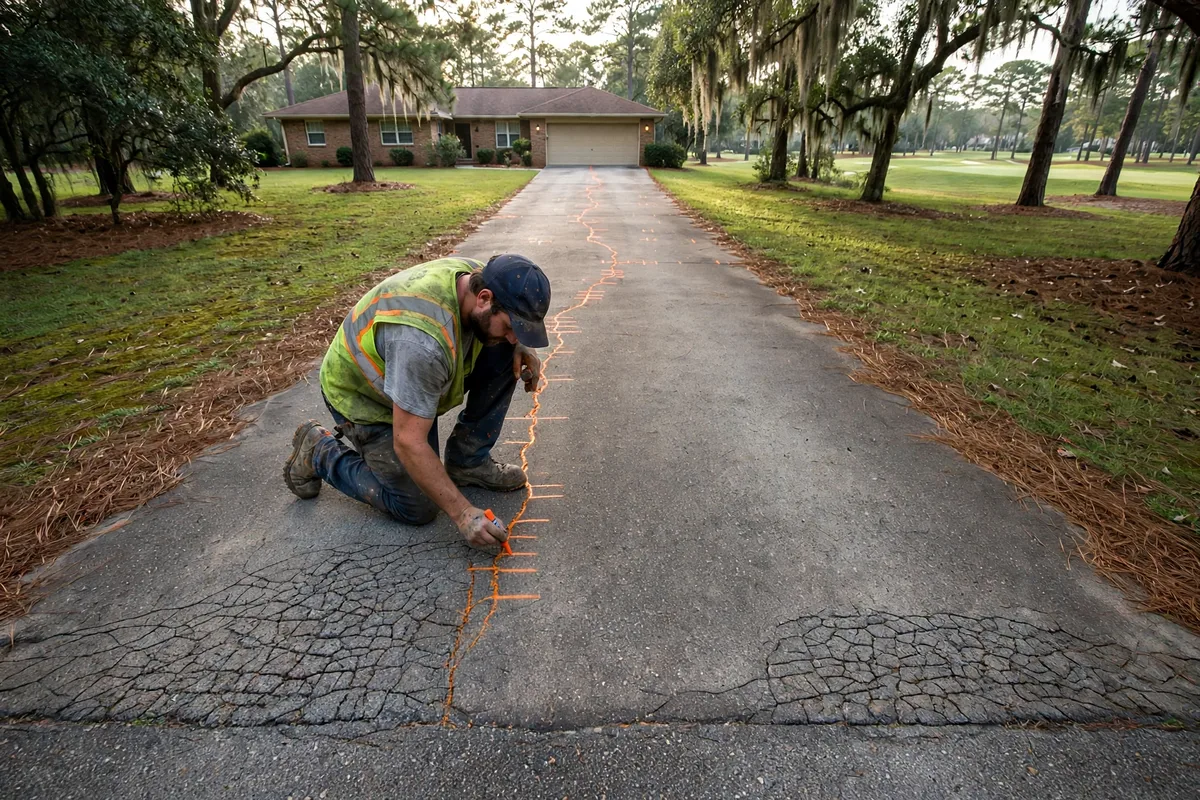
Step 2: Measure by the linear foot. Cracks are priced by length. We run a measuring wheel along each marked crack and add it up on the spot, so you see the footage before any work starts.
Step 3: Sort what can be sealed from what cannot. We check each crack's width and edges, and we press and listen over the soft spots. Sound cracks go on the sealing list. Alligator patterns and sunken spots go on a separate list for patching. Nothing in that second group is sealed over.
Step 4: Route the working cracks. On wide, moving cracks, we cut a channel along the crack with a router. That removes loose edges and gives the sealant a reservoir with square walls to grab.
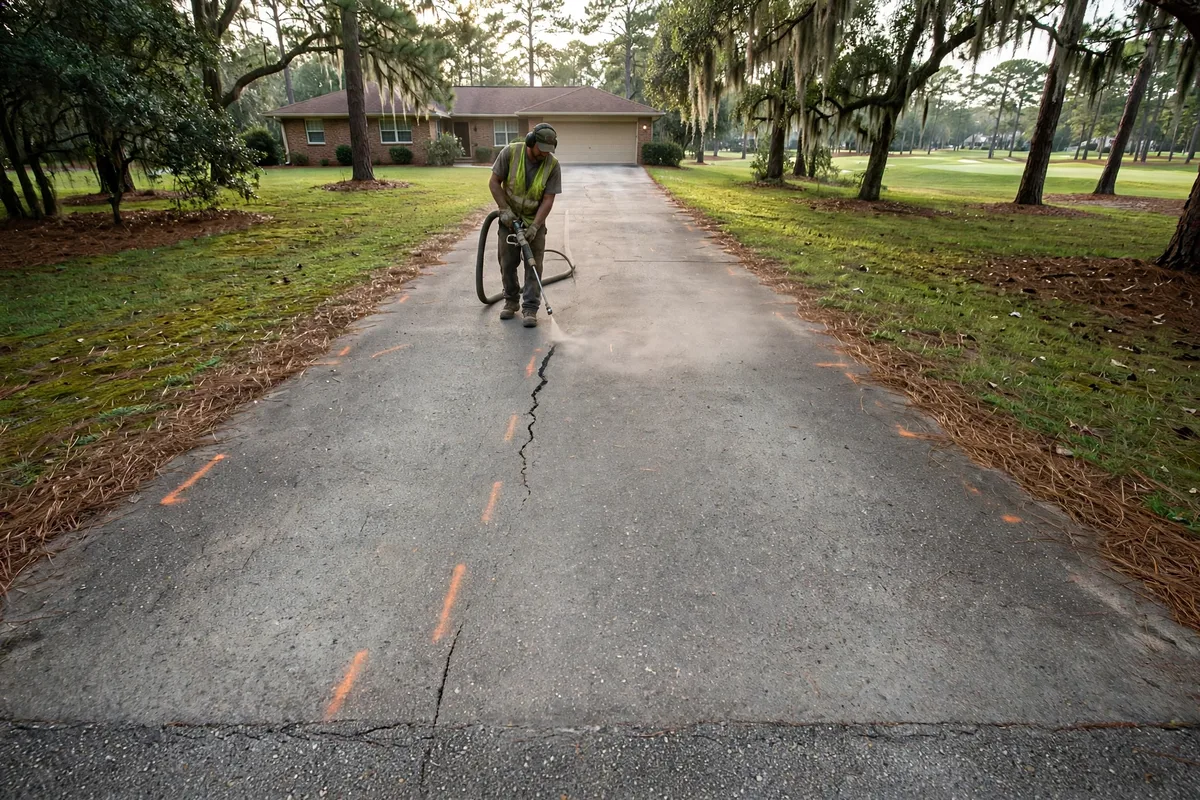
Step 5: Clean and dry the crack. Dust, sand and old filler come out with compressed air. A crack that is dirty or damp will not hold hot sealant, so the crack has to be dry and clean before anything goes in.
Step 6: Pour and finish. Hot rubberized sealant goes in from a wand and is struck off level with a squeegee. It is filled to the surface, with no big bead left on top.
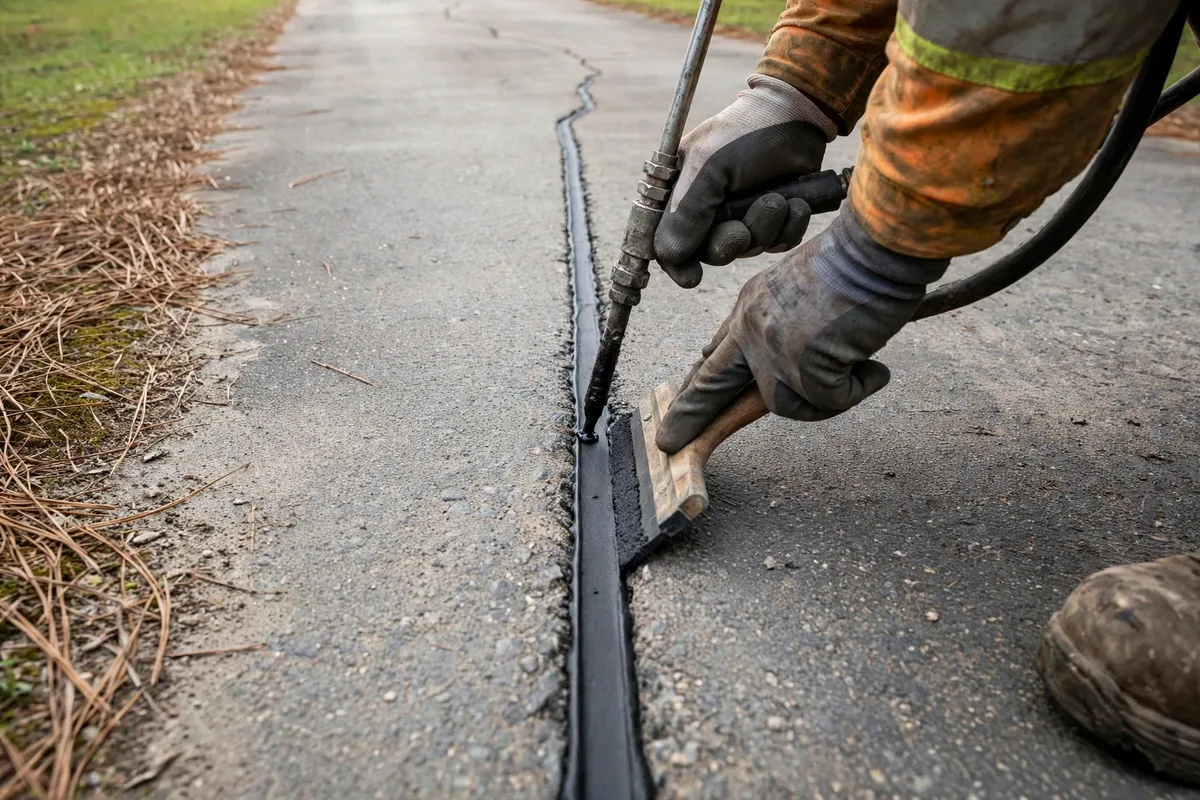
Step 7: Walk it back. Before we leave we go over every marked crack and check the fill, the edges, and the patch list. You get told what is done, what is next and what to watch.
What it costs
Crack sealing runs $0.50 to $3.00 per linear foot. Where in that range your drive lands depends on the crack: how wide and deep it is, whether it needs routing, how clean it is and how much old filler has to come out. Tight, clean cracks sit at the low end. Wide, routed cracks with broken edges sit toward the high end. The footage is measured on the drive, so you pay for the cracks that are actually there.
Patching is a separate line. A pothole class repair runs $150 to $400 where the base work follows: cut, remove, re-base and hot mix. Size, depth and the condition of the base drive that price. A bigger failed area is measured by area and priced on what it takes to rebuild it, not by the pothole.
Those are the two numbers on an older Carolina Shores drive. The coat, when it comes, is its own job with its own price, set by the size of the drive.
The driveway off Carolina Shores Drive
A homeowner off Carolina Shores Drive called about a driveway that had been there since the 1980s. The surface was gray and dry. Cracks ran across the whole length, and a couple of them had edges breaking away. Rain stood in a few places after storms.
Chapter 1: What the crew found
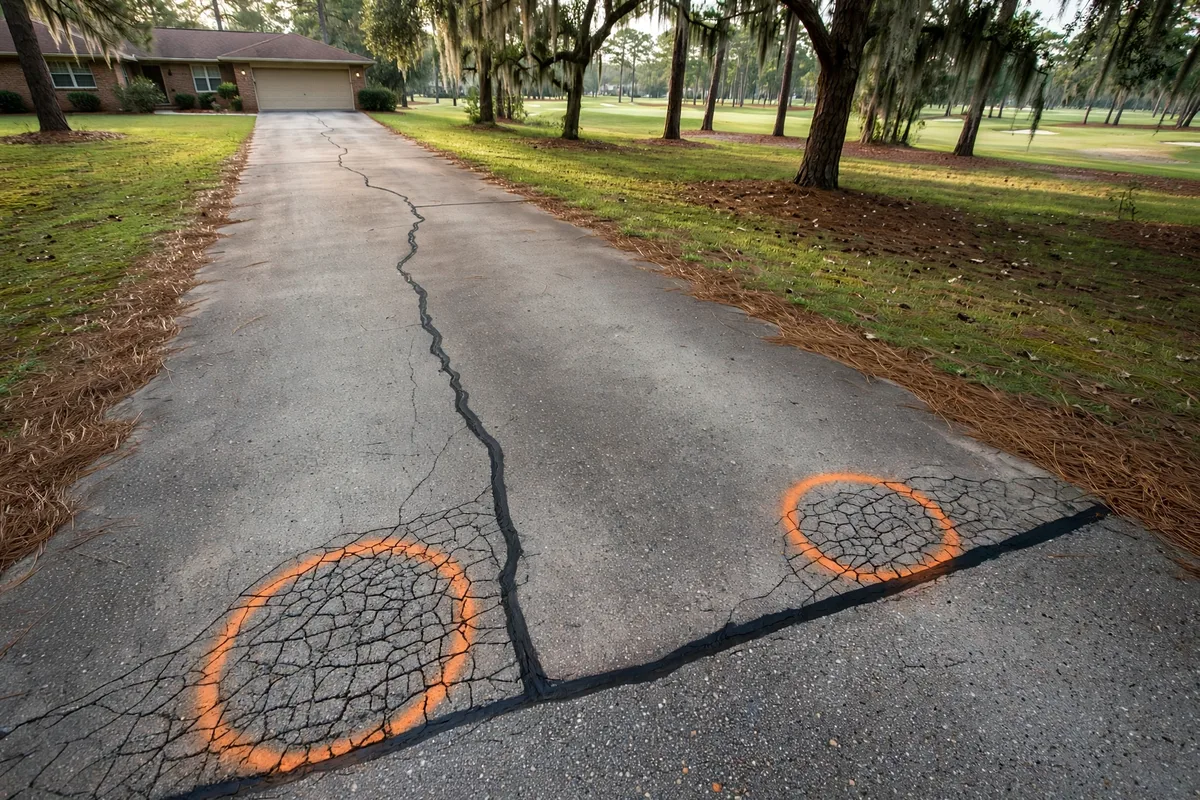
The crew walked the drive and marked everything. Most of the cracks were working cracks, wide enough to move. Near the low end were two areas where the cracks joined in the block pattern and the surface gave a little underfoot. Those two were the base going, not the surface.
Chapter 2: Sorting the cracks
We measured the cracks by the linear foot with a wheel and wrote the footage on the paperwork. The two soft areas were circled and kept off that list. The drive had three kinds of trouble, and each one gets a different answer. Work through it the way the crew did.
Seal it or patch it? Sort the cracks on the driveway.
Clean it and seal it with hot-pour rubberized sealant. Priced by the linear foot, $0.50 to $3.00 per linear foot.
Route it to cut a reservoir, clean it dry, fill it with hot-pour rubberized sealant. Same price basis, $0.50 to $3.00 per linear foot, with routed, wider cracks toward the higher end.
Do not seal it. The base has failed and sealant over it only buries the problem. It is a patch: saw cut, remove, re-base, hot mix, at $150 to $400 per pothole class repair where the base work follows.
Patch it the same way, $150 to $400 per pothole class repair where the base work follows.
The order of the job is sealed cracks first, patches named as the next job, then the coat.

Chapter 3: Route, clean, pour
Every working crack was routed, blown clean with air and checked for dryness, then filled with hot-pour rubberized sealant and struck off flush. The crew worked from the street end to the garage so that nothing was walked through.
Chapter 4: The two patches, named honestly
The crew did not seal those two areas, and the owner was told why. Sealant over a failing base cracks again as soon as the base moves, and the money is gone. They went on the paperwork as the next job: two pothole class repairs, saw cut, base and hot mix, at $150 to $400 each where the base work follows.
Chapter 5: The coat, the following month
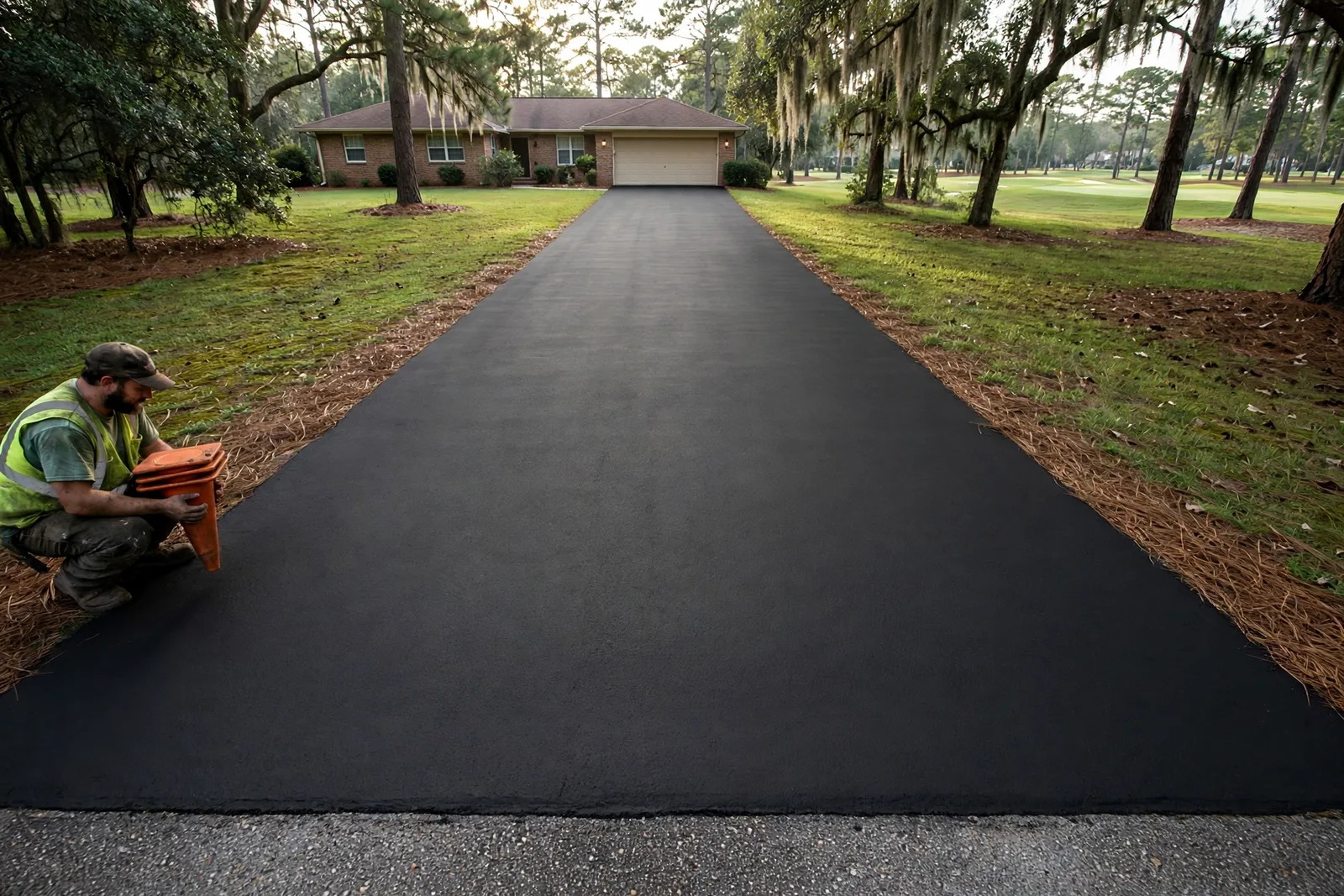
A month later the crew came back and put an asphalt-emulsion sealcoat over the drive. With the cracks sealed, the coat had something sound to cover. It deals with the sun-dried, oxidized surface and with oil. The coat is the last step, never the first.
What it cost, and what to watch
The crack work was priced by the linear foot, inside $0.50 to $3.00, on footage measured before anything was poured. Wide, routed cracks cost more per foot than tight, clean ones, which is why the band runs wide. The two patches were priced as pothole class repairs at $150 to $400 each.
For the owner, the things to watch were these. Look at the sealed lines after hard rain for any place a crack is opening at the edge. Watch the patch areas for any further sinking. Check the low end of the drive after storms, because that is where water went first. If a new crack opens, call about it while it is still narrow.
Questions
Do you work in Carolina Shores?
Yes. Carolina Shores is about 50 minutes from Leland, at the far edge of the ground we cover. We come out for crack work, patching and sealcoating on homes, HOAs and churches there.
How much does crack sealing cost per foot?
$0.50 to $3.00 per linear foot. Where your drive falls depends on how wide and deep the cracks are, whether they need routing, and how much old filler has to come out. We measure the cracks with a wheel on site, so the price is the footage times the rate.
My driveway is from the 1980s. Is it too old to bother sealing?
Most worn driveways are repair candidates. What matters is the base. If the cracks are the problem and the base is firm, sealing them is the right work. If the base has failed in places, those places get patched first. We tell you which is which when we walk the drive.
Can I just use the crack filler from the hardware store?
You can, and plenty of people have. Cold-pour and do-it-yourself filler go in easily and pop out of a crack that moves. Hot-pour rubberized sealant, run into a clean crack, is the professional method, and it stays flexible with the pavement.
What does routing a crack mean, and why do it?
Routing cuts a clean channel along the crack so the sealant has a reservoir with square walls and enough depth to flex. It matters most on wide cracks that are moving. Tight, clean cracks can sometimes be filled without it. Routing adds a step, so routed cracks cost more per foot.
How wide a crack can you seal?
Hot-pour rubberized sealant is the right fill for cracks from ¼" to 1" wide. Anything that is not a crack at all, like a block pattern with a soft surface, is a base problem and gets patched.
What is alligator cracking, and can you seal it?
It is a pattern of connected cracks that looks like alligator skin, usually with a surface that gives underfoot. It means the base underneath has failed. We do not seal it, because sealant over a failing base cracks again. It is repaired as a patch, $150 to $400 per pothole class repair where the base work follows.
What does patching cost?
A pothole class repair is $150 to $400 where the base work follows: cut, remove, re-base and hot mix. Size, depth and base condition set the price. Larger failed areas are measured by area.
Should I seal the cracks or sealcoat first?
Cracks first, coat after. A coat over open cracks does not keep water out. The sequence on an older drive is cracks sealed, patches done, then the coat. The coat is a separate job with its own price, set by the size of the drive.
Will the cracks come back?
Asphalt is a maintained surface, not a permanent one, and it keeps moving. Sealed cracks keep water out, but new cracks can open elsewhere, and old ones can open again at the edge. Most owners check the sealed lines each year and after hard storms, and fix what has opened while it is small.
Why do older drives here crack so much?
Sun and humidity dry the surface, heavy rain gets into every opening, and the sandy ground under the drive shifts when it is wet. An older driveway has been through all of that for decades. Salt air and storm seasons add to it.
Do you replace driveways?
No. We maintain and repair asphalt, and we do not lay new driveways. If a driveway is repair work, we do it. If the base is gone across the whole drive, we will say so plainly, and that is a decision for another kind of contractor.
Can you handle a shared lane or a community lot?
Yes. We work for homeowners, HOAs and churches. Crack sealing on a shared lane or community lot is priced the same way, by the linear foot, with the footage measured on site.
How do I get started?
Call (910) 370-1121 or fill out the form below. Tell us roughly how old the driveway is and what you are seeing, and we will go from there.
Call about your Carolina Shores driveway
If your driveway has cracks running across it, or soft spots near the low end, call (910) 370-1121 or send the form below. Tell us how old the drive is, where the cracks are and what you have seen after rain. The more you can describe, the better we can tell you what the drive needs.
The more details you give, the better we are able to help you.