Holden Beach had 359 full-time residents at the 2020 census, and in season it holds many times that. Leland Pavement Care works about 40 minutes up the road from Leland, and the pothole repair we do here is mostly for the rental driveways, beach-access lots and shared lanes that take that crowd.
What the work comes down to is asphalt patching: cutting out the failed spot, rebuilding the base under it and filling it with hot mix. Sand, standing water and the steady line of vehicles coming over the bridge work the same weak spots every year, so the same entrances, low corners and turning areas open up again and again.
A hole is usually the end of a longer story. When the crew is already on site, we seal the cracks that let the water in, and that crack sealing is part of doing asphalt repair in the right order: fix what failed, then close what will fail next. Rental owners call us about driveway repair, associations and condo managers call about parking lot maintenance, and some ask about asphalt sealcoating once the base underneath is sound.
Why patching is the job on this island
Asphalt sits on its base. On the mainland you can get away with a thin base for a while. On a barrier island the base is sand, the water table is high, and a summer thunderstorm or tropical system can drop inches of rain in an hour. If that water finds a crack, it goes straight down and softens the sand under the asphalt. The surface then flexes under each tire until it breaks.
Hurricane Florence in 2018 showed how hard this county's pavement gets pushed by water. Most years the damage is smaller and slower, but it comes from the same cause. Holden Beach also has a second problem. A rental driveway that sits quiet in March carries a different car every weekend by July. An access lot built for a few cars takes heavy traffic all summer. Weak spots do not last long under that kind of use.
So when someone here calls about a hole, we look at what is underneath it and why the water got in. We do not look at the hole alone.
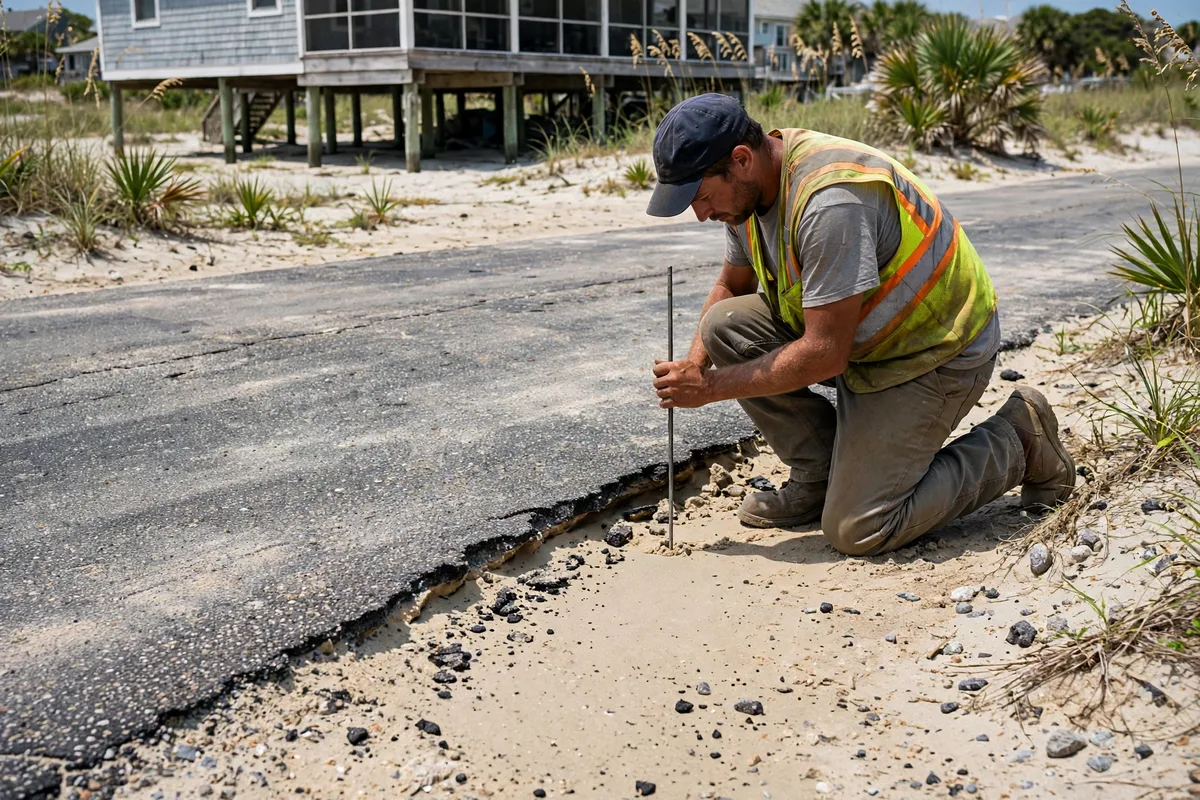
What a failing spot looks like here
Some failures are obvious. A hole you can lose a tire in is plain enough. The ones that cost owners the most are the early signs:
- A dip near the entrance or at the foot of the driveway where water stands after rain.
- A network of small cracks in a patch of pavement, like dried mud.
- Damp edges, or sand and fine gravel washed out onto the surface after a storm.
- A spot that moves under your foot or your tire.
- A cold-patch fill that has already come loose.
A pumping hole is the one we see most on the island. After rain, water shows at the edges of the break, and each tire that rolls over it pushes water and sand up through the opening. It means the base under the hole is saturated, and no fill on the surface will hold it.
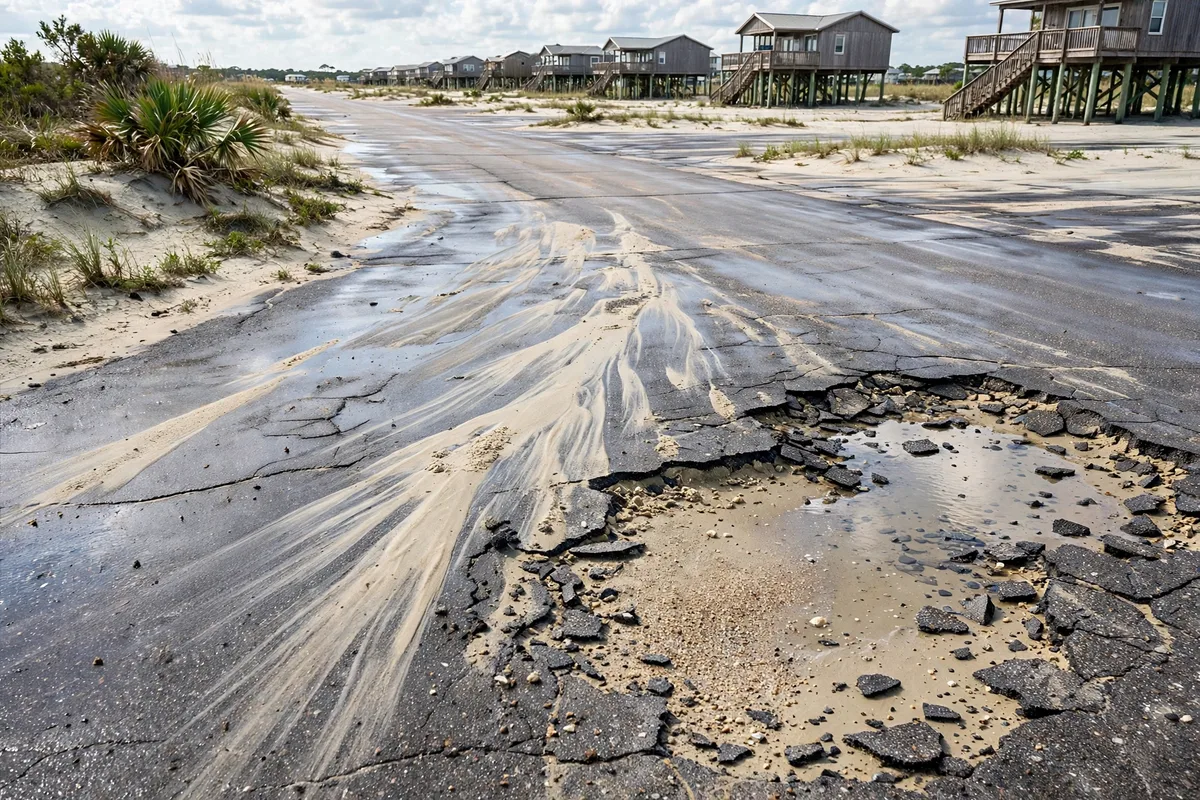
How the patch goes, step by step
This is the durable repair: saw-cut, remove, re-base and hot-mix patch. A skin patch or a bag of cold patch is the temporary contrast, and we do not sell it as the repair.
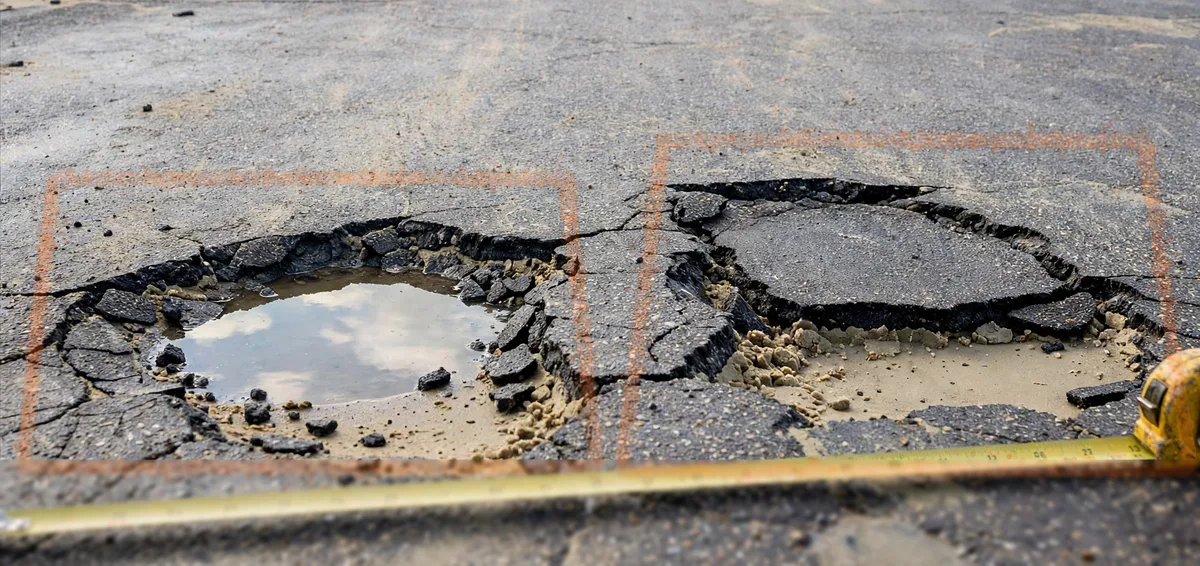
1. Walk the area and mark it
The crew looks at the whole drive or lot before cutting anything, then marks the failed spots with paint. We check where water stands, how soft the edges are and whether neighboring cracks are feeding the problem. The marked outline always extends past the visible break onto sound asphalt.
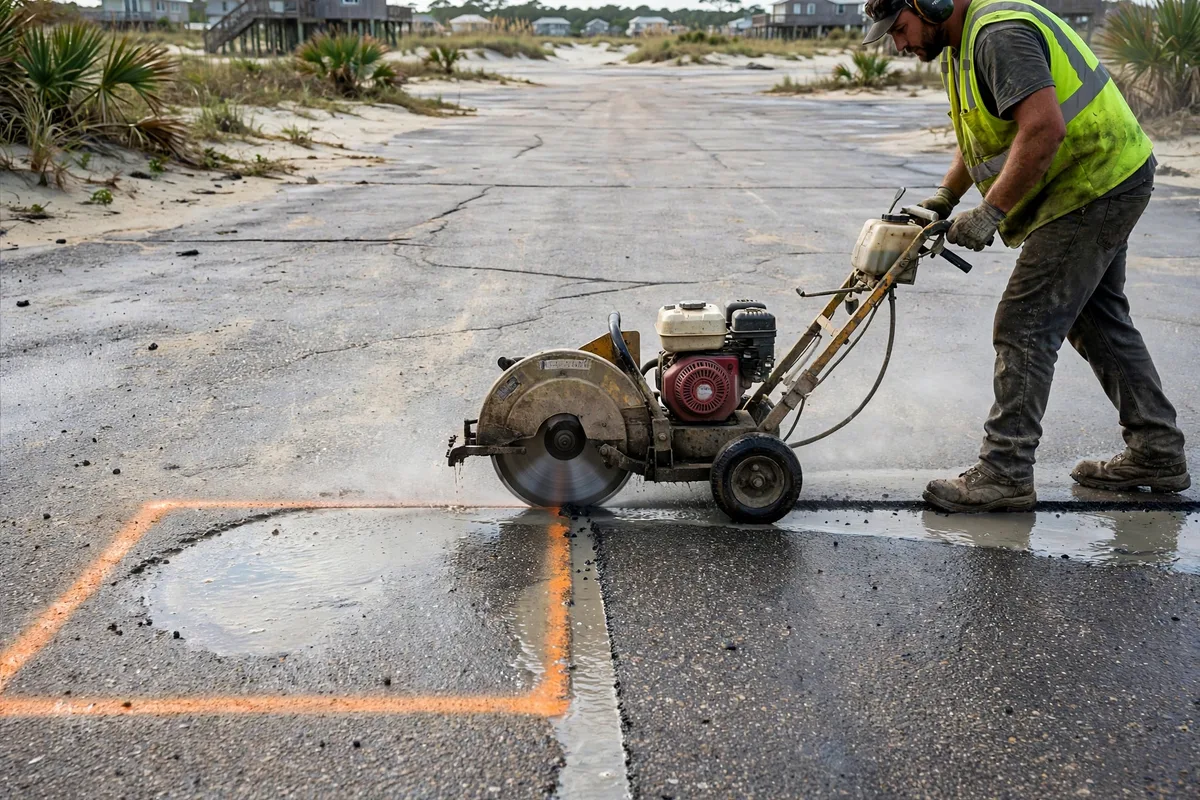
2. Saw-cut the edges
A saw cuts straight, vertical edges along the marked lines. Clean edges let the patch seat tight. A ragged edge leaves a seam where water gets in the first time it rains.
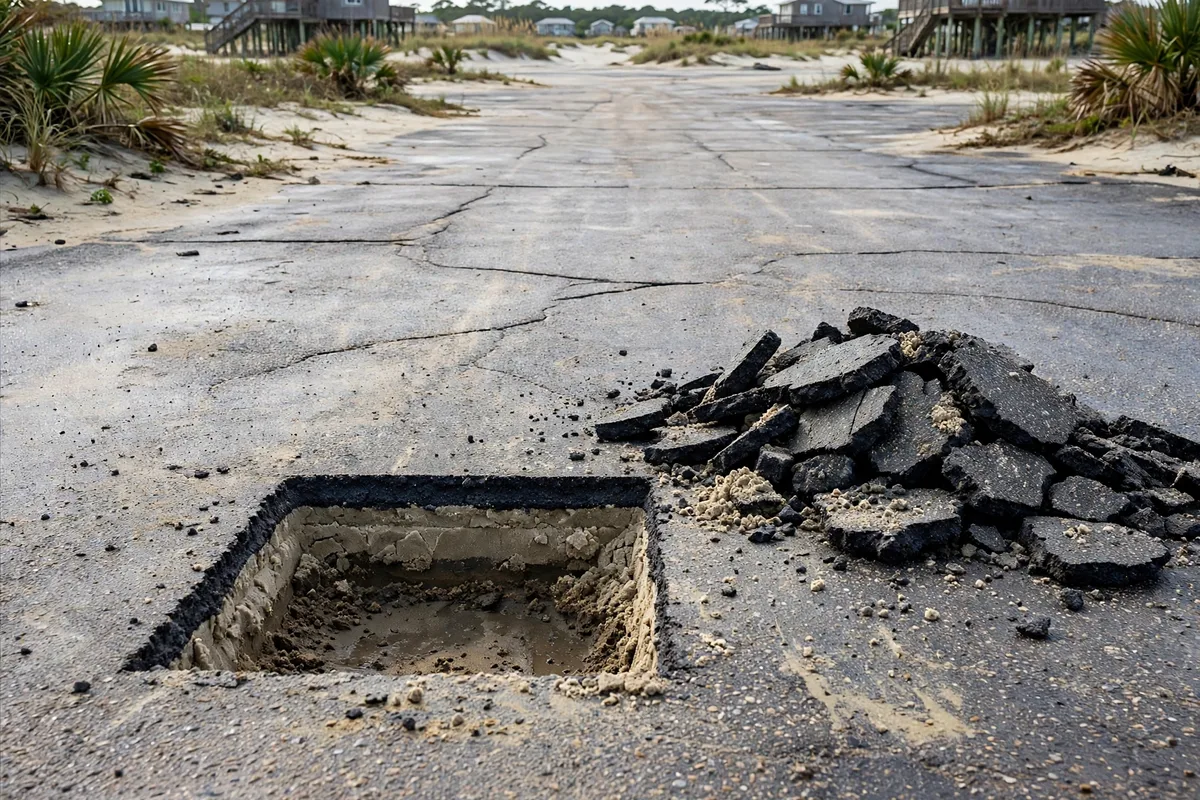
3. Remove the damaged asphalt and check the base
The cut section comes out. This is where we find out what is really wrong. If the sand underneath is dark and wet, or the old base is mixed up with fines, it has to be dug out as well. We would rather open the hole wider than put hot mix over bad ground.
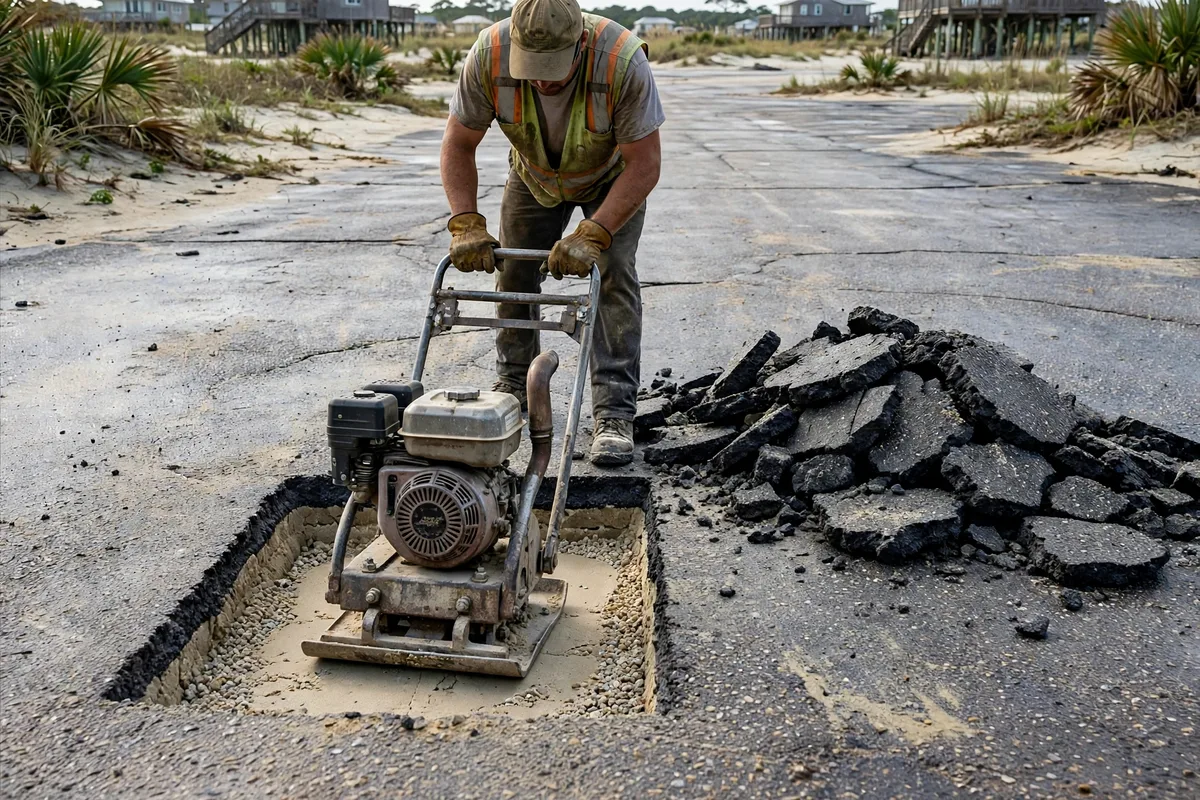
4. Re-base and compact
Clean base material goes in and is compacted in layers until it is firm. This step decides how the patch performs on sand. The hot mix on top is only as good as what it sits on.
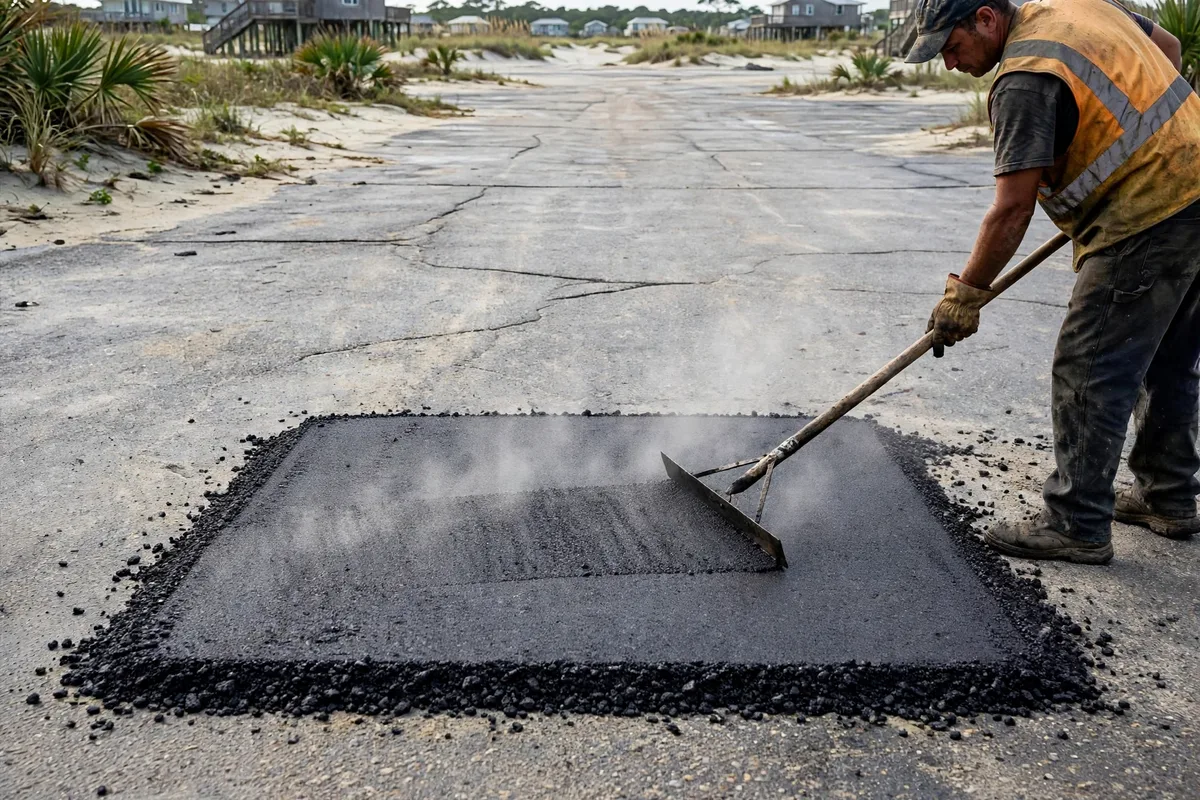
5. Place and compact the hot mix
Hot-mix asphalt goes in, is raked level with the surrounding pavement and compacted. The surface is set slightly proud before compaction so that it finishes flush. A patch that sits low holds water, and one that sits high gets hit by every tire.
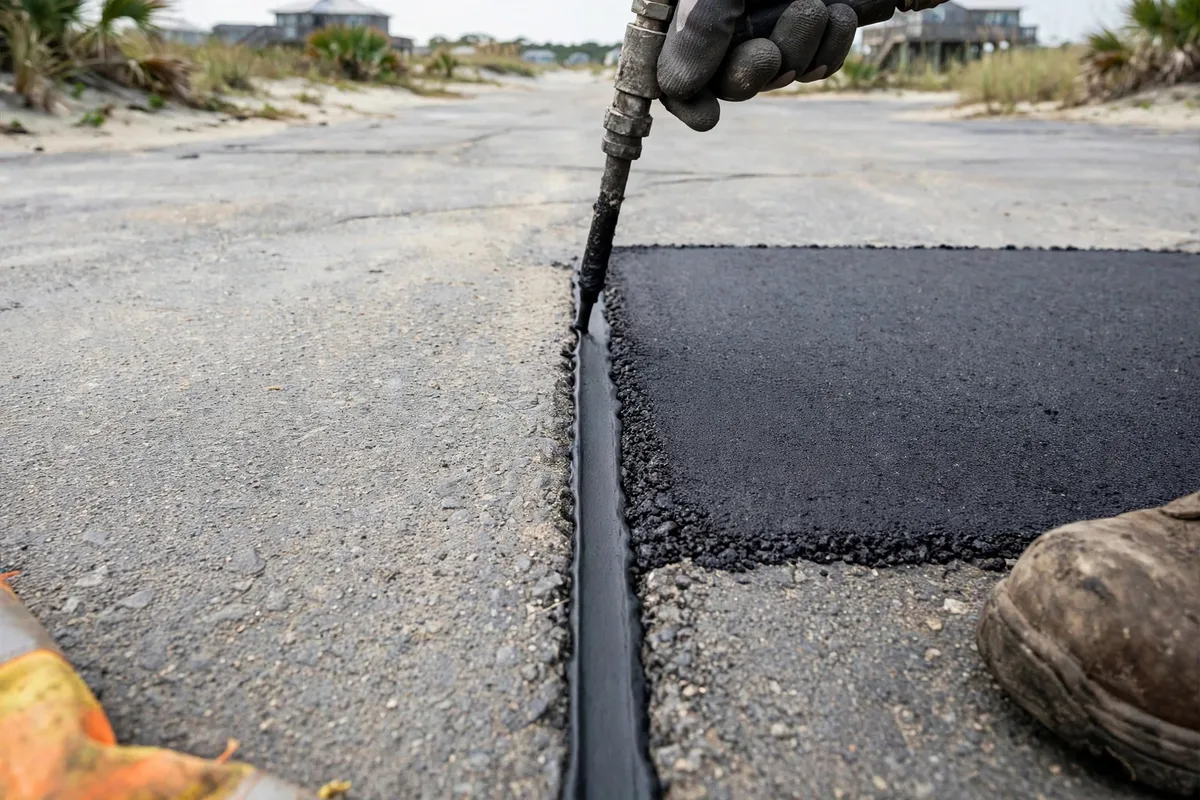
6. Seal the cracks, then clean up
With the patch in, we seal the cracks around it with hot-pour rubberized sealant, which is the professional standard. It is far better than cold-pour or hardware-store filler. Then we sweep the area clean and walk it with the customer.
What it costs
Our pothole repair price is $150-$400 per pothole. The number moves with three things: how big the hole is, how deep it goes, and what shape the base is in. A shallow hole in sound ground sits toward the low end. A deep hole with wet, failed sand under it, which is common on this coast, takes more digging and more base material and sits toward the high end.
When the damage is a cluster of holes, a failed strip or a whole worn corner, we price the asphalt patching by the square foot on the area instead of by the hole. The same three drivers apply: size, depth and base condition. We measure the area and give you the figure before the saw starts.
Crack sealing is $0.50-$3.00 per linear foot. Width, depth and whether the cracks need cleaning or routing first set where a job lands in that range. Short runs next to a patch add little to a visit. A long network of cracks across a lot is a larger line on the bill.
The beach-access lot off Ocean Boulevard
This job followed a wet spring, and it shows how the island's problems fit together.
The call
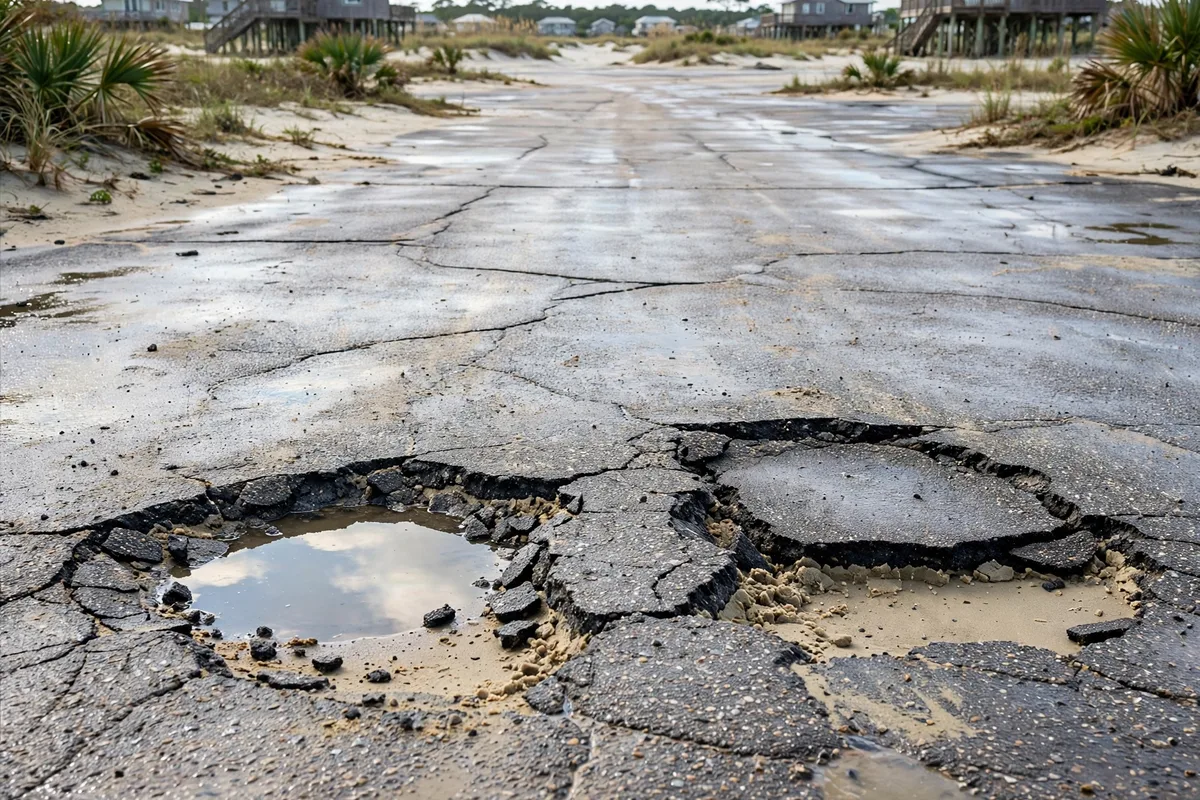
The owners of a small beach-access lot off Ocean Boulevard noticed two holes at the entrance after a wet spring. They were worried because the season's traffic was weeks away. Every car that came in or out hit them, and the holes were already wider than the month before.
What the crew found
Both holes were pumping. Water showed at the edges whenever a vehicle rolled across, and sand was spread out on the pavement around them. The cracks running across the rest of the lot were open, which is how rain had been reaching the base. The entrance took the worst of it because it takes every turn and every braking tire.
What the crew did, in order
Read the lot
Two holes at the lot entrance after a wet spring. Water shows at the edges when a vehicle rolls over them. That is a pumping hole: the base underneath has gone soft and wet, and every tire pushes water and sand up through the break.
A fill on top will not hold here. The soft base is the problem, so the crew cut out both holes, re-based them and patched them with hot mix. Priced per the patching band: $150-$400 per pothole.
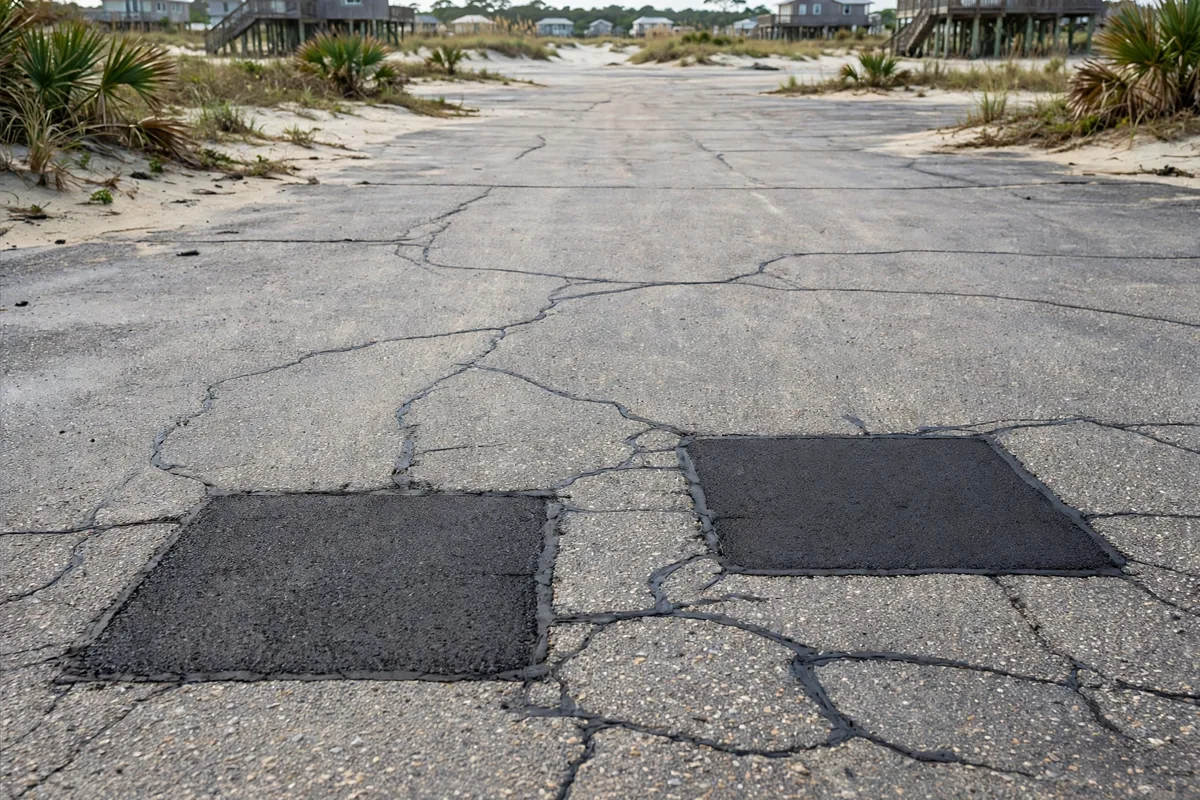
Cracks run across the lot. Open cracks take rain straight to the base, which is how the entrance failed. The crew sealed the lot's cracks on the same visit. Priced per linear foot: $0.50-$3.00 per linear foot.
The work was done before the season's traffic. A wet spring opens the holes, and summer traffic makes them wider.
A hole in your lot pumps water after rain. What do you do? (a) Fill it with cold patch. (b) Cut it out, re-base it and patch it with hot mix. (c) Wait for dry weather. Answer: (b). Cold patch and skin patches are temporary, and a hole that pumps comes back. Waiting lets traffic make it bigger.

The crew marked both holes with paint past the broken edges and saw-cut the outlines. The damaged asphalt came out, and so did the wet sand beneath it. New base went in and was compacted in layers. Hot mix went on top and was compacted flush with the lot. Then the crew sealed the lot's cracks, and the whole job was done in one visit before the season's traffic began.
What it cost
Each hole was priced inside the $150-$400 per pothole band for its size, depth and base. The cracks were priced per linear foot inside the $0.50-$3.00 band. The owners paid for what was wrong and nothing else.
What to watch for
After a patch like this, check the edges and seams after the first hard rain. They should stay dry and flush. Watch the cracks the crew did not need to seal, and any new dip near the entrance. If a new spot is damp or sinking, call before it opens.
Can I trust the work
We are a pavement-care business. We patch, seal, stripe and maintain asphalt. We do not pave new lots or roads, mill, pour concrete or do drainage work, and we do not bid municipal road work. If the water in your lot is coming from a grade or drainage problem that asphalt cannot fix, we will tell you before we patch it.
We do not promise a number of years for a patch or a coating. A saw-cut, re-based hot-mix patch is the durable repair, and a skin patch is not. Most owners in this part of the state who keep up their pavement look at it every year and seal cracks as they open. Leland is where we work from, and Holden Beach is about 40 minutes down the road.
Questions
Do you do pothole repair on Holden Beach?
Yes. Holden Beach is about 40 minutes from Leland. The work here is mostly rental driveways, beach-access lots, condo lots and shared lanes, and we cut out, re-base and hot-mix patch them.
How much does it cost to fix one pothole?
Our price is $150-$400 per pothole. Size, depth and base condition set where a hole falls. A shallow hole in firm ground sits toward the low end, and a deep one over wet, failed sand sits toward the high end.
What if I have a whole worn area and not just a hole?
Then the patching is priced by the square foot on the area instead of by the hole. The drivers are the same: size, depth and base condition. We measure the area and give you the figure before the saw starts.
Why do the holes keep coming back in the same place?
Because the cause is still there. Sand, standing water and traffic work the same weak spots each year. If a hole is filled on top without fixing the base or closing the cracks around it, the next storm reopens it.
What is a pumping hole?
It is a hole where water shows at the edges and sand or fines wash out on the pavement whenever a vehicle rolls across. It means the base underneath is soft and saturated. It has to be cut out and re-based, not filled.
Can I just use cold patch from the hardware store?
Cold patch and skin patches are temporary, and on sand with a high water table they let go quickly. The durable repair is saw-cut, remove, re-base and hot-mix patch.
Should the cracks be sealed when the holes are patched?
Yes, in most cases. Open cracks let the rain reach the base, which is what makes the holes. Crack sealing is $0.50-$3.00 per linear foot, using hot-pour rubberized sealant. Width, depth and prep set the price.
When should I get a lot patched, before the season or after?
Before is better. A wet spring opens the holes, and summer traffic makes them larger. The lot off Ocean Boulevard was patched and sealed before the season's traffic for that reason.
Do you work for associations and condo managers?
Yes. Condo lots, access lots and association drives take commercial-level wear in season, and the patching and crack work is the same. Describe what you see and where it is, and we price from that.
I own a rental here but live somewhere else. How do I get a hole fixed?
Call (910) 370-1121 or use the form below. Tell us the street, what the damage looks like and where it sits on the drive or lot. We price by the pothole, or by the square foot for larger areas.
Do you sealcoat after patching?
Sometimes. Asphalt sealcoating works against sun oxidation and oil softening, and it is worth considering once the base and cracks are sound. Most owners reseal every two to three years as typical practice, and that is not a guarantee for any coating or pavement.
Can you fix drainage or pave a new lot?
No. We maintain and repair existing asphalt. If standing water comes from grade or drainage, we will say so before we patch.
Is a patch permanent?
We do not promise a number of years. A properly cut, re-based hot-mix patch is the durable repair, and checking the seams after heavy rain tells you early if something is moving.
Get the holes fixed before the season
If you have a hole, a dip or a damp spot in a Holden Beach drive or lot, call us at (910) 370-1121 or fill out the form. Tell us the street, the size of the damage and whether it holds water. We will give you the price by the pothole or by the square foot, then the date.
The more details you give, the better we are able to help you.