Northwest is a small town of long drives and shared lanes, and out here pavement fails from the bottom up. Leland Pavement Care does pothole repair for Northwest homeowners and the neighbors who share a lane, about 15 minutes from our base in Leland. The method is simple to say and harder to do. We cut the failed spot out and rebuild what is under it.
Proper asphalt patching starts with a saw, not a bucket. The crew cuts past the damaged edge, pulls out the bad material, rebuilds and compacts the base, and fills with hot-mix. A cold-patch fill from the hardware store covers the hole for a few months. In most cases the same hole is back the next spring.
The same crew handles crack sealing before water gets in and asphalt repair on worn spots that have not become holes yet. We also do driveway repair when a long drive has several trouble areas. Where a shared access lot needs more than one patch, that becomes parking lot maintenance, and a sound surface can take asphalt sealcoating afterward.
Why holes keep coming back in Northwest
Brunswick County sits on sand. Sand drains well, but it also moves, and a driveway or lane is only as good as the base holding it up. When rain comes through an open crack, it goes straight into that base and carries fines away from under the asphalt. Summer thunderstorms and tropical systems drop inches at once. After Hurricane Florence in 2018, nobody in this county needs to be told what standing water does to ground.
Long drives make it worse. A drive that runs a long way back from the road has more pavement to crack and more places for water to find. A shared lane takes weight from every household that uses it, including delivery trucks, trailers and the heavy vehicles that turn at the same spot every day. The edge of the pavement and the first soft spot take that load.
So the hole you see is rarely the whole problem. The surface let go because the base under it already had. Filling the surface alone leaves the real failure where it was.
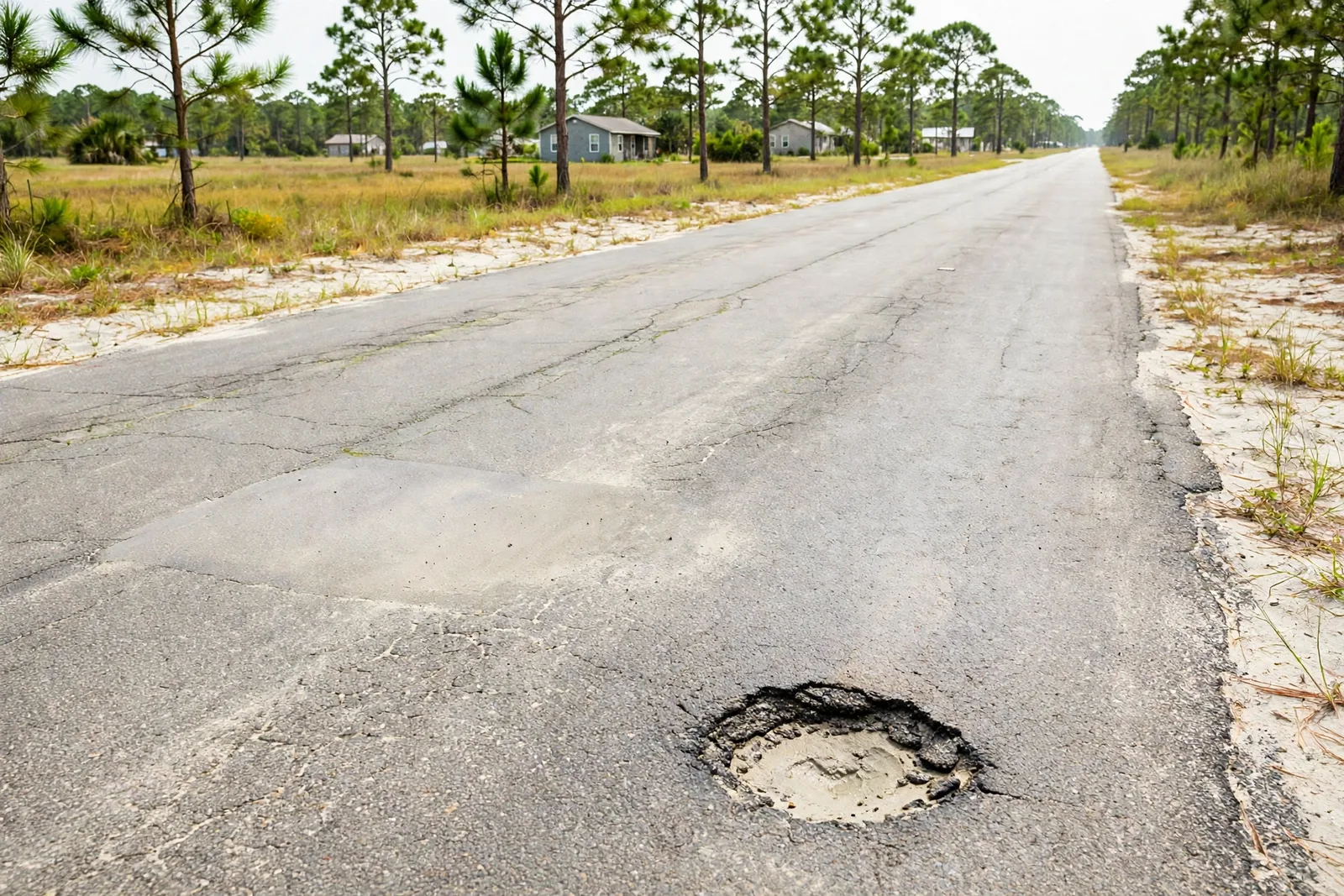
What a failing spot looks like
Most people call about the hole. The crew looks at what surrounds it. A pothole with solid, clean edges is one problem. One ringed by alligator-pattern cracking, with the pavement sagging toward the middle, is another. A hole that has been filled and refilled shows a raised hump of old cold patch, often with a crescent crack curving around it.
We also check the low spots. Water that pools on a lane after a storm and stays is a pothole waiting to open. Cracks running toward an existing hole are the path the water is using, and they get sealed as part of the work.
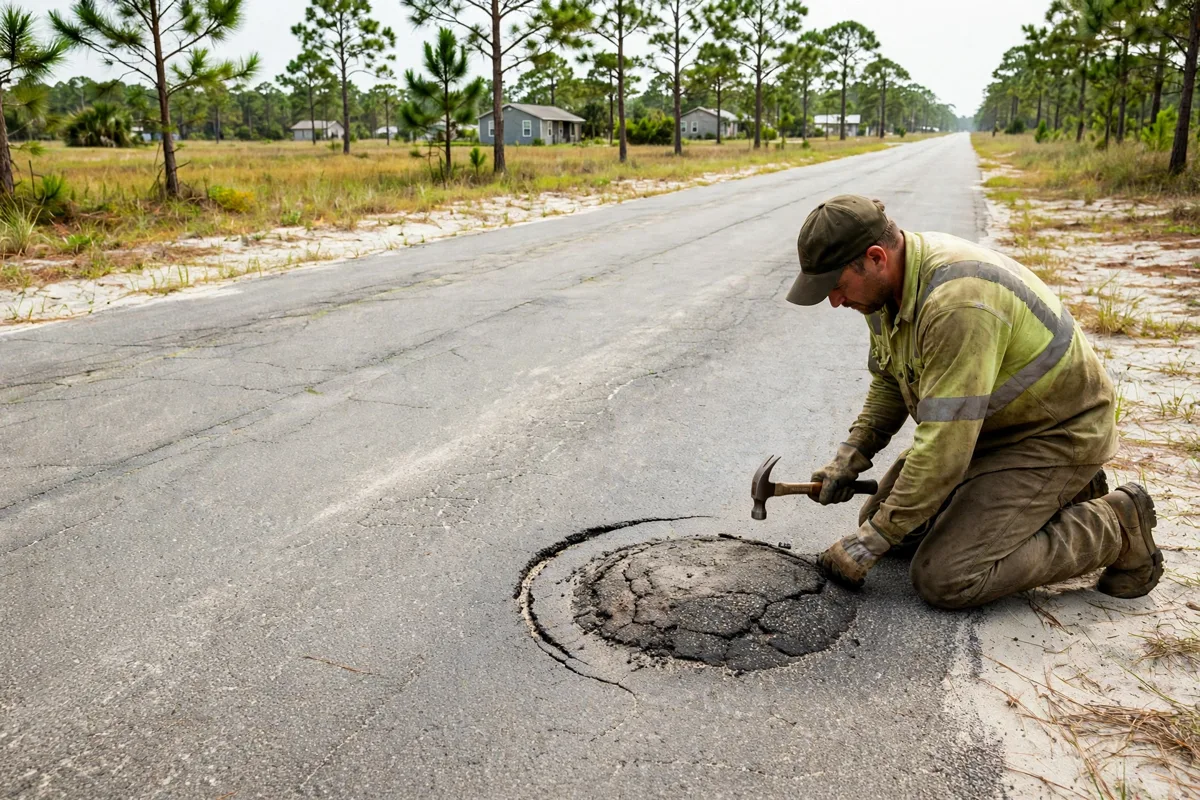
How the work goes
This is the order on a Northwest job, from the moment the truck pulls in.
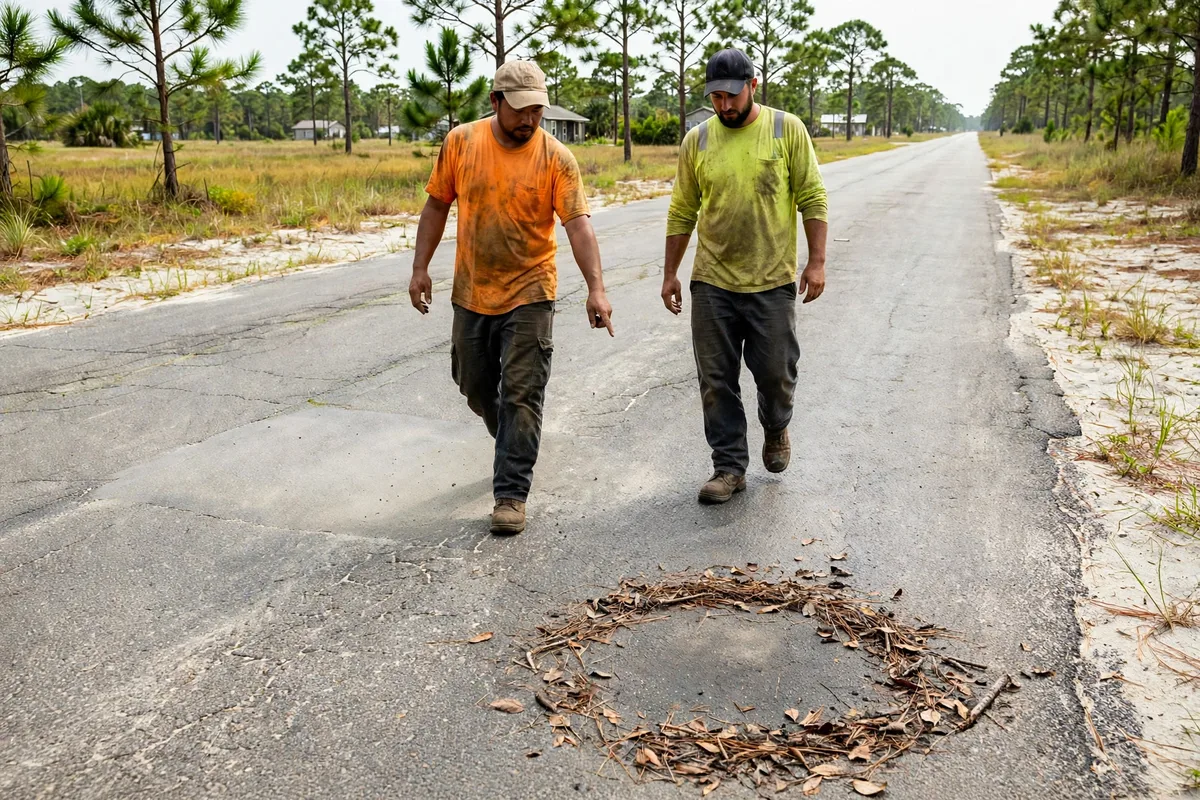
1. Walk the lane and read the damage
The crew walks the whole drive or lane, not only the hole you called about. They look for sagging, soft edges, cracks leading in and places where water stands.
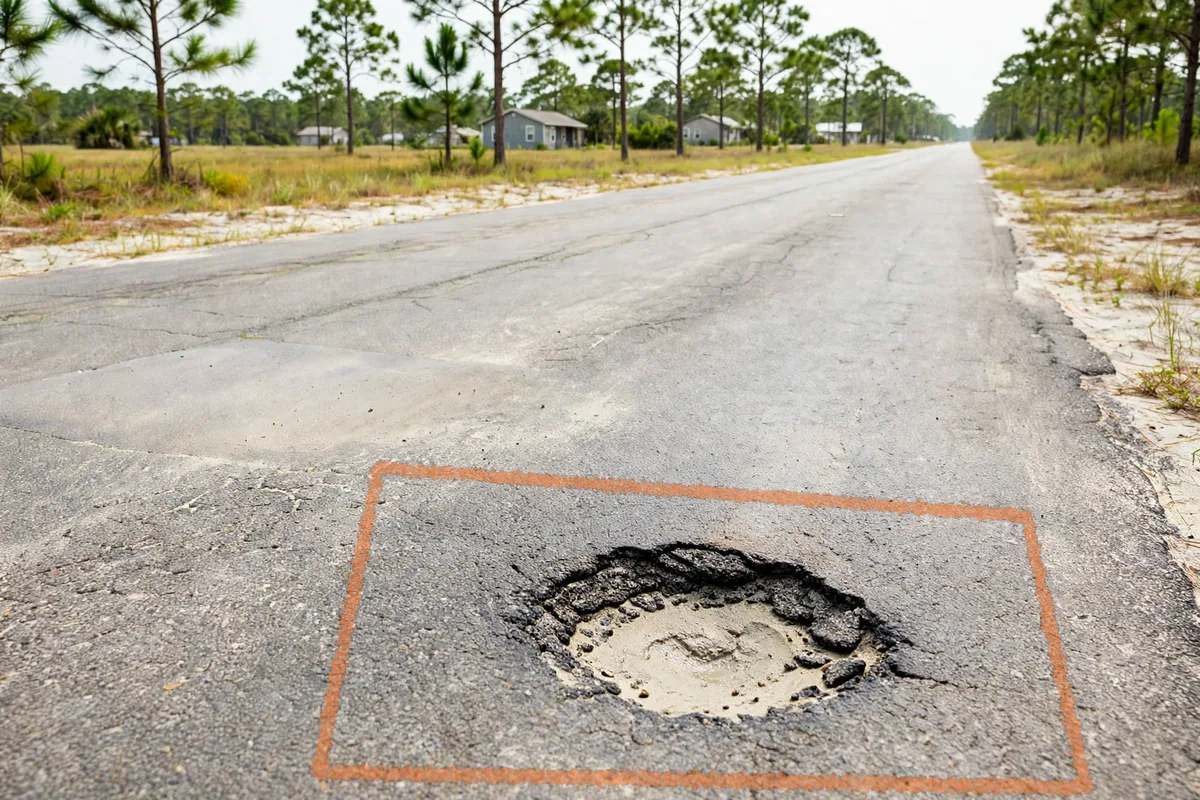
2. Mark the cut
The crew paints a square or rectangle around the damage, extended past the visible edge into sound pavement. Straight lines give the patch clean, tight edges.
3. Saw-cut and remove
A saw cuts along the marked lines. The crew breaks out everything inside, plus any base that is wet, loose or contaminated.
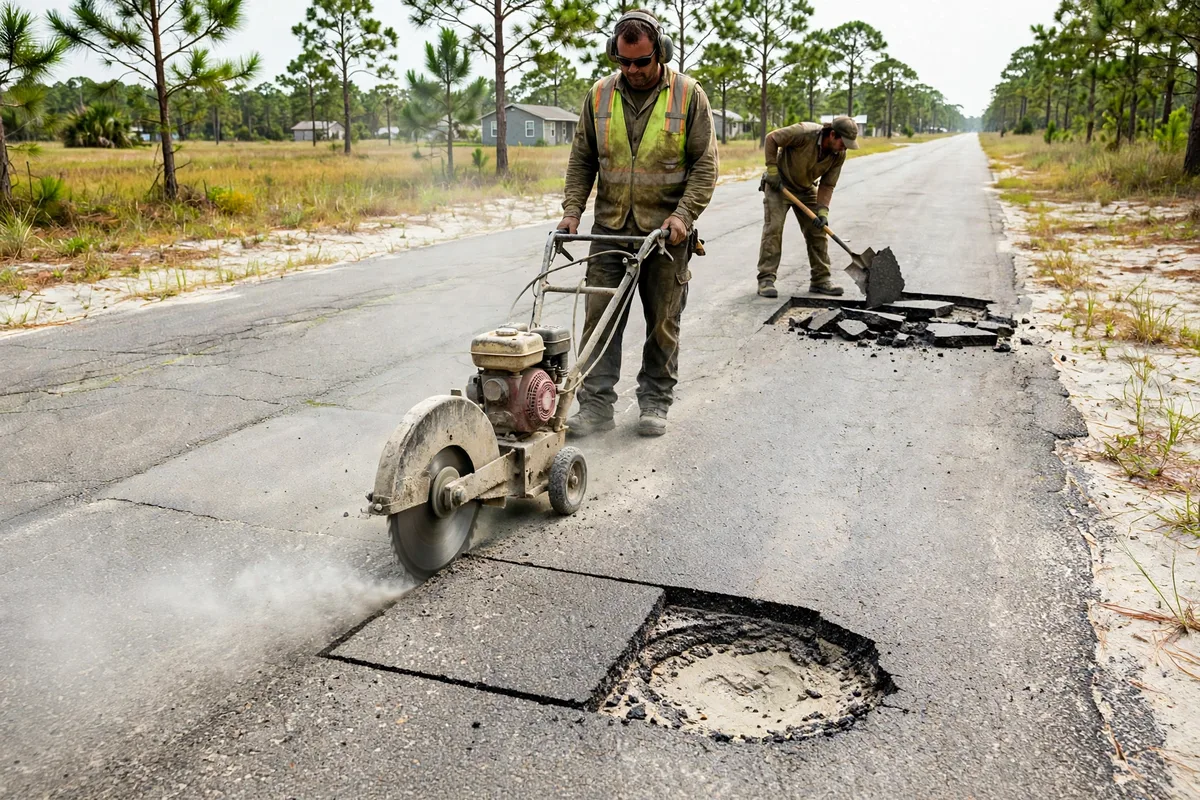
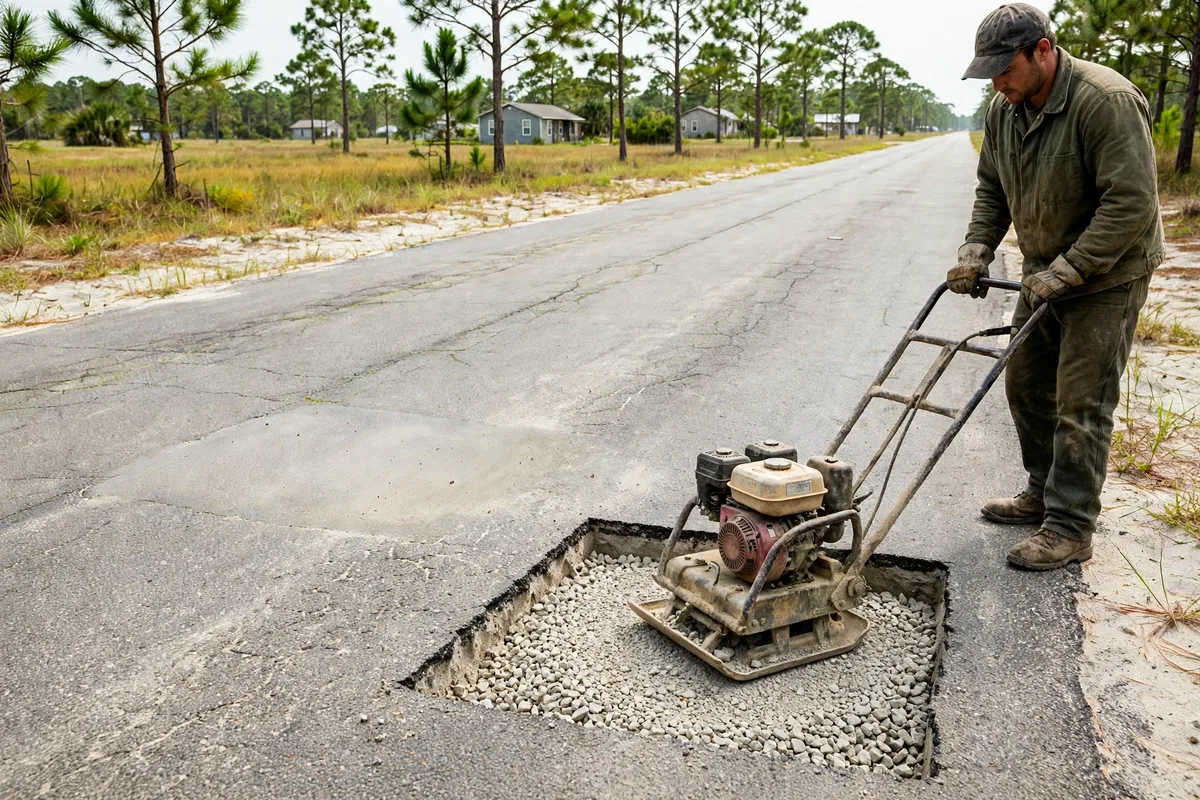
4. Rebuild and compact the base
On this coast, this step decides the job. The crew checks what is under the hole. They replace soft or washed-out base with fresh material, then compact it until it is firm.
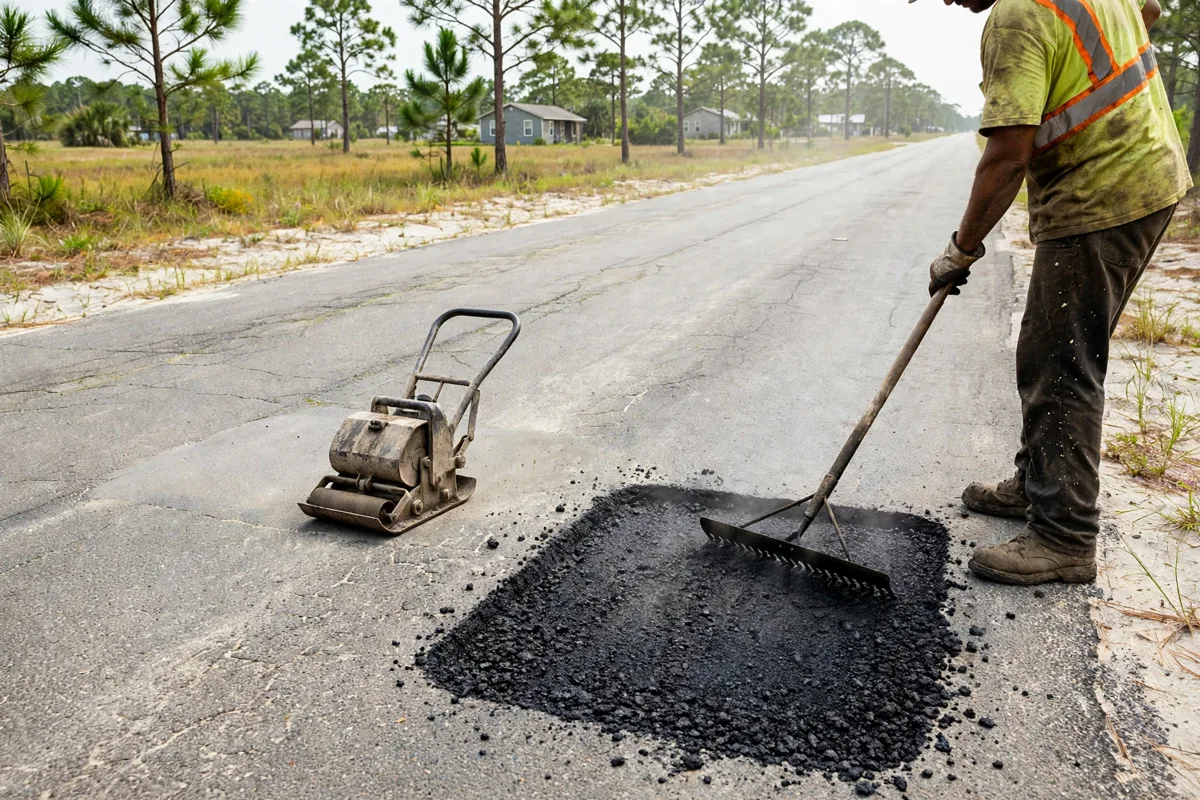
5. Place and compact the hot-mix
Hot asphalt goes in, gets raked level to a slight crown and is compacted in lifts. The finished patch sits flush with the surrounding pavement so water runs off instead of into it.
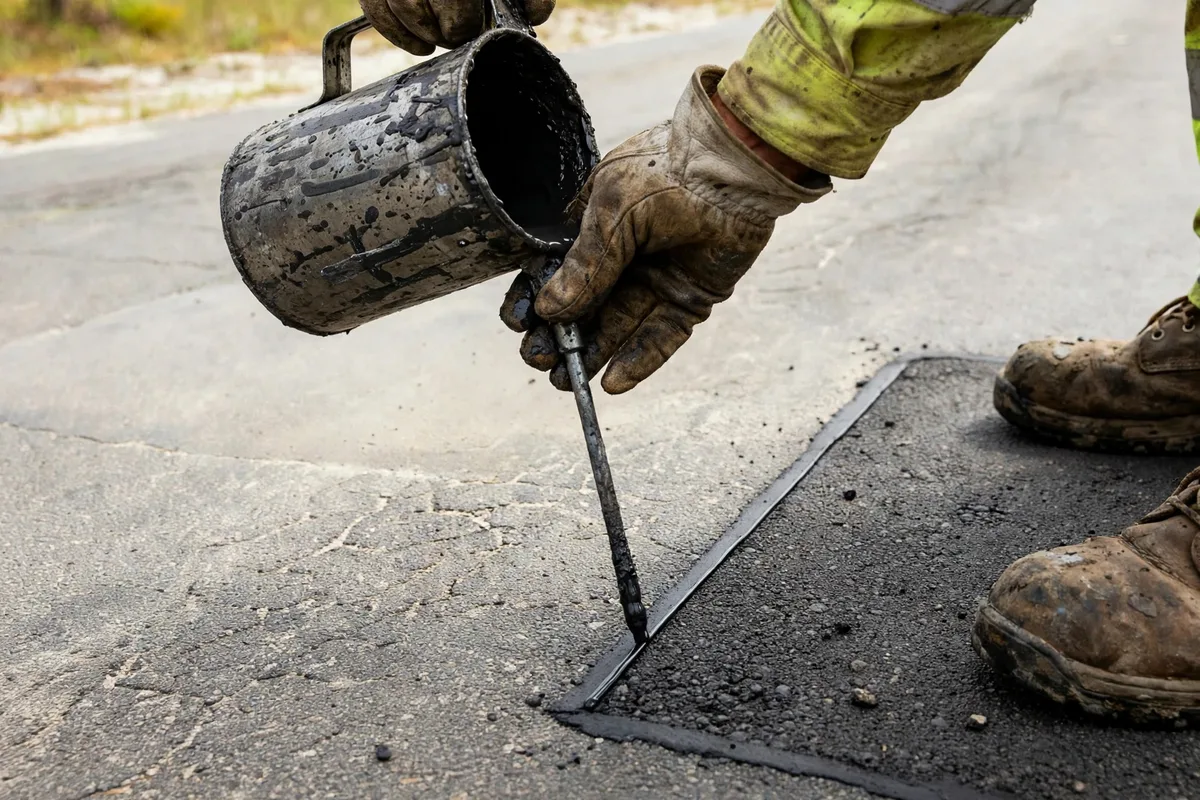
6. Seal the edges
The seams around the patch are sealed so water cannot run down the joint. Any cracks leading toward the patch are routed or cleaned and filled in the same visit if you have asked for it.
7. Clean up and walk it with you
The crew sweeps, picks up debris and walks the finished work with you. We tell you when the patch can take traffic and what to watch for over the next few storms.
What it costs
Pothole repair is $150-$400 per pothole. Where the damage covers an area rather than a single hole, we price a cut-and-patch by the square foot on the area. Crack sealing runs $0.50-$3.00 per linear foot.
Three things move a price within those numbers.
- Size. A small, clean hole sits at the low end. A wide one, or several close together, costs more.
- Depth. A hole that stops at the surface course is a smaller job. One that has gone through to the base needs more material and more work.
- Base condition. Dry, sound base under a hole is a short job. Washed-out sand, standing water and soft ground take longer to rebuild. Sandy ground in Northwest makes this the factor to watch.
Cracks leading into a patch are priced by length. A short run beside a patch is an easy add. A long drive with cracks along its full run is a bigger decision, and it is the better time to seal them.
The shared lane off Northwest Road
This is the kind of job we get most in Northwest. The neighbors on a shared lane off Northwest Road had one hole at the same spot for three springs running.
What the neighbors had been doing
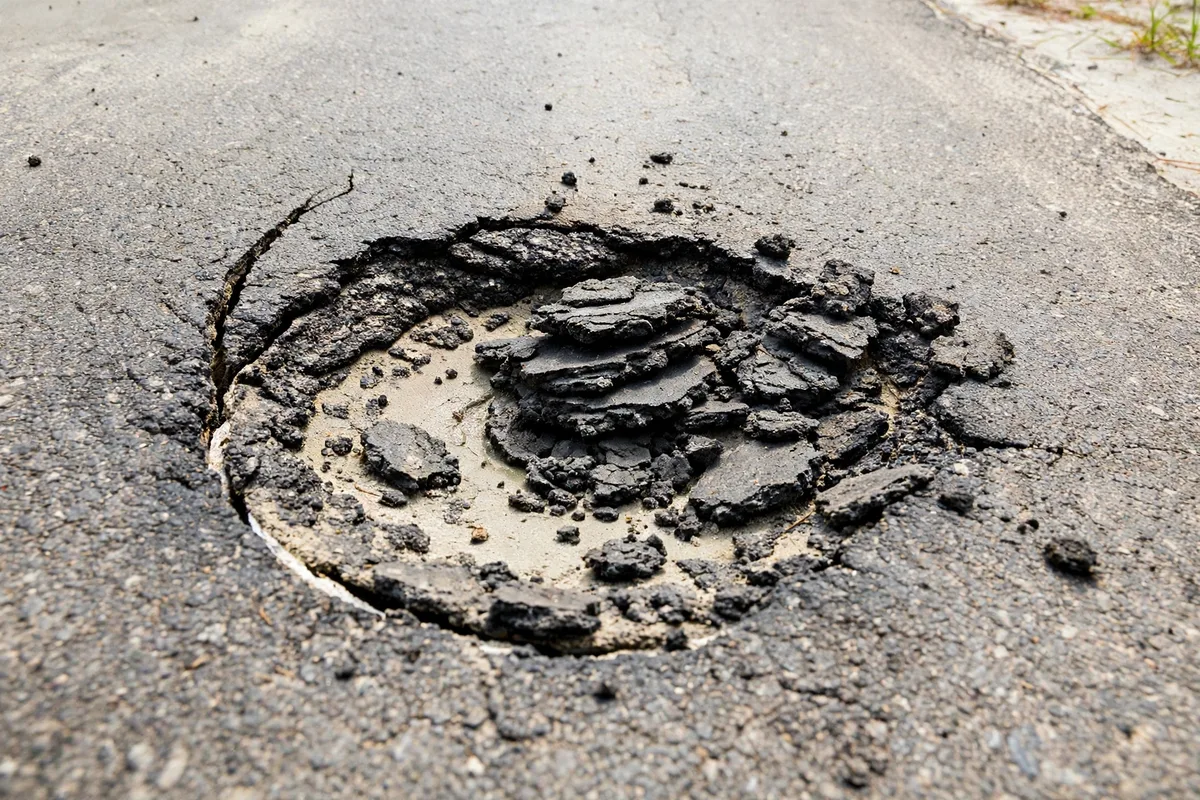
Every spring, somebody filled it with bagged cold patch. It looked fine for a few weeks. By summer it was loose again, and by the next spring it was a hole with a raised hump of old filler around it and a crescent crack curving past one edge.
What the crew found
The crew pressed the edges and found them loose several inches out. They pulled the old cold patch by hand and found wet, washed-out sand under it. That sand was the cause. The hole had been trying to open every spring because the base under it had no strength.
The cut-out
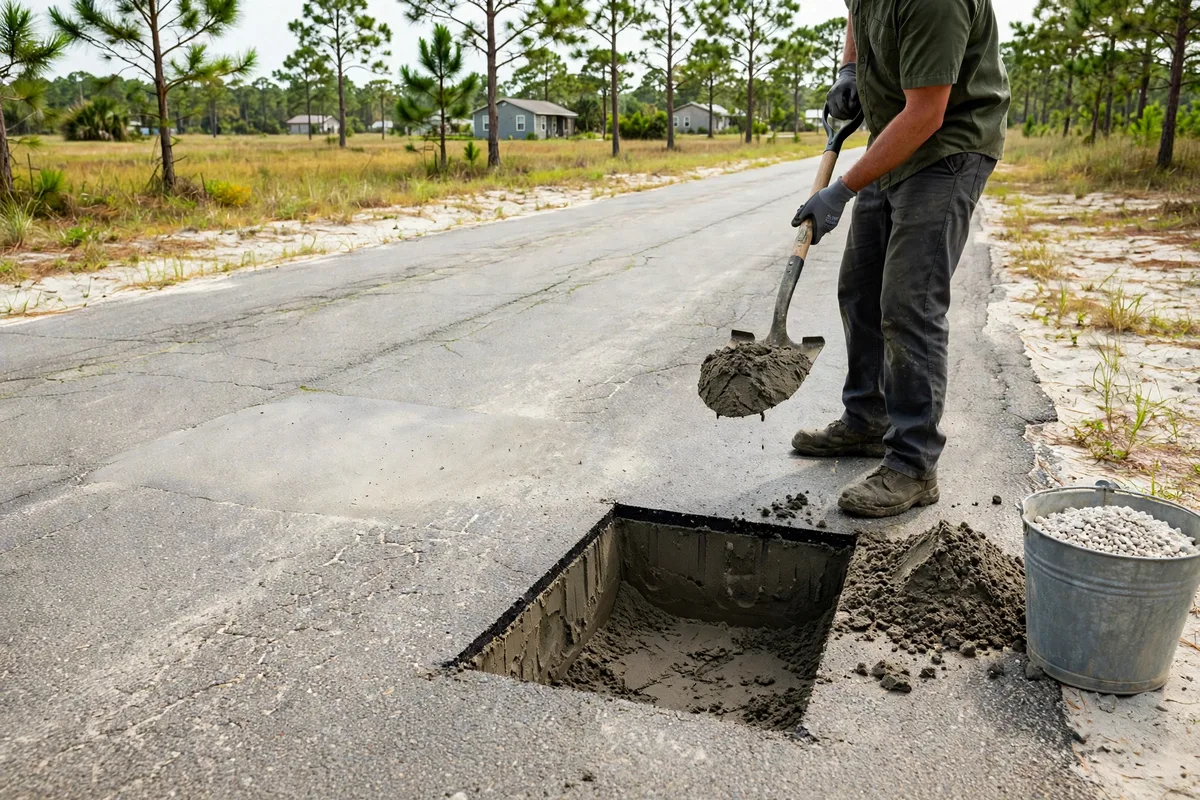
The crew marked a rectangle well outside the loose edge and saw-cut it. They took out the broken asphalt and the soft sand, and kept digging until they reached firm ground. Then they rebuilt the base and compacted it in layers until it stopped moving under the tamper.
The patch and the edges
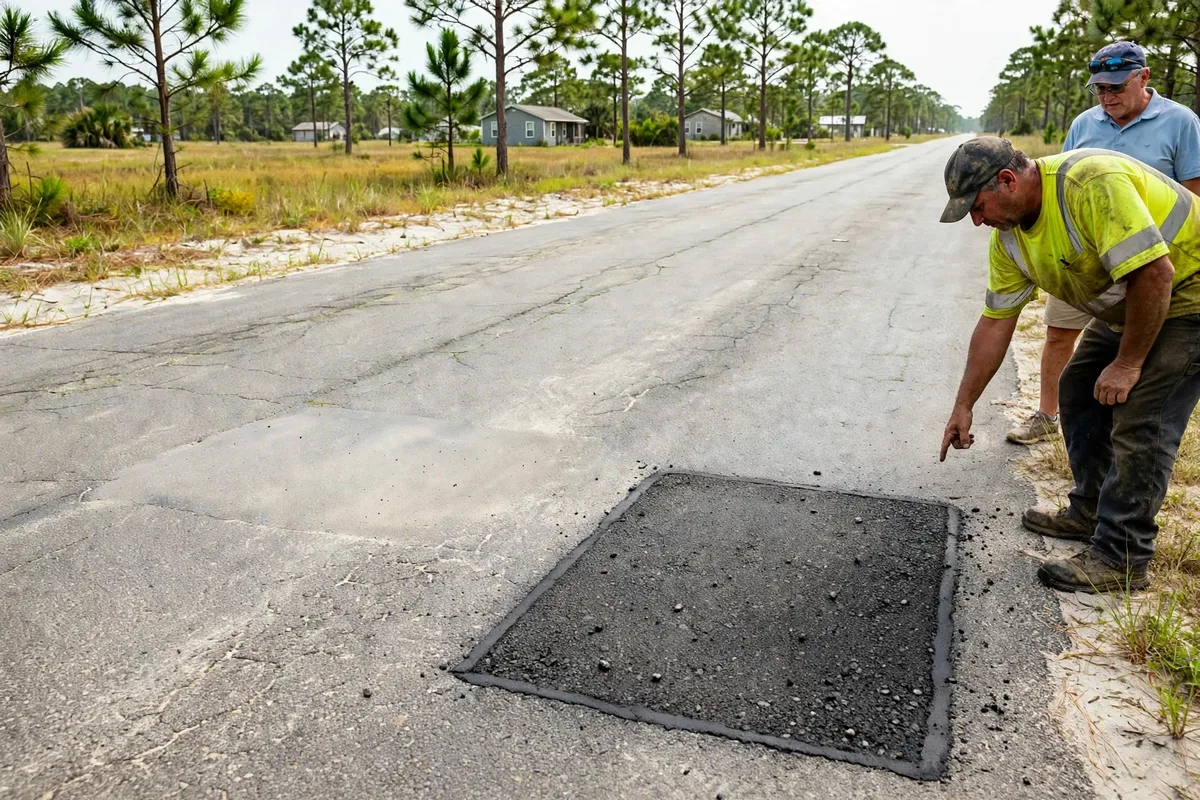
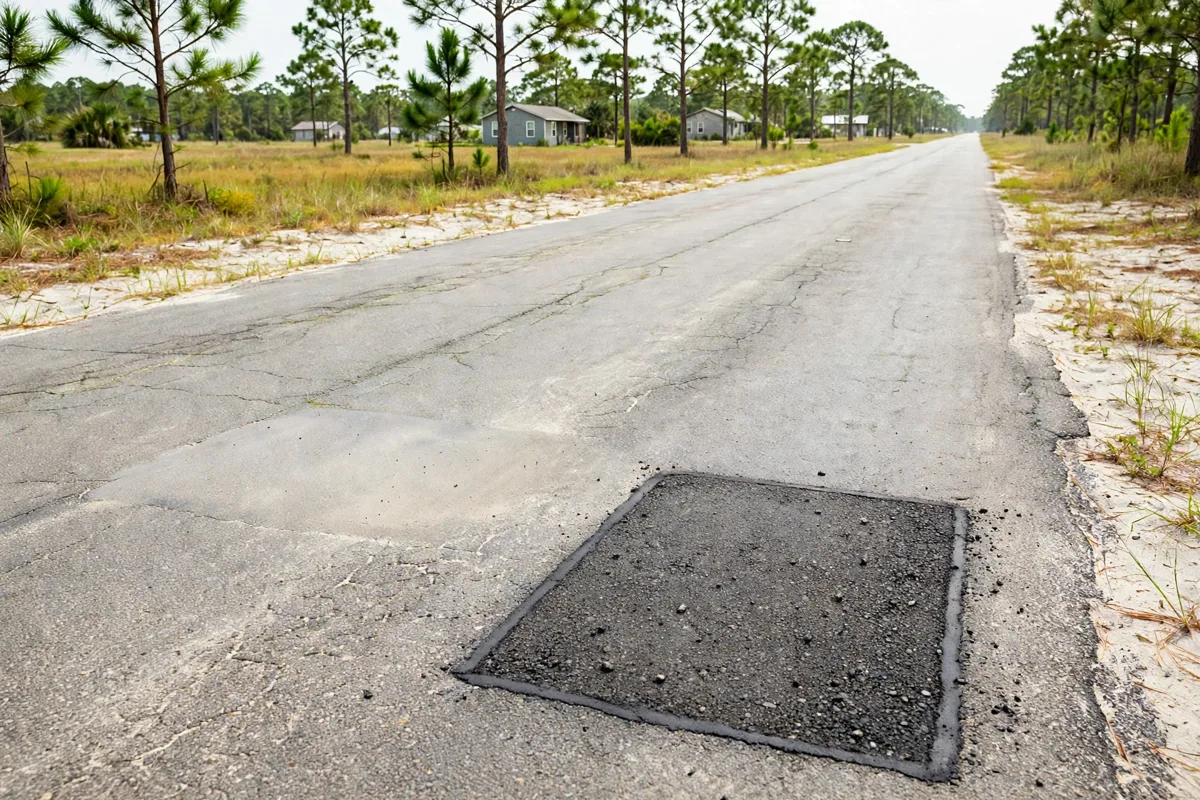
Hot-mix went in, was raked to grade and compacted flush with the lane. The crew then sealed the seams on all sides, and filled the crescent crack that had been leading water toward the hole.
What it cost and what to watch for
It was one hole, so it was priced as pothole repair, inside the $150-$400 per pothole band. Had the failed area been wider, the same work would have been priced by the square foot on its area. The crack leading to it was priced by the linear foot within $0.50-$3.00.
Watch the seam. After the first heavy rains, walk the lane and look at the patch edge. Hairline gaps open first at the seam, and a gap caught early gets sealed in minutes. Also watch for new soft spots nearby. Where one hole opened, the base nearby may be on the same clock.
Work the hole yourself
Cold patch or cut-out?
The same hole has been cold-patched three springs running. A raised hump of old filler sits around it, a crescent crack curves past one edge, and the edges are loose when pressed.
Saw-cut past the damage into sound pavement, in straight lines. A cut that starts on weak asphalt fails along its own seam. Straight, vertical walls give the new asphalt something to bond against.
Take out the old cold patch, the broken asphalt and the soft or wet base. Keep digging until you reach firm ground. On this lane the base was wet, washed-out sand, which is why the hole kept returning.
Rebuild the base and compact it until it stops moving. Place hot-mix, rake it flush with the lane and compact it. A finished patch sits level with the old surface so water runs off instead of into it.
Seal the seam on all sides, and fill the crack that leads to the patch. The seam is the weakest line in any patch. After the first heavy rains, walk the lane and check it. Pricing: priced as one pothole repair at $150-$400 per pothole. Wider failed area is priced by the square foot on its area. Cracks are $0.50-$3.00 per linear foot.
Fill it again with cold patch, or cut it out. Result if you fill again: the filler sits on the same soft base and fails the same way, usually by the next spring. Result if you cut it out: go to Panel 2."

Other pavement on your Northwest property
A patch repairs one failure. It does not make the rest of the drive sound. Once the holes are cut out, the crew will point out what is next.
- Cracks. Open cracks let water into the base, which is how holes start. Sealing them with hot-pour rubberized sealant is the cheapest protection a drive can get. Cold-pour and DIY filler are the short-lived contrast.
- Worn, dry surface. A faded drive with no holes is a sealcoat candidate. Most owners reseal every two to three years as typical practice, not as a promise about any coating.
- A drive with several failed areas. That is a driveway repair conversation. We walk it with you and tell you what to patch, what to seal and whether the whole drive should be looked at differently.
We maintain and repair asphalt. We do not lay new drives or lanes, mill, pour concrete or do drainage work. We also do not do municipal or public-road work, only private drives, lanes and lots.
Questions
How much does pothole repair cost in Northwest?
Pothole repair is $150-$400 per pothole. Size, depth and base condition set where a hole falls in that band. A small hole on sound base is at the low end. A wide hole with wet, washed-out sand under it is at the high end.
Do you come out to Northwest?
Yes. Northwest is about 15 minutes from our base in Leland, and we work private drives, shared lanes and lots there. Call (910) 370-1121 and tell us where the lane is and what the hole looks like.
Why does my pothole keep coming back after I fill it?
Because the hole is the symptom. The base under it is washed out or soft, and a bucket of cold patch sits on top of the same weak ground. It holds until water gets in, then it fails. A cut-out removes the failed material and rebuilds the base.
What is the difference between cold patch and hot-mix?
Cold patch is bagged material you tamp into a hole. It is a temporary fill. Hot-mix is placed hot into a squared, saw-cut hole over a rebuilt, compacted base, and bonds against the cut walls. For a hole that keeps returning, hot-mix over a rebuilt base is the repair.
Can you just fill the hole quickly?
We can tell you what a quick fill will do, but we do not recommend it for a hole that has been filled before. A skin patch or cold-patch fill is the temporary contrast to a cut-out. If a hole is new and the base is sound, the cut-out is small and quick anyway.
How is a bigger damaged area priced?
When damage covers an area and not a single hole, we price a cut-and-patch by the square foot on the area. Size, depth and base condition still drive it. We tell you the number on site after looking at the damage.
Our lane is shared. Who do you talk to?
Whoever calls. Tell us it is a shared lane when you phone, and we will walk the lane and show you what needs doing. Sorting out who pays among neighbors is yours to settle, but we can describe the repair so everyone sees what is being done.
Do you fix cracks too?
Yes. Crack sealing is $0.50-$3.00 per linear foot. We use hot-pour rubberized sealant in cleaned or routed cracks. Cracks running toward a hole are worth sealing the same day, since that is the path the water takes.
Should I sealcoat after you patch?
Only if the surface is sound and worn. A sealcoat does not repair holes or cracks, so those get fixed first. Most owners reseal every two to three years as typical practice. We will tell you honestly if your drive is ready for it or needs more repair first.
When can I drive on the patch?
We tell you at the end of the job, after the compaction and sealing are done. Keep to the crew's word on that. Heavy vehicles and turning wheels are hardest on a new patch.
What should I check after a big storm?
Walk the lane and look at the patch edge. A hairline gap along the seam is easy to seal. Also look for pooled water and any new soft spots near the patch. If something has opened, call early.
Do you work on public roads or town roads?
No. We work on private drives, shared lanes and parking lots. We do not bid municipal or public-road work.
What if my whole drive is in bad shape?
Then we look at it as a driveway repair job, with patching, crack sealing and possibly sealcoating in the order the pavement needs. We walk it with you and tell you where it stands. We maintain and repair asphalt. We do not lay new drives.
Get the hole fixed once
If you have a hole on a Northwest drive or shared lane that keeps coming back, call (910) 370-1121 or send the form. Tell us where it is and what has been tried. We will walk it and tell you what the cut-out needs.
The more details you give, the better we are able to help you.