Sun, salt air and beach sand are hard on an asphalt drive, and on Oak Island the drives that carry rental guests every week get it worst. Leland Pavement Care does driveway sealcoating for Oak Island homeowners, rental owners and the property managers who look after them, coming down from Leland, about 40 minutes up the road.
Sealing is the main job, but it only works on a drive that is ready for it. On a sound surface, asphalt sealcoating slows the sun's damage, and it does nothing for a crack that is open to rain. So the cracks get crack filling before any coating goes on, and the wider or repeating ones get hot-pour crack sealing.
Some drives are past coating. Where the surface has broken out in patches, driveway repair comes first, with asphalt patching cut out and built back into the base. Where the base has let go and left a hole, that is pothole repair, and we will tell you so before we price a coat over it. We maintain and repair existing asphalt. We do not lay new drives.
![Oak Island driveway, sealed surface at a rental home]
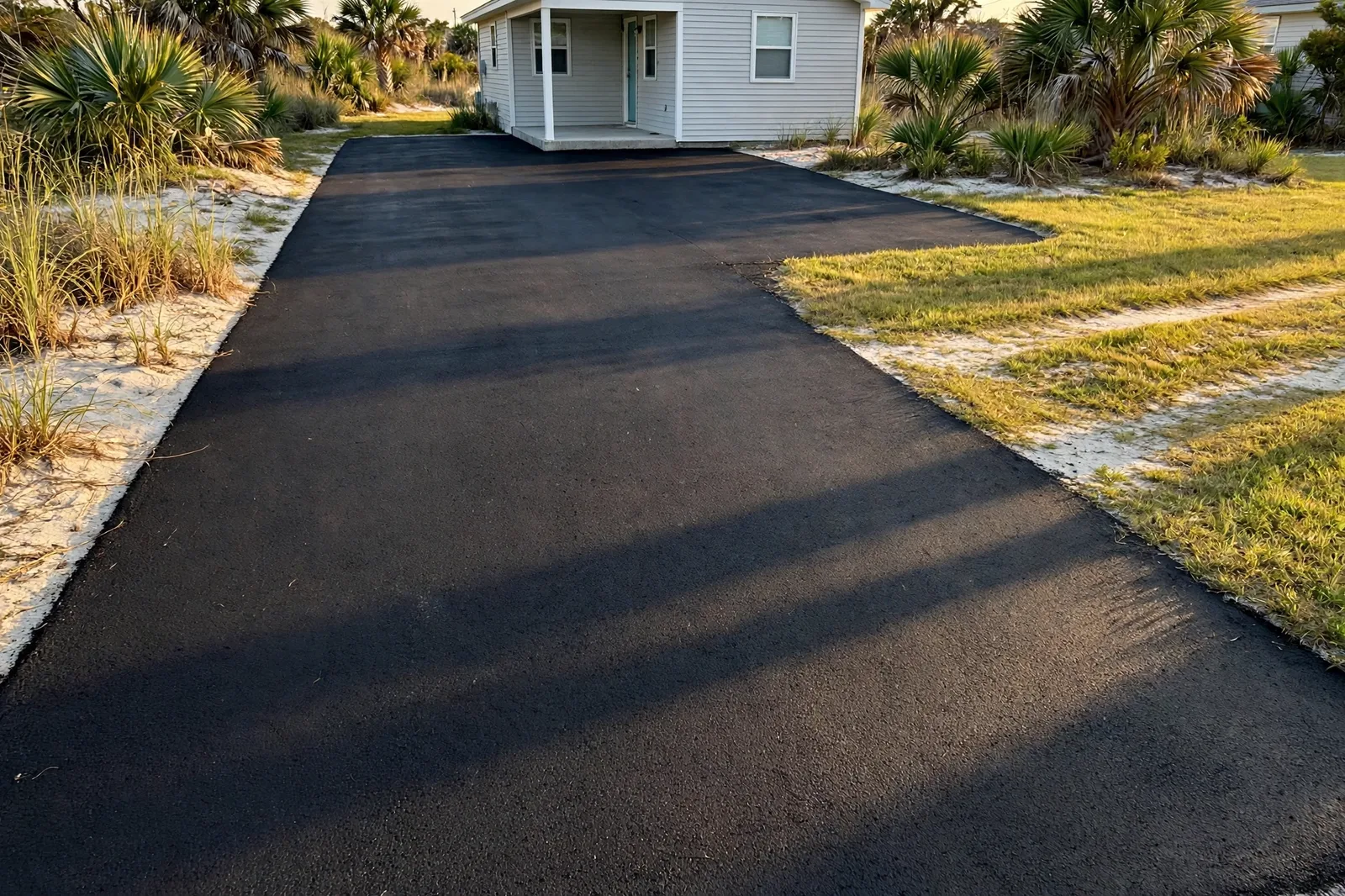
What salt, sun and rental traffic do to a drive here
Oak Island is the county's largest beach town, 8,396 people at the 2020 census, and a lot of its houses are not lived in by their owners for most of the week. Year-round homes sit next to a deep stock of rentals, and the drives on both take the same weather. The rentals take more traffic on top of it.
Asphalt is a maintained surface, not a permanent one. Four things wear it down on this coast. Sun oxidizes the binder, so the surface turns gray, dry and rough. Rain gets in through cracks and works at the base, and this county drops inches of it at once in a summer storm. Oil and fuel from parked cars soften the surface where the car sits. And sandy soil means the base under the drive is only as good as its drainage and its edges.
Oak Island adds its own wear. Beach sand comes home on tires and feet, and sand ground into a surface acts like sandpaper under every wheel. Golf carts cross the edge of a drive at the same spot again and again, and the edge breaks first. Guests arrive in rented cars, park wherever they land, and leave a few oil drips at the pad. Salt air rides in off the water and goes after everything, a dried-out surface most of all.
A sealcoat does two jobs against that. It puts a protective layer between the asphalt and the sun and fuel, and it brings the color back, which is the part a rental agency's camera sees. Neither job works on a dirty, cracked or oil-soaked surface, which is why most of the work is in the prep.
How the work goes on an Oak Island driveway
Here is the job in the order it happens.
Step 1. Walk the drive and read it
We start by walking the whole drive with you or your manager, edge to edge. We look at where the color has gone gray, where cracks run, where the edges are breaking, and where the cars sit and drip. We measure the drive for square footage and run a tape along the cracks for linear feet. Those two measurements drive the price.
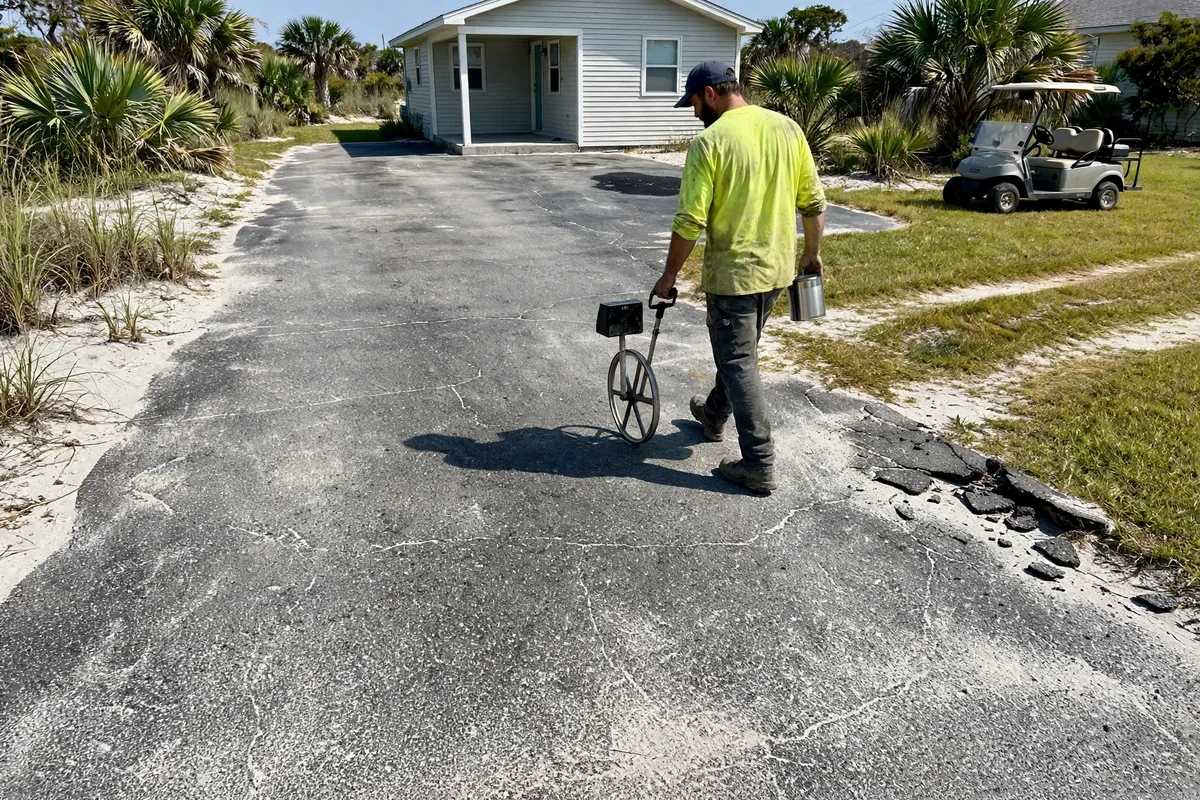
Step 2. Clean the surface down to asphalt
Sealer bonds to asphalt, not to sand, leaves or dust. We sweep and blow the drive, and brush out the edges and cracks, where sand packs in. Loose, crumbling material at the edges comes off now. If we skip this step, the sealer sits on the sand and peels away with it.
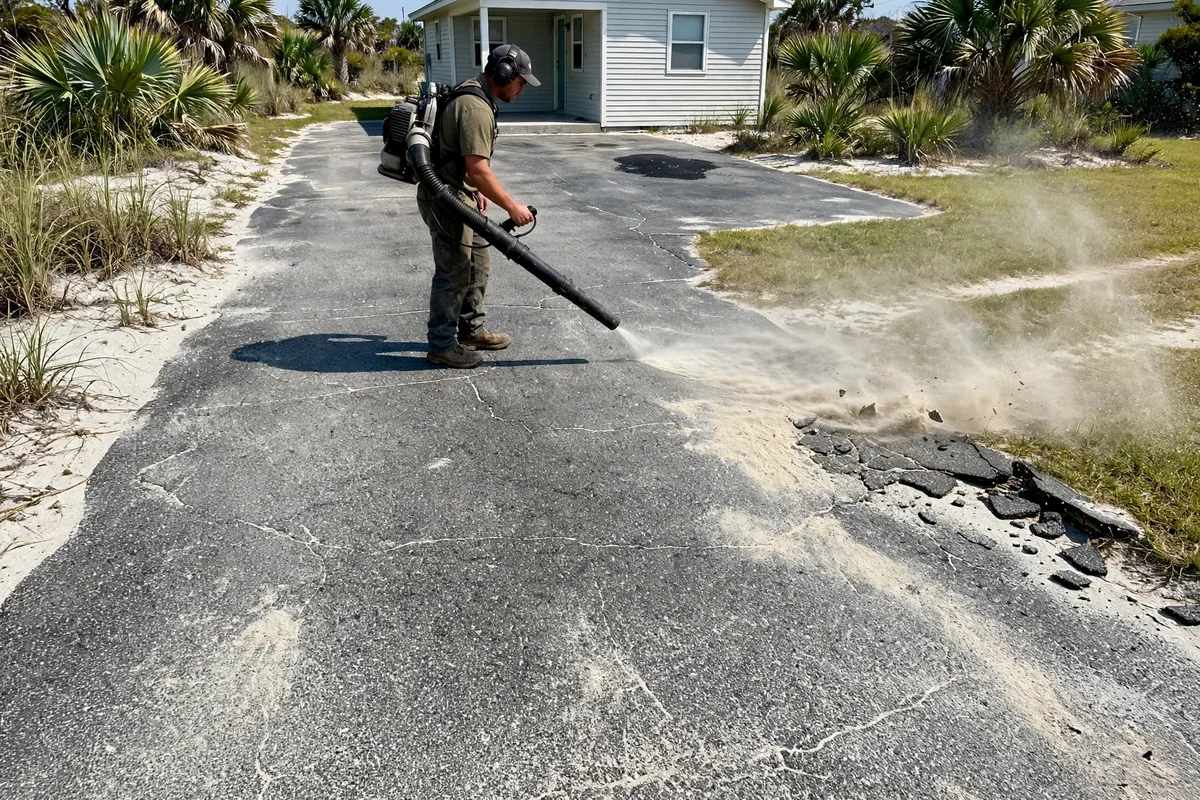
Step 3. Fill the cracks
Cracks get filled before the coat, not after. Small cracks take crack filling with a rubberized material. Wider or repeating cracks may call for hot-pour sealant, which is the professional method, and some are cleaned out to a clean-sided channel first. A coating laid over open cracks looks fine for a few months, then the cracks show through and the water has been getting in all along.
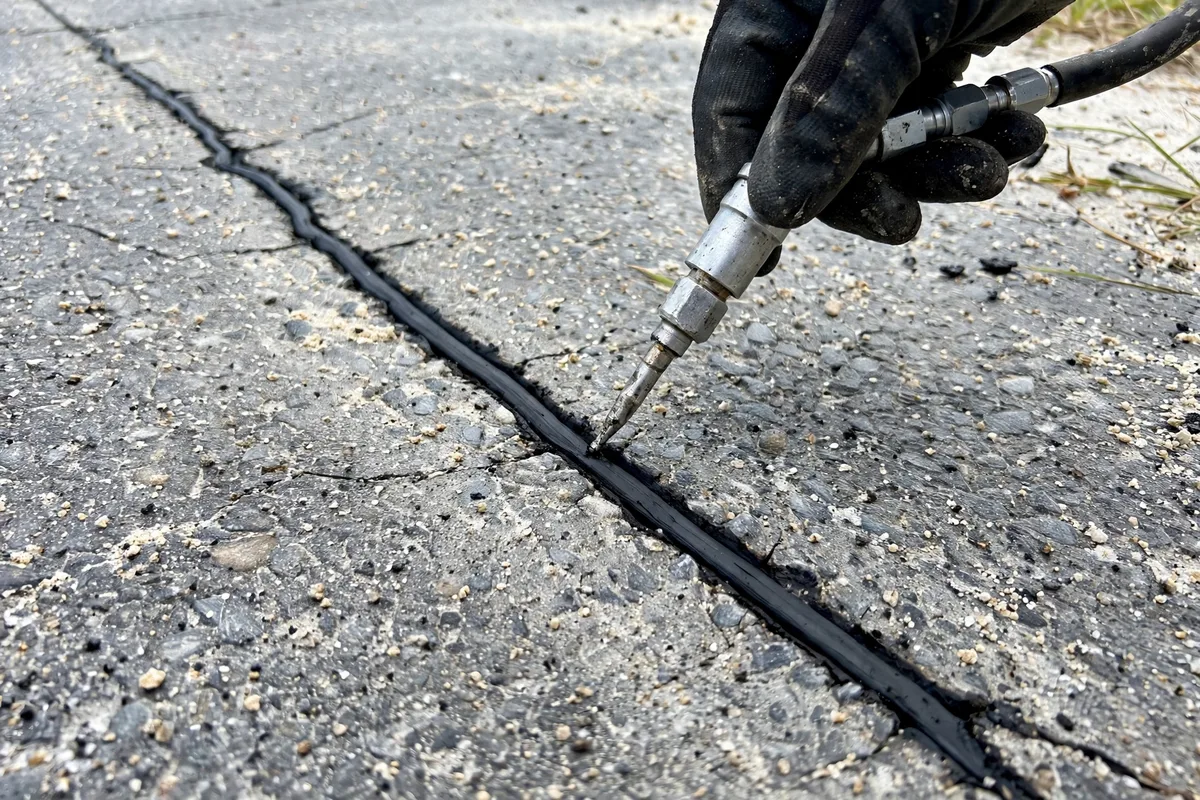
Step 4. Prime the oil spots
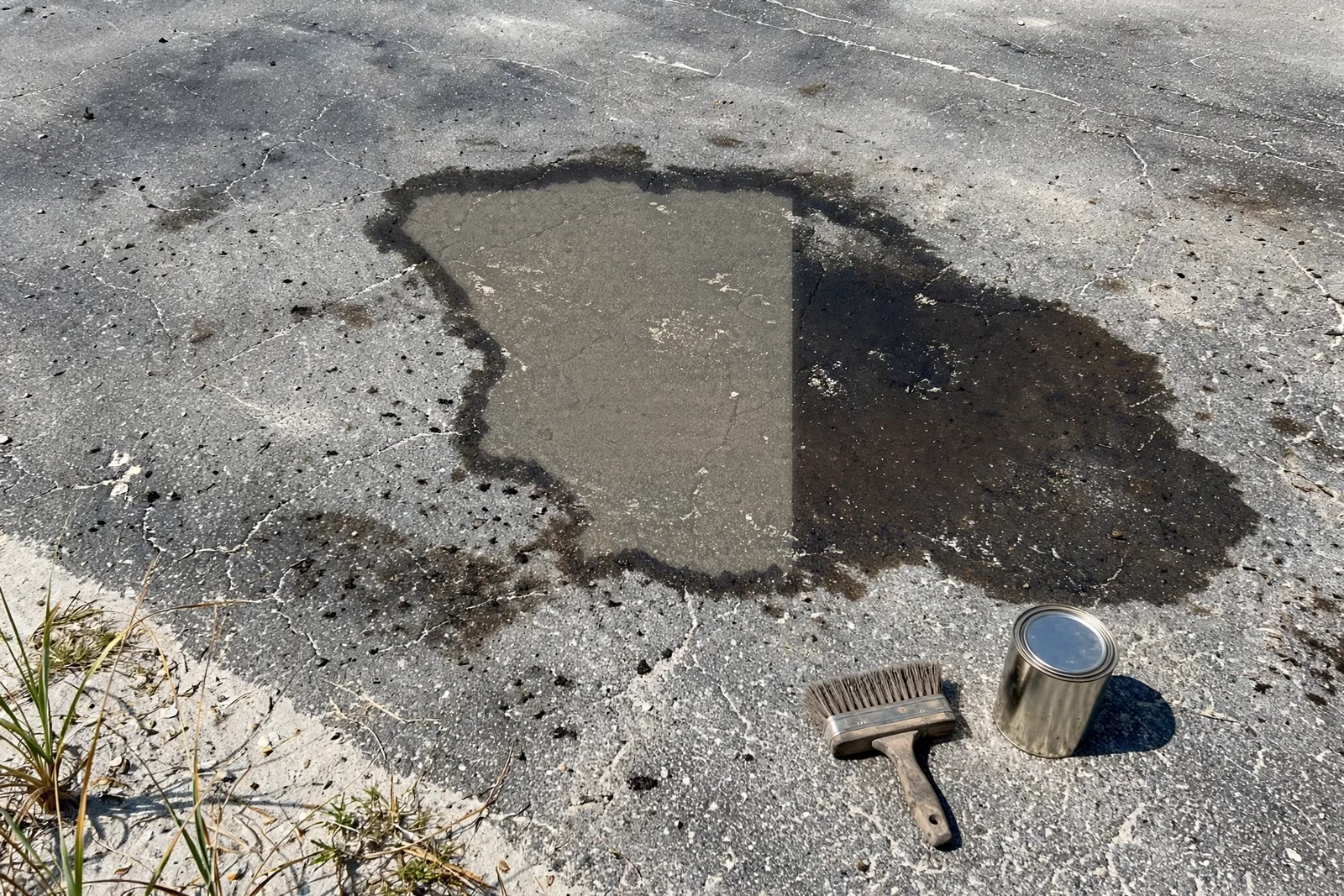
Sealer will not stick to oil. Where a car has dripped at the pad, the surface is soft and slick, and plain sealer over it will fail in a patch the shape of the stain. We scrub the spot, let it dry, and apply an oil-spot primer. Heavily soaked spots may need a second pass.
Step 5. Protect what is not getting sealed
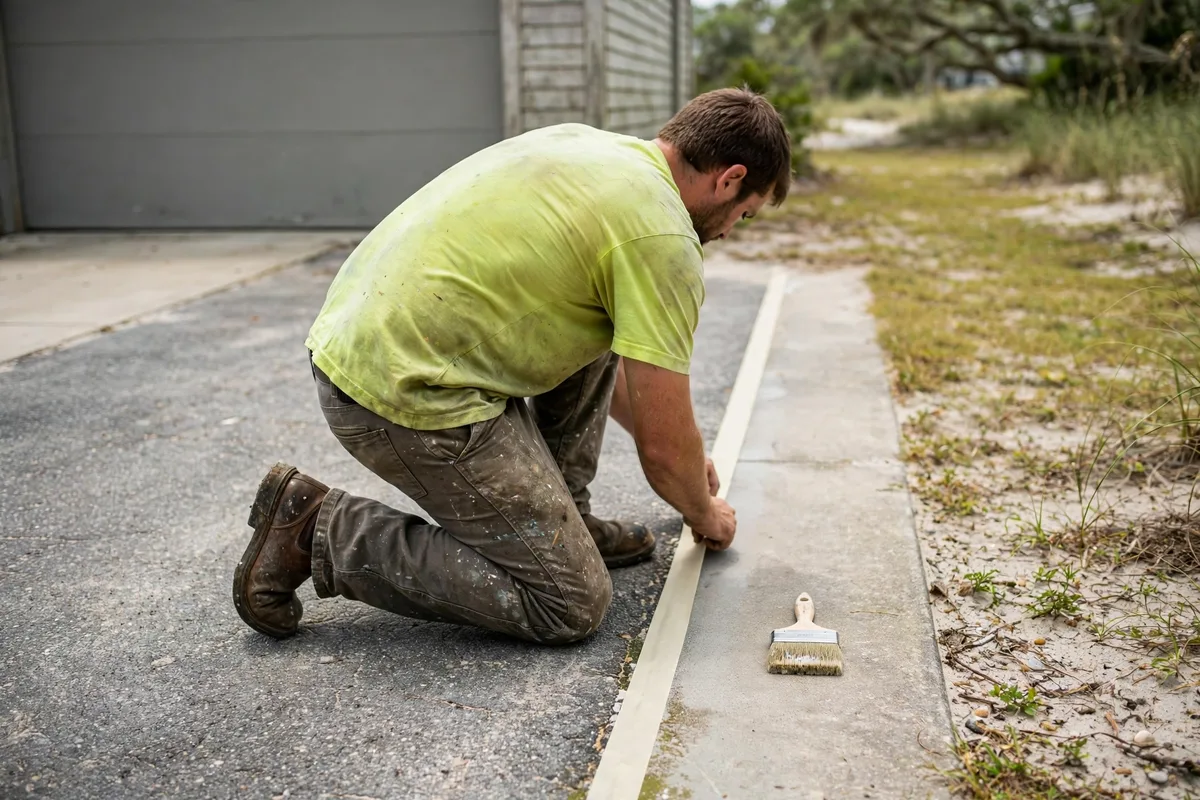
Sealer is black and it stays black. We edge and mask where the drive meets garage slabs, walkways, pavers and the road apron so those stay clean. We also check the weather. The coating needs a dry surface and dry hours after, so we do not apply into rain.
Step 6. Apply the sealer
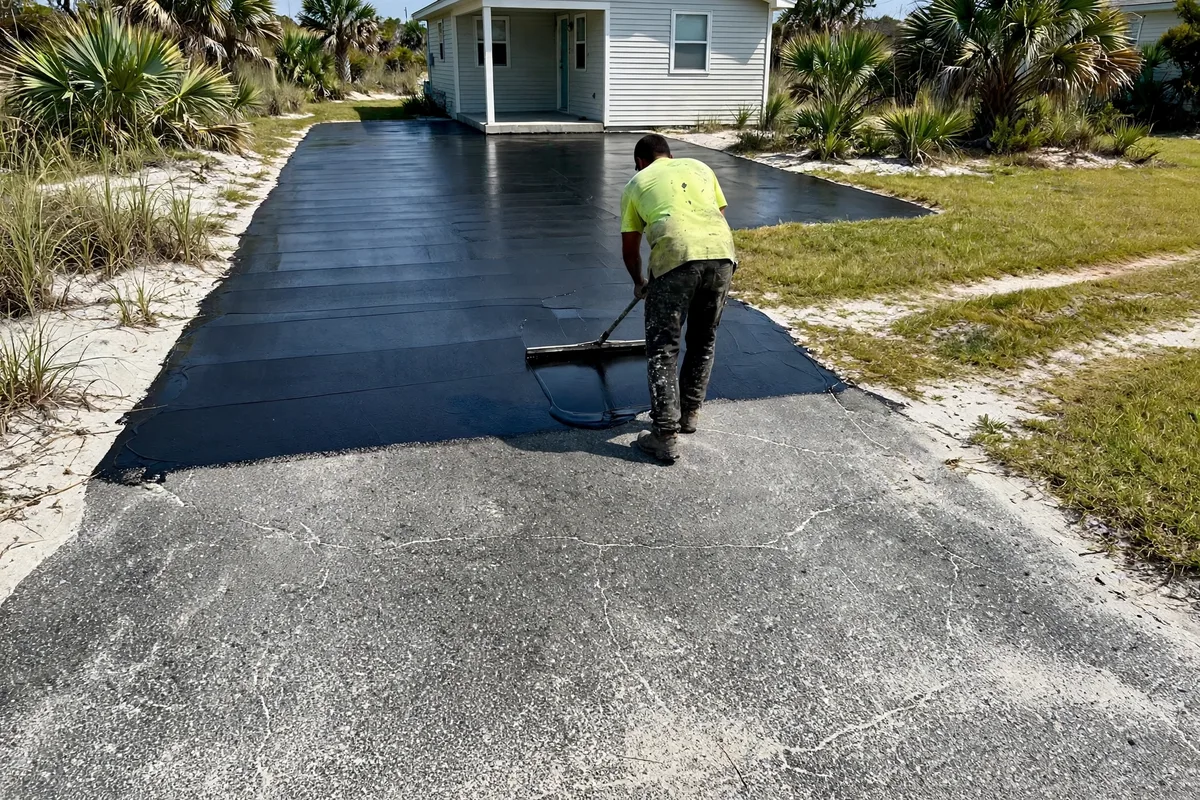
We use an asphalt-emulsion sealer, applied by squeegee or spray depending on the drive, and worked in an even coat so it fills the surface texture without puddling. We cut in the edges by hand, then work across the drive from the far end back toward the street so we are never walking on the wet coat. Two thin coats beat one thick one.
Step 7. Cure, then open the drive
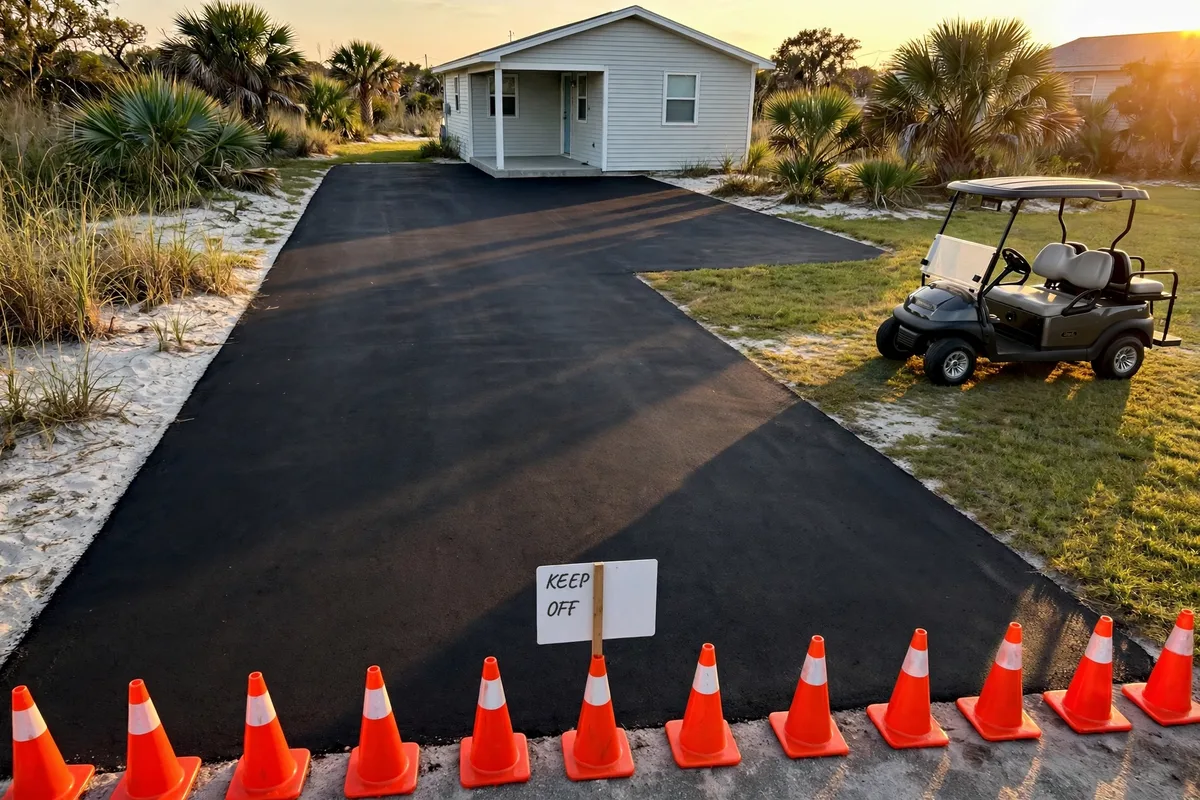
The drive stays closed while the sealer cures. How long depends on temperature, humidity and how thick the coat went down, and on this coast humidity is not on our side. We tell you at the end of the job when it is safe to walk on and when it is safe to drive. We put out barricades or cones so a guest, a delivery driver or a golf cart does not roll through it early.
What driveway sealcoating costs
Typical driveway sealcoating jobs run $600 to $2,000. That is the whole job: cleaning, sealer, and normal prep. The sealer itself is priced at $0.15 to $0.25 per square foot, so the size of the drive is the biggest piece of the number. Small drives carry a minimum fee, and that is why even a short drive does not price at pennies.
Cracks are priced on top, by length. Crack filling runs $0.50 to $3.00 per linear foot, and where a drive lands in that range depends on how wide and how deep the cracks are and whether they need cleaning out first. Oil-spot priming is the other add-on, and it depends on how many spots there are and how far they have soaked in.
So four things set your price: how big the drive is, what condition it is in, how many feet of crack need filling, and how much oil is at the pad. We measure on site, so the figure we give you is for your drive, not a guess from the road.
Timing matters on Oak Island. Many owners get the work done in spring so the drive is clean and dark before the rental season starts. Most owners reseal every two to three years, which is typical practice, not a promise about any coating. A drive in the sun and salt may want checking sooner, and the crack work is worth redoing as new cracks open.
The rental on Oak Island Drive
This is one job from start to finish, told in the order the crew worked it.
Chapter 1. What the drive looked like
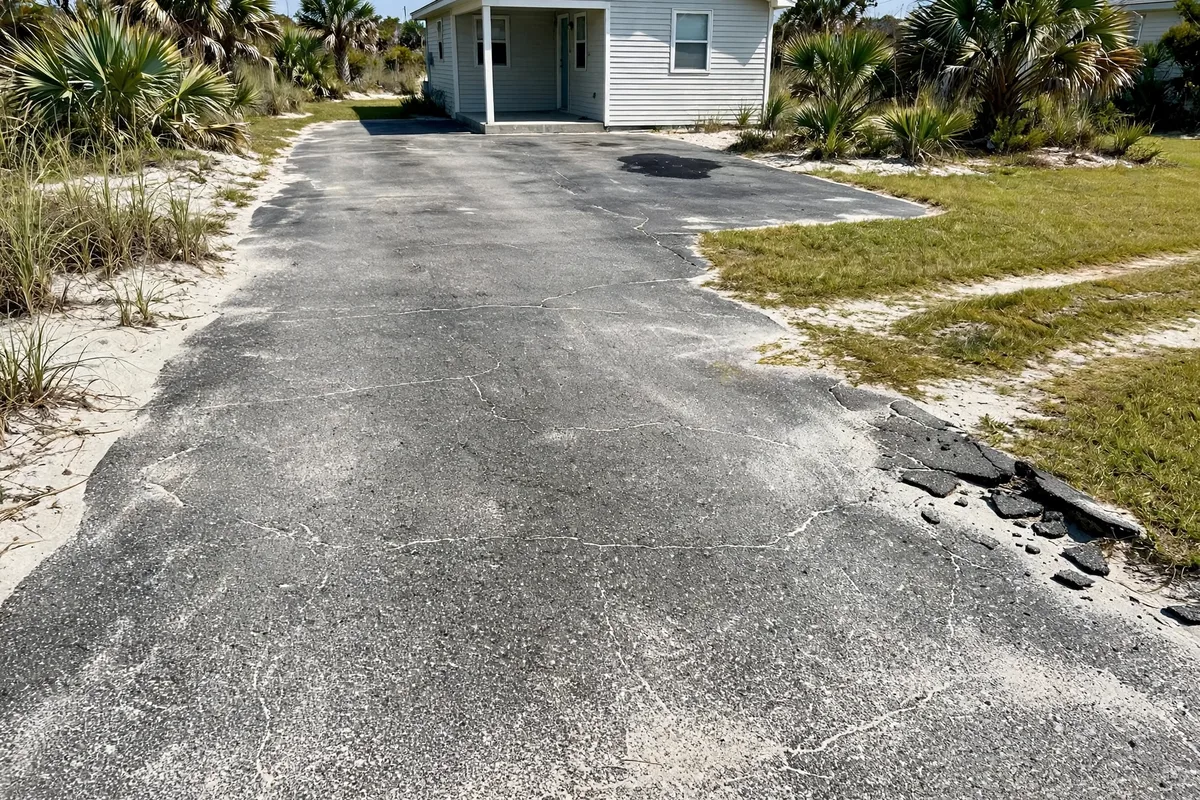
The house was a rental home off Oak Island Drive, and the owner wanted the drive ready before the season started. When the crew walked it, the surface was gray and rough from the sun. Sand had been tracked in over a couple of seasons and ground into the surface, so it felt gritty underfoot. There was oil at the pad where guests parked. The edges were crumbling where golf carts crossed from the grass onto the drive, with small pieces breaking off at the lip.
Chapter 2. Read the drive yourself
The checker below walks through the four problems on this drive, and what the crew did about each.
Read the drive
- What you see: a gritty, rough, gray surface with sand packed in the cracks and along the edges. What the crew did: swept the drive, blew out the cracks and edges, and cleaned down to bare asphalt before anything else went on. What to watch for: sand tracked in from the beach acts like sandpaper under every tire, and sealer will not hold on top of it.
- What you see: a dark, glossy stain where guests park, soft to the touch. What the crew did: scrubbed the spot, let it dry, and applied oil-spot primer before sealing. What to watch for: sealer over unprimed oil fails in a patch the shape of the stain.
- What you see: small pieces breaking off the lip where golf carts cross from the grass. What the crew did: cleared the loose material, filled the breaks and cracks along the edge, and cut the sealer in by hand along the line. What to watch for: the edge goes first, and a cart crossing at the same spot every day keeps working at it.
- What you see: hairline and wider cracks running across the surface. What the crew did: cleaned them out and filled them before the coat, never after. What to watch for: a coating over open cracks hides them for a season, and the water keeps getting in.
- The job was priced inside the driveway band: typical driveway sealcoating jobs run $600 to $2,000. Sealer is $0.15 to $0.25 per square foot. Crack filling is $0.50 to $3.00 per linear foot. Size, condition, crack filling and oil-spot priming set where a drive lands in the band.

Chapter 3. Clean, fill, prime
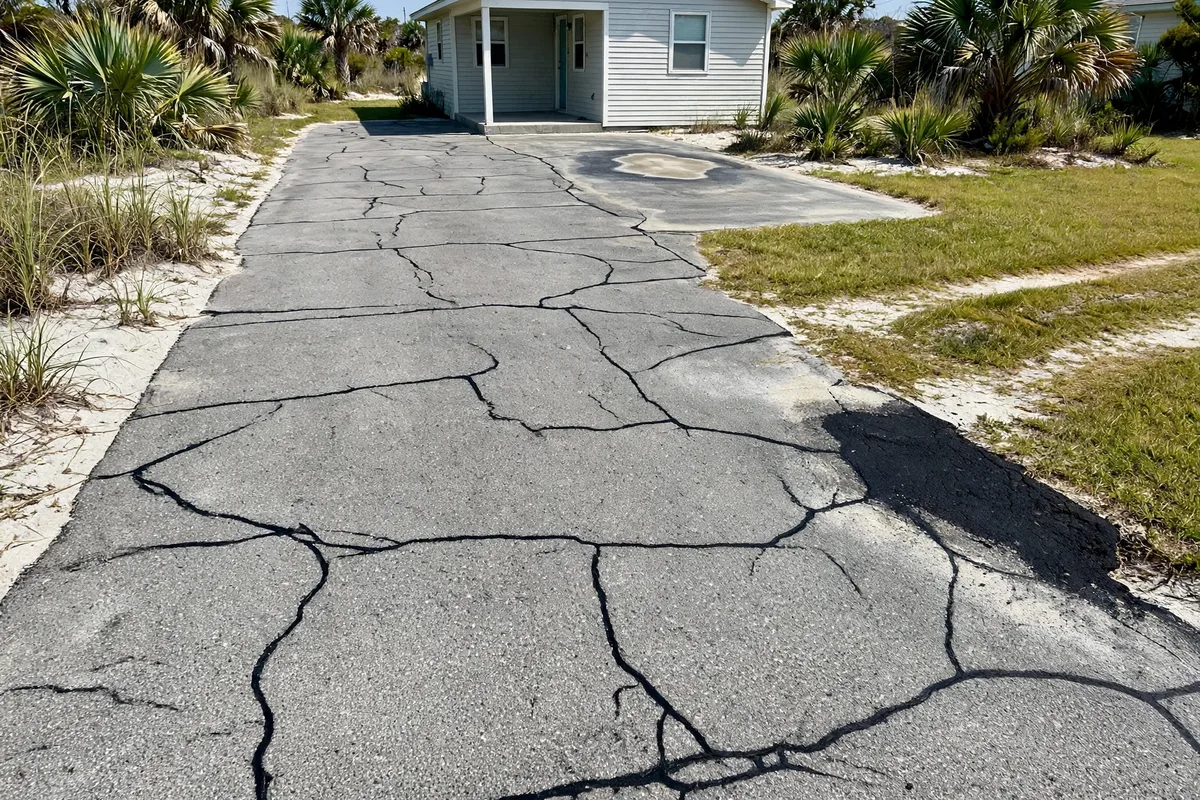
The crew started with the sand. The drive was swept and blown from the house toward the road, and the cracks and edges were brushed and blown out until the asphalt showed dark and clean. The crumbled lip was cleared back to material that held. Then the cracks and edge breaks were filled, level with the surface. The oil at the pad was scrubbed, dried and primed. None of this is the part the owner sees afterward, but it is most of the day.
Chapter 4. Seal in the spring window
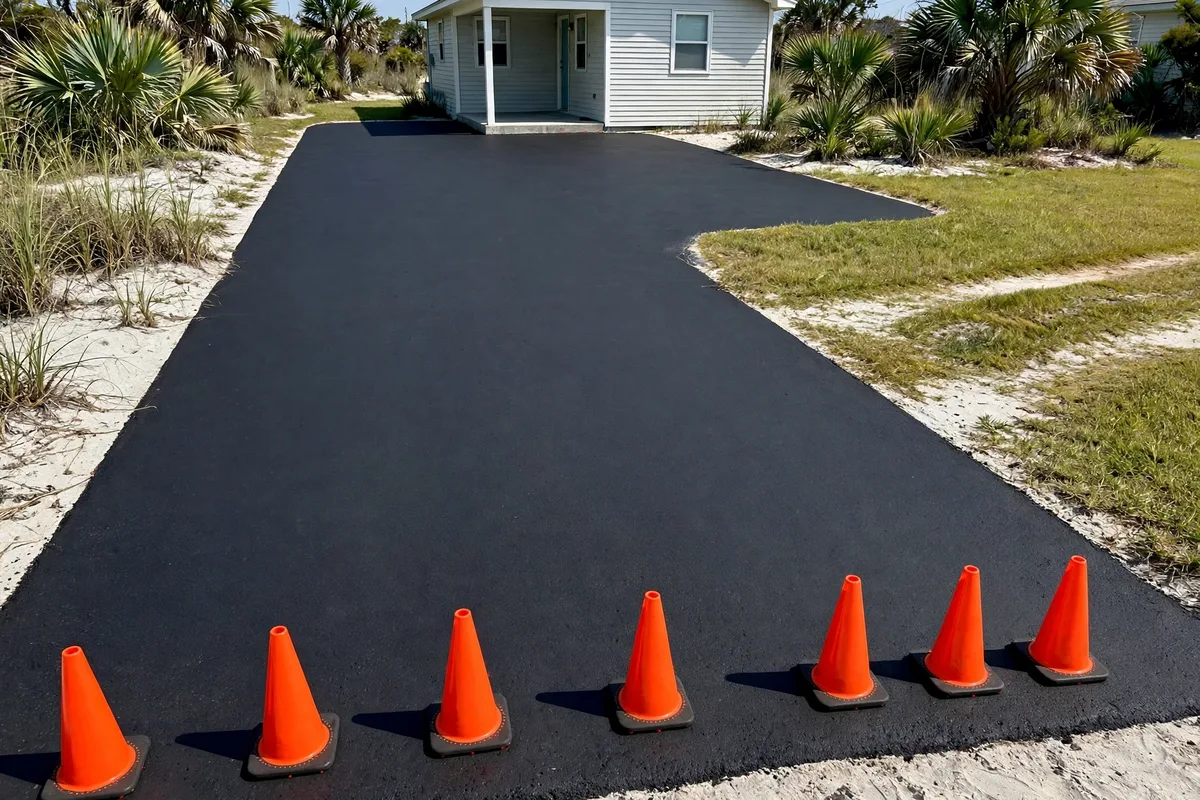
With the weather dry, the crew masked the garage and walkway edges and cut in the sealer along the lawn and the apron. Then they squeegeed two thin coats down the drive, working back toward the street. The job was done in the spring window, before the season started, so the first guests drove onto a finished surface. Cones went up at the road until it cured.
Chapter 5. What it cost and what to watch
The job priced inside the driveway band: typical driveway sealcoating jobs run $600 to $2,000. The sealer was figured at the $0.15 to $0.25 per square foot rate on the measured drive, and the crack and edge filling by the linear foot at $0.50 to $3.00, with the oil-spot priming as prep. The size of the drive and the amount of filling are what moved the total within that band.
For the owner, the watch list is short. Look at the cart crossing first, because the edge will show wear before anything else. Check the pad for new oil and clean it up early. Sweep sand off the drive instead of letting it grind in, and have new cracks filled as they open, not at the next coat. A drive that gets that attention is cheaper to keep sealed than one that is left alone.
Questions
Do you do driveway sealcoating on Oak Island, or only in Leland?
We work on Oak Island regularly. It is about 40 minutes from Leland by the road, and we serve road-connected Brunswick County from there. Call us at (910) 370-1121 and we will talk through your drive.
How much does it cost to seal a driveway on Oak Island?
Typical driveway sealcoating jobs run $600 to $2,000. The sealer is priced at $0.15 to $0.25 per square foot, so the size of your drive does most of the work in setting the price. Small drives carry a minimum fee. Cracks and oil spots are priced on top, as described below.
What does crack filling cost on top of the sealcoat?
Crack filling runs $0.50 to $3.00 per linear foot. Where you land depends on how wide and deep the cracks are and whether they have to be cleaned out first. We measure the length on site and give you a figure for your drive.
Does salt air really matter for my driveway?
Yes, in combination with the sun. Salt air and hard UV dry out the surface binder, and the surface turns gray and rough. Sealer puts a protective layer back on a sound drive. It does not replace a drive that has already broken down, which is why we look at condition first.
How often should I seal a rental driveway?
Most owners reseal every two to three years. That is typical practice, not a guarantee for any coating. A rental that takes a lot of traffic, sand and oil may want a closer look sooner, and cracks should be filled as they open between coats.
Can you work between guest stays?
Tell us your turnover dates when you call and we will plan the job around them. The drive has to stay closed while the sealer cures, so a gap between guests, or the spring window before the season, works best. We do not promise a particular date until we have looked at the drive and the weather.
There is sand all over my drive. Is that a problem?
It is the biggest one on the island. Sand ground into the surface wears it like sandpaper, and sealer will not bond to it. We sweep and blow the drive and the cracks clean first. Sweeping it off yourself between guests helps.
Will sealcoating fix the crumbling edges where the golf cart crosses?
Not by itself. We clear the loose material and fill the breaks along the edge before sealing, which holds a lightly crumbled edge together and protects it. If the edge has broken away badly or the base underneath has let go, that is patching, and we will tell you that before we quote a coat.
What about the oil stains at the parking pad?
We scrub them, dry them and prime them before the sealer goes on. Sealer will not stick to oil, so skipping this step leaves a failed patch in the shape of the stain. Priming is priced as prep, and it depends on how many spots there are and how deep they have soaked.
Do you use coal tar sealer?
No. We use asphalt-emulsion sealer, which is the standard product in this market. Coal tar is restricted in some parts of North Carolina and is not where the region is headed.
How long before I can drive on it?
It depends on temperature, humidity and how thick the coat went down. On the coast, humidity slows it. At the end of the job we tell you when it is safe to walk on and when it is safe to drive, and we leave barricades or cones out until then.
What if it rains after the job?
We do not apply sealer into rain, and we check the forecast before we start. If the weather turns, we reschedule rather than seal a wet drive. Sealer needs dry surface and dry hours after it goes down.
Can you pave a new driveway if mine is too far gone?
No. We care for and repair existing asphalt, which means sealcoating, crack filling and patching. We do not pave new drives, pour concrete or do drainage work. If we see that yours needs more than we do, we will tell you.
Do you also seal condo or rental office lots on the island?
We do parking lot work too. If you manage a lot rather than a drive, mention it when you call and we will go over what the lot needs.
Get your Oak Island driveway looked at
Call (910) 370-1121 or send the form below, and tell us about the drive, whether it is a home or a rental, and when you want it done. We will give you a figure for your drive, not a range from somewhere else.
The more details you give, the better we are able to help you.