Ocean Isle Beach counted 867 residents in the 2020 census and fills to many times that in season. The lots take all of it. Condo lots, beach access lots and the lots behind rentals and restaurants get driven on, parked on and walked across from spring through fall, and the paint is the first thing to show it. Leland Pavement Care works out of Leland, about 45 minutes up the road, and repaints the accessible spaces, access aisles, crosswalks, fire lanes and arrows that make up a lot's pavement markings.
Most of that is line striping, and paint is only as good as what it sits on. If a lot needs parking lot sealcoating or crack sealing first, we tell you before any paint goes down, because stripes laid over a breaking-up surface go with it. Owners who keep up regular parking lot maintenance generally find the markings are the easy part of the year.
Some lots also want parking signs at the accessible spaces or wheel stops at the head of a bay. We set those as an add-on to the markings, never as the job itself. If your accessible spaces have faded to ghosts, or the aisle beside them was never striped at all, this is the work that fixes it.
What the work covers
Accessible spaces and the access aisles beside them. Crosswalks from the lot to the walkway or the building. Fire lanes, with the curb or pavement lettering. Directional arrows, stop bars, no-parking hatching and the plain bay lines that tell a driver where a car goes.
An accessible space is not just a blue symbol. It is a space of a set width, with an access aisle next to it, in a set position. The standard dimensions govern how wide the space is, how wide the aisle is, and where a van-accessible space belongs. The crew lays the work out to those dimensions and to whatever plan or direction the owner supplies. We lay out and paint. Deciding what your lot must contain belongs to your designer, your association's counsel or the code official. We do not make that call and never claim to.
Why markings fade faster on this coast
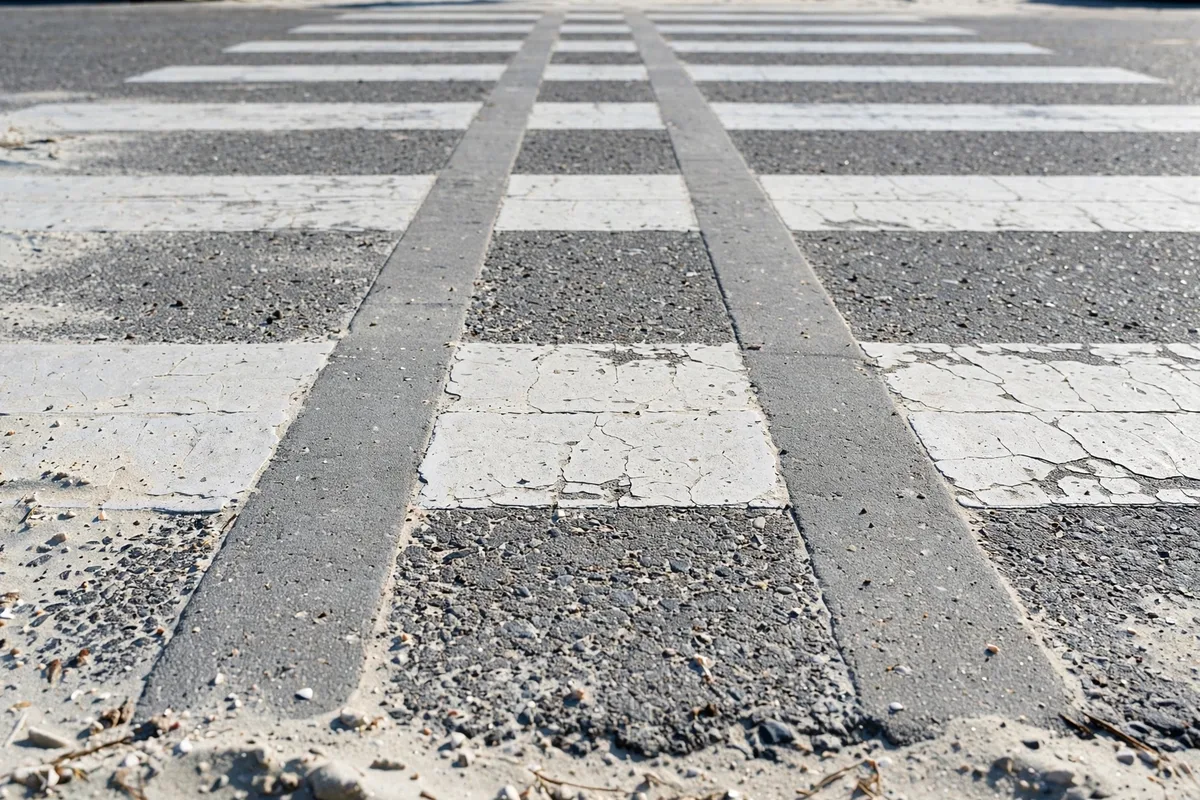
Sun does the slow work. Hard UV breaks down paint and the asphalt under it, and a bright blue symbol goes chalky and pale well before the surface fails. Salt air and humidity ride in off the ocean and sit on everything. Sand comes off the beach on tires and feet and works like sandpaper across a crosswalk. Summer thunderstorms put down inches of rain at once, and the water that finds an open crack under a stripe lifts the paint and the pavement together.
Then there is the season itself. A lot that sits nearly empty in winter turns over constantly in summer, with rental guests pulling in and out, delivery vans stopping where they shouldn't and beachgoers crossing between cars. Crosswalks and stop bars take the heaviest wear because they are where tires turn and brake.
How the work goes
Every job follows the same order. Skipping a step shows up later as paint that peels or lines that sit crooked.
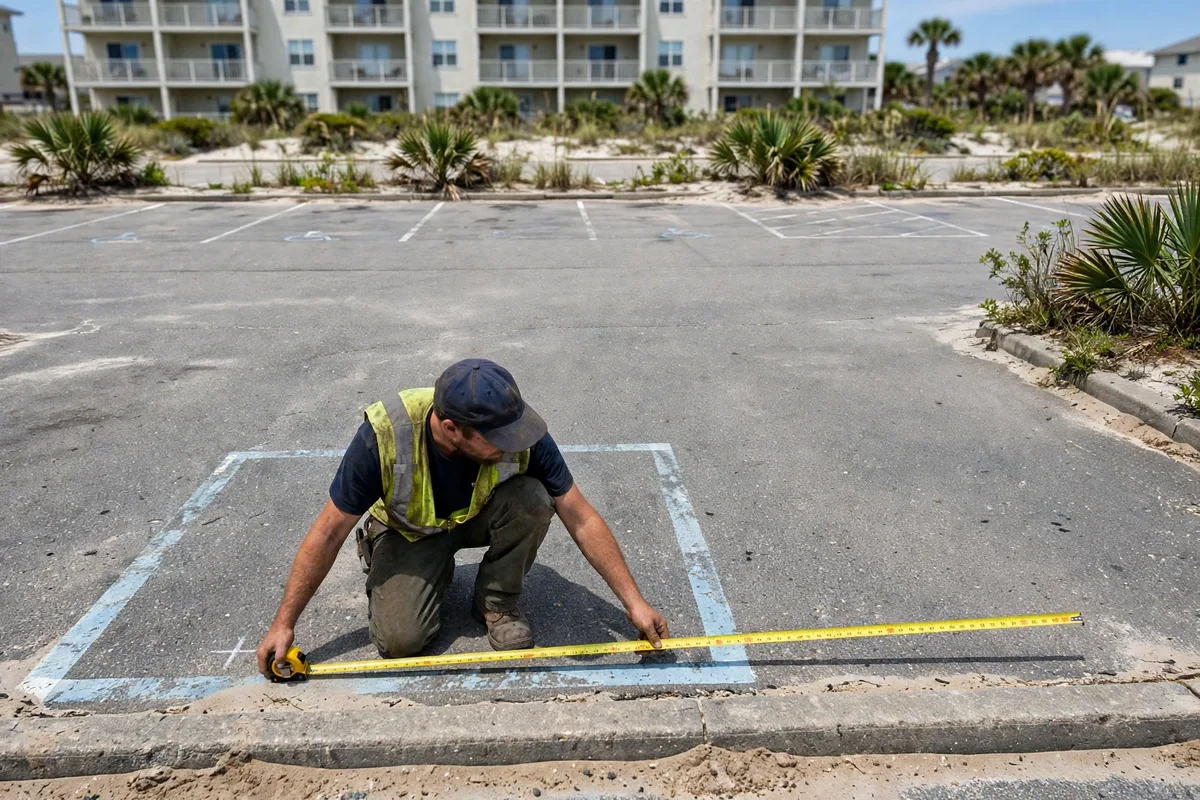
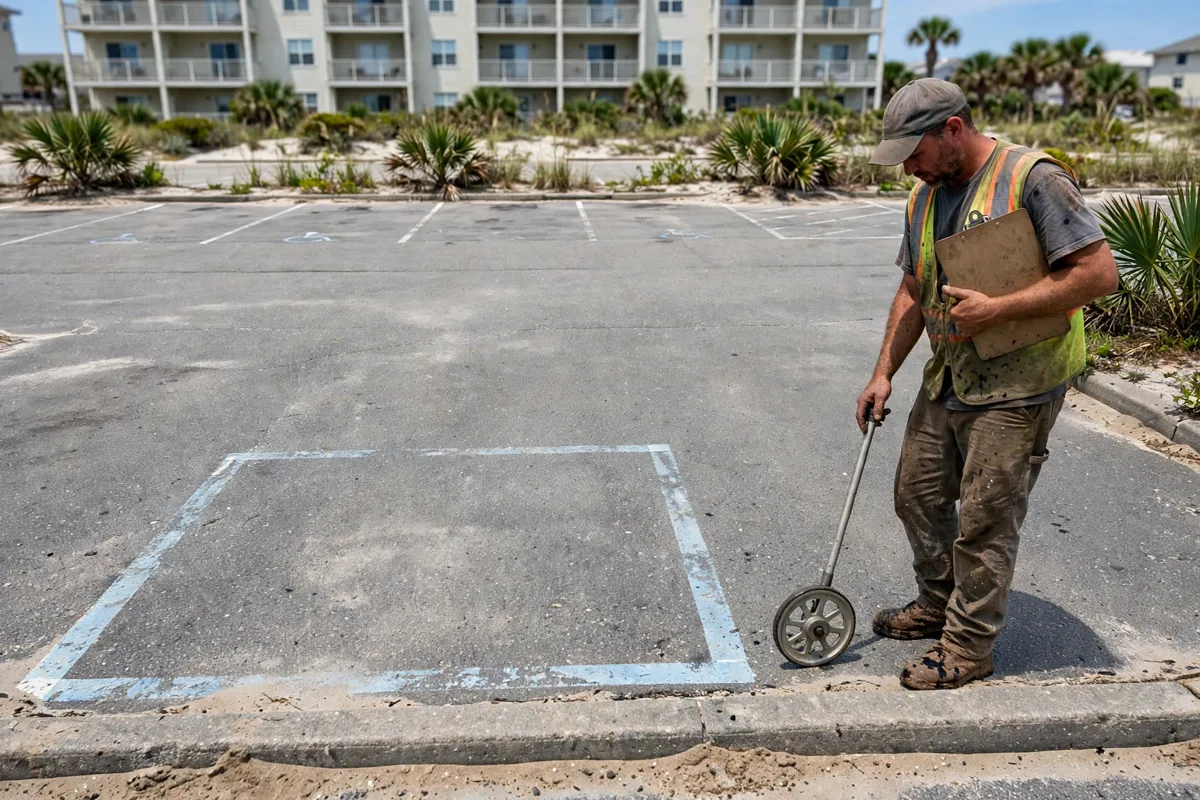
1. Walk the lot and measure. We look at the surface first, then at what markings remain. We measure bay widths, find the spaces that carry accessible markings, and note the fire lane, the walkways and where the aisles must run.
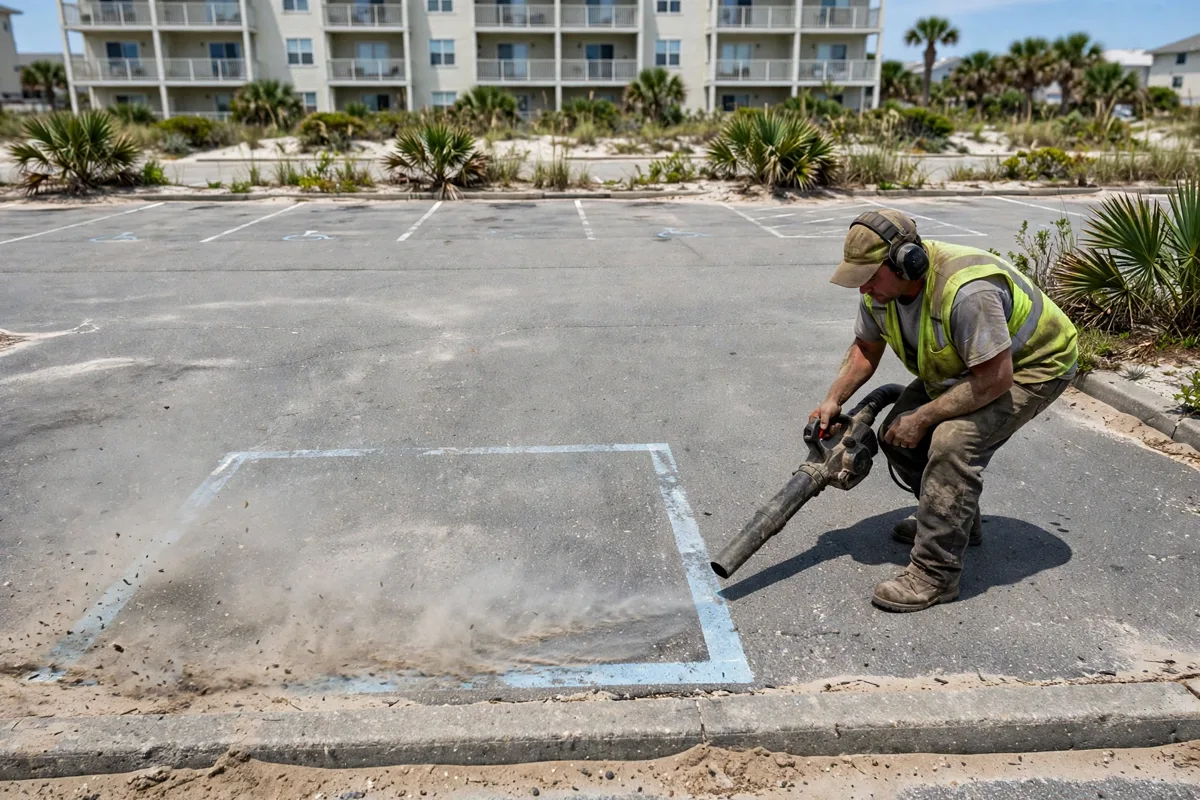
2. Check the pavement and prep it. We sweep and blow off sand and debris, scrape flaking paint, and look for cracks and oil spots that will not hold paint. If the surface needs crack sealing or sealcoating, that comes first and the stripes follow.
3. Lay out the lines. Using the measurements and the standard dimensions, we mark the corners of each space and aisle with chalk and string lines, pin the ends, and check the whole layout before paint touches it.
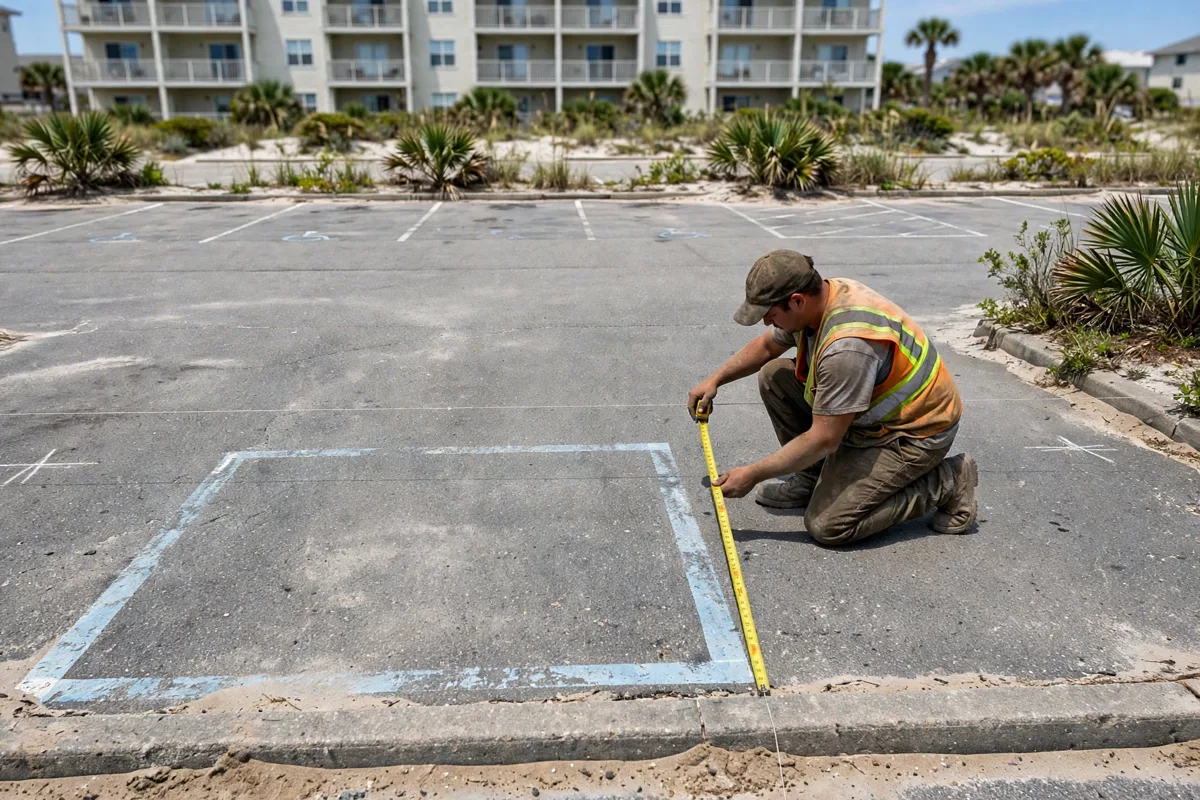
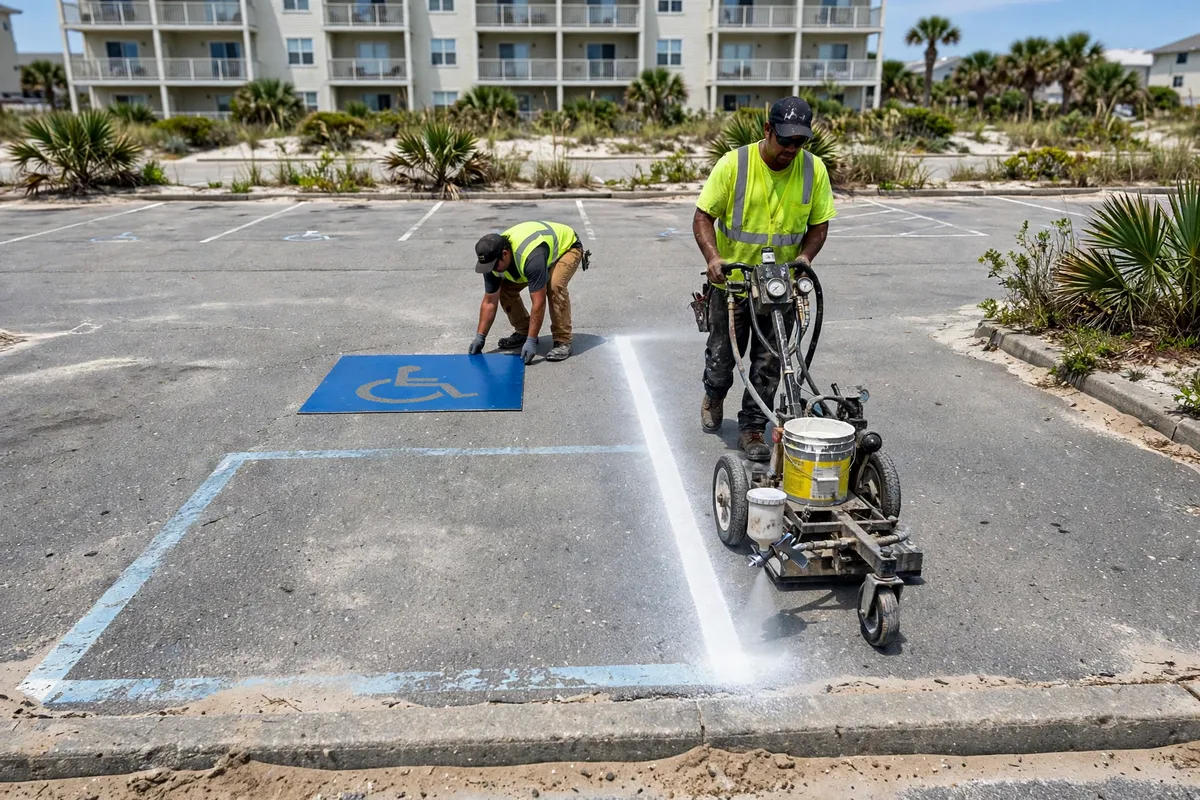
4. Stencil and paint. Waterborne traffic paint is the standard for lot markings. Stencils set the accessible symbol and any lettering, and the lines go down straight along the string. Where a crosswalk or stop bar takes heavy traffic, thermoplastic is the long-wear option, and we will say so while we are on site.
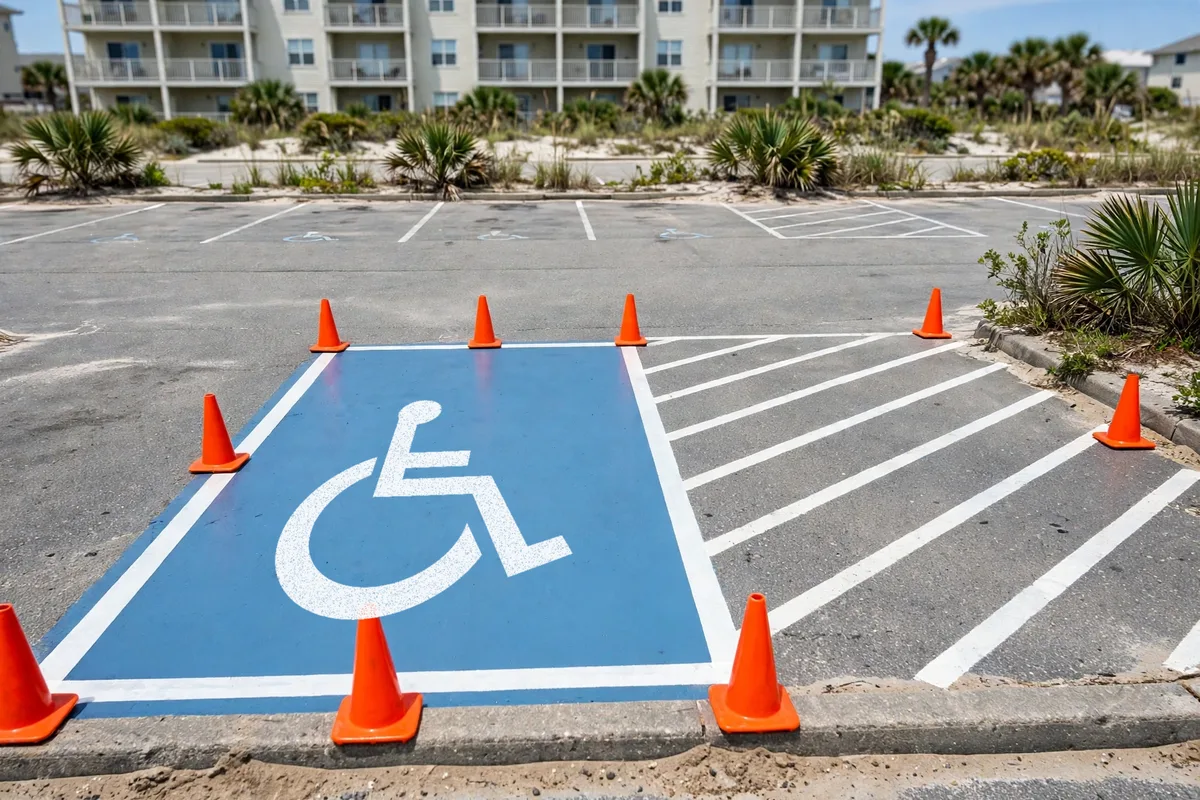
5. Cone off while it dries. New paint stays closed to traffic until it is dry to the touch. We cone the finished spaces and walkways and set the sequence so the lot is never fully closed if we can avoid it.
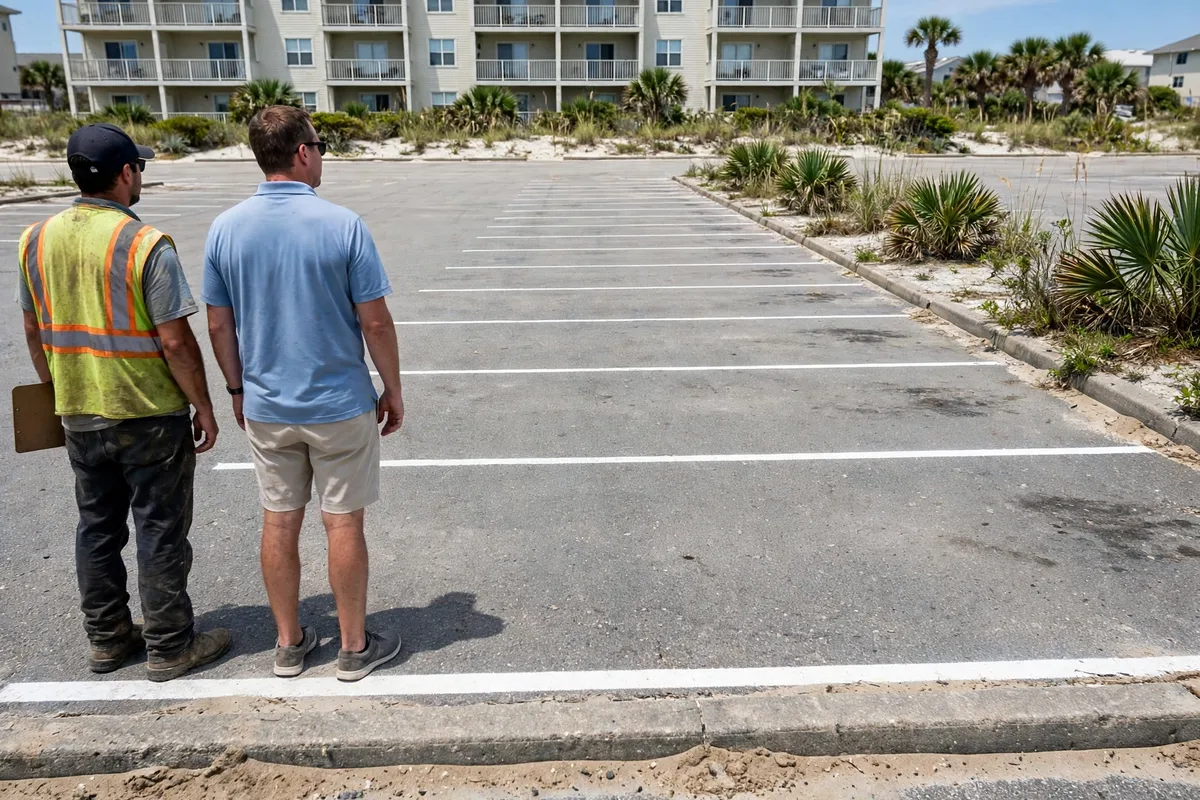
6. Walk it with you. At the end we walk the finished layout with the owner or manager, space by space. If you want parking signs at the accessible spaces or wheel stops at any bay, that is the time to say so.
A condo lot off Causeway Drive
The lot sat behind a condo building off Causeway Drive. The accessible spaces had faded to ghosts, pale blue outlines with the symbol almost gone. The access aisle beside them had never been striped at all. The crosswalk to the building entrance was scuffed through, and the fire lane lettering along the curb had weathered away. The association manager called because owners were parking across where an aisle should have been, and nobody could tell from the pavement where it was meant to go.
The surface itself was sound. That mattered, because it meant the job was markings work from start to finish with no sealing or patching ahead of it.
Work the Causeway Drive lot
Accessible spaces faded to pale outlines. Access aisle never striped. Crosswalk scuffed through at the tire paths. Fire lane lettering weathered off the curb. Surface sound, so no sealing or patching first.
The crew measured what was left of the old outlines, then re-laid the spaces out to the standard dimensions from a fresh string line, rather than painting over the old ghosts. Waterborne paint, stencilled symbol.
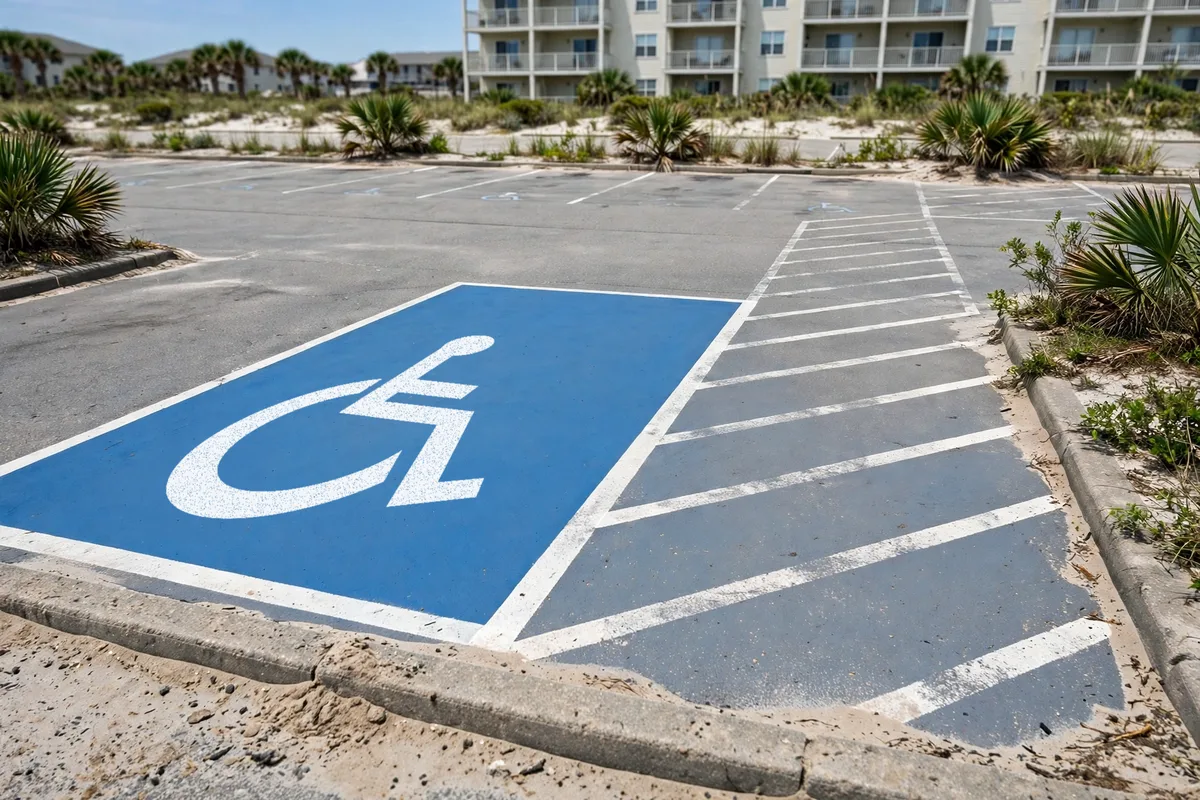
The access aisle was laid out beside each accessible space and striped for the first time. The crosswalk to the building entrance was re-marked.
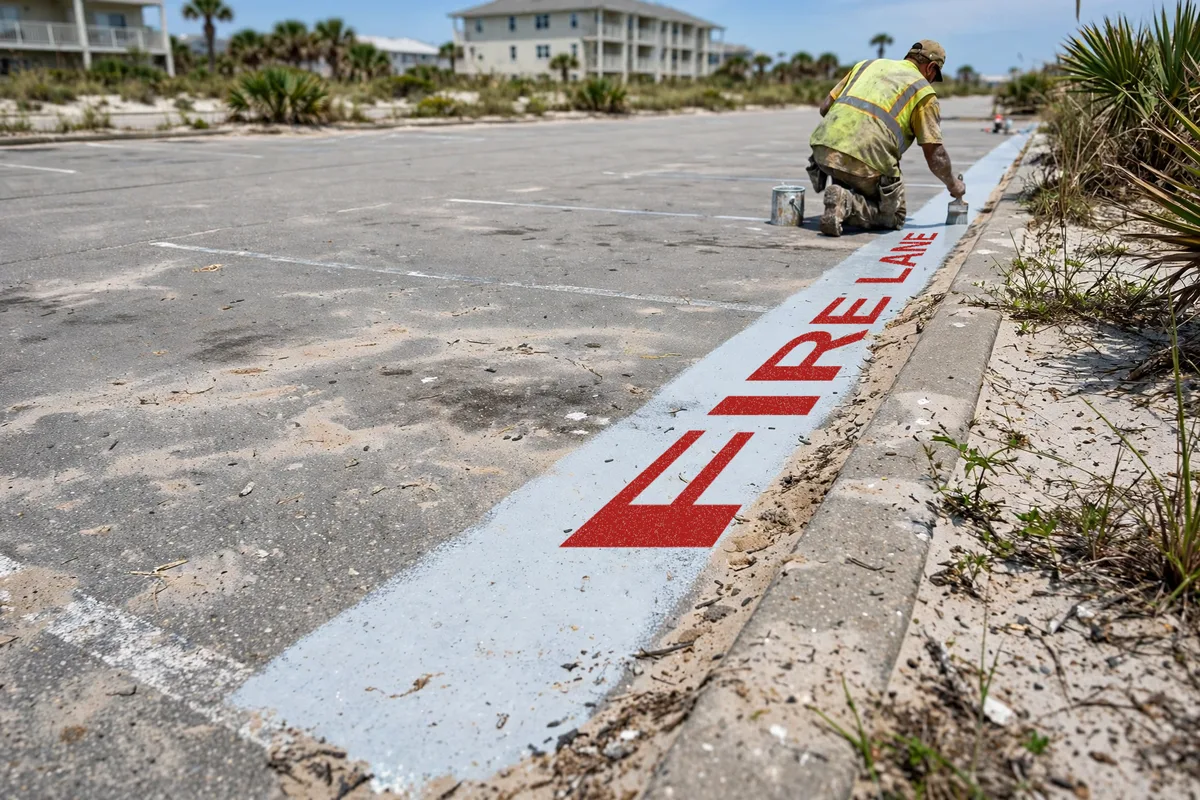
The fire lane was cleared of the old, worn marking and re-lettered along the curb.
Priced with the lot's striping work, inside the $600-$3,600 range for marking jobs. This is markings work only. No certification is promised or implied. Watch for: wear at the crosswalk tire paths, tracks on wet paint, and vehicles parked across the aisle.

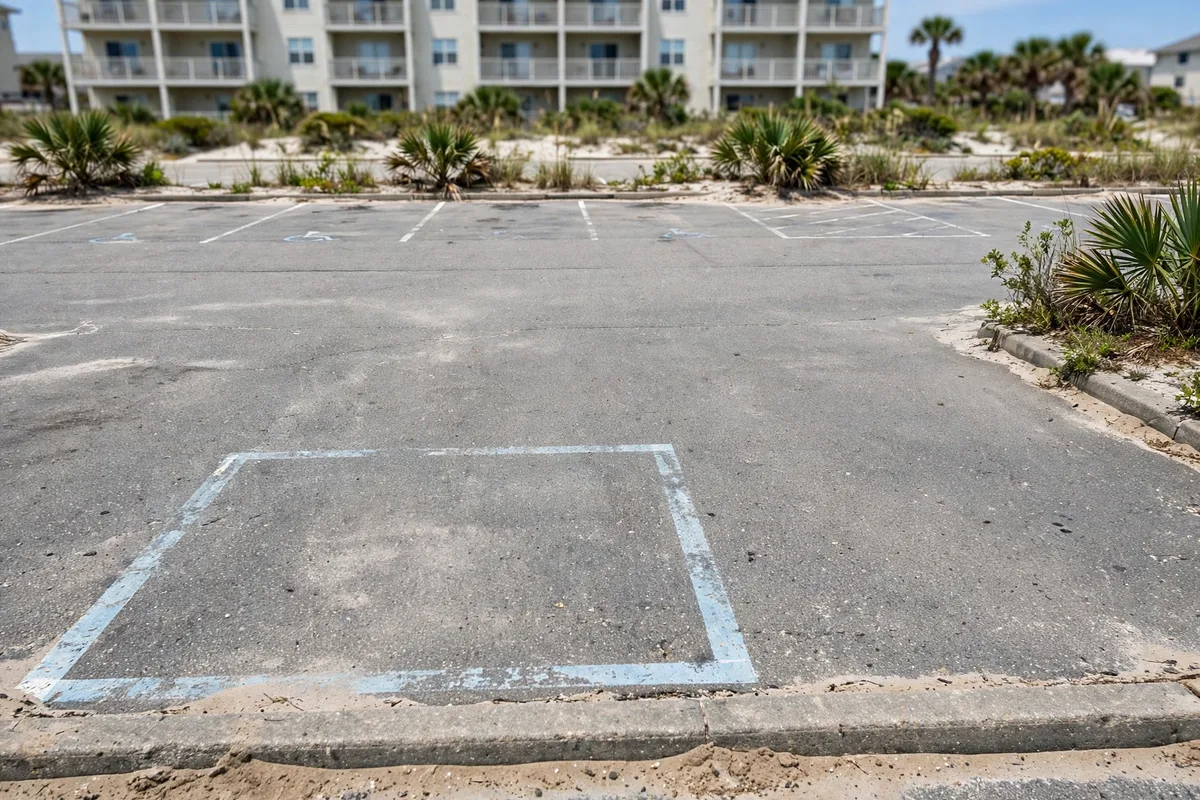
The crew went in order. They measured what remained, then did not trust it. The old outlines had drifted from true, so the spaces were laid out new from string lines to the standard dimensions, with the van-accessible position and the aisle beside each space worked out on the ground before paint was opened. Stencils set the symbol and the lines went down along the string.
The crosswalk to the entrance was re-marked next. The fire lane was last. The old lettering was cleared along the curb and the lane was re-lettered, so a driver reading it from the car could not mistake it.
The job was priced with the lot's striping work and came in inside the $600-$3,600 range for marking jobs. The association got a lot whose spaces, aisle, crosswalk and fire lane all read clearly. We said what we did: markings, laid out to the standard dimensions. We did not say the lot met any code, because we do not certify that.
What to watch afterward: the crosswalk tire paths wear first, wet paint holds tire tracks, and a car parked across an aisle makes the aisle useless no matter how good the paint is. A parking sign at each accessible space helps with that, and it is an add-on we set if the association wants it.
What it costs
Marking jobs are priced with the lot's striping work, and striping jobs run $600-$3,600. Where your lot falls in that range depends on a few things:
- How many spaces and markings. A small condo lot with a handful of accessible spaces sits at the lower end. A larger lot with many bays, crosswalks and arrows sits higher.
- New layout or restripe. Laying out a lot fresh, as on Causeway Drive, takes more measuring and string work than restriping over a layout that is still clear.
- Paint. Waterborne traffic paint is the standard. Thermoplastic for high-traffic crosswalks and stop bars is the long-wear option and is priced into the job when you choose it.
- Prep. Sand, oil spots and flaking paint add time. If the surface needs crack sealing or sealcoating first, that work is priced on top of the markings.
- Add-ons. Parking signs and wheel stops are set and priced separately from the markings.
That is the number. Call and we will talk through your lot against it.
What we will and will not tell you
We will tell you what is on your pavement and what we laid out. We will tell you the standard dimensions we worked to and show you the measurements. We will tell you when the surface under the paint is the real problem.
We will not certify that your lot complies with the ADA or any code, and we will not guarantee that an inspector or a court will agree. That belongs to your designer, your counsel or the code official. We work for property owners, condo associations, businesses and churches. We do not bid municipal road work.
Questions
Do you mark accessible spaces and access aisles in Ocean Isle Beach?
Yes. Accessible spaces, the access aisles beside them, crosswalks, fire lanes and directional markings are the work on this page. Ocean Isle Beach is about 45 minutes from our base in Leland and inside our service ground.
Will you certify that my lot is ADA compliant?
No. We lay out and paint the markings to the standard dimensions and to any plan you supply. We do not certify compliance or guarantee code conformance. For that, ask your designer or the code official.
How much does it cost to mark my lot?
Marking jobs are priced with the lot's striping work, and striping jobs run $600-$3,600. Size, new layout versus restripe, paint type and prep decide where yours lands.
My accessible spaces have faded to almost nothing. Can you just paint over them?
Sometimes, if the outline is still true. We measure first. If the old lines have drifted, as they had on the Causeway Drive lot, we lay the spaces out fresh from a string line rather than copying a crooked ghost.
Our access aisle was never striped. Is that a different job?
It is part of the same job, but it is a new layout rather than a restripe, so there is more measuring and layout work. The aisle goes beside each accessible space and is striped and marked.
What kind of paint do you use?
Waterborne traffic paint is the standard for lot markings. Thermoplastic is the long-wear option for high-traffic markings such as crosswalks and stop bars, and we will tell you if a spot on your lot warrants it.
Can you do the fire lane?
Yes. We clear the worn marking and re-letter the lane along the curb or pavement. We mark what you or your fire official specify and do not decide where a fire lane must run.
Do I have to close the whole lot?
Not always. New paint stays closed until it is dry to the touch, so we cone off finished areas and sequence the work to keep as much of the lot open as we can. Tell us on the call when the lot is quietest.
Do you install parking signs and wheel stops?
Yes, as an add-on to the markings. A sign at an accessible space or a wheel stop at the head of a bay helps keep the paint in use, and we price them separately from the striping.
Should the lot be sealcoated or crack-sealed before the stripes go down?
If the surface is breaking up, yes. Paint over open cracks and a failing surface will not last, so we say so up front. If the surface is sound, as it was on Causeway Drive, the job is markings only.
Do you work on town-owned lots or public roads?
No. We work for property owners, condo associations, businesses and churches, and we do not bid municipal road work.
How do I get started?
Call (910) 370-1121 or send the form below. Tell us the type of lot, roughly how many spaces, and what has faded or is missing.
Call or send the form
If your accessible spaces have faded, the aisle was never painted, or the crosswalk and fire lane are wearing through, call (910) 370-1121. You can also send the form below. We will go through your lot and the marking jobs against the $600-$3,600 range.
The more details you give, the better we are able to help you.