Leland Pavement Care keeps water out of the asphalt on Sandy Creek's long drives and shared lanes. Sandy Creek is a town of 248 people about fifteen minutes from Leland, and most of the calls we take from here come down to the same thing. A crack opens, the rain gets in, and the sand underneath stops holding still once it's wet. The work that stops that is crack sealing, and on most drives out here it is the whole job.
Done right, crack filling means cleaning the crack out, routing the wide ones, and running hot-pour rubberized sealant into them so it stays flexible through the heat and the cold. Done wrong, it's a squeeze of cold filler that is gone by next summer. Once the cracks are closed, asphalt sealcoating over the drive is a choice and not a requirement. Only on a surface that is sound underneath does driveway sealcoating make sense.
Some drives need more than sealant. Where the base has already let go, pothole repair or asphalt patching comes first. An older drive that is broken up across its whole width is a driveway repair conversation, and we will have it with you straight. We start by walking the drive and telling you which one you have.
Crack work on Sandy Creek drives
The drives here are long. Many run back from the road through trees to a house set well off the pavement, and some are shared lanes serving more than one household. That is a lot of asphalt with a lot of edge, and edges and seams are where cracks start first.
We do the maintenance side of asphalt. That means cleaning, routing and sealing the cracks, and patching where a crack has turned into a failed spot. If a coat of sealer is wanted over the top, we apply it. We do not lay new drives, mill, pour concrete or do drainage work. If your drive is past saving, we tell you that on the walk-through and we do not sell you crack work that won't hold.
What water does to a Sandy Creek drive
Asphalt is a maintained surface, not a permanent one. On this coast four things work against it: sun oxidizing the surface, water getting in through cracks, oil and fuel softening the binder, and the base failing underneath. Crack work answers the second one, and the second one is the one that costs people their drives.
The soil around Sandy Creek is sand, with a high water table. On sand, the base under a drive is what holds it up. When a summer thunderstorm or a tropical system drops inches of rain at once, the water finds every open crack and runs down to the base. Sand washes out from under the asphalt, and the pavement above it sags, cracks wider and lets in more water. Hurricane Florence in 2018 showed this county what standing water does, and storm-season wear on drives is a plain fact of living here.
A sealed crack stops that loop at the start. An open one lets it run every time it rains.
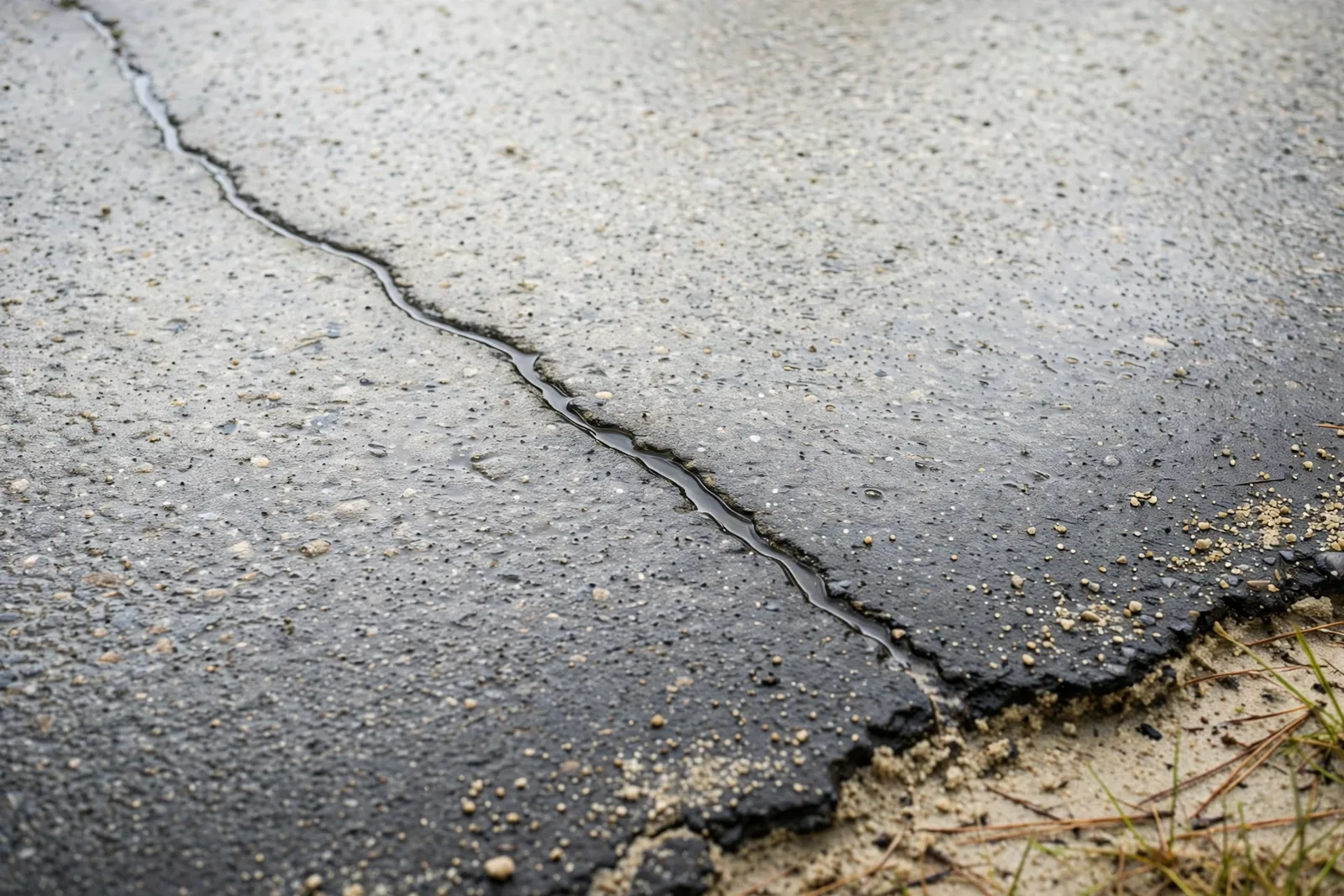
Reading the cracks on your drive
Not every crack is the same job. Knowing which kind you have decides what goes in it and what it costs.
Tight hairline cracks are the early ones. They are cleaned and sealed, and sealing them while they are still tight is the cheapest crack work there is. Cracks that have opened to somewhere between ¼ inch and 1 inch are wider and usually carry more movement. Those are routed, meaning cut out to a clean reservoir so the sealant has something to grip and room to flex. Cracks that connect in a web or a block pattern, or that sit in a sunken or soft area, are a different matter. Those point to the base, and the crew treats them as base trouble to watch or patch, not as sealant jobs alone.
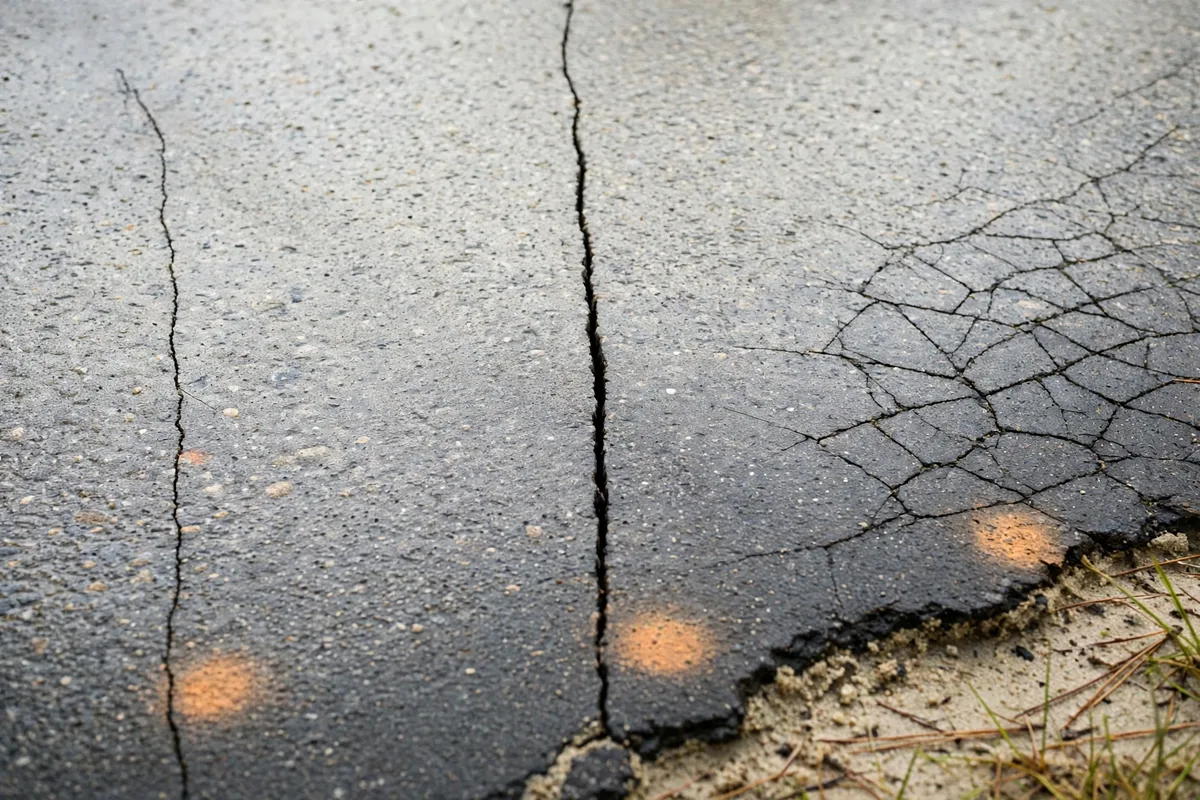
How the work goes
Here is the order the crew works in on a Sandy Creek drive.
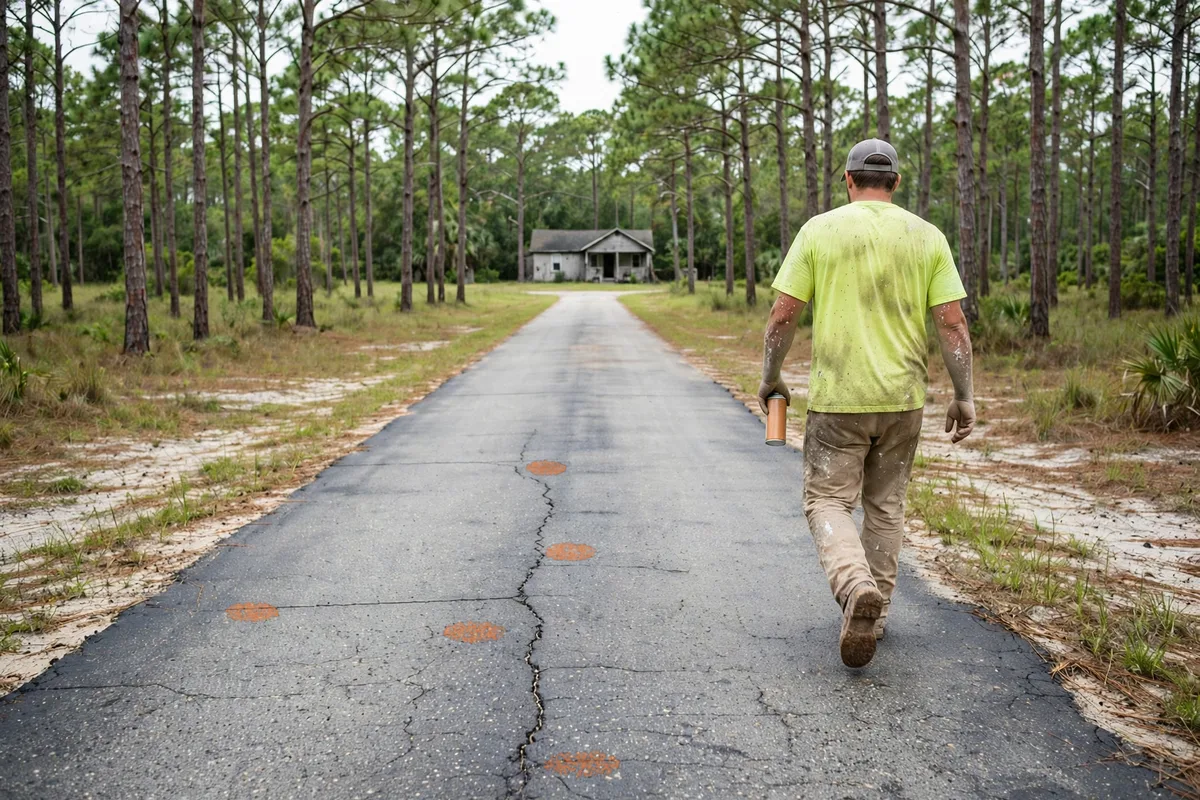
1. Walk and mark the drive. We walk the whole length with you if you are home, and mark every crack with paint. We note which are hairline, which are wide enough to route, and which look like base trouble.
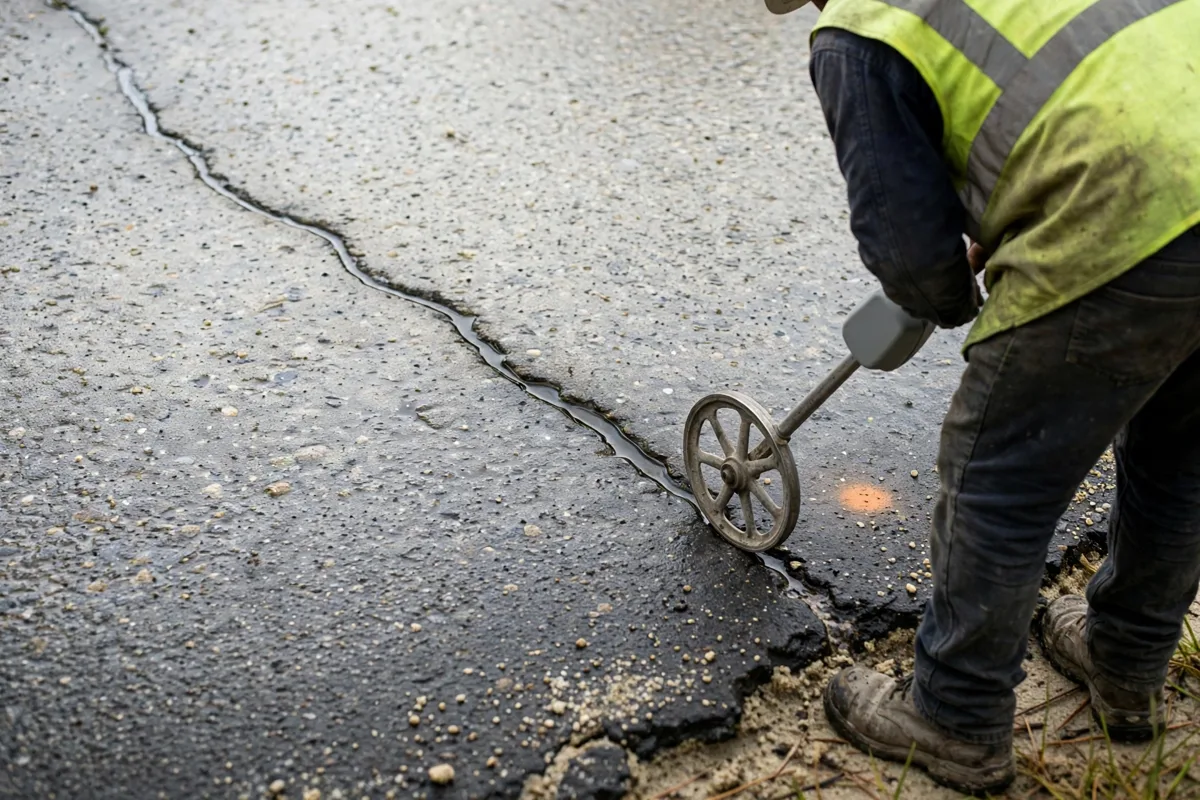
2. Measure by the foot. We run a measuring wheel along the marked cracks to get the total linear feet. That measured length is what the price is built on.
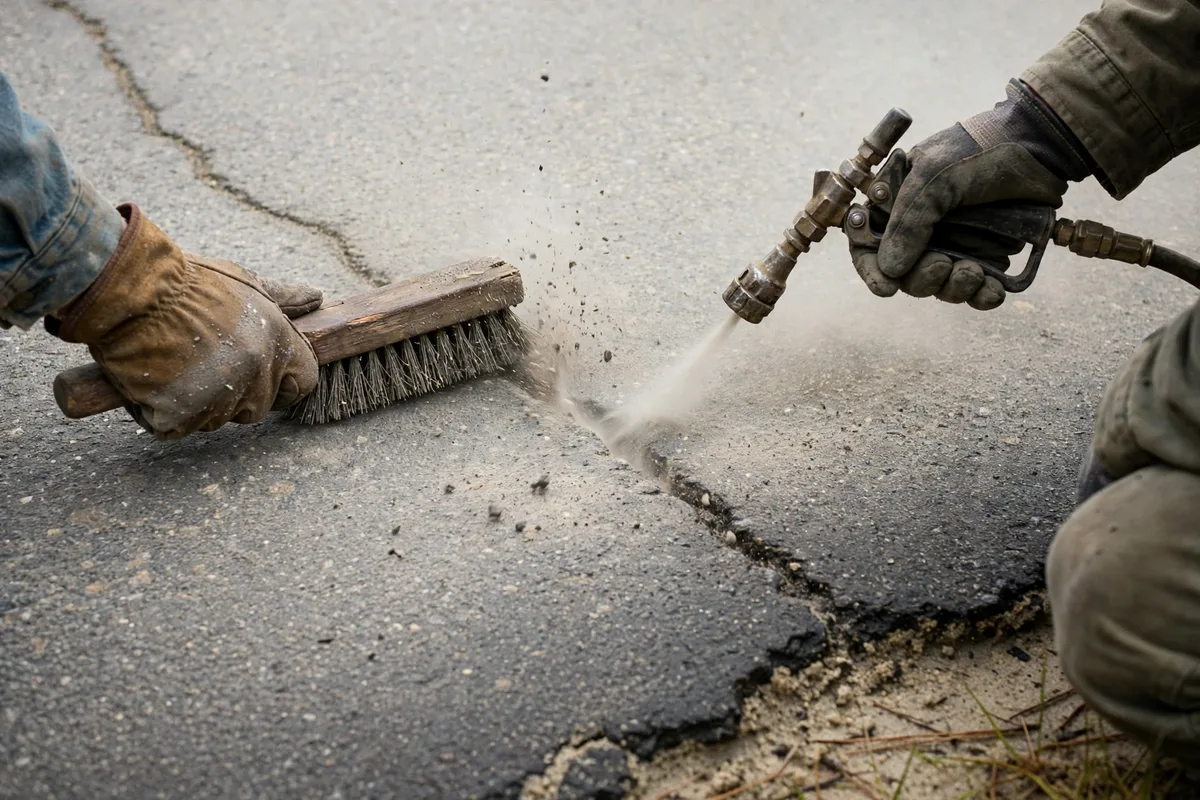
3. Clean the cracks out. Dirt, sand, loose asphalt and plant growth all come out. Sealant will not hold to a dirty crack, and a skipped cleaning is the most common reason filler fails early.
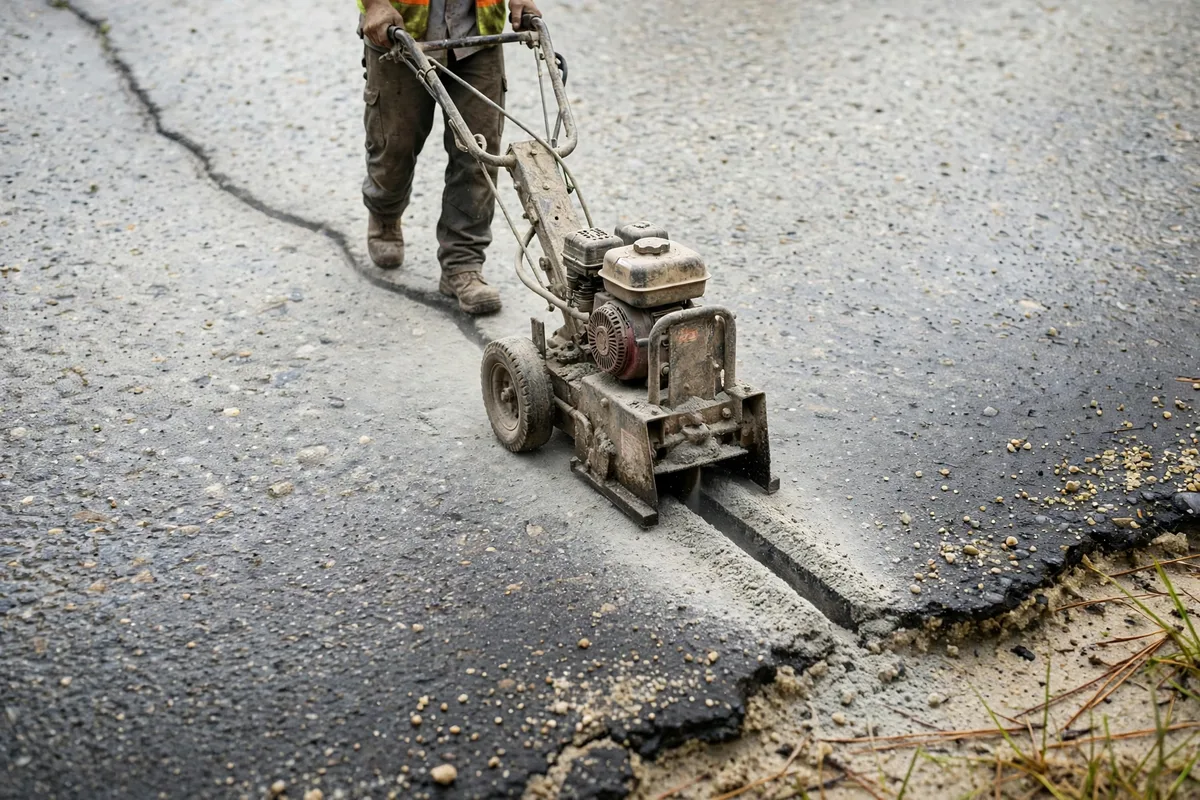
4. Route the wide ones. Cracks that have opened up are cut to a clean, even channel. Routing gives the sealant a reservoir to sit in and flex in as the drive warms and cools.
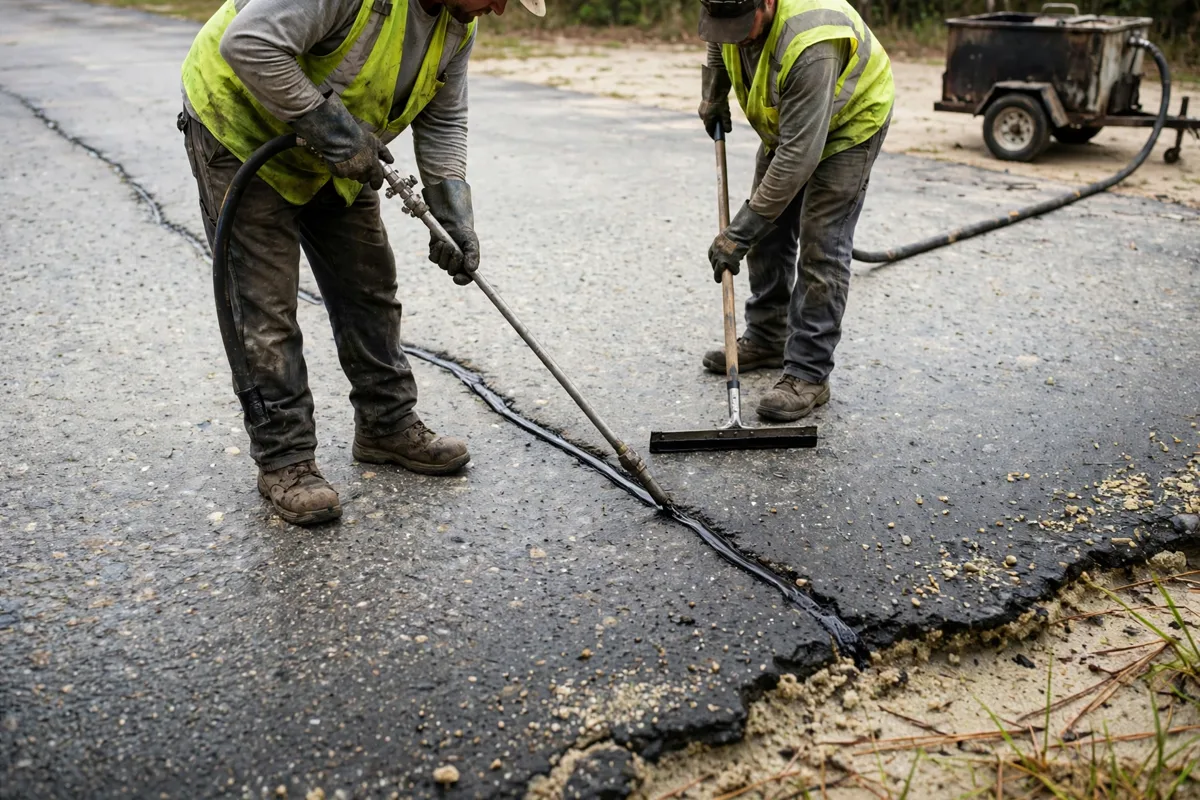
5. Pour hot rubberized sealant. Hot-pour rubberized sealant goes into every marked crack from a heated wand, filling the crack and leveling at the surface. This is the professional method, and it is what stays flexible once the crack starts moving again.
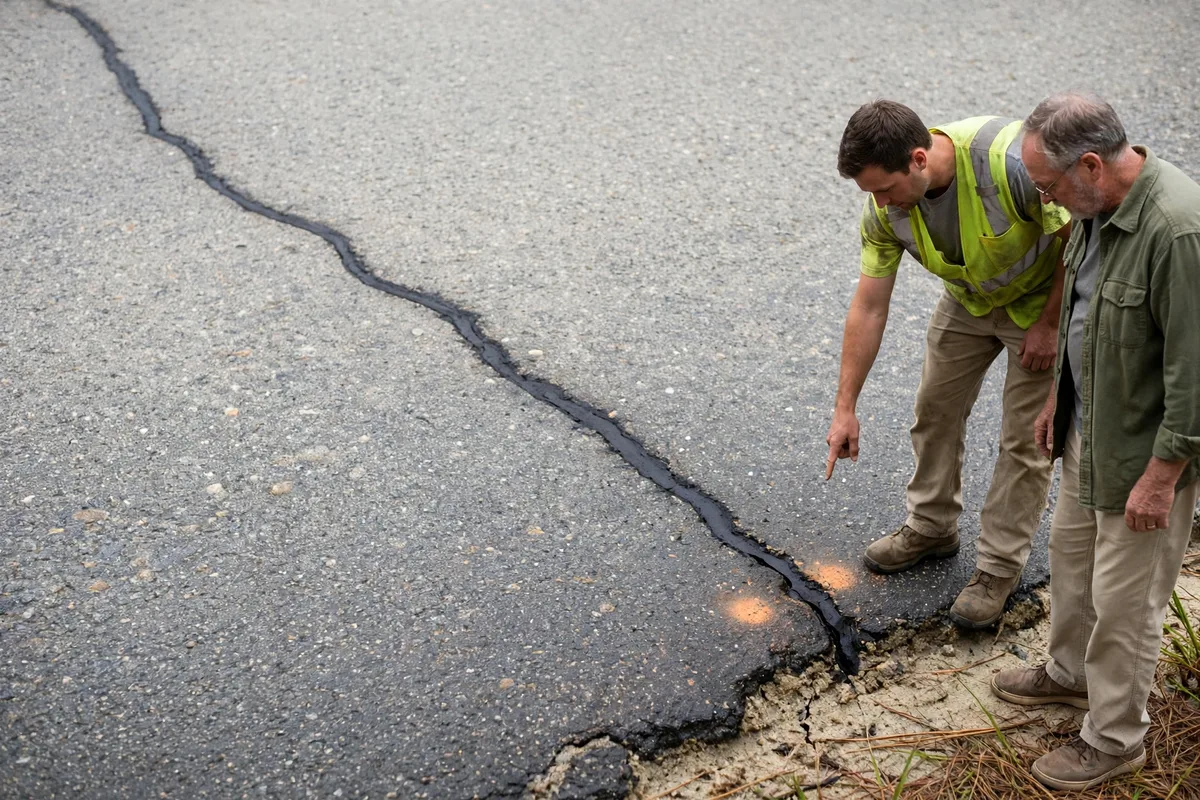
6. Walk it again and keep traffic off. The crew walks the finished drive and checks that every marked crack is full. We tell you how long to stay off the sealant, which depends on the day. Then we show you the cracks we flagged for watching and what to look for in them.
The older drive off Sandy Creek Drive
This one is typical of the calls we get out here.
The call
The owner of an older drive off Sandy Creek Drive called because the cracks had been getting longer every storm season. The drive was long and the asphalt was old. A few years of filler from a hardware store had come out of most of the cracks, and the ones that were still filled were pulling away at the sides. There was no pothole yet. The owner wanted to keep it that way.
Walking and mapping it
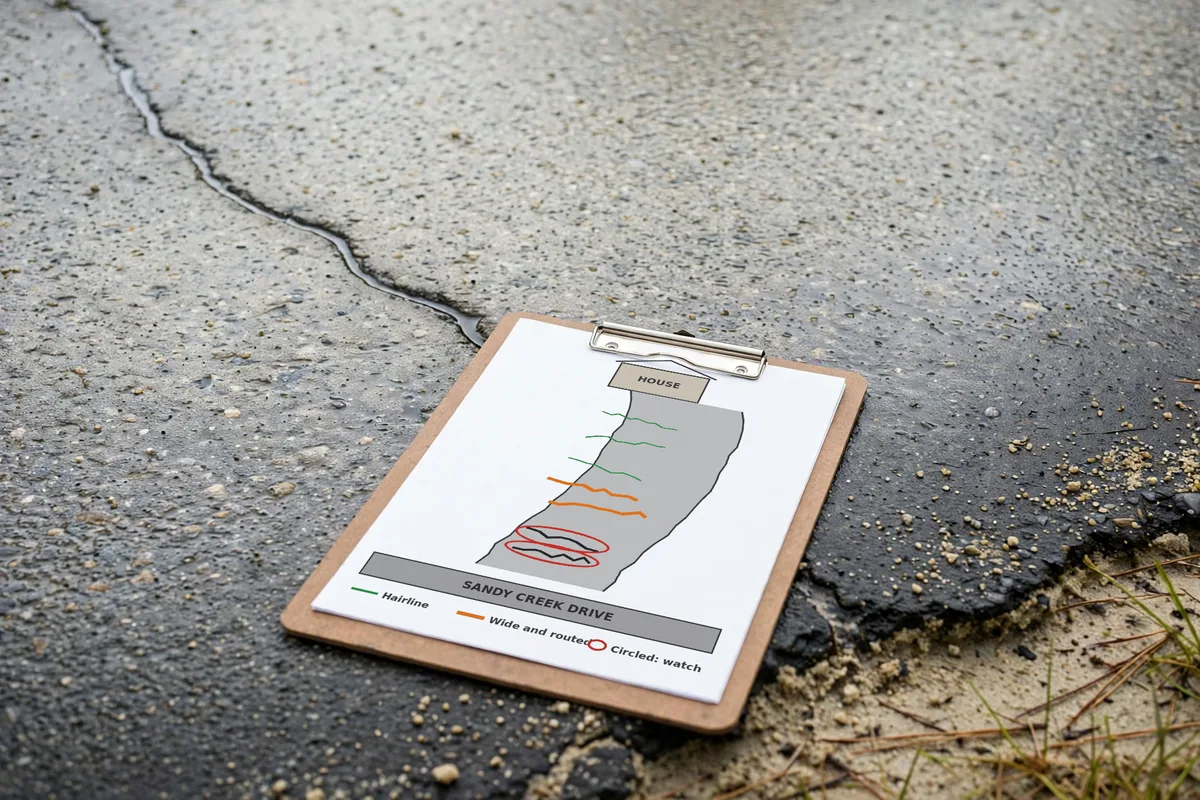
The crew walked the drive from the road to the house and marked every crack with paint. The result was a map of working cracks. There were fine hairlines across the surface, a handful of cracks that had opened wide enough to route, and a couple of lines near the lower end of the drive that did not look like surface cracks at all.
Work the drive
A tight hairline crack is cleaned out and filled with hot-pour rubberized sealant. It is priced by the linear foot, within our range of $0.50 to $3.00 per linear foot. Sealing it while it is still tight is the cheapest crack work there is.
A crack that has opened to between ¼ inch and 1 inch is routed to a clean channel, cleaned, and filled with hot-pour rubberized sealant. It is priced by the linear foot, within the same range of $0.50 to $3.00 per linear foot. Routing and cleaning are the reasons a wide crack costs more per foot than a hairline.
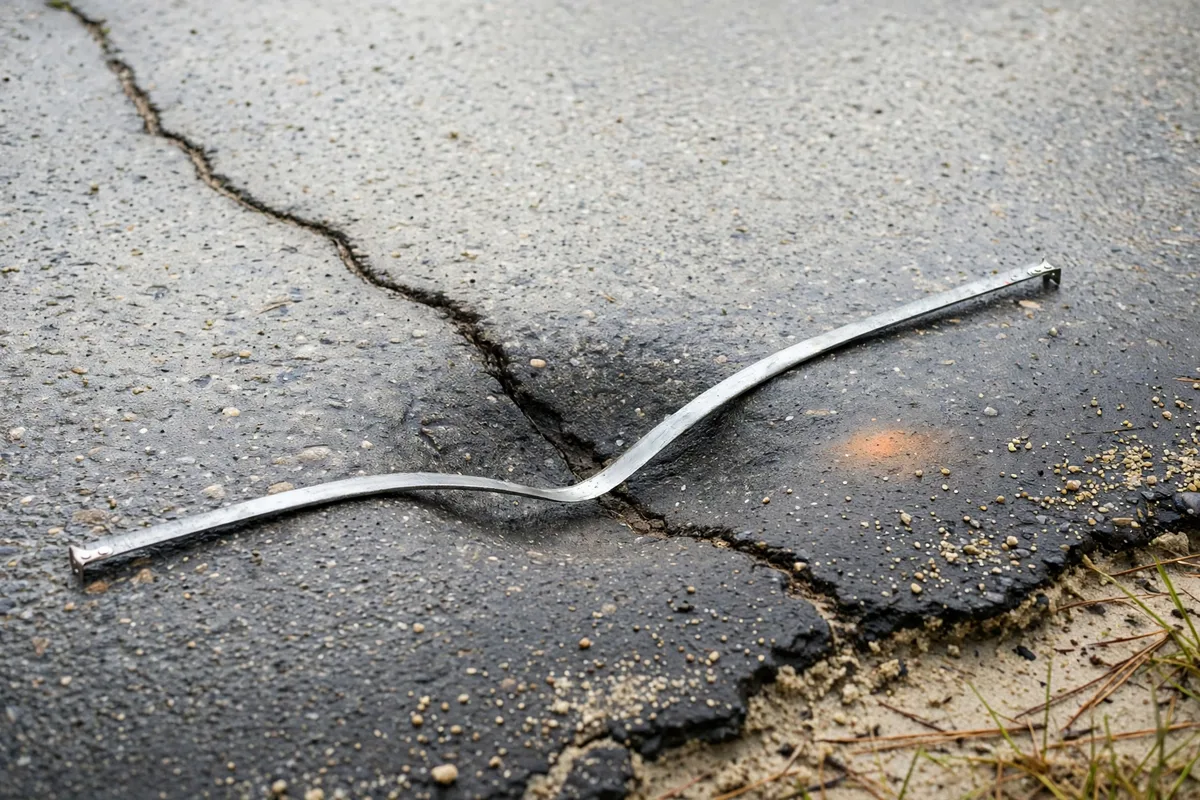
Two cracks near the low end of the drive were sealed like the rest, but they were early base trouble, not surface cracking. They follow a line where the drive dips, and sand under them has been moving. They were marked with paint and flagged for the owner to watch. Check them after heavy rain. If one widens again, drops on one side, or shows fresh sand at its edge, call us, because that is the base asking for patching and not more sealant.
A web of connected cracks, or cracks sitting in a sunken or soft spot, point to a failed base. Sealant alone will not hold there. That is an asphalt patching conversation, saw-cut, remove, re-base and hot-mix patch, and the crew tells you so on the walk-through.
Tap each crack to see the work, then tap the total to see how the drive is priced: measured length times the per-foot rate, plus an optional finishing coat at $0.15 to $0.25 per square foot.

Cleaning and routing
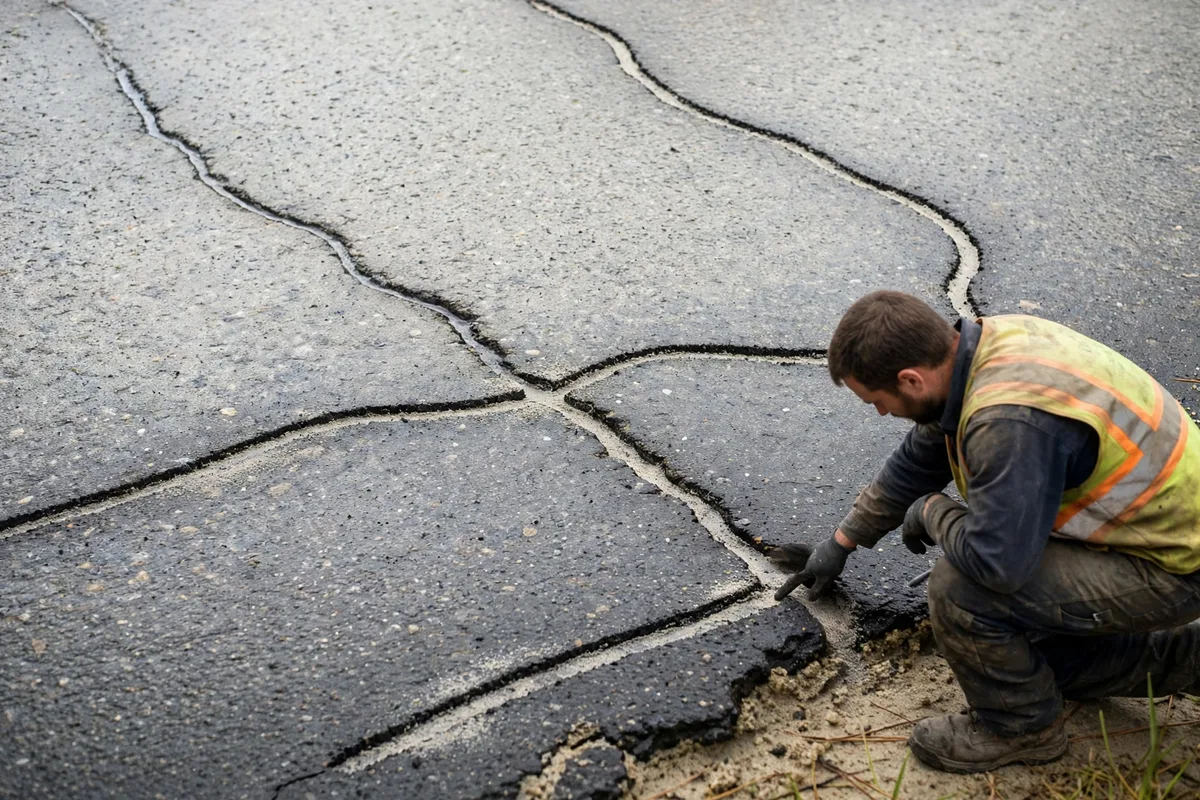
The crew cleaned every marked crack with wire brushes and compressed air. A good deal of sand came out of the older cracks, and some had grass roots in them. The wide cracks were then routed to clean channels.
Sealing
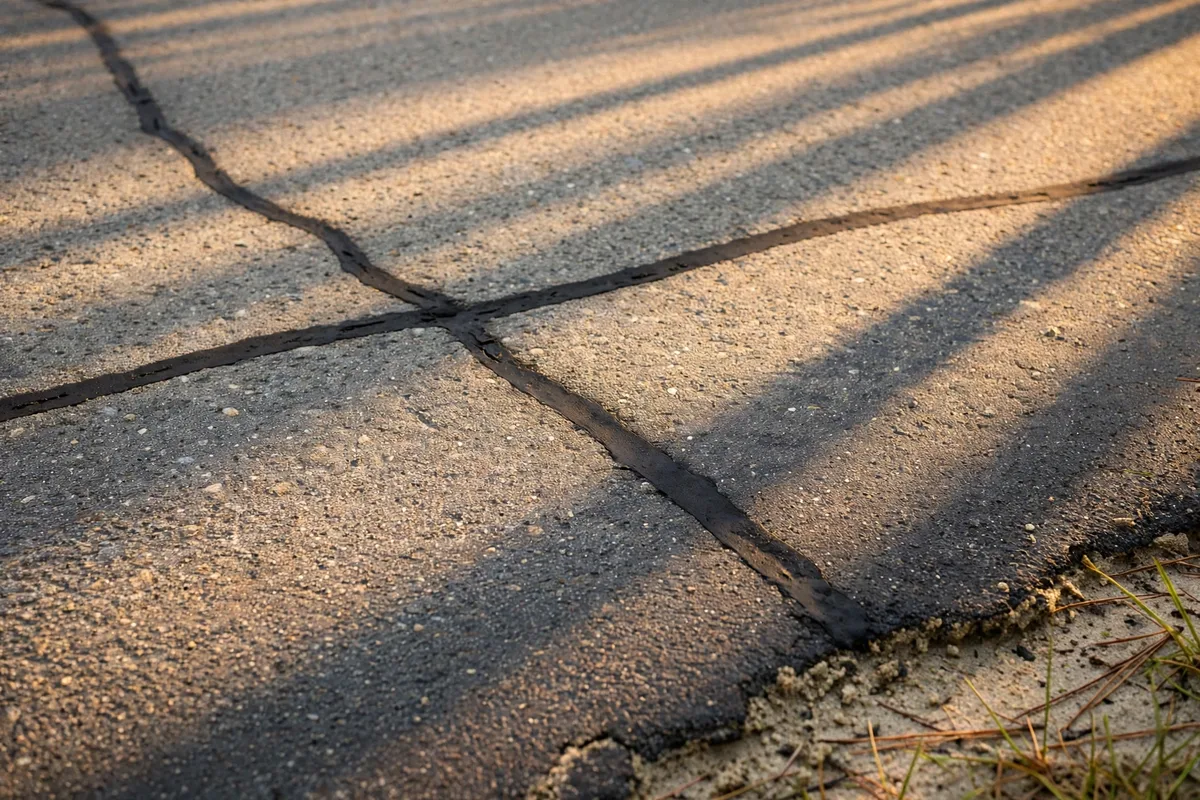
Hot-pour rubberized sealant went into every crack, hairline and routed alike, and was leveled flush with the surface. The whole drive was done in one visit along the marked lines, and traffic stayed off until the sealant set.
Reading the two cracks
The crew told the owner plainly that two of the cracks were not like the others. Both sat near the low end of the drive where it dipped, and the sand under them had been moving for a while. The sealant would keep rain out of them, but it would not fix a base that was still shifting. They were marked and left to watch.
What it cost
The job was priced by the linear foot on the measured length of cracks, inside our range of $0.50 to $3.00 per linear foot. The tight hairlines sat toward the lower rates, and the wide, routed cracks cost more per foot because of the extra cutting and cleaning. The total was the measured length of cracks times those per-foot rates, with no surprises added on afterward.
The owner asked about a finishing coat. Asphalt sealcoating over the whole drive runs $0.15 to $0.25 per square foot. The crew's advice was to hold off until the two flagged cracks had been through a rainy season and shown what they were going to do. That is what the owner did.
The point of the job is plain. Seal the cracks while they are cracks, learn which ones are really base trouble, and do not coat over a problem you have not finished reading.
What it costs
Crack sealing and filling is priced at $0.50 to $3.00 per linear foot. A whole-drive crack job is priced by measured length: we walk and measure the marked cracks, and the total is the feet times the per-foot rate for that kind of crack.
What moves the rate within that range:
- Width. Tight hairlines are the low end. Wide cracks that need routing cost more per foot.
- Condition. Cracks packed with sand, roots or old failed filler take more cleaning before they can be sealed.
- Amount. A short run of cracks and a whole long drive of them are priced on the same per-foot basis, but the long drive adds up to a bigger total.
- Base trouble. Where a crack is really a failing spot, patching is priced separately from the sealant work, so you see each line on its own.
If you want a finishing coat over the sealed drive, that is asphalt sealcoating at $0.15 to $0.25 per square foot. It is optional, and we will tell you whether your drive is ready for it or should wait.
Questions
Do you come out to Sandy Creek?
Yes. Sandy Creek is about fifteen minutes from Leland, and drives and shared lanes there are exactly the kind of work we do. Call and we will set a time to walk your drive.
How much does crack sealing cost per foot?
It is $0.50 to $3.00 per linear foot. Where your drive falls in that range depends on how wide the cracks are, whether they need routing, and how much cleaning they need before sealant goes in.
How do you price a whole drive?
By measured length. We walk the drive, mark the cracks, measure them with a wheel, and price the total from the feet and the per-foot rate for each kind of crack. You see the measurement before any work starts.
Why do you route some cracks and not others?
Cracks that have opened to between ¼ inch and 1 inch need a channel cut so the sealant can sit in a reservoir and flex as the pavement moves. Tight hairlines do not need that, so they are cleaned and sealed as they are.
Can I just fill the cracks myself with the hardware-store stuff?
You can, and many people do. Cold-pour and do-it-yourself filler are short-lived, and the crack often opens again within a season or two. Hot-pour rubberized sealant in a clean, routed crack is the professional method and holds up much longer.
Why do the cracks keep coming back out here?
Because the soil is sand with a high water table, and the pavement moves more than it would on firmer ground. Every open crack lets rain reach the sand, and washed-out sand lets the pavement shift and crack again. Sealing the cracks early keeps that cycle from starting.
How do I know if a crack is just a crack or a sign of base trouble?
Look at where it is and how it behaves. A single line across level pavement is usually a surface crack. A crack that follows a dip, widens after rain, shows fresh sand at the edge, or sits in a web of connected cracks usually means the base is moving. We will tell you which is which when we walk the drive.
Do I need to sealcoat after the cracks are sealed?
No. It is optional. If you want it, asphalt sealcoating is $0.15 to $0.25 per square foot. Most owners reseal every two to three years as typical practice, but that is a general habit and not a promise about how long any coating will last. We will tell you honestly if your drive should wait.
Can you work after a heavy rain?
Cracks have to be dry and clean before sealant goes in, so after a hard rain the work waits until the drive is dry. The crew checks the cracks on the day and tells you if it needs to move.
What if my drive has potholes as well as cracks?
Potholes and failed spots are base trouble that sealant cannot fix. The durable repair is to saw-cut, remove the bad material, re-base and patch with hot mix. That is priced separately from the crack work, so each line stands on its own.
Do you lay new asphalt or redo the whole drive?
No. We maintain and repair asphalt, we do not lay new drives. If your drive is worn past what sealing and patching can do, we tell you so plainly on the walk-through.
How long do I stay off the drive afterward?
Until the sealant has set. The crew tells you how long on the day, because it depends on the weather and on how much went down.
My lane is shared with a neighbor. Can you do that?
Yes. Shared lanes wear at the edges and base first, and crack work on them is priced the same way, by measured length. If the owners are splitting the job, we can walk the lane with everyone and mark what each part covers.
How do I get started?
Call (910) 370-1121 or send the form below. Tell us about the drive, how long it is, and what the cracks look like, and we will set up a time to walk it.
Call about your drive
If your drive is cracking and the rain is getting in, the cheapest time to deal with it is now. Call (910) 370-1121 or send the form, and tell us about the drive. We will set up a time to walk it and mark what it needs.
The more details you give, the better we are able to help you.