Drive US-17 through Shallotte and the lots are what you notice first: faded stalls, ghosted arrows and accessible spaces worn down to a few flecks of blue. On a retail lot, customers see that before they reach the door. Leland Pavement Care handles line striping for Shallotte shopping centers, Main Street storefronts, churches and office lots, about 35 minutes from our base in Leland.
Restriping is mostly about getting the existing layout back exactly as it was: stall widths, access aisles, the fire lane, the arrows. Those pavement markings move traffic through the lot and tell a delivery driver where not to park. Paint also goes down best over sound pavement. If a lot needs parking lot sealcoating or crack sealing first, we say so before we price the paint, and the striping goes on last.
Think of it as one piece of parking lot maintenance. Paint wears on a cycle that follows traffic. The same visit can replace broken wheel stops or turn up parking signs that are leaning or missing. Those two are add-ons to the striping, not the main job.
Why Shallotte lots wear the way they do
Shallotte is Brunswick County's retail hub, and 4,185 people lived in town at the 2020 census. The US-17 corridor draws traffic from well beyond town limits. A shopping lot here sees cars turning, braking and parking all day, and the markings wear out under it. The front rows and the entrance lanes go first, because that is where tires scrub the same few feet over and over.
The coast adds its own wear. Heat and hard sun bleach paint and oxidize the asphalt under it. Summer thunderstorms and tropical systems put inches of water on a lot at once, and that water does not help a marking hold. Salt air rides in off the ocean. On sandy soil, a lot is only as steady as its base, and a sagging patch near a stall line will chew up fresh paint early.
You do not need a calendar to know when a lot is due. Walk the front row at dusk and look at the stalls. If you have to guess where one stops and the next begins, a driver already has.
What gets marked, and with what
Waterborne traffic paint is the standard for parking lot work, and it is what most restripes use. For high-traffic markings, such as the crosswalk at the main entrance or heavy arrows in a drive lane, thermoplastic is the long-wear option. We will tell you if a spot on your lot is worth it.
A typical retail restripe covers some or all of the following:
- Stall lines, every one counted.
- Accessible spaces, with their access aisles and symbols.
- The fire lane and its lettering.
- Directional arrows, stop bars and crosswalks.
- Wheel stops, replaced where broken or missing.
On accessible spaces, we re-mark what is laid out on your lot today. We describe the work and paint it carefully, but we do not certify legal compliance or guarantee code conformance. That is a layout question for the owner and the people who govern the lot.
Restripe over the existing layout, or lay it out new
Most Shallotte jobs are restripes. The old layout is still readable, and the crew follows it. A new layout is a different job, because someone has to measure and mark where every stall and aisle will go before paint is opened. It is priced differently from a restripe.
If your lot is also getting sealcoat, the sealer covers the old lines. In that case we record the layout first, so the new lines go back where the old ones were.
How a striping job goes
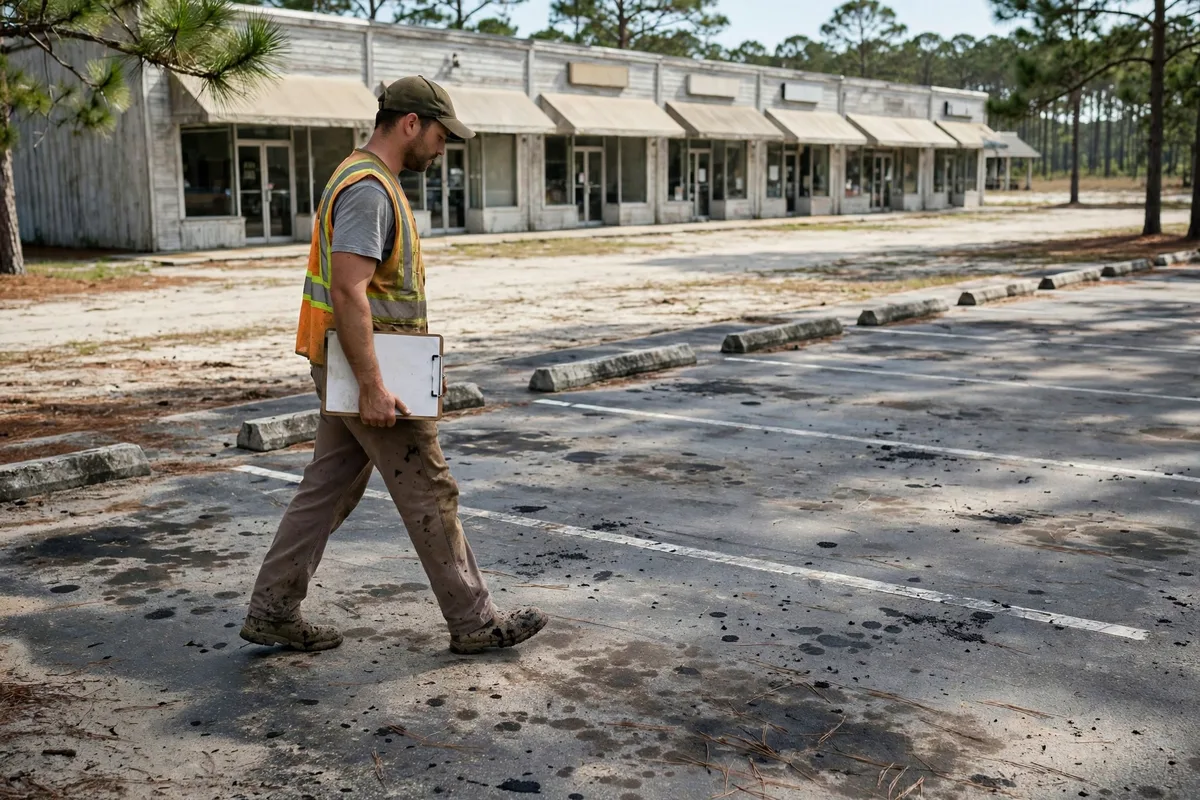
Step 1: Walk the lot and read the old layout
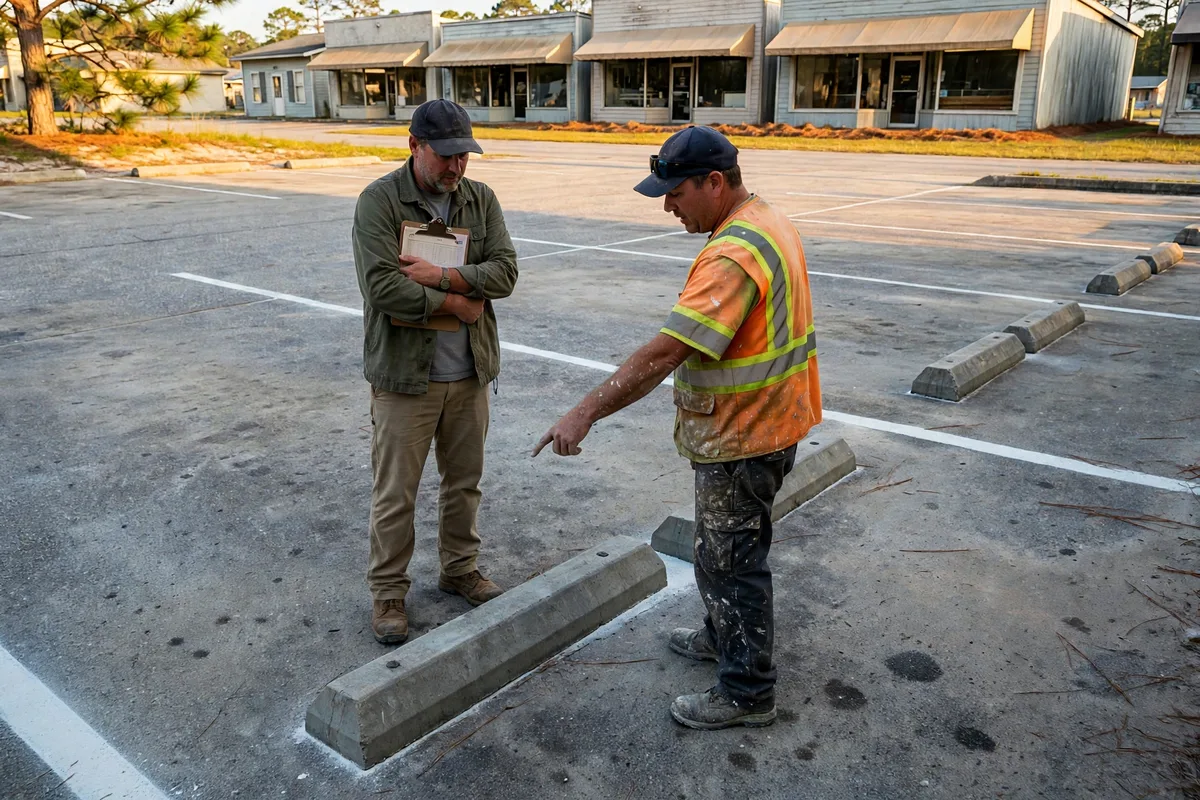
We start on foot, with the lot as it is. We look at where the old lines still show, where the pavement is cracked or low, and where the paint has worn through to bare asphalt. Faded lines tell us a lot about how traffic moves through the lot.
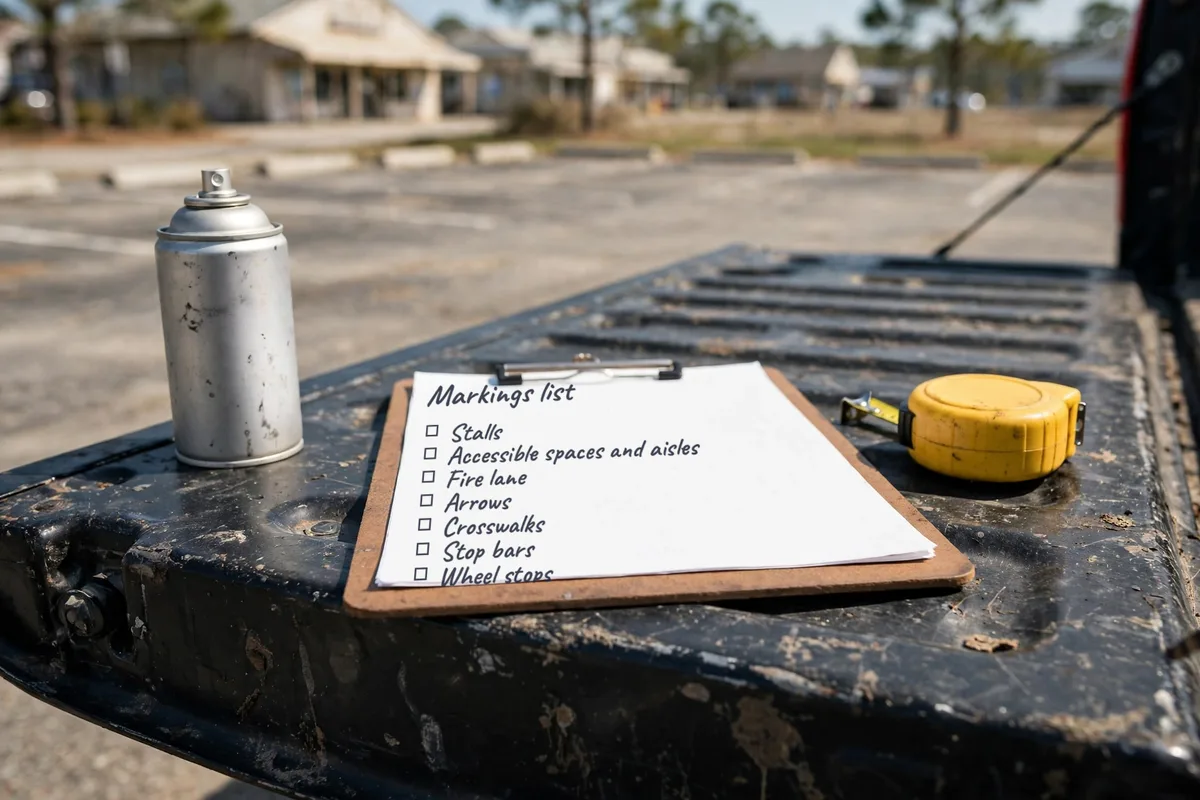
Step 2: Count the stalls and list the markings
Every stall is counted, and every other marking goes on a written list: accessible spaces and aisles, the fire lane, arrows, crosswalks, stop bars. Broken or missing wheel stops are counted on the same proposal. This list is the proposal, and it is the reason two lots that look alike can price differently.
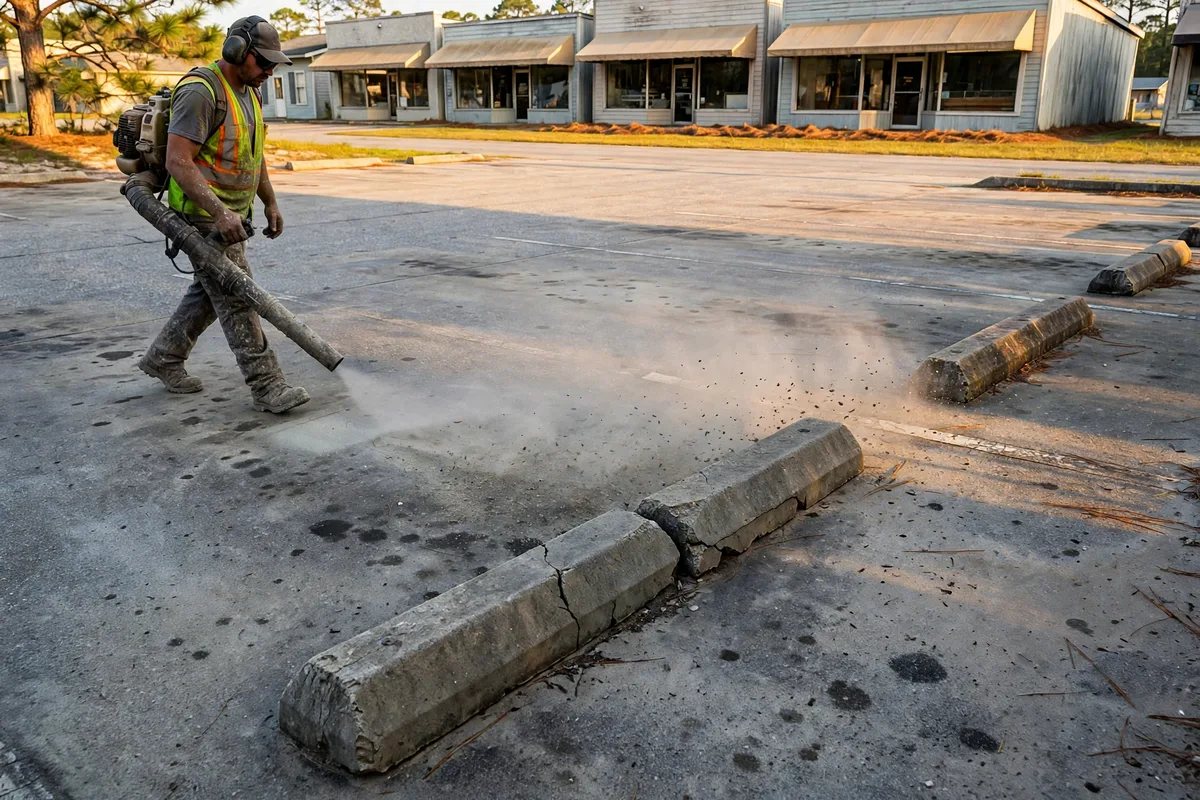
Step 3: Clean the pavement
Paint will not hold to dirt, sand or loose debris. The crew sweeps and blows the lot clean, paying special attention to the old lines and the edges of stalls. Sandy ground and wind-blown grit are a fact of life here, and they matter.
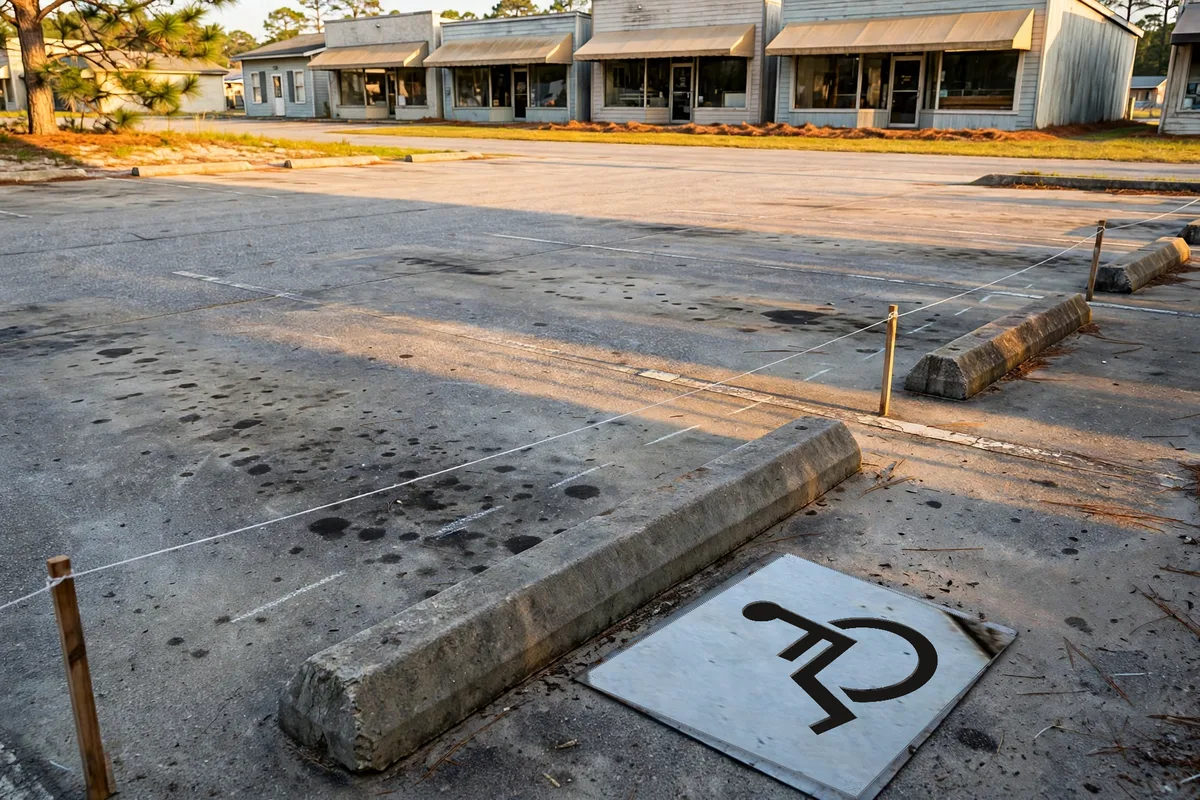
Step 4: Set the layout points and place the stencils
Before any paint goes down, the crew marks reference points from the old layout, so each stall lands where it belongs. String lines, measured marks and stencils for arrows, symbols and lettering all get placed. This is the step that keeps rows straight and stalls an even width across a long lot.
Step 5: Paint
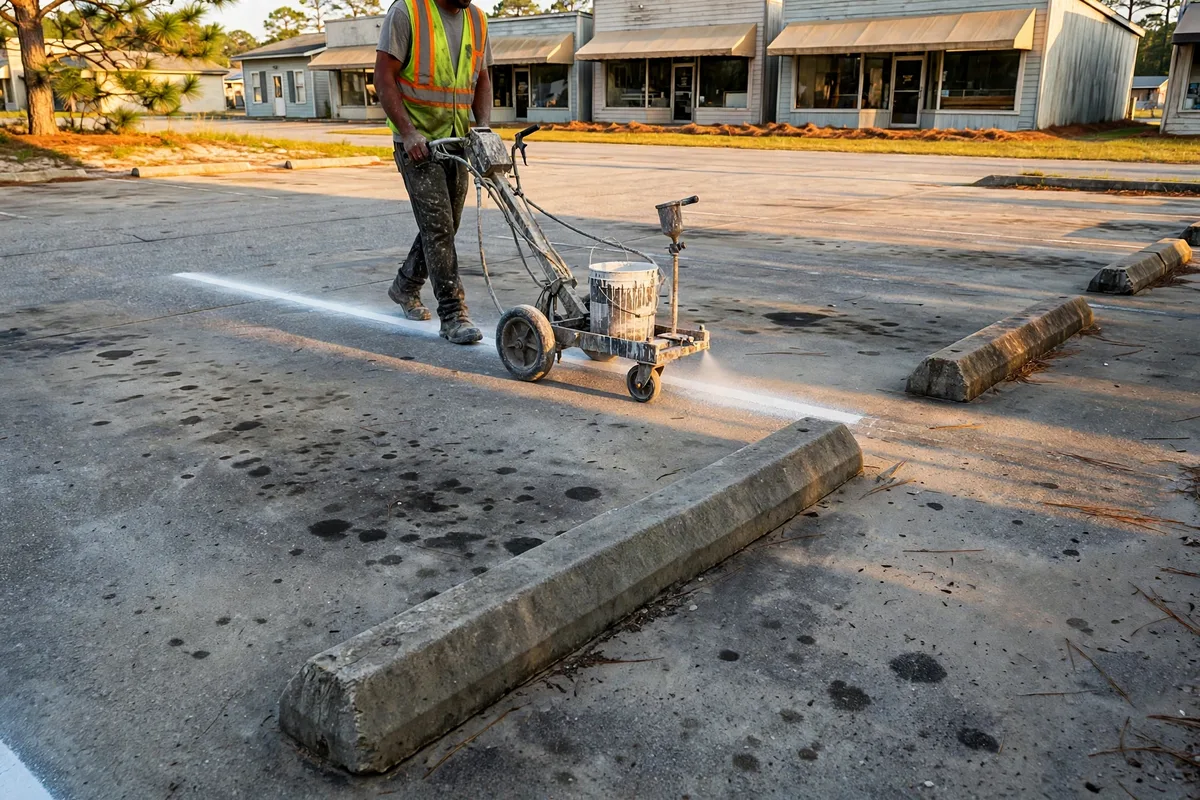
Stalls are striped first, then the accessible spaces and aisles, then the fire lane, arrows and crosswalks. Waterborne traffic paint goes down in clean, even lines. Where a high-traffic marking calls for thermoplastic, that is applied on its own.
Step 6: Walk it, then deal with wheel stops and signs
When the paint is down, we walk the whole lot against the list and check every item off. This is also when we replace broken wheel stops that were counted on the proposal, and when we mention any parking signs that are leaning, faded or missing. You get a plain account of what was done and what we saw.
What striping costs
Striping jobs run $600 to $3,600. The price is set by the stall and the markings list: how many stalls, how many accessible spaces and aisles, how long the fire lane is, how many arrows and crosswalks. Wheel stops are counted on the same proposal, so you see paint and hardware together.
Where your job falls in that range depends on:
- Size. More stalls means more lines to paint, and the stall count is the largest driver.
- Markings list. Accessible spaces, a fire lane, arrows and crosswalks all add to the list.
- Restripe or new layout. Painting over an existing layout is priced differently from laying one out new.
- Paint type. Waterborne is the standard. Thermoplastic for high-traffic markings is its own line.
- Pavement condition. If cracks or low spots need work before the paint goes on, that is priced as its own item, not hidden in the striping.
Main Street retail lot, restriped after closing
A Main Street retail lot in Shallotte had the kind of wear you see all along the corridor. The owner wanted the layout back the way customers knew it, without closing the lot during business hours.
Chapter 1: What the lot looked like
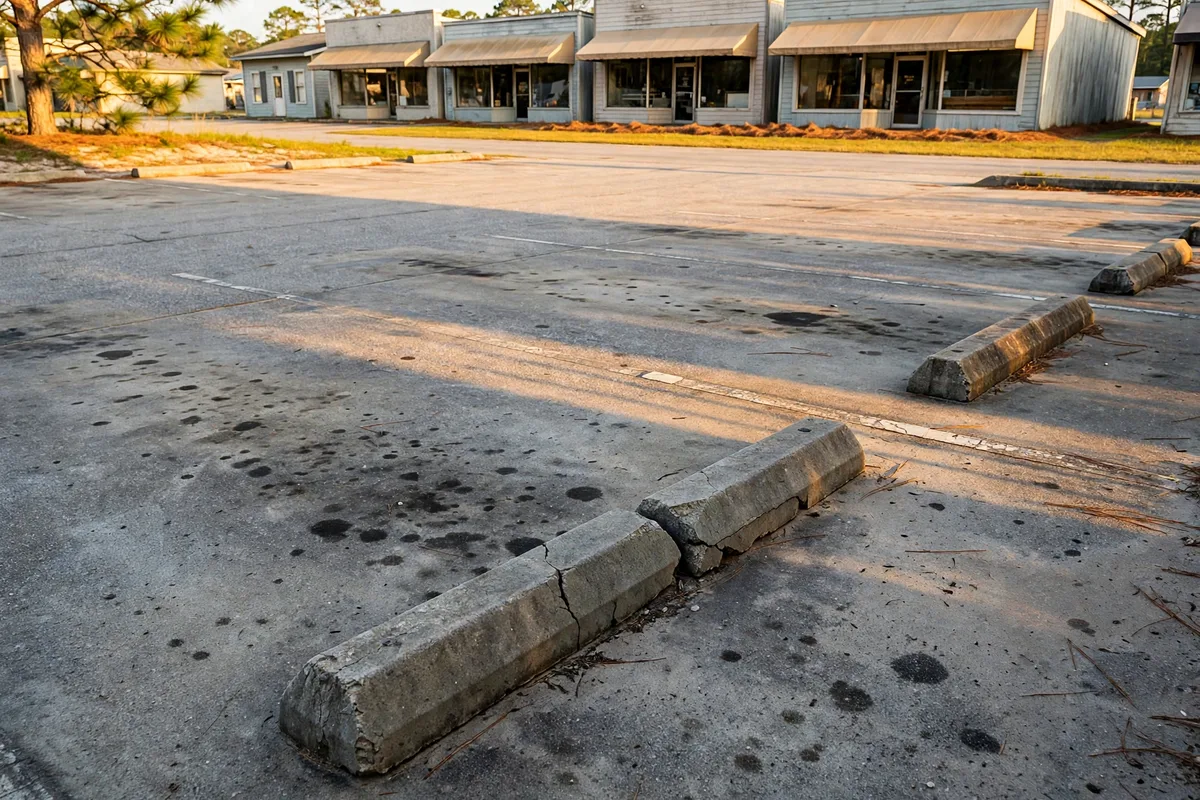
The front rows had faded to dashes. The accessible spaces were worn to a few patches of color. The fire lane markings were hard to read from the curb. Two wheel stops had broken, one cracked through and one with a missing end. Customers were parking at angles, and a cracked wheel stop is also a trip hazard in the dark.
Chapter 2: The count and the list
The crew walked the lot, counted every stall and listed the markings: stalls, the accessible spaces with their aisles, the fire lane and the arrows. The two broken wheel stops went on the same proposal. The job priced inside the $600 to $3,600 striping band, by the stall and the markings list.
Markings list builder
Stalls are counted one by one. Each stall is lines the crew paints, so the stall count is the biggest driver of the proposal.
- These are re-marked as laid out on the lot today: the space, the access aisle beside it and the symbol. The crew paints what is there. It does not certify code compliance.
The fire lane is measured by length and lettering as it stands, and re-marked to match.
Directional arrows, stop bars and crosswalks are listed by item. Thermoplastic is the long-wear option for the busiest of these.
Broken or missing wheel stops are counted on the same proposal as the striping, each one listed, so the owner sees paint and hardware in one place.
Striping jobs run $600 to $3,600, priced by the stall and the markings list. Wheel stops are counted on the same proposal.

Chapter 3: After the doors were locked
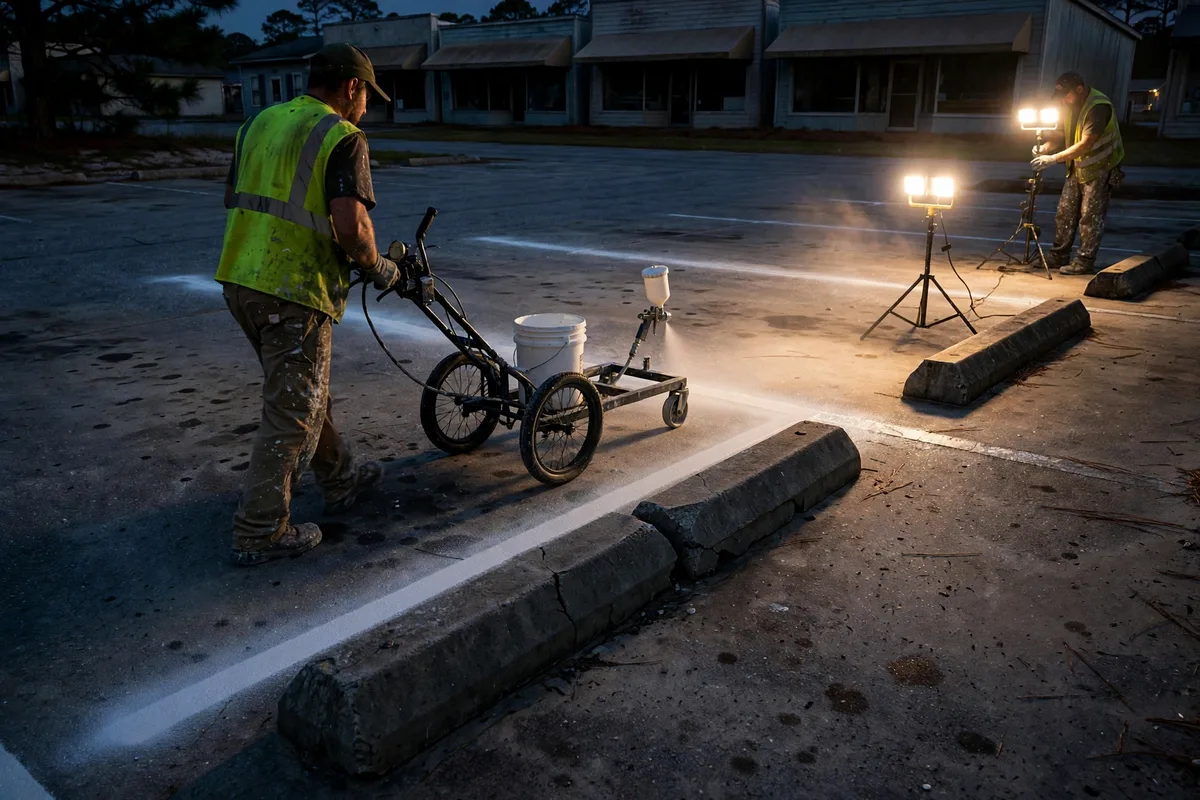
The crew came once the shops had closed and the lot was empty. They swept it clean, then marked reference points from the old layout and set string lines down the rows. Stalls went first, then the accessible spaces and aisles, the fire lane and the arrows. Nothing had to be moved around customers, and nobody had to park somewhere else.
Chapter 4: Two wheel stops
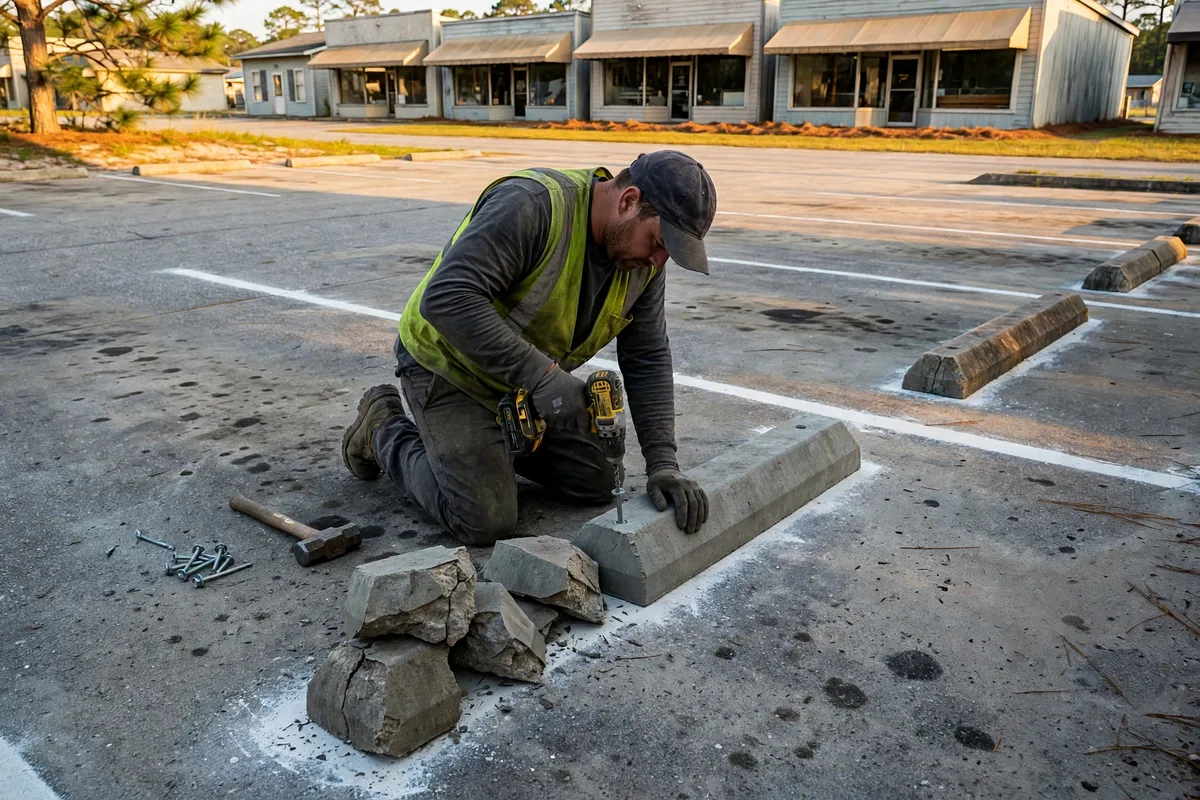
While the crew was on the lot, they pulled the two broken wheel stops and set new ones at the heads of the same stalls, fastened to the asphalt. Because they were on the proposal from the start, there was no second trip and no surprise line item.
Chapter 5: What to watch for next time
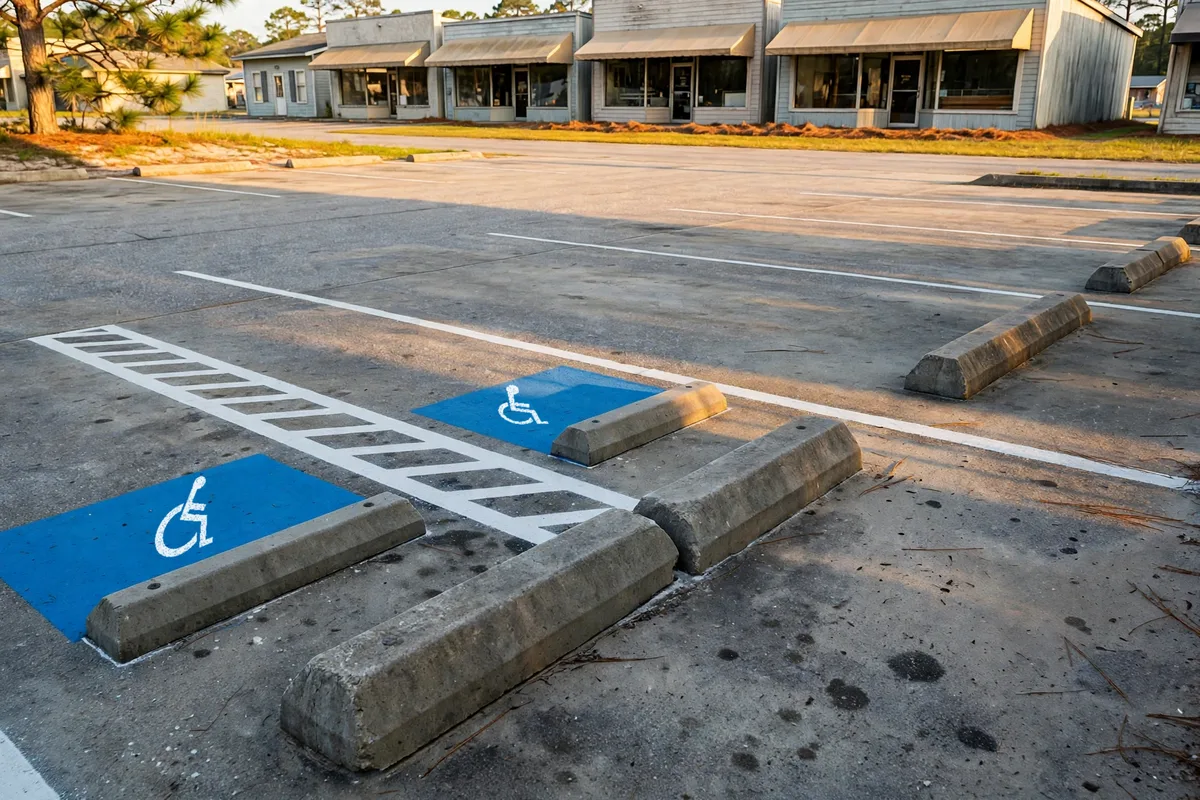
In the morning, the lot read clearly from the curb. The owner now had the layout back, accessible spaces sharp, a readable fire lane and two sound wheel stops. The front rows will wear first again, since that is where tires scrub, so those stalls are the ones to check as the paint ages. A crack that opens near a stall line is worth sealing before the next restripe, so it does not undercut the new paint.
Questions
How much does line striping cost in Shallotte?
Striping jobs run $600 to $3,600. The price is set by the stall and the markings list, so a small lot with a few stalls sits toward the lower end and a larger lot with a long list sits higher. Wheel stops are counted on the same proposal.
What decides where my lot falls in that range?
The number of stalls is the biggest factor. After that, it is the markings list: accessible spaces and aisles, the fire lane, arrows and crosswalks. Restriping over an existing layout is priced differently from laying a lot out new.
Do you restripe over what is already there?
Yes. Most Shallotte jobs are restripes. We follow the existing layout, mark reference points before painting, and put each line back where it was.
What if my lot has no readable layout left?
Then it is a new layout, which means measuring and marking where the stalls and aisles will go before any paint is opened. That is priced differently from a restripe, and we will tell you which one your lot is when we walk it.
What kind of paint do you use?
Waterborne traffic paint is the standard for parking lot work. For high-traffic markings, such as a busy crosswalk, thermoplastic is the long-wear option, and we will point out where it makes sense.
Can the work be done after my shop closes?
It can often be planned that way. The Main Street job was done after closing, so nobody had to move their cars or find other parking. Tell us when your lot is quietest and we will build the visit around it where the job allows.
Will you re-mark my accessible spaces?
Yes. We re-mark the accessible spaces, their access aisles and the symbols as laid out on your lot today. We do not certify legal compliance or guarantee code conformance. That is a question about the layout itself, not the paint.
Do you repaint the fire lane?
Yes, it goes on the markings list, measured by length and lettering, and re-marked to match what is there.
My wheel stops are broken. Can you replace them during the striping?
Yes. Broken or missing wheel stops are counted on the same proposal as the striping, so the work happens in one visit and you see all of it on one list.
Do you handle parking signs too?
Parking signs and wheel stops are an add-on to the striping, not our main job. If we see leaning, faded or missing signs while we are on the lot, we will tell you.
Should my lot be sealcoated before it is striped?
If the pavement is in good shape, no. If it needs parking lot sealcoating or crack sealing, those come first and the striping goes on last, since sealer covers old lines and cracks undercut fresh paint. We record the layout before any sealing so the new lines match.
How often does a retail lot need restriping?
There is no fixed number. Retail lots in Shallotte restripe on a cycle that follows traffic, and the front rows and entrance lanes go first. If you cannot tell where stalls begin and end, it is time.
Do you do town or public road striping?
No. We care for private asphalt: retail lots, church lots, HOA and office lots, and driveways. We do not bid municipal or public-road work.
Do you pave new lots?
No. We maintain and repair existing asphalt. That includes line striping, sealcoating, crack sealing, patching and maintenance programs, but not new paving, milling, concrete or drainage work.
Ready to get the lines back?
Call (910) 370-1121 or send the form, and tell us about your lot in Shallotte. We will go over the stall count and the markings list with you, give you the price and set a time that works for the lot.
The more details you give, the better we are able to help you.