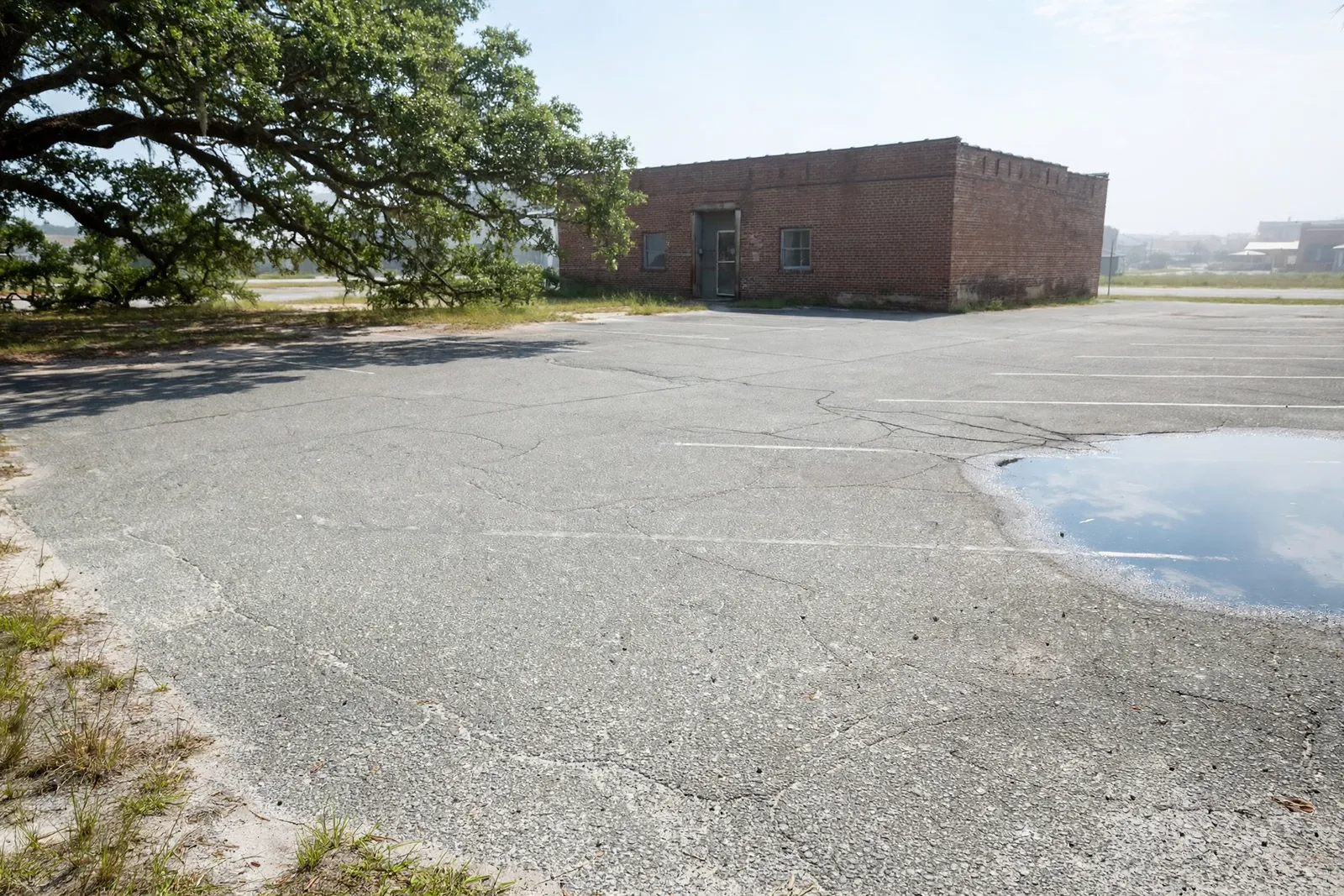
In a town like Southport, the lot is the first thing a customer, a parishioner or a boat owner meets. A faded gray surface with open cracks tells them something before they reach the door. We bring a tired lot back to a dark, even, protected finish with parking lot sealcoating. Leland Pavement Care does that work for Southport businesses, churches and marina lots from our base in Leland, about 35 minutes up the road.
The surface of the job is asphalt sealcoating, but it is never the first step. Cracks get cleaned and filled with crack sealing before any sealer goes down, because sealer laid over open cracks only hides them for a few weeks. Oil spots get primed. Once the sealer has cured, line striping and pavement markings go back over a clean, dark surface, and the lot looks the way it did when it was new.
Most of our Southport lots cannot close for a day, so we phase the work. We section the lot, seal half while the other half stays open, and plan the days around your trade. Ongoing parking lot maintenance follows from there. Where a lot needs them, wheel stops are an add-on, not the reason for the visit.
Why Southport lots wear the way they do
Southport is a historic waterfront town of about 3,971 people at the 2020 census. A lot of its business happens on small, tight lots close to the water: storefronts downtown, church lots, marina and waterfront parking. These lots are asked to look good all the time, and the coast is hard on them.
Four things work on asphalt here. Heat, humidity and strong sun oxidize the surface, so it turns gray and brittle. Rain arrives in bursts, from summer thunderstorms and tropical systems, and water that finds an open crack goes straight to the base. The soil in Brunswick County is sand with a high water table, so the base under a lot decides how it lasts. Oil and fuel drip from engines and boat trailers and soften the surface where they land.
Sealcoating answers the sun and the oil. Crack sealing answers the water. Patching answers a base that has already let go, and that is a separate job from the one on this page. Asphalt is a maintained surface, not a permanent one. Sealer is the cheapest way to keep it maintained, and cracks and base trouble found early cost far less to deal with than the same trouble found late.
Salt air rides in off the water and storms leave their wear. Neither is a reason to panic. They are the reason a Southport lot is better on a regular cycle than on an emergency one. Most owners reseal every two to three years. That is typical practice, not a promise about any coating or any pavement, because traffic, shade, drainage and the condition of the base all change the answer.
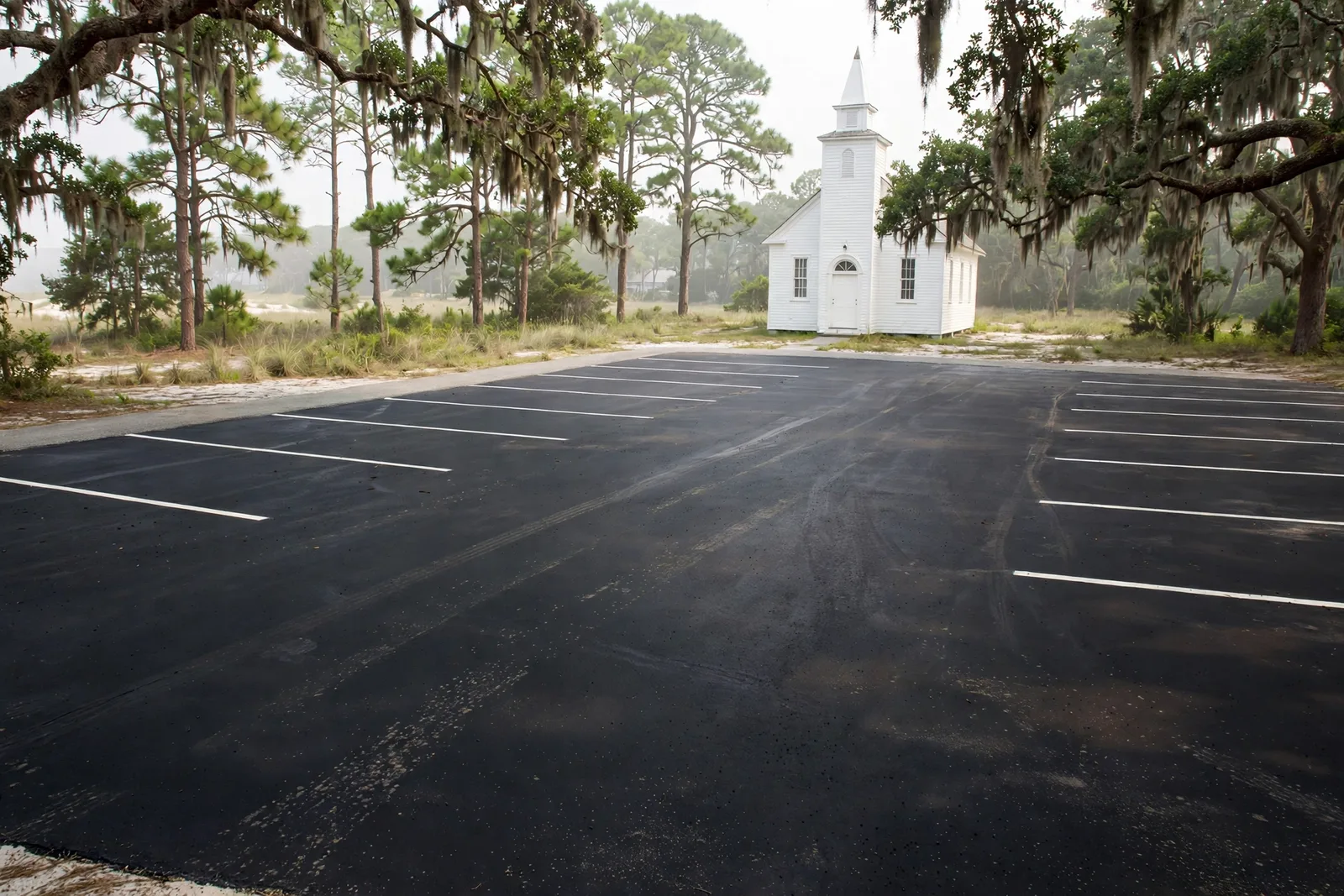
What a sealed lot looks like
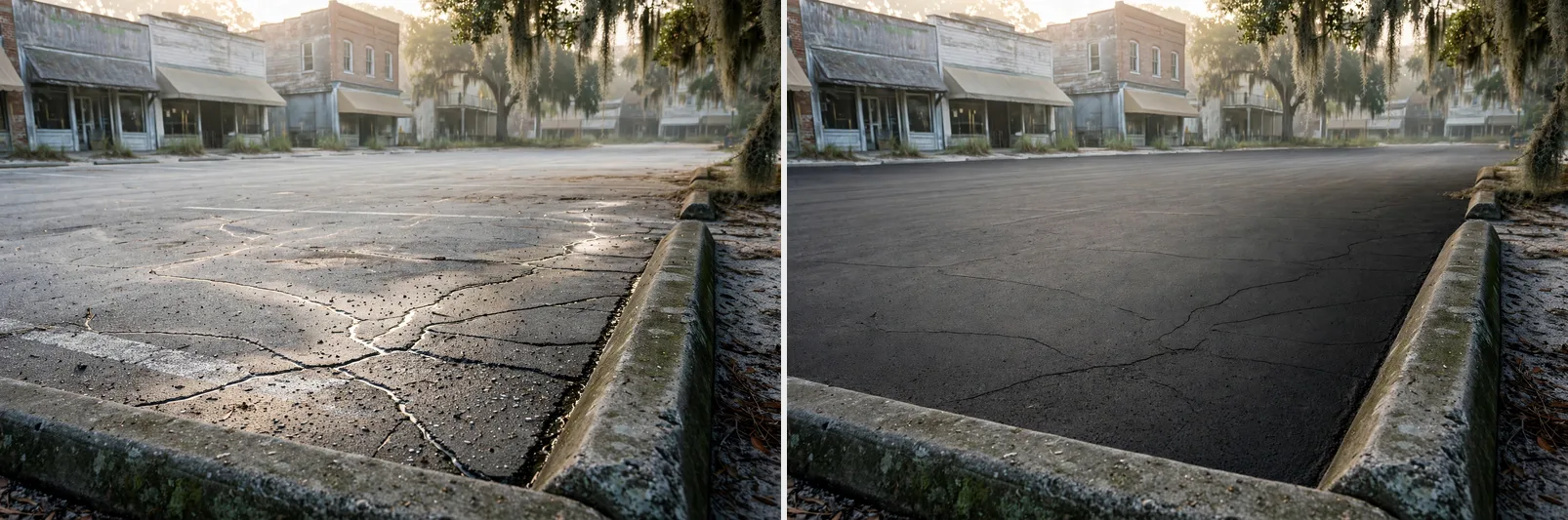
A finished lot is a uniform dark black with no streaks, no thin patches and no sealer ridges at the edges. Crack lines are filled flush rather than left as dark scars. Stall lines and markings are bright, straight and square to the curb. A church or marina lot that has been done right looks cared for from the street, which is the point.
The sealer we apply is an asphalt-emulsion product, the market standard. Polymer-modified grades are the premium option, and we recommend them for lots that see heavy turning traffic or want the longest-wearing appearance. Two coats is the commercial norm. It goes on by spray, squeegee, or a spray and squeegee combination, depending on the surface and the lot's layout.
How the work goes
The same sequence applies to every lot. Only the days and the phasing change.
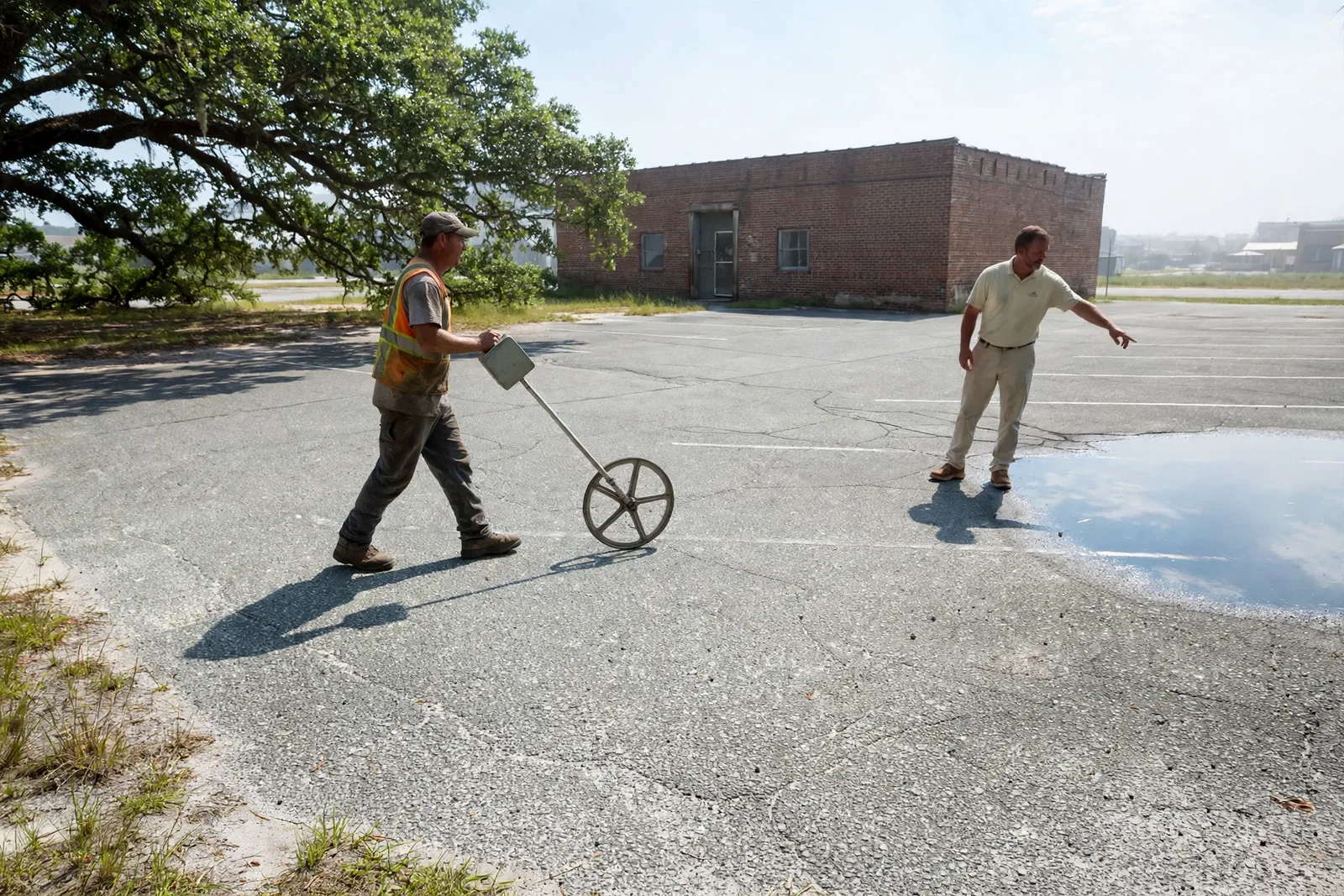
1. Walk the lot and measure it. We walk the whole surface with you, note the cracks, the oil spots, the low spots that hold water and the places where traffic turns hardest. We measure the lot because square footage drives the price. We also ask which days your lot is quiet and which parts must stay open.
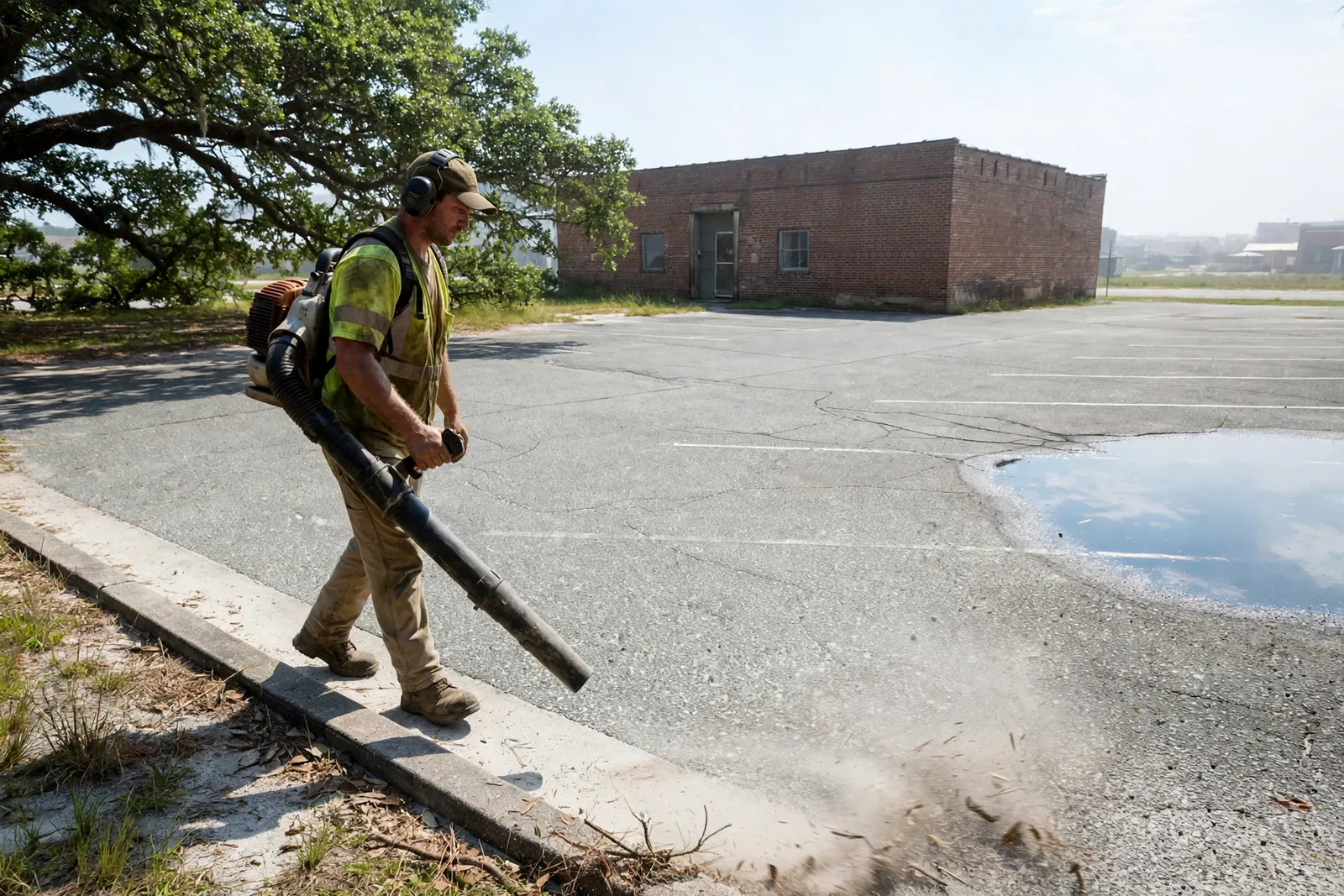
2. Clean the surface. Dirt, sand and loose debris keep sealer from bonding. We blow and brush the lot clean, then take a closer pass along curbs, drains and the edges where leaves and sand collect.
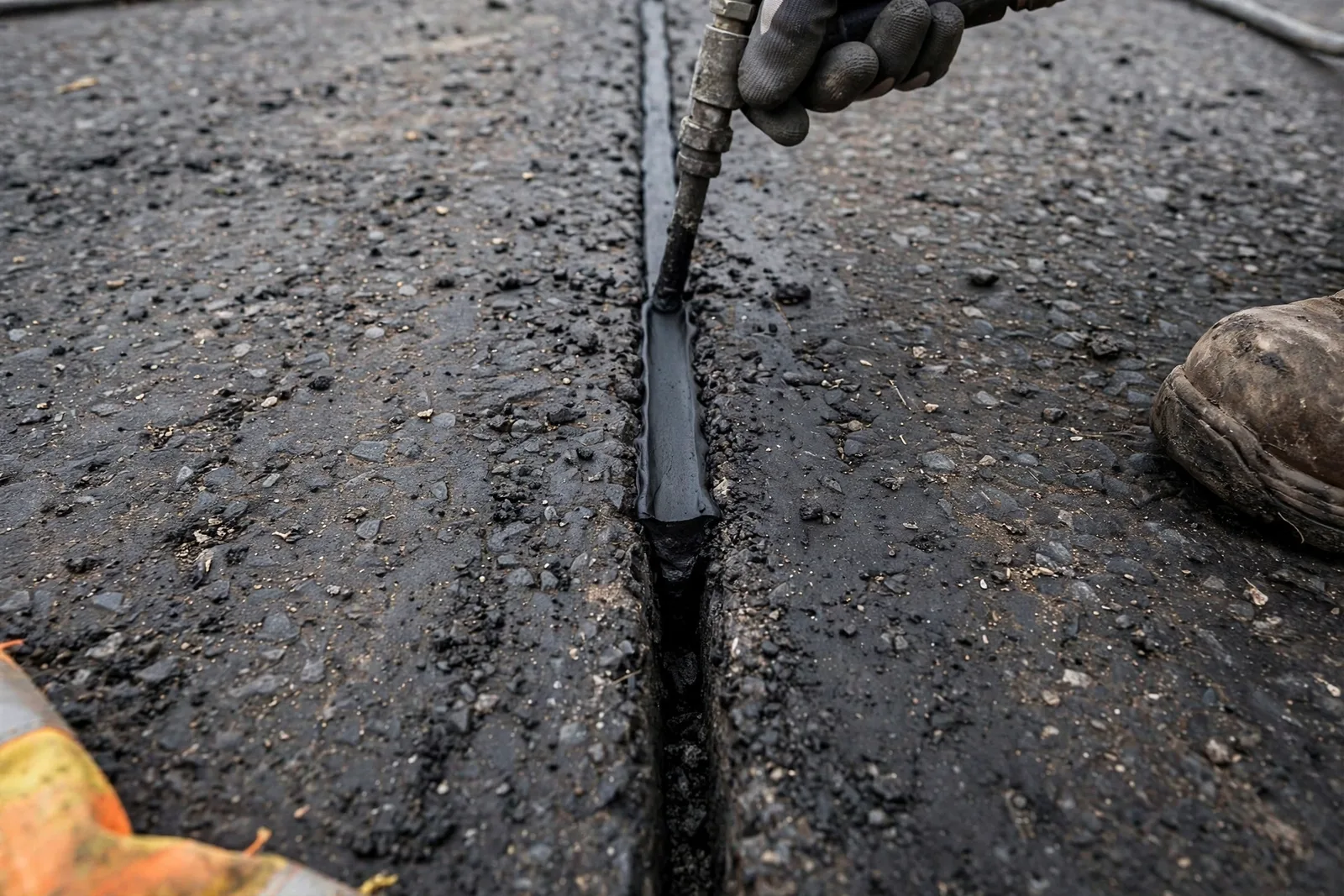
3. Seal the cracks. Cracks get cleaned and filled with hot-pour rubberized sealant, the professional method. The sealant fills the crack flush so water stops getting to the base. This is done before the sealer, never after.
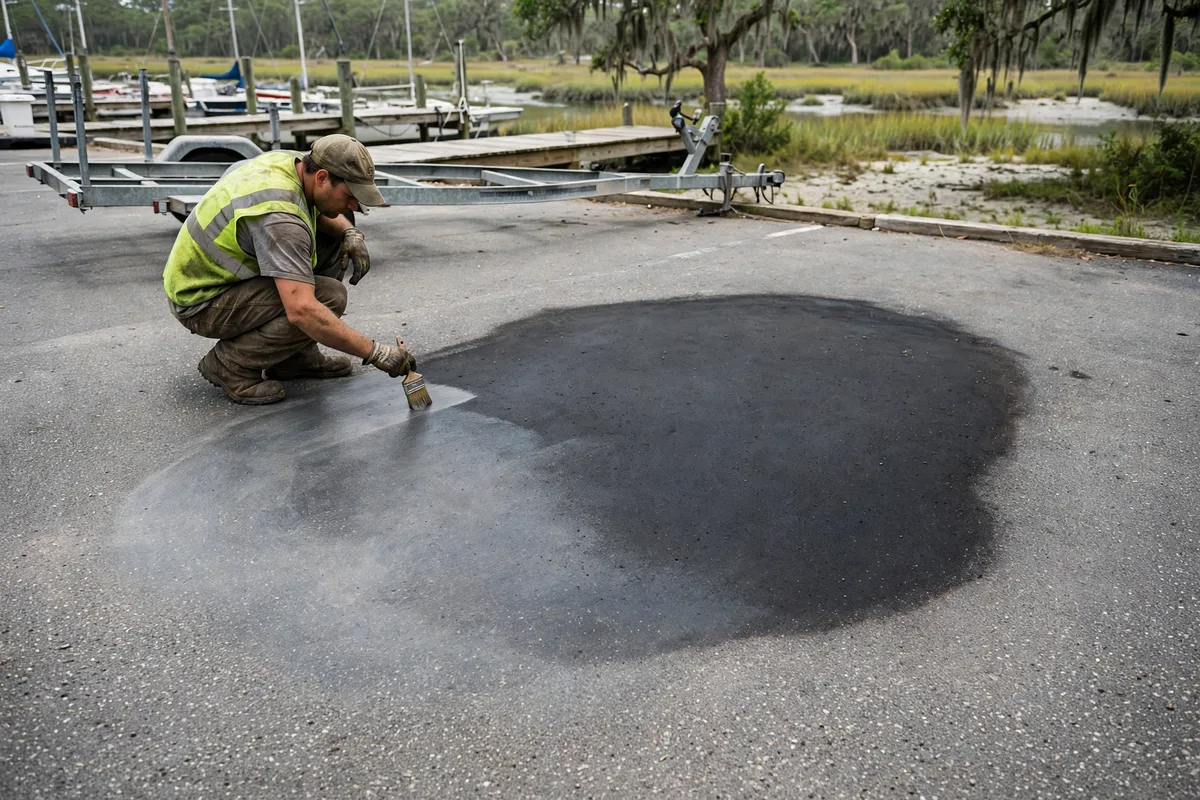
4. Prime the oil spots. Oil and fuel stains are scraped and treated with a primer so the sealer will stick. Untreated oil spots show through as dull patches, and the sealer peels off them.
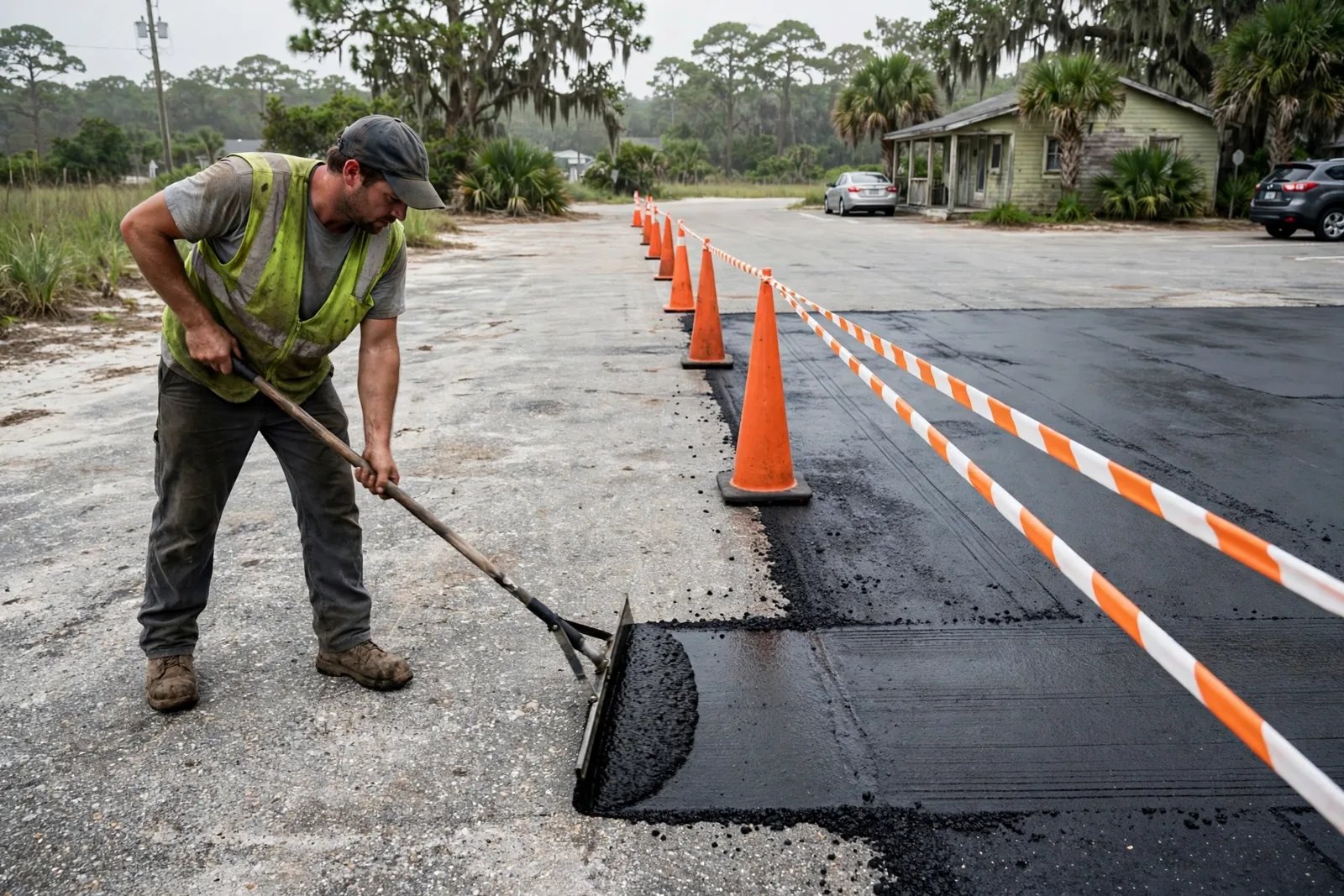
5. Apply two coats of sealer. We mix the sealer, spray or squeegee it across the lot in one even coat, let it set, then apply the second. On phased jobs, we seal half, mark the edge, and keep the other half open until the first has cured enough to drive on.
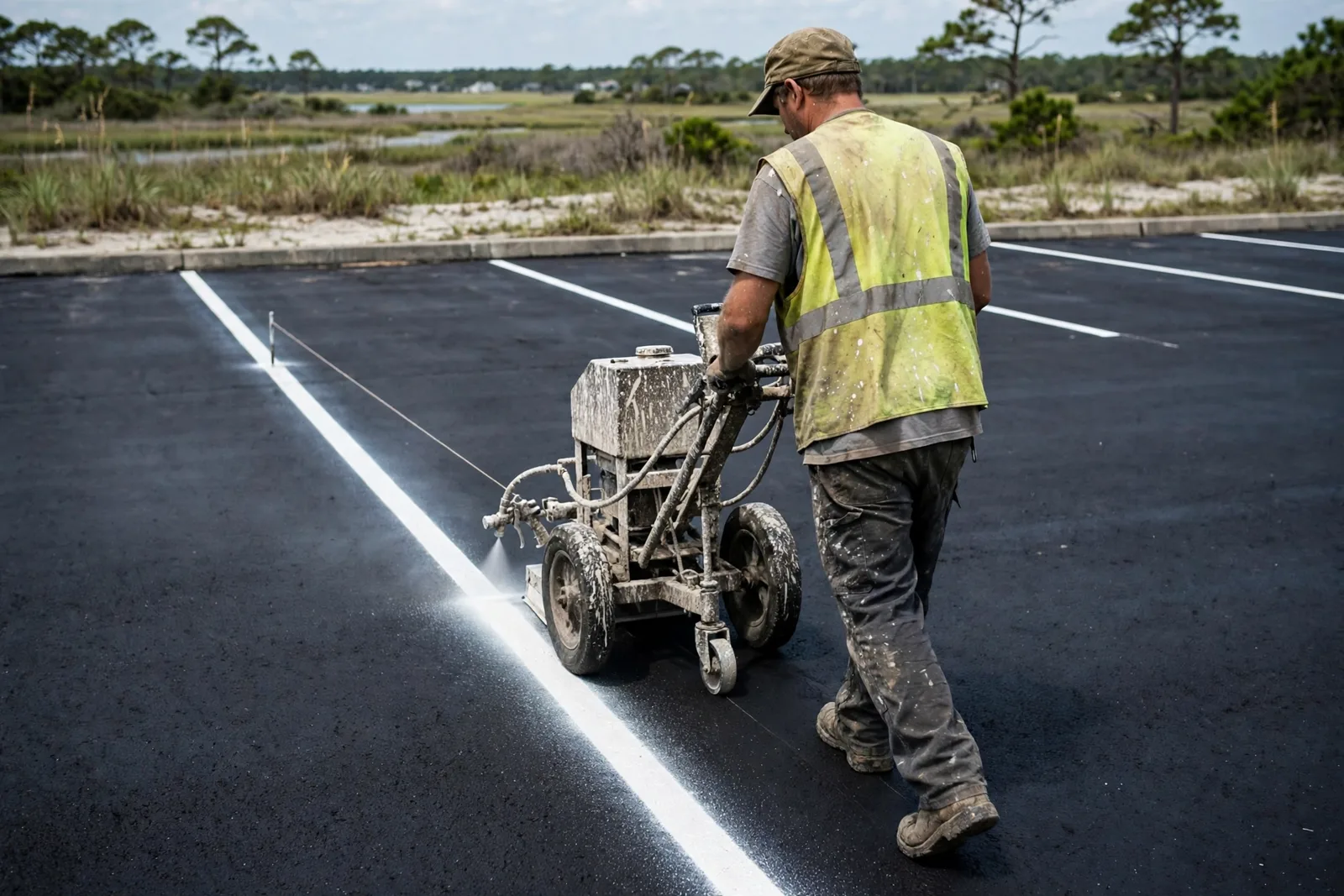
6. Restripe and reopen. Once the sealer is cured, we restripe the stalls and put the pavement markings back, following the existing layout unless you want a change. Then we pull the cones and reopen the section.
What it costs
Commercial sealcoating for a Southport lot runs $0.20 to $0.40 per square foot. Polymer-modified sealer prices higher than that base rate. Large lots tend toward the lower end per square foot, and small tight lots tend toward the upper end, because the setup and edge work are a bigger share of the job.
Three things set where your lot lands in the band. Size is first, because we measure it and multiply. Condition is second, because a lot with more cracking, more oil and more worn patches takes more prep. The sealer grade is third: standard emulsion or polymer-modified. Crack sealing, cleaning and oil-spot priming are priced on top of the sealcoating, because how much of each a lot needs varies so much.
Line striping rides with the job where a restripe is wanted, and striping jobs run $600 to $3,600. The number depends on how many stalls, how much of the layout is new or just refreshed, and whether it is a restripe over the existing layout, which costs less than a new layout.
Wheel stops are added where a lot needs them and priced on their own. They are an add-on.
A Howe Street lot, two blocks off the waterfront
This is a Howe Street business lot that needed sealing and could not afford to close. It stood two blocks from the waterfront, and the owner's busiest trade came at the end of the week.
Chapter 1: What was wrong
The surface had oxidized to a chalky gray. Cracks ran across the lot and toward a low corner, and in two places the cracks had opened wide enough to hold water after rain. A few oil spots sat where cars usually parked. The sealer that had been on the lot was thin and mostly gone.
Chapter 2: Cracks first
The crew started with crack sealing. Every crack was cleaned and filled with hot-pour rubberized sealant before any sealer was opened. The two widest cracks got extra attention because they were the ones carrying water. The oil spots were scraped and primed the same morning.
Chapter 3: Sunday, the first half
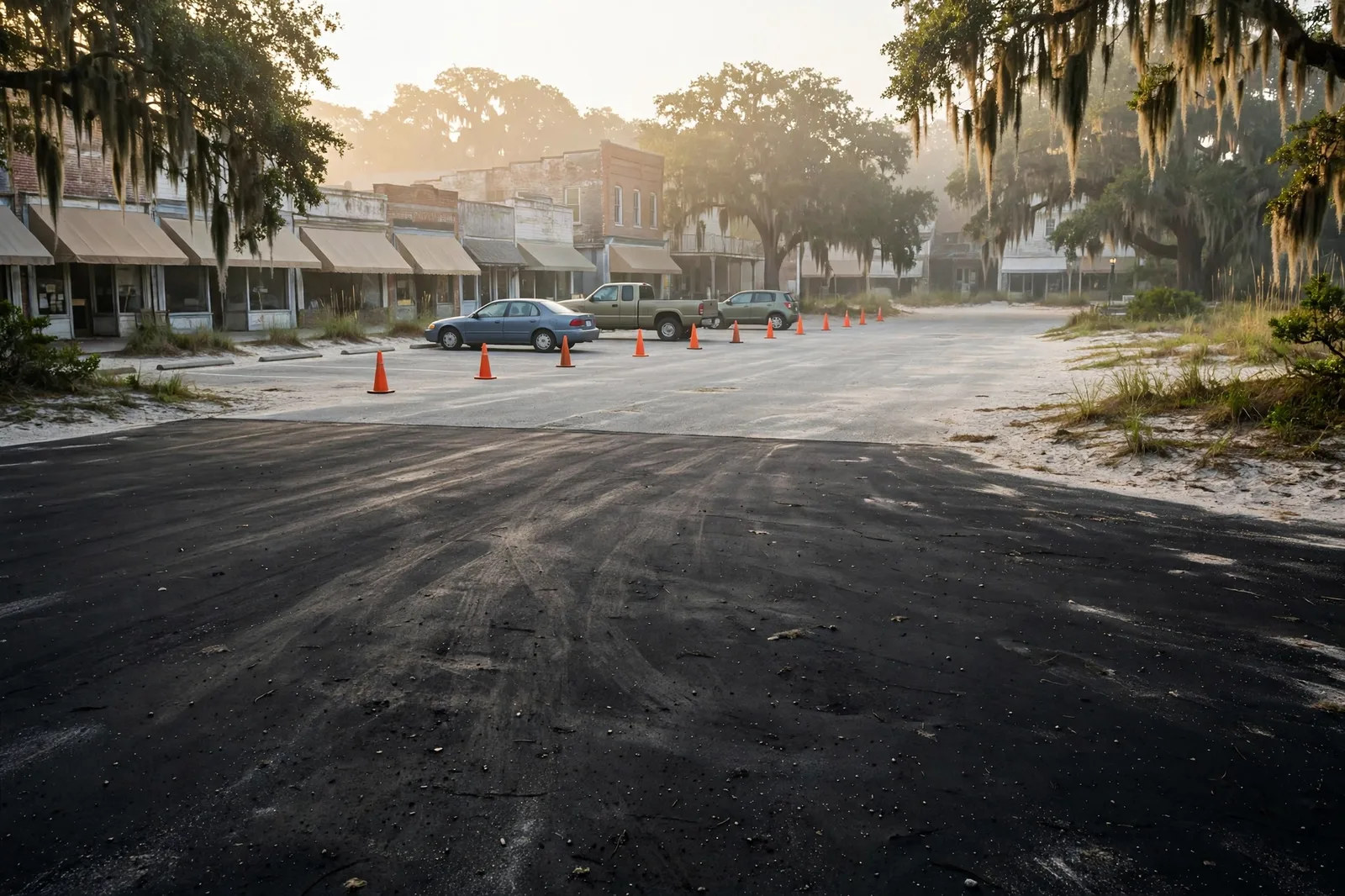
The owner's quietest day was Sunday, so the crew sealed one half of the lot that day, two coats of polymer-modified sealer. The other half stayed open with cones and tape marking the edge.
Chapter 4: Monday morning, the second half
On Monday morning the crew moved to the other half and sealed it the same way. The first half was by then cured enough to park on.
Chapter 5: Restriped before the weekend
The new stall lines went on before the weekend trade, following the original layout, so the lot was ready for its busiest days.
Phasing planner
Crack sealing comes first. Sealer laid over open cracks hides them for a few weeks and does nothing to stop water reaching the base.
Oil spots are scraped and primed before sealer. Sealer will not grip an oily surface and peels off untreated spots.
Half the lot is sealed on the quietest day, two coats of polymer-modified sealer, with cones and tape marking the closed side while the other half stays open.
The second half is sealed the same way once the first half has cured enough to park on.
Striping goes on only after the sealer has cured, so the lot is ready before the weekend trade. If the reader puts a step out of order, the panel shows the consequence: sealing before cracks are filled, striping before cure, or closing the whole lot at once.

Chapter 6: What it cost and what to watch
The job priced from the commercial band of $0.20 to $0.40 per square foot, with the polymer-modified grade pricing the sealer higher than the base rate. The lot's measured square footage set the total. Crack sealing and oil-spot priming were priced on top, and the restripe was its own line within the $600 to $3,600 that striping jobs run.
Three things are worth watching on any lot like this. First, look at the cracks again after heavy rain. A crack that reopens is a crack that needs another pass. Second, watch the low corner, because standing water there is how a base starts to fail. Third, keep heavy turning and parked trailers off fresh sealer until the crew says it has cured.
Working around your business
Southport lots rarely close. Churches have Sunday services. Marinas have weekend boat traffic. Downtown storefronts run through the week. That is why we phase.
We section the lot so half stays open, and we plan the days around your trade rather than ours. We put cones and tape where customers can see them, and the sections are laid out so people can still get in. If a Sunday is your quiet day and Monday morning is slow, we use them. If your busy days are different, we plan around those.
Leland is our base, about 35 minutes from Southport. We serve road-connected Brunswick County, and Southport is part of the ground we cover.
Questions
How much does parking lot sealcoating cost in Southport?
Commercial sealcoating runs $0.20 to $0.40 per square foot. Polymer-modified sealer prices higher than the base rate. Where your lot lands in that band depends on its size, its condition and the sealer grade. Crack sealing, cleaning and oil-spot priming are priced on top.
Can you seal my lot without closing my business?
Yes, by phasing. We seal one section while the other stays open, mark the edge with cones and tape, then switch. The job runs across a quiet day and the next morning where it can.
How often should a Southport lot be sealed?
Most owners reseal every two to three years. That is typical practice, not a guarantee. Traffic, shade, drainage and the condition of the base all change it.
Do you fill the cracks before you seal?
Always. Crack sealing comes first, using hot-pour rubberized sealant. Sealer over open cracks hides them briefly but does not stop water reaching the base.
What is polymer-modified sealer and do I need it?
It is a premium grade of asphalt-emulsion sealer. It prices higher than the standard emulsion. It suits lots with heavy turning traffic or owners who want the longest-wearing appearance. We can look at your lot and tell you whether it is worth it.
How many coats do you apply?
Two coats is the commercial norm, and that is what we do on commercial lots. The second goes on after the first has set.
How long before customers can drive on it?
The sealer has to cure before traffic. We will tell you on the day when each section is ready. That is why phasing keeps one half open while the other cures.
Will you restripe the lot afterward?
Yes, where you want it. Striping jobs run $600 to $3,600, depending on how many stalls and whether it is a restripe over the existing layout or a new layout. A restripe over what is already there costs less.
Do you do ADA markings and wheel stops?
We lay accessible-space and traffic markings as part of the striping work, and we can add wheel stops where a lot needs them. Wheel stops are an add-on, priced separately. We describe and paint the markings. We do not certify that a lot meets a code.
What about oil spots from boat trailers and trucks?
We scrape and prime them before sealing. Sealer will not stick to oil, so an untreated spot shows through and peels.
Does the salt air change how you seal?
It changes how often to look at the lot more than the method. Sun, salt air and rain all wear asphalt, and a regular sealing cycle keeps ahead of it.
Do you work in Southport if you are based in Leland?
Yes. Leland is about 35 minutes away, and Southport is part of the Brunswick County ground we cover.
Do you pave new lots or do concrete and drainage work?
No. We maintain and repair asphalt: sealcoating, crack sealing, patching, striping and markings. We do not lay new lots or roads, mill, pour concrete or do drainage work.
Call about your Southport lot
If your lot is gray, cracked or due for fresh lines, call or send the form and we will walk it with you. Tell us when your lot is quietest and which parts have to stay open. The number is (910) 370-1121, and we answer Monday to Friday, 9:00 AM to 5:30 PM.
The more details you give, the better we are able to help you.