St. James Plantation is a gated golf community, and the town around it counted 6,529 residents in the 2020 census. Its clubhouses, amenity centers and common lots are held to a standard that people see every time they drive in. Leland Pavement Care keeps that ground in shape with a parking lot maintenance program: one relationship, one schedule, and the same crew looking at the same pavement season after season.
The program is a handful of jobs put in the right order. Sealer goes on through parking lot sealcoating, which shields the surface from sun, rain and dripped oil. Water stays out of the base through crack sealing, and in sandy Brunswick County soil the base is what fails first. The spots that have already broken through get pothole repair. Then line striping and pavement markings bring the stalls, aisles and arrows back to something a driver can read at a glance.
Where a lot needs them, signs and wheel stops go in alongside the striping as an add-on. We work out of Leland, about 35 minutes from the St. James gates, and we plan visits around the property manager's calendar so the lot stays usable.
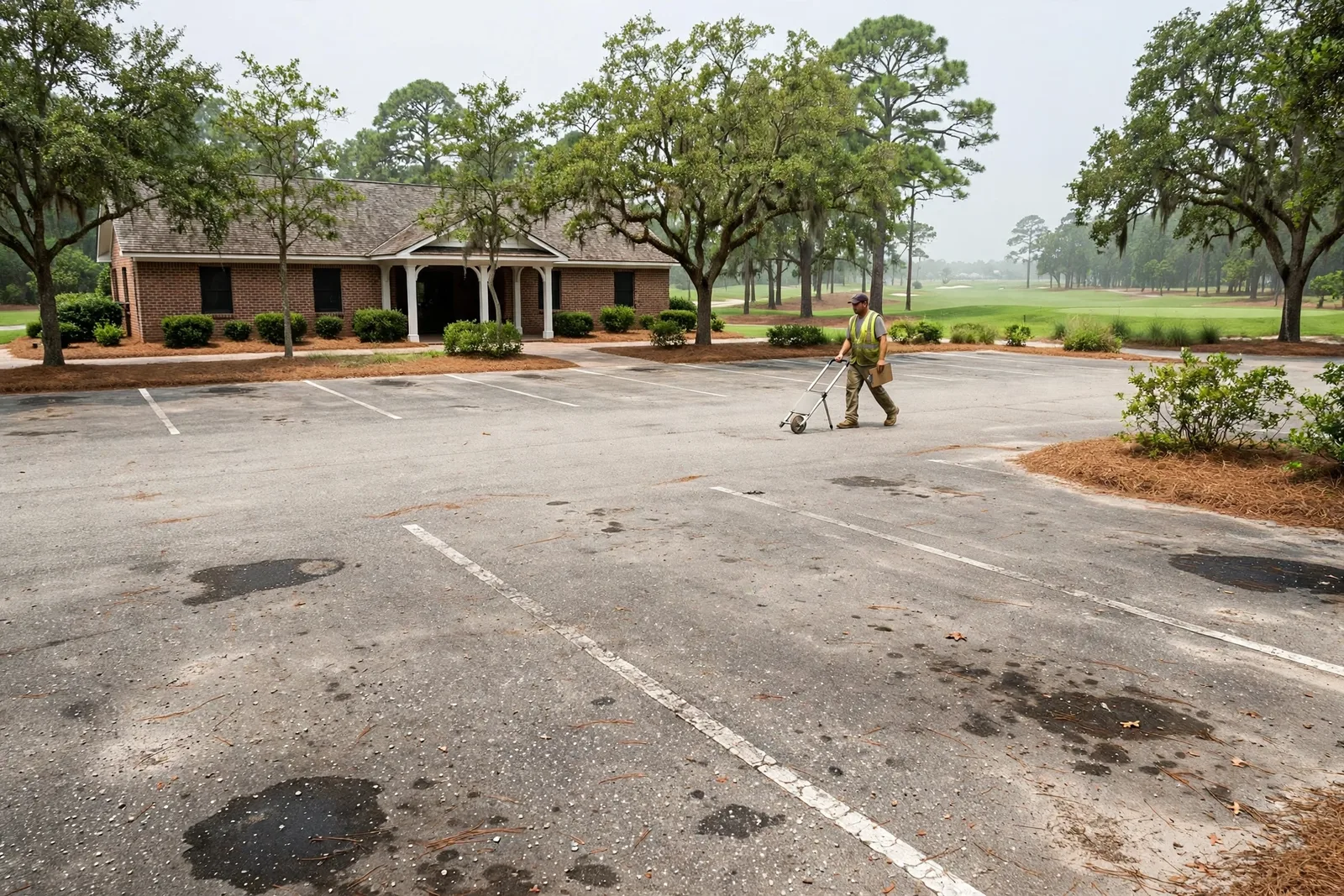
What a program covers on a St. James lot
A maintenance program is not a single big job. It is a set of smaller jobs, sealcoating, crack work, patching and striping, put under one schedule so each one protects the others. Sealcoat over open cracks lets water in. Fresh stripes over a failing patch look good for a few months and then do not. Doing the work in order, and coming back on a cycle, is what keeps the lot from sliding.
For a common lot or amenity center, that usually means:
- Repair of any broken spots first, so the base is solid before anything goes on top.
- Cracks cleaned and filled with hot-pour rubberized sealant, the professional standard for the job.
- Sealcoating once the surface is clean and the oil spots are primed.
- Restriping after the sealer has cured, with the layout matched to what the lot already has.
- A standing inspection with the property manager so small problems get handled before they turn into large ones.
We maintain and repair asphalt. We do not lay new lots, mill, pour concrete or do drainage work, and we do not do municipal road work. If a lot is past the point where maintenance helps, we tell you that plainly.
What the ground does to a lot here
Four things wear asphalt on this coast. Heat and hard UV oxidize the surface until it turns gray and brittle. Rain finds its way through open cracks, and summer thunderstorms and tropical systems can drop inches at once. Oil and fuel soften the surface wherever cars park. And the county's sandy soil and high water table mean the base underneath decides how a lot holds up.
Sealcoating answers the sun and the oil. Crack sealing answers the water. Patching answers the base. That is why the program does not skip any of them.
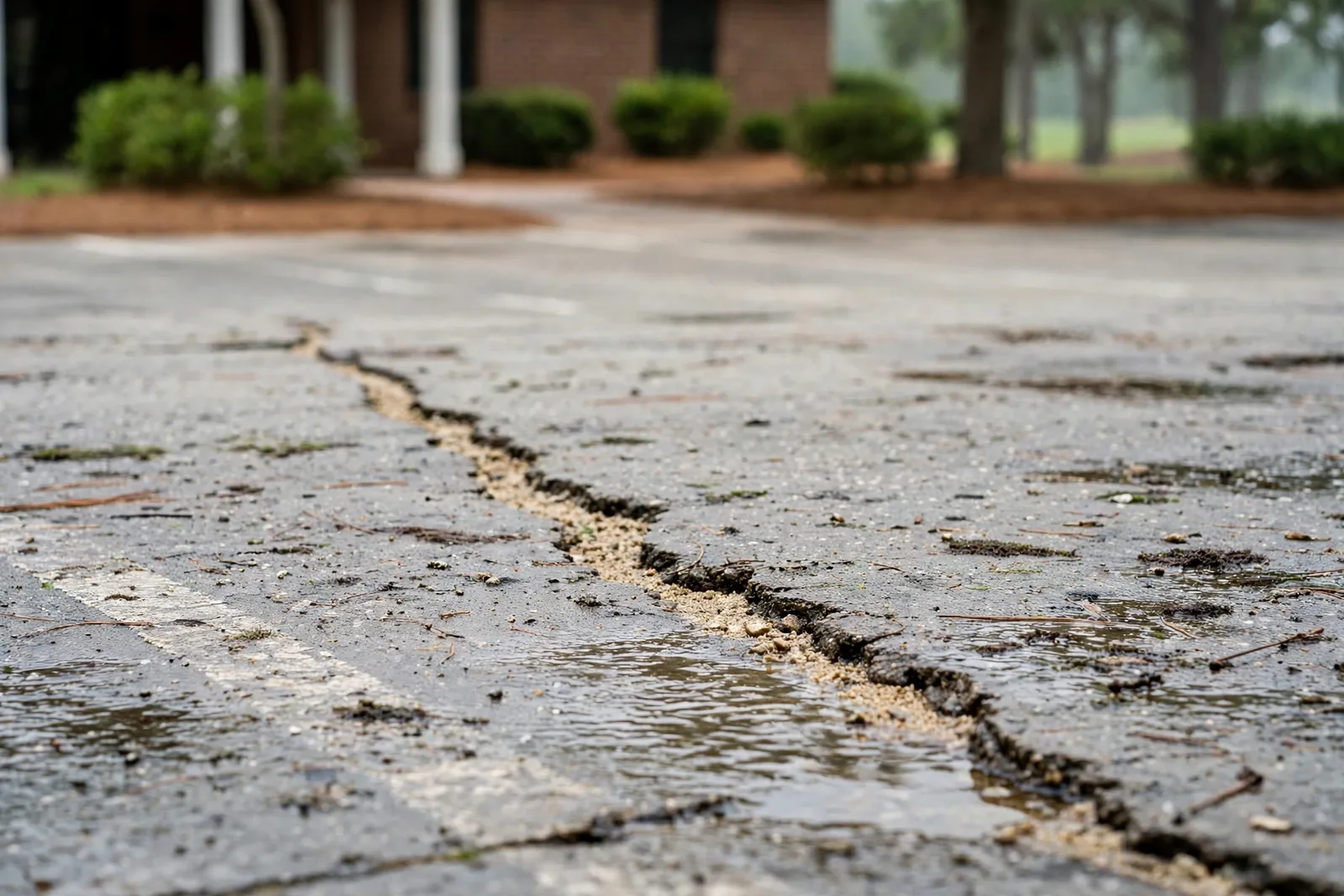
Hurricane Florence in 2018 flooded Brunswick County badly, and storm seasons since have tested every lot on this coast. We do not make promises about storms. We do look closely at the edges, low spots and patched areas after a wet season, because that is where the damage shows first.
How a program visit goes
Every program starts with the same six steps. The order does not change, because each step sets up the next one.
1. Walk the lot with the property manager
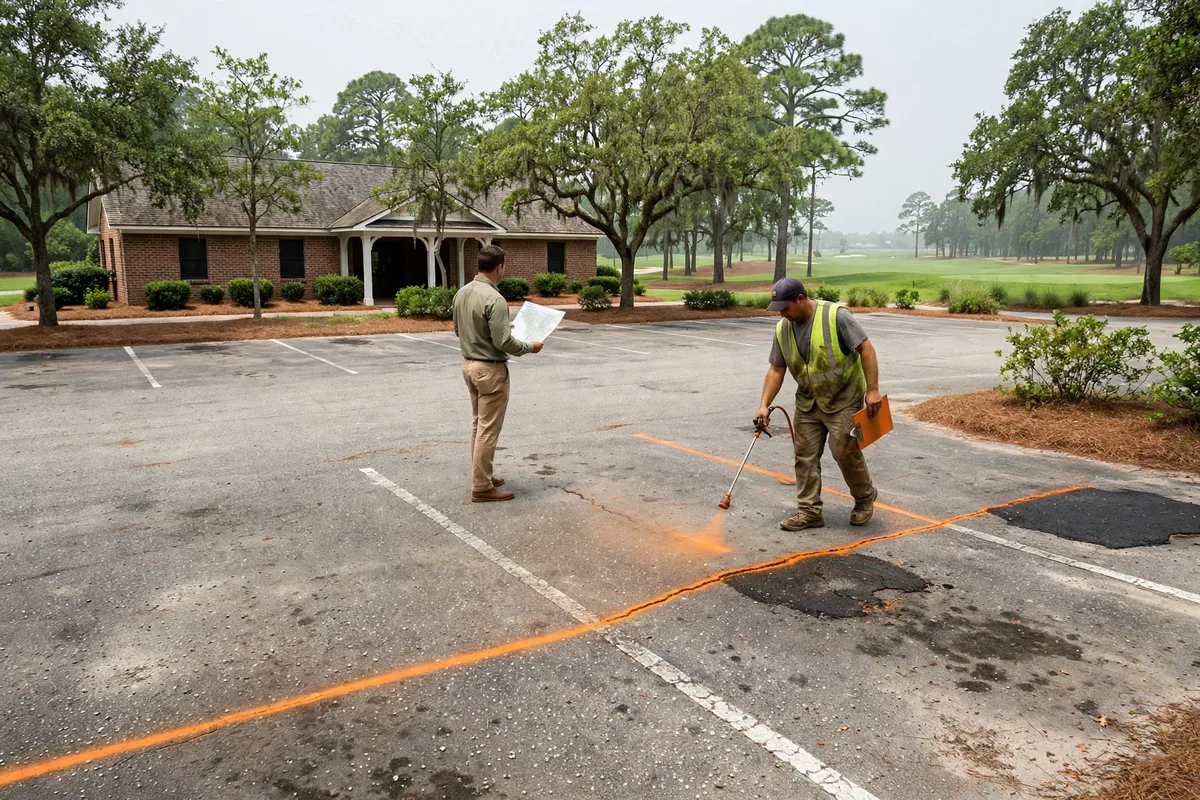
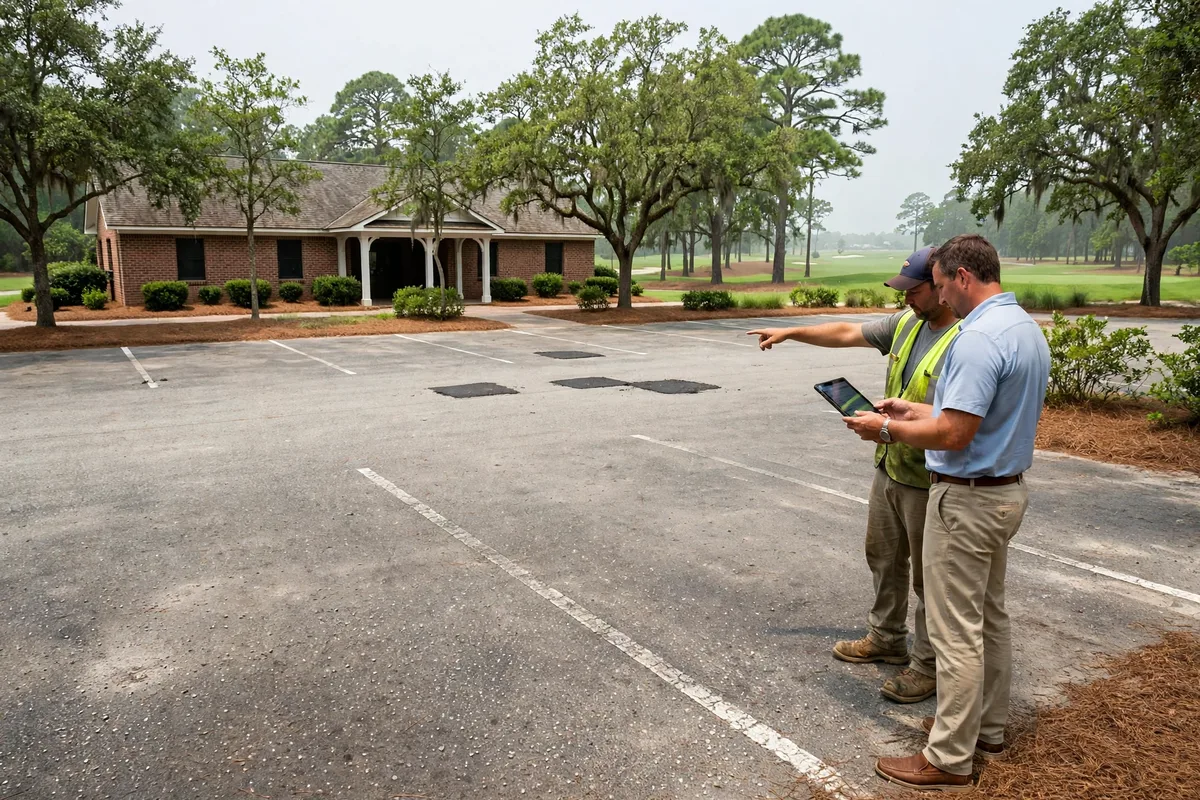
We walk the whole lot, usually with the property manager, and mark what we see: potholes, crack runs, oil spots, worn markings, damaged signs or wheel stops. We measure the area and the crack footage so every price is built from real numbers. Gate access and lot closures are arranged here, not on the day.
2. Patch the failed spots
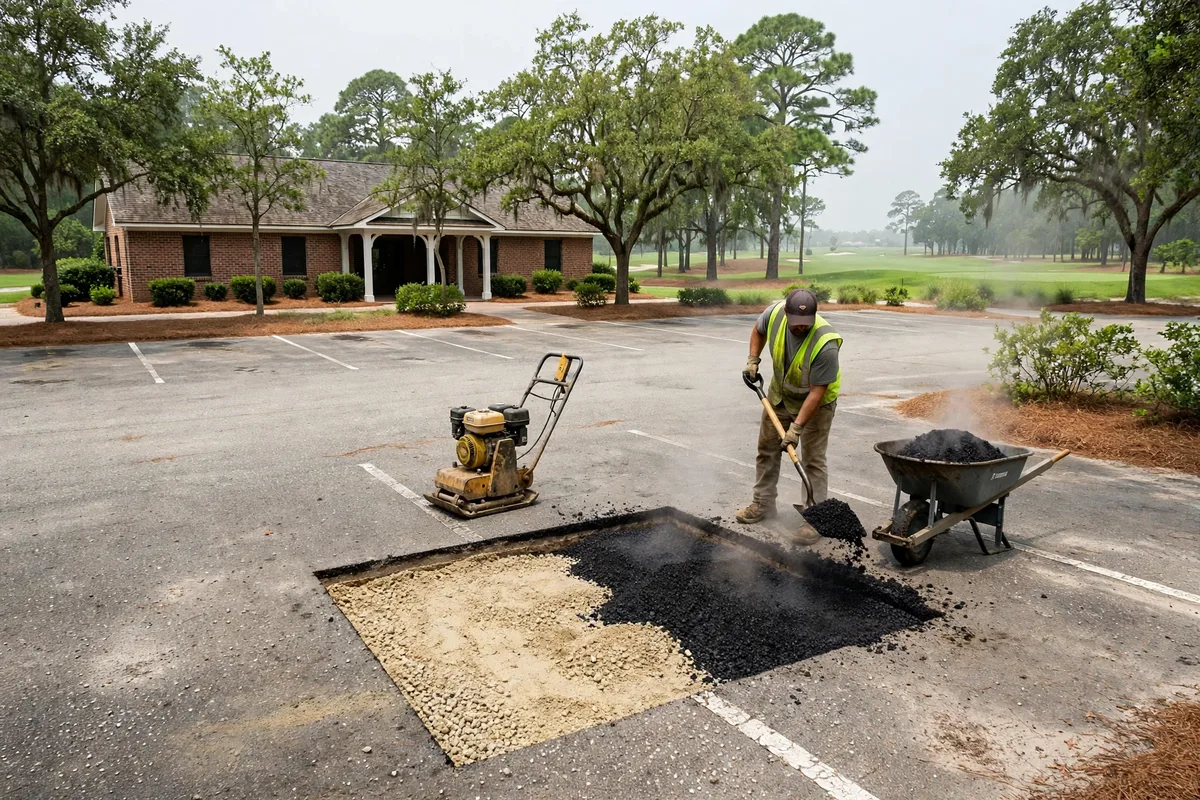
Potholes and broken edges come first. The durable repair is a saw cut around the failure, removal of the bad material, a rebuilt base and hot-mix asphalt compacted in. Surface patches and cold-patch fills are temporary, and we do not treat them as the repair. On sandy soil, the base underneath is the part that matters.
3. Seal the cracks
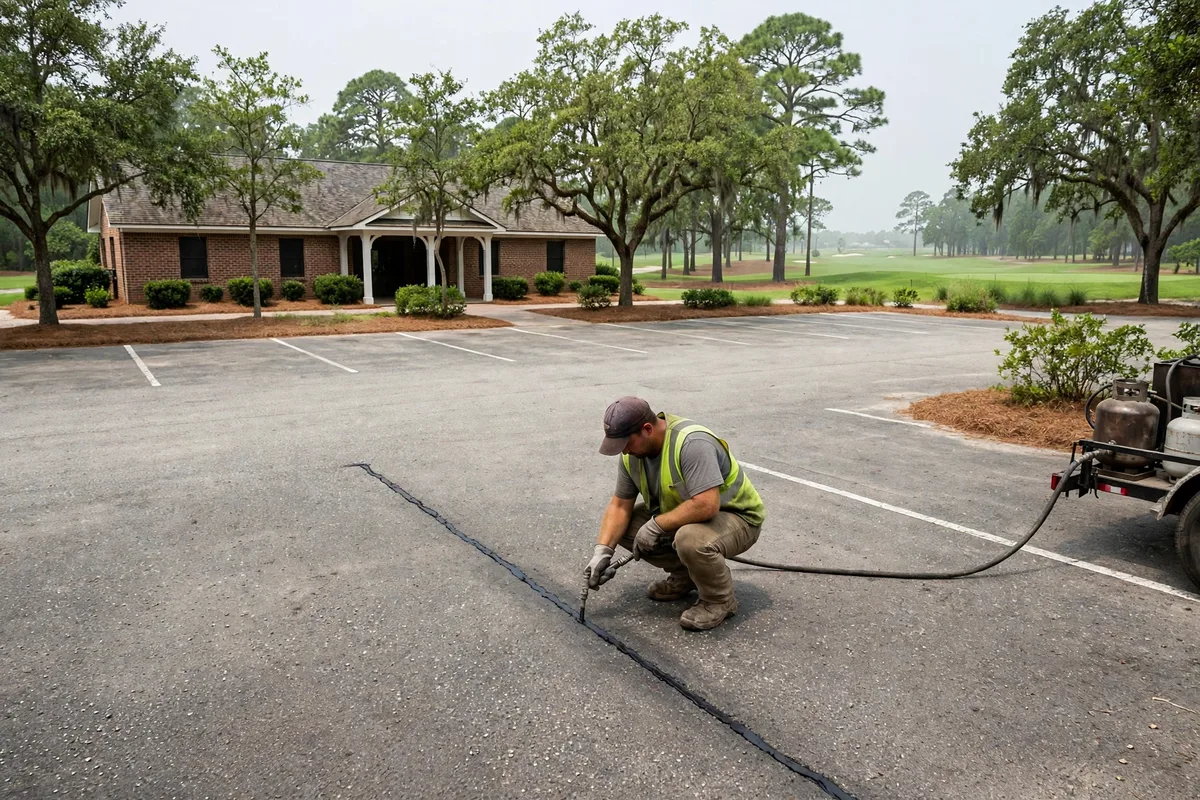
Cracks are cleaned and, where they are wide enough, routed to form a reservoir. Hot-pour rubberized sealant then goes in. It stays flexible as the pavement moves with heat and cold. Cold-pour and store-bought filler are the short-lived option, and we do not use them for a program lot.
4. Clean, prime and sealcoat
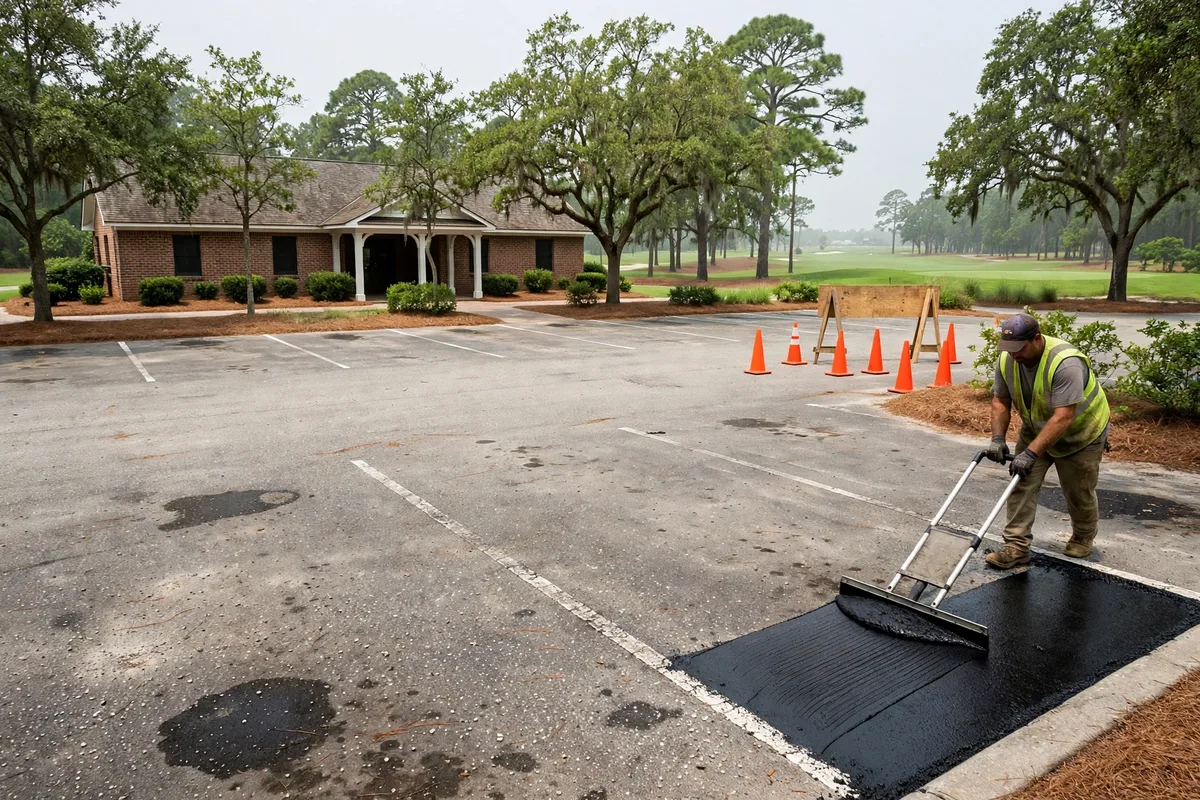
The lot is swept and blown clean, and oil spots are primed so the sealer bonds. We apply an asphalt-emulsion sealer, normally in two coats on a commercial lot, by spray or squeegee. For lots that want a premium grade, polymer-modified sealer is available. This step is done in the summer window, on dry days, with the lot closed off in sections long enough for the sealer to cure.
5. Restripe and set the markings
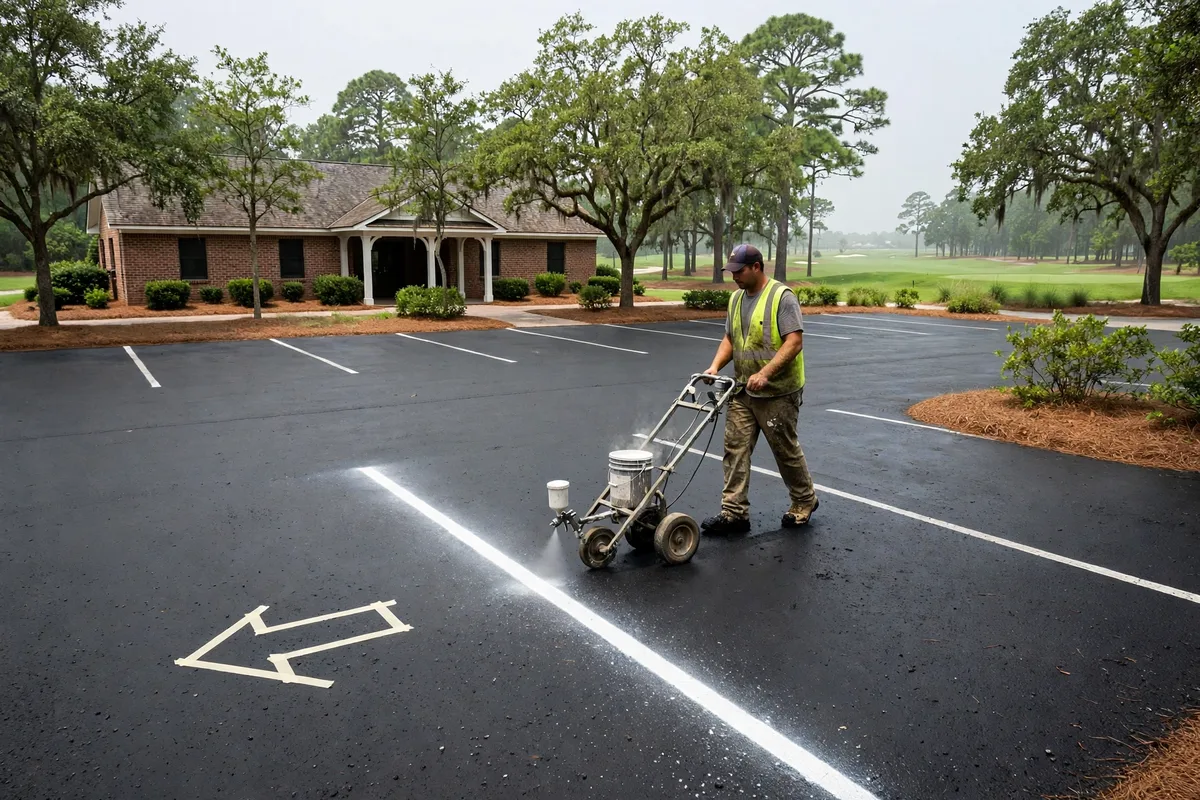
After the sealer cures, stalls, aisles, arrows and crosswalks go back down, with waterborne traffic paint as the standard. We follow the existing layout. A new layout takes more work and is priced separately. High-traffic markings can be done in thermoplastic when you want them to wear longer. Signs and wheel stops are checked at this step and replaced or reset if they are damaged.
6. Set the inspection cycle
We agree a standing inspection with the property manager. At each visit we look at the cracks, the patches, the oil spots and the markings, and we note what needs work before the next season. Most owners reseal every two to three years as a matter of typical practice, and the inspections tell us, lot by lot, whether that holds.
What the program costs
These are our prices for the building blocks of a program. The final number depends on size, condition and prep.
- Sealcoating: $0.20 to $0.40 per square foot for commercial lots. Larger lots price toward the lower end of that band. Prep such as crack sealing, cleaning and oil-spot priming is priced on top.
- Crack sealing: $0.50 to $3.00 per linear foot. Crack width, whether it is routed, and how much cleaning it needs set where a job falls in that range.
- Pothole repair: $150 to $400 per pothole. Size, depth and the condition of the base decide it. A larger failed area is a cut-and-patch priced by the square foot on the area, and we set that figure on the walk once we have measured it.
- Striping: $600 to $3,600 per job. The number of stalls, whether it is a restripe over the existing layout or a new layout, and any thermoplastic markings drive it.
On the first walk we measure, count and add it up, and you get a figure you can read line by line.
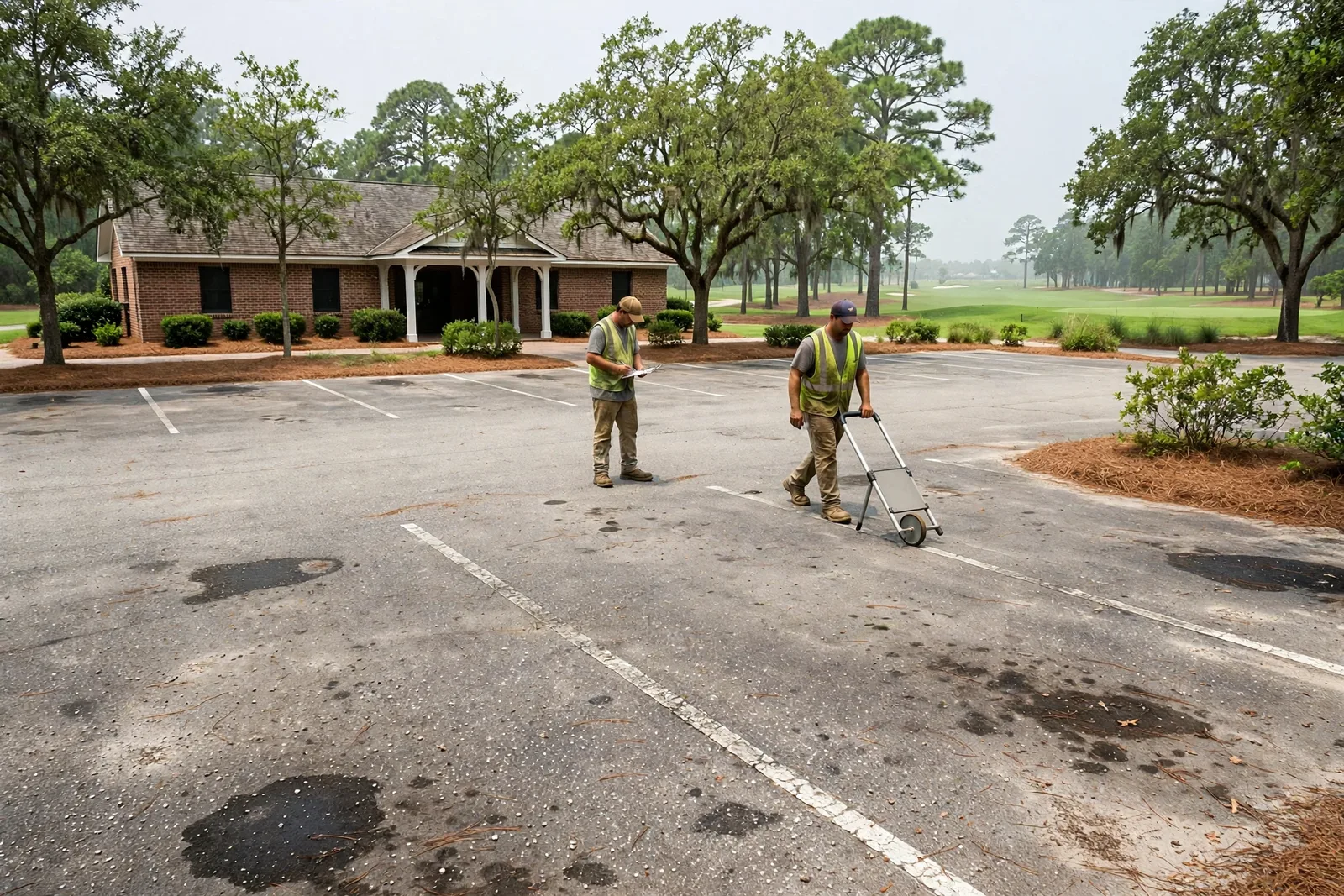
An amenity-center lot inside the gates
This job shows how the program works start to finish. An amenity-center lot inside the gates came onto the program after a few seasons of patching only when something broke. The property manager wanted it brought up to a standard and kept there. What follows is the order it went in.
The first visit
The lot had a handful of open potholes along the drive aisle, cracks that had been running since the last storm season, a gray, dry surface with dark oil spots at the stalls nearest the entrance, and stripes that had faded to the point of guesswork. A few wheel stops were knocked out of line. We walked it with the property manager, marked everything, and measured the area and the crack footage.
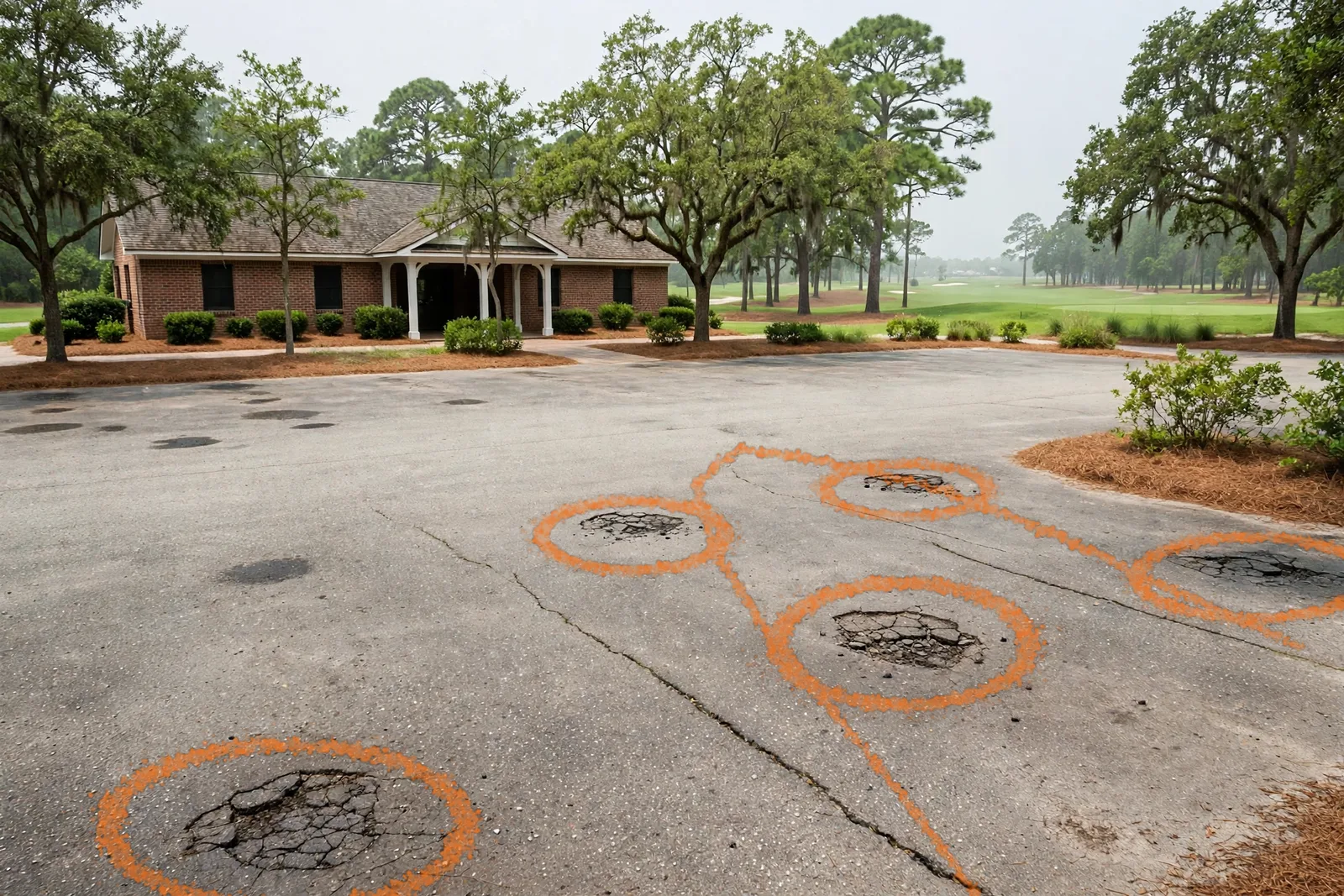
Catching up the patches and cracks
The first work crew caught up what had been put off. Potholes were saw-cut, the base rebuilt and hot-mix compacted in. The cracks were cleaned, routed where wide and filled with hot-pour rubberized sealant. This work happened before any sealer went down, because sealer over open defects only hides them for a season.
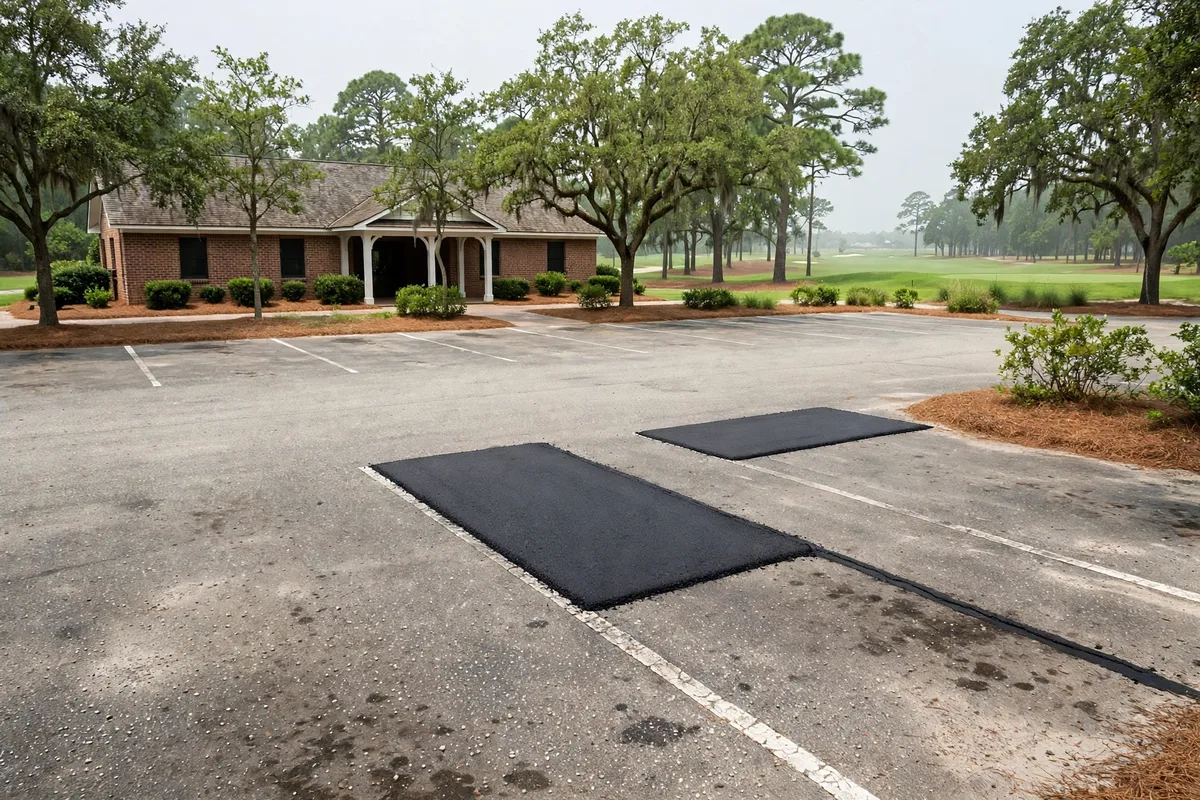
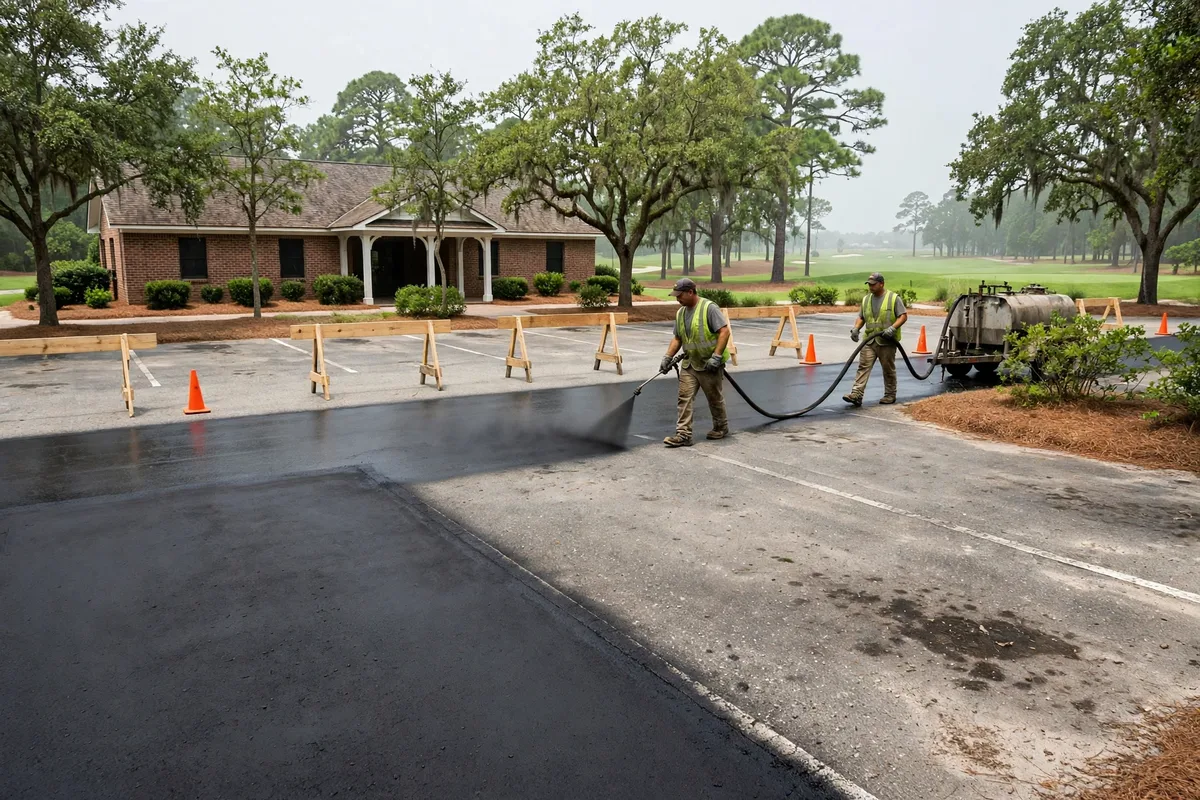
Sealcoat in the summer window
With repairs in, we cleaned the lot, primed the oil spots and sealcoated in the summer window, in two coats and in sections so the property could keep using part of the lot. The sealer was an asphalt-emulsion grade.
Restripe after cure
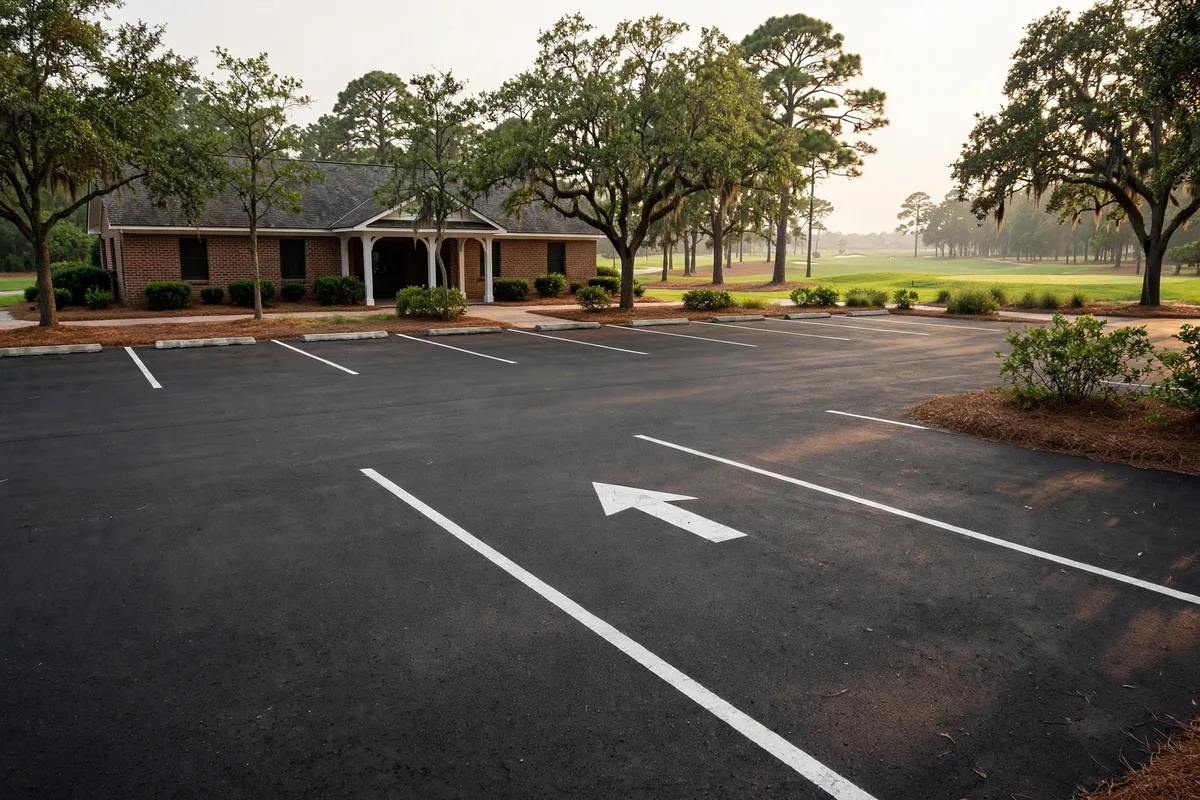
After the sealer cured, we restriped over the existing layout, set the damaged wheel stops back in line and replaced the ones that had cracked. The lot went from a gray patchwork back to one clean surface with lines drivers could follow.
Try the checker
Pick a finding on your own lot and see what the program does about it, what it costs, and where it sits in the order.
Read the lot
Pothole repair comes first. The crew saw-cuts around the failure, removes the bad material, rebuilds the base and compacts hot-mix asphalt. Cost: $150 to $400 per pothole, set by size, depth and base condition. A larger failed area is a cut-and-patch priced by the square foot on area. It goes first because sealer over a hole does not hold.
Crack sealing is next. Cracks from ¼" to 1" are cleaned or routed, then filled with hot-pour rubberized sealant. Cost: $0.50 to $3.00 per linear foot, set by width, routing and cleaning. It goes before sealcoat so water cannot get to the base.
Sealcoating follows. Oil spots are primed, the lot is cleaned, and an asphalt-emulsion sealer goes on in two coats, in the summer window, in sections. Cost: $0.20 to $0.40 per square foot for commercial lots, with large lots toward the lower end and prep priced on top.
Striping goes down after the sealer cures, over the existing layout, in waterborne traffic paint. Cost: $600 to $3,600 per job, set by the number of stalls, restripe versus new layout, and any thermoplastic markings. Damaged wheel stops are reset or replaced here as an add-on.
A standing inspection cycle is set with the property manager. Each visit checks cracks, patches, oil spots and markings. Most owners reseal every two to three years as typical practice, and the inspections show when that is right for the lot.

What it cost and what to watch
The job was priced from the building blocks above: patching by the pothole and by area for the larger failures, crack sealing by the linear foot, sealcoating by the square foot at the commercial band, and the restripe as a single striping job. The lot was large enough to sit toward the lower end of the sealcoat band, and the prep was priced on top of it.
What to watch for: cracks that reopen along the same lines, new oil spots at the stalls nearest the entrance, wheel stops that have shifted, and any spot where water sits after rain. These are the first things the inspection cycle checks.
Why St. James lots suit a program
A gated golf community has lots everywhere: clubhouse, amenity centers, common areas. Each one has its own wear, but they all sit under one standard, and the people who use them notice when it slips. A program puts all those lots on the same calendar, so one property manager has one point of contact and one set of numbers.
It also takes the guesswork out of when to spend. Instead of reacting to a pothole or a failed stripe, you plan the next visit knowing what the last one found.
Questions
Do you work inside the gates at St. James Plantation?
Yes. St. James is inside our Brunswick County service area, about 35 minutes from Leland. We arrange gate access and lot closures with the property manager at the first walk, so the day of the work runs smoothly.
What does a parking lot maintenance program include?
Patching of failed spots, crack sealing, sealcoating, restriping and a standing inspection with the property manager. Each is priced on its own building-block band, so you see what you are paying for.
How much does sealcoating cost for a clubhouse or amenity lot?
Commercial sealcoating runs $0.20 to $0.40 per square foot. Large lots price toward the lower end. Crack sealing, cleaning and oil-spot priming are priced on top, since the lot has to be ready before sealer goes down. We measure the lot and give you the total.
How much does crack sealing cost?
Crack sealing is $0.50 to $3.00 per linear foot. Width, whether the crack is routed, and how much cleaning it needs decide where a job falls in that range.
What does pothole repair cost?
$150 to $400 per pothole, depending on size, depth and the condition of the base underneath. A larger failed area is a cut-and-patch priced by the square foot on the area, and we give you that number once we have measured it.
What does restriping cost?
Striping jobs run $600 to $3,600. The number of stalls, whether it is a restripe over the existing layout or a new layout, and whether any markings are in thermoplastic all move the price.
How often should an amenity lot be sealcoated?
Most owners reseal every two to three years. That is typical practice, not a promise about how long any coating lasts. The inspection cycle is what tells us whether your lot is ready.
Why is sealcoating done in the summer window?
Sealer needs dry weather and time to cure. We work in sections, so part of the lot stays open while the rest cures, and the property manager decides which sections close and when.
In what order does the work go?
Patching first, then crack sealing, then cleaning, priming and sealcoating, then restriping after the sealer has cured. Putting sealer over open defects only hides them for a season, and fresh stripes on wet or uncured sealer do not last.
Do you repave or lay new lots?
No. We maintain and repair asphalt. We do not lay new lots or roads, mill, pour concrete or do drainage work. If a lot is beyond what maintenance can do, we say so on the walk.
Can you replace signs and wheel stops while you are there?
Yes, as an add-on to the striping work. We check them at the restripe step and reset or replace the ones that are damaged.
Can you repaint accessible spaces and crosswalks?
We repaint the markings on the lot, following the existing layout. Whether the layout meets any legal requirement is not something we certify. If you are changing the layout, that is a separate conversation with the person responsible for the property's compliance.
How do we get started?
Call (910) 370-1121 or fill out the form below. Tell us what the lot looks like and where it is, and we will set up the first walk with your property manager.
Set up the first walk of your St. James lot
If your clubhouse, amenity center or common lot needs a plan and not another patch, call (910) 370-1121 or send the form below. We will set up a walk, measure the lot and give you a figure built from the bands above. We are available Monday to Friday, 9:00 AM to 5:30 PM.
The more details you give, the better we are able to help you.