Salt air, hard sun and wind-blown sand work on a Sunset Beach driveway every day of the week, whether anyone is home or not. Leland Pavement Care does driveway sealcoating for the second homes and retirement houses here, coming down from Leland, about 50 minutes away. A sealed drive protects the asphalt, and it also tells the neighbors and the owners that the house is looked after.
The coat itself is asphalt sealcoating, a thin protective layer over pavement that is still sound, so the job is only as good as the work before it. The sand comes off first. Hairline cracks get crack filling, and longer or wider ones get crack sealing with hot-pour rubberized sealant, then the coat goes down over a clean, closed surface.
Some drives need more than a coat. A drive with soft spots, broken edges or a sunken patch needs driveway repair before any sealer goes on, and the crew handles that with asphalt patching or pothole repair at the spot. We tell you which drive you have before we price it.
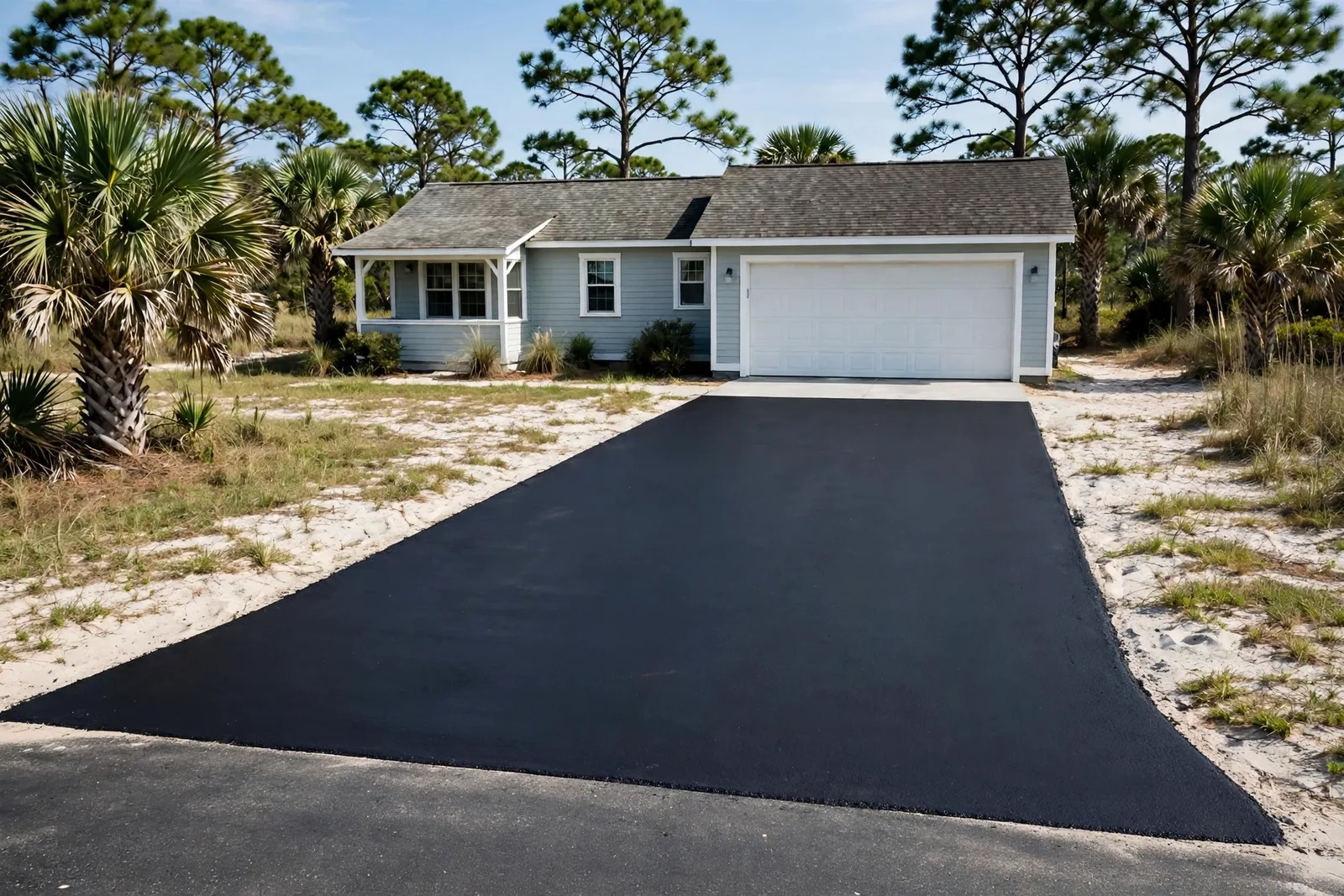
Why drives in Sunset Beach wear the way they do
Most driveways here sit empty for weeks at a time. That sounds easy on pavement, and in one way it is, because there is less tire wear. But an empty drive still takes everything the coast throws at it. Sun oxidizes the surface until it turns gray and dry. Salt air rides in off the water. Summer storms and tropical systems drop inches of rain at once, and that water finds every open crack.
The soil under the drive is sand, and the base under a drive here decides whether it lasts. Water that gets through a crack can wash fines out from under the asphalt, and what shows up later as a dip or a pothole began as an open hairline. Wind-blown sand adds its own problem. It collects in cracks and across the surface, keeps sealer from bonding, and the owners who are away most of the month never see it building.
So the work here is mostly prevention. Seal the surface against sun and oil. Close the cracks before the rain gets under them. Fix the soft spot while it is still small.
What sealcoating does, and what it does not
The sealer we use is an asphalt-emulsion product, applied by squeegee or spray depending on the drive. It slows sun oxidation, gives the surface a uniform dark finish, and resists oil and fuel drips. It is not a repair. It will not hold up a failing base, bridge a wide crack, or fill a pothole.
How often to reseal is a matter of typical practice, not a promise. Most owners reseal every two to three years. A drive in full sun with a car parked on it weekly may want attention sooner than one shaded by a live oak, and the crew will tell you what they see when they walk it. We do not promise how long any coating or any pavement will last.
We care for asphalt. We do not pour concrete or lay new drives, and if a drive has failed past saving we say so plainly rather than coat it.
How the job goes
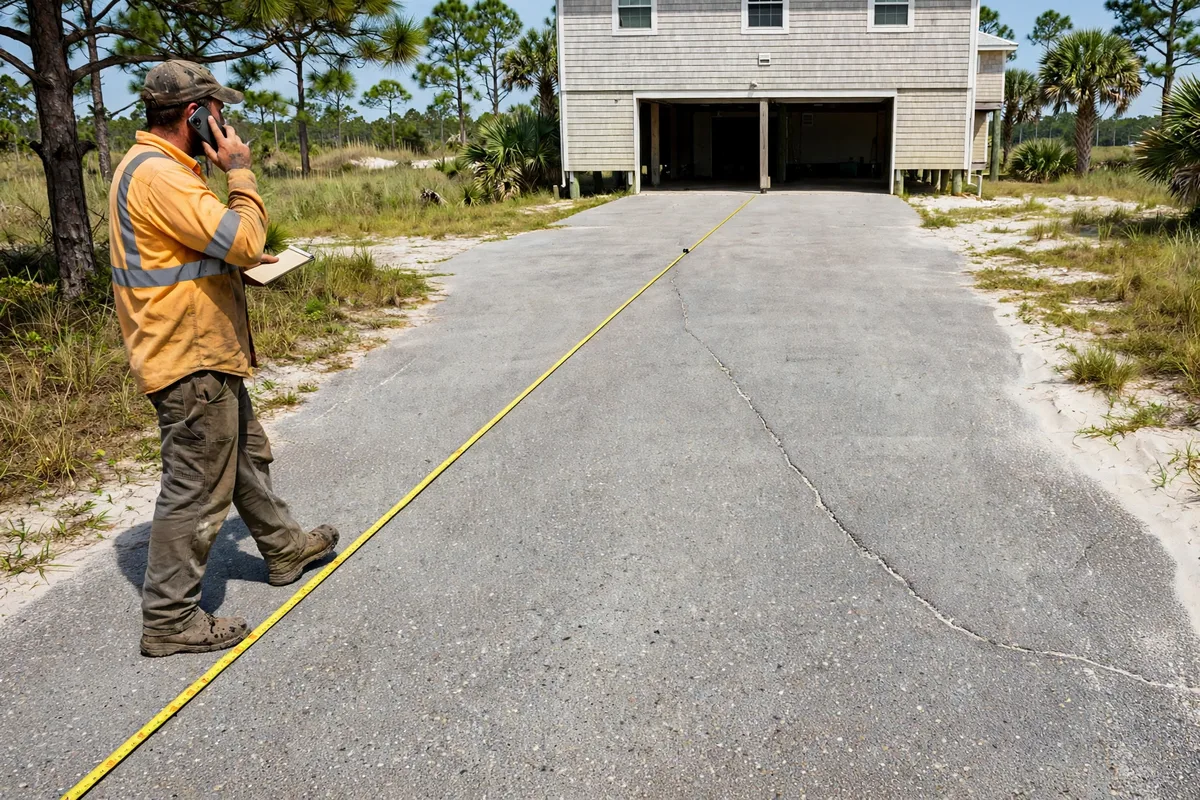
1. Walk the drive and make the plan. The crew measures the drive, notes the cracks by length, and checks for soft spots and low edges. If you are not in town, this is where the phone call happens. We settle when the crew will be there and when the car has to stay off.
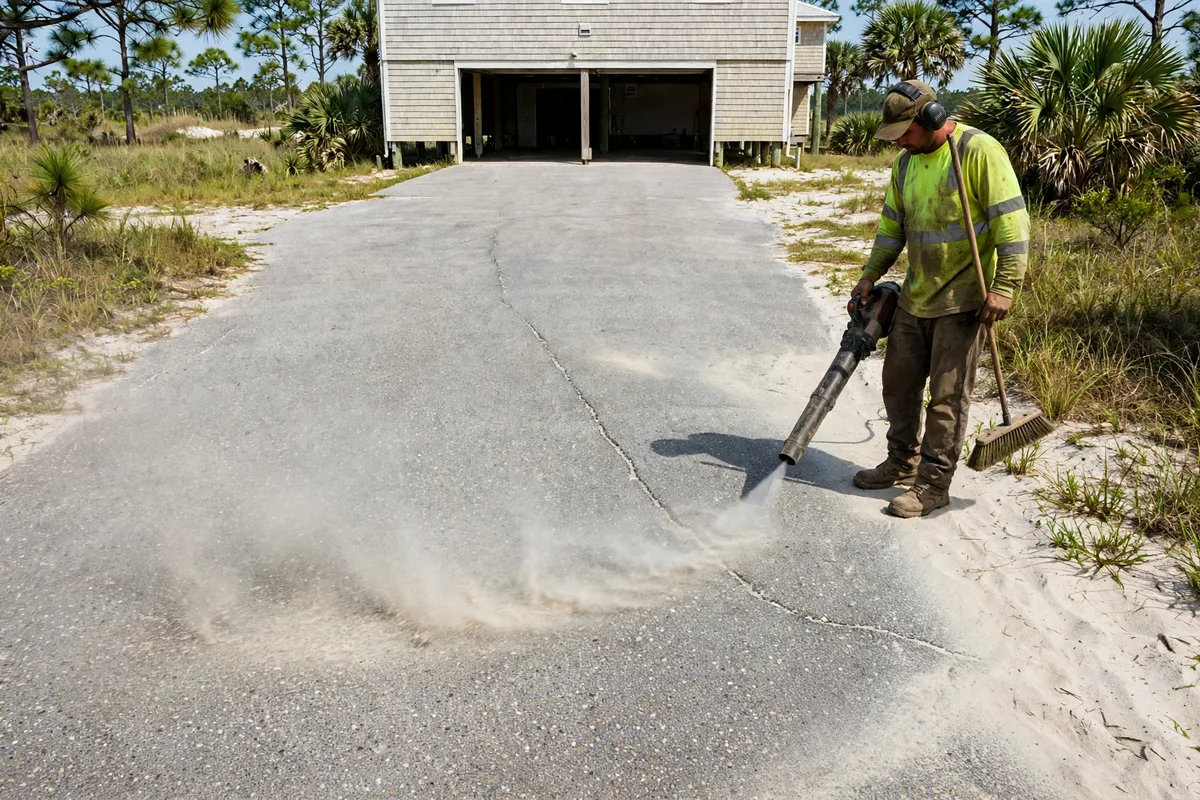
2. Clean it down. Blow, brush and, where the drive needs it, wash. Sand, leaves and loose grit all come off. Wet pavement is allowed to dry before anything is applied.
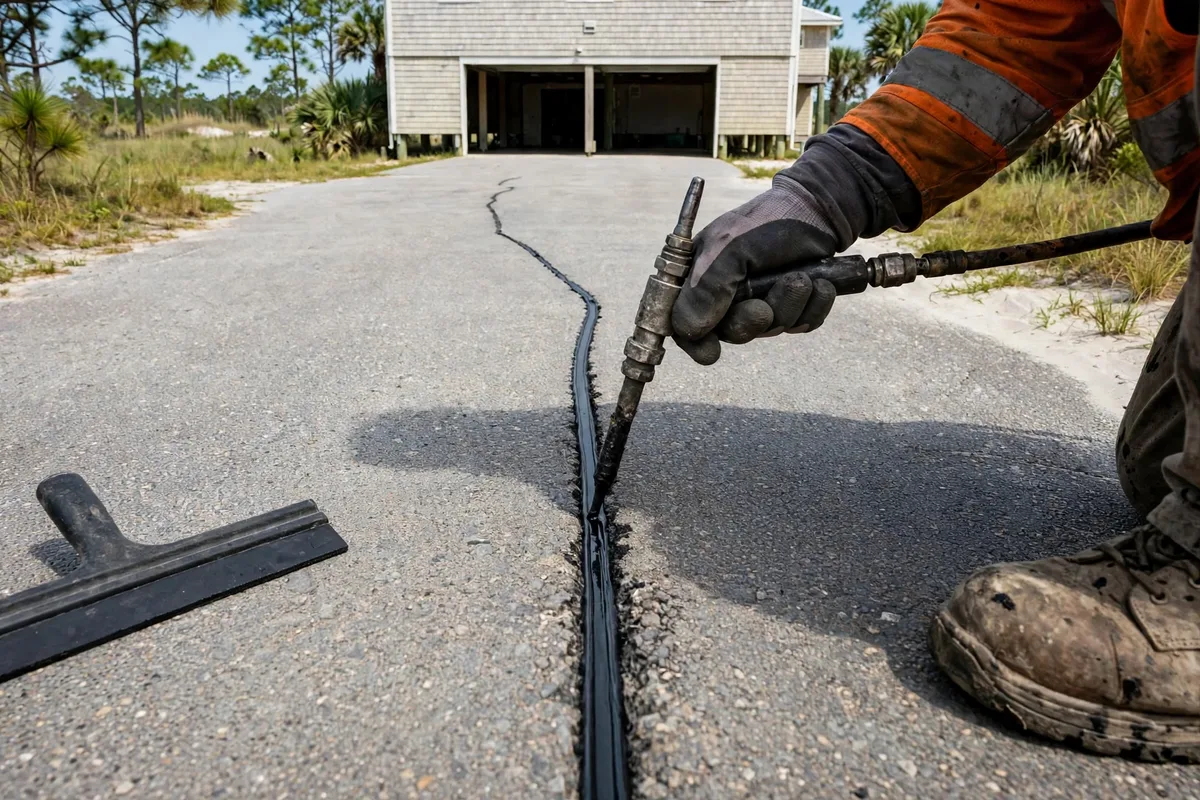
3. Fill the cracks and make the small repairs. Cracks are filled with hot-pour rubberized sealant, which is priced by the linear foot. Small broken spots get patched. If the drive has failures that are more than small, we stop and talk to you before coating.
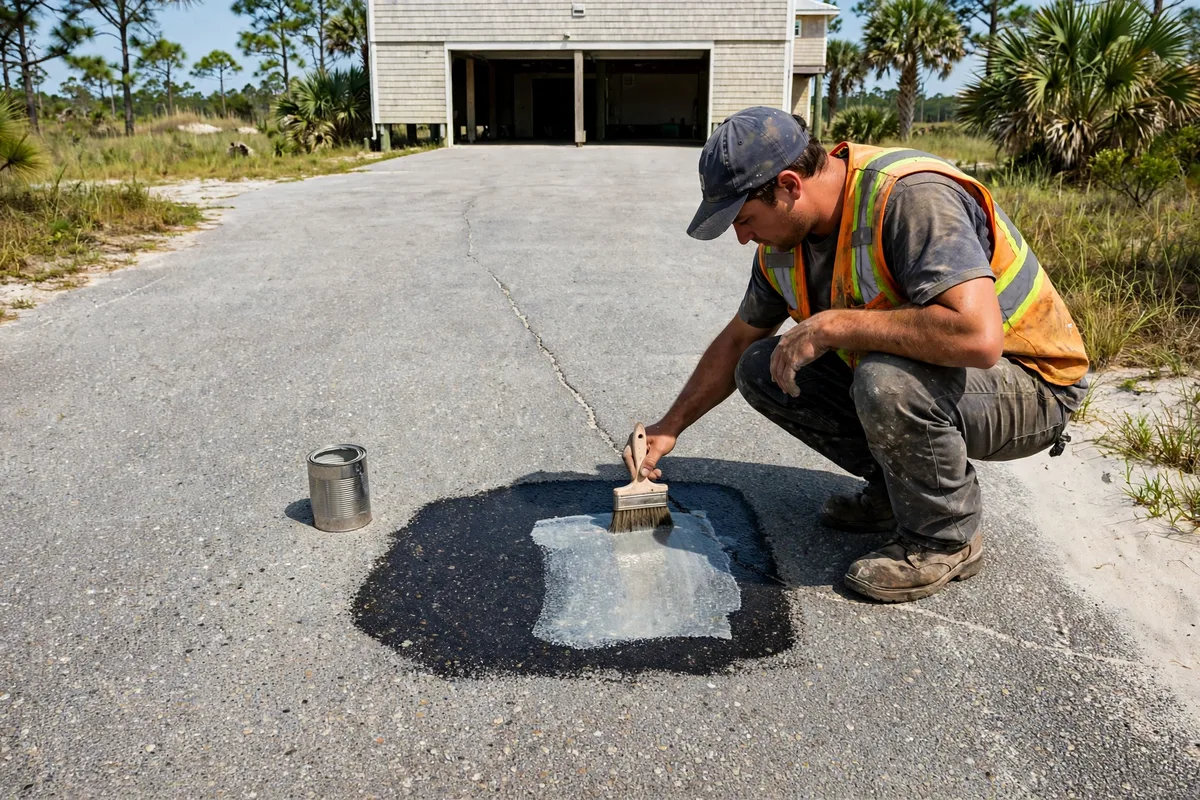
4. Prime the oil spots. The place where the car sits every visit is the first place to check. Oil and fuel drips are cleaned and primed so the sealer has something to grip.
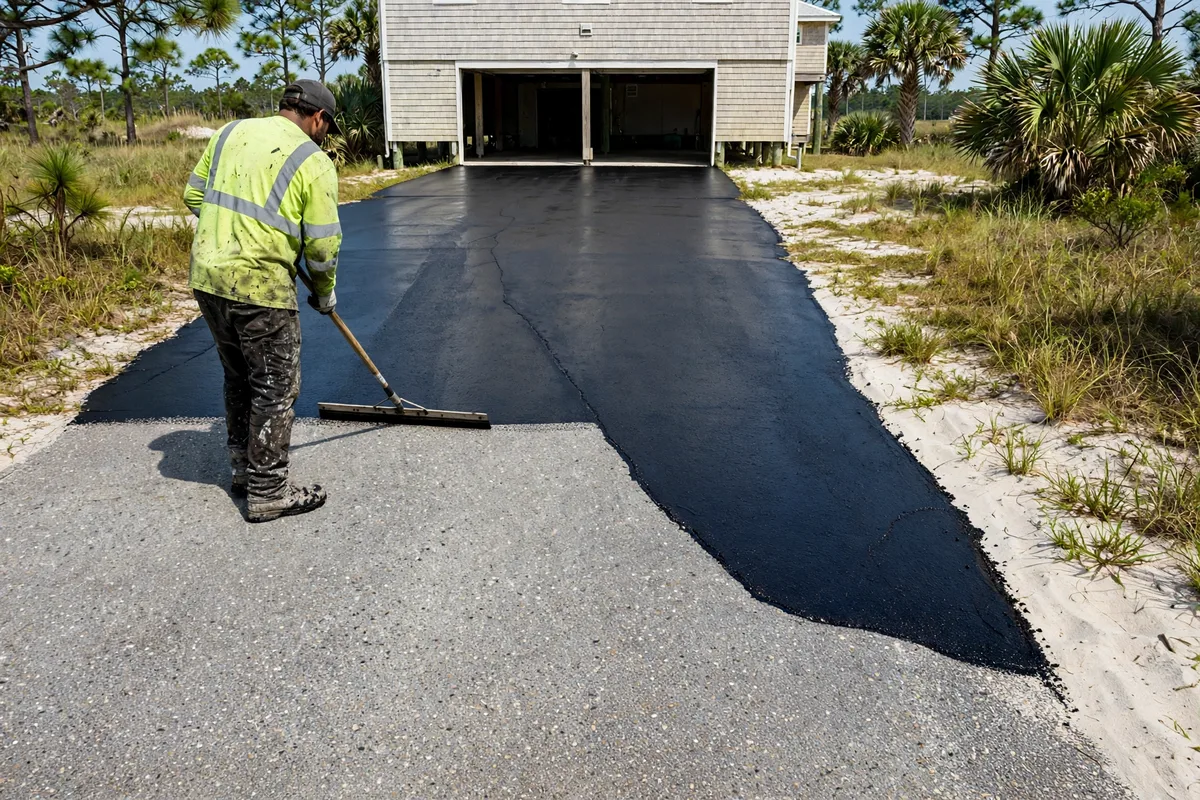
5. Apply the sealer. Edges are cut in first, then the field is coated in even passes. Coverage is watched the whole way across the drive.
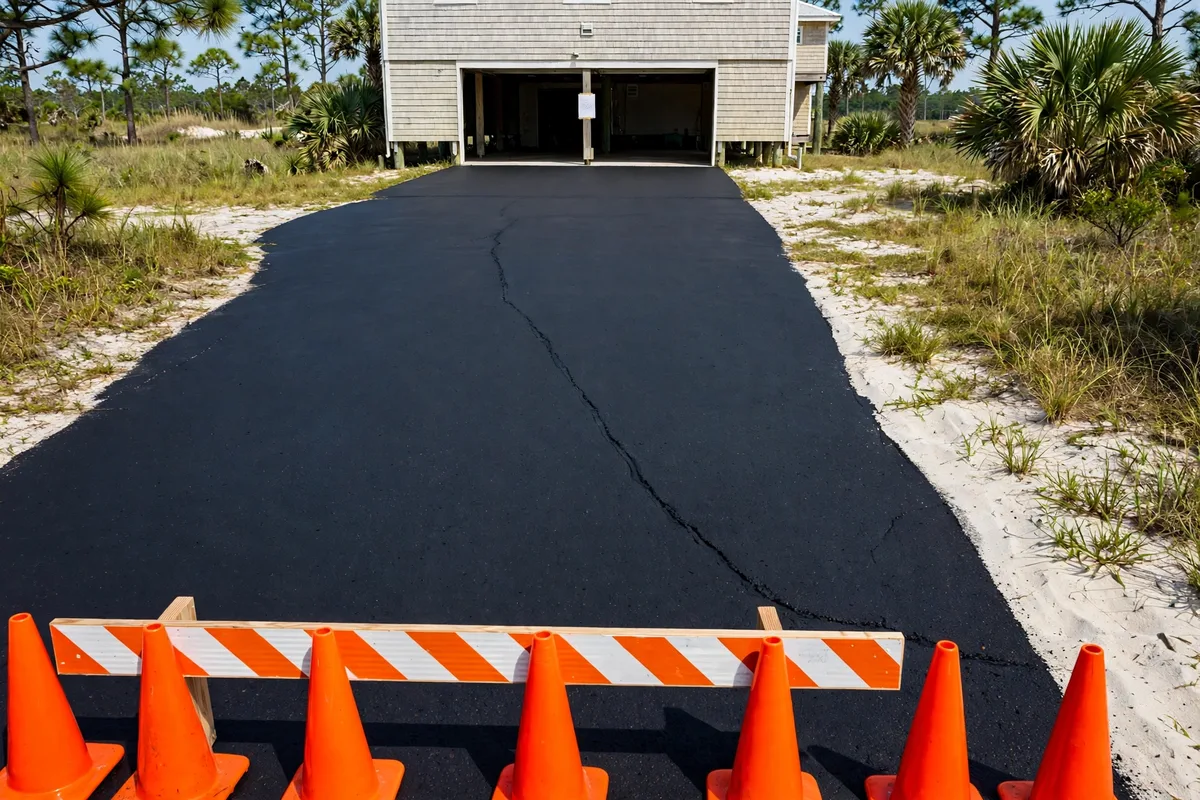
6. Protect the cure. The drive is barricaded and the crew tells you, in plain words, how long to keep cars and foot traffic off. They set that time by the product and the day's conditions. When it is clear, they call or text and the drive goes back to use.
What it costs
Driveway sealcoating is priced by the square foot at $0.15-$0.25 per square foot. Typical driveway jobs run $600-$2,000. Where your drive falls depends on size, on the condition of the pavement, on how much crack filling it needs, and on how many oil spots need priming. Small drives carry a minimum fee.
Crack filling is priced separately, by the linear foot, at $0.50-$3.00 per linear foot. That range is wide because cracks are different. A clean hairline costs little. A long, wide, deep crack takes more material and more prep.
If the walk-through turns up spots that need patching or driveway repair, that is quoted as its own line before the coat, so you know what the repair is and what the coat costs separately. The number is given at the start, and you approve it before the crew starts work.
A second home off Sunset Boulevard
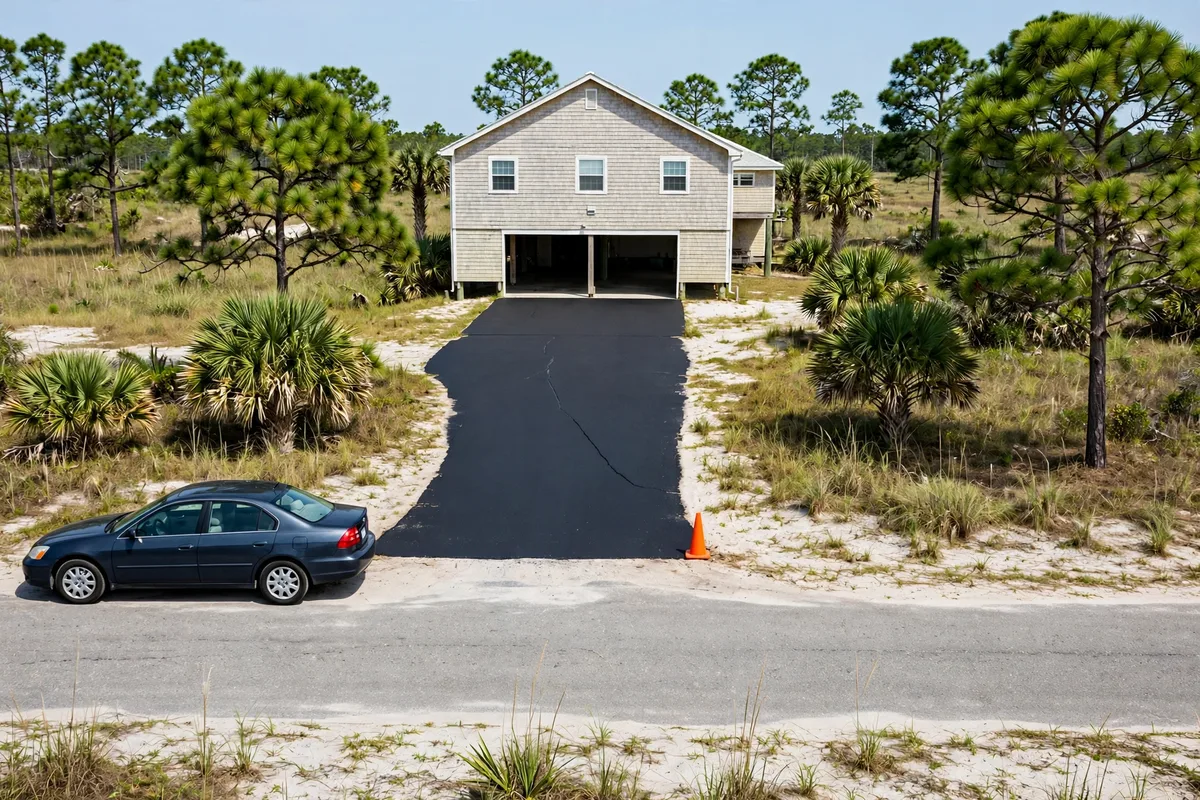
The house sits just off Sunset Boulevard, and the owners come down about once a month. The drive had gone gray, and it carried a skin of wind-blown sand with more packed into a run of cracks near the garage. The owners wanted it sealed. They also did not want to arrive on a weekend and find it wet.
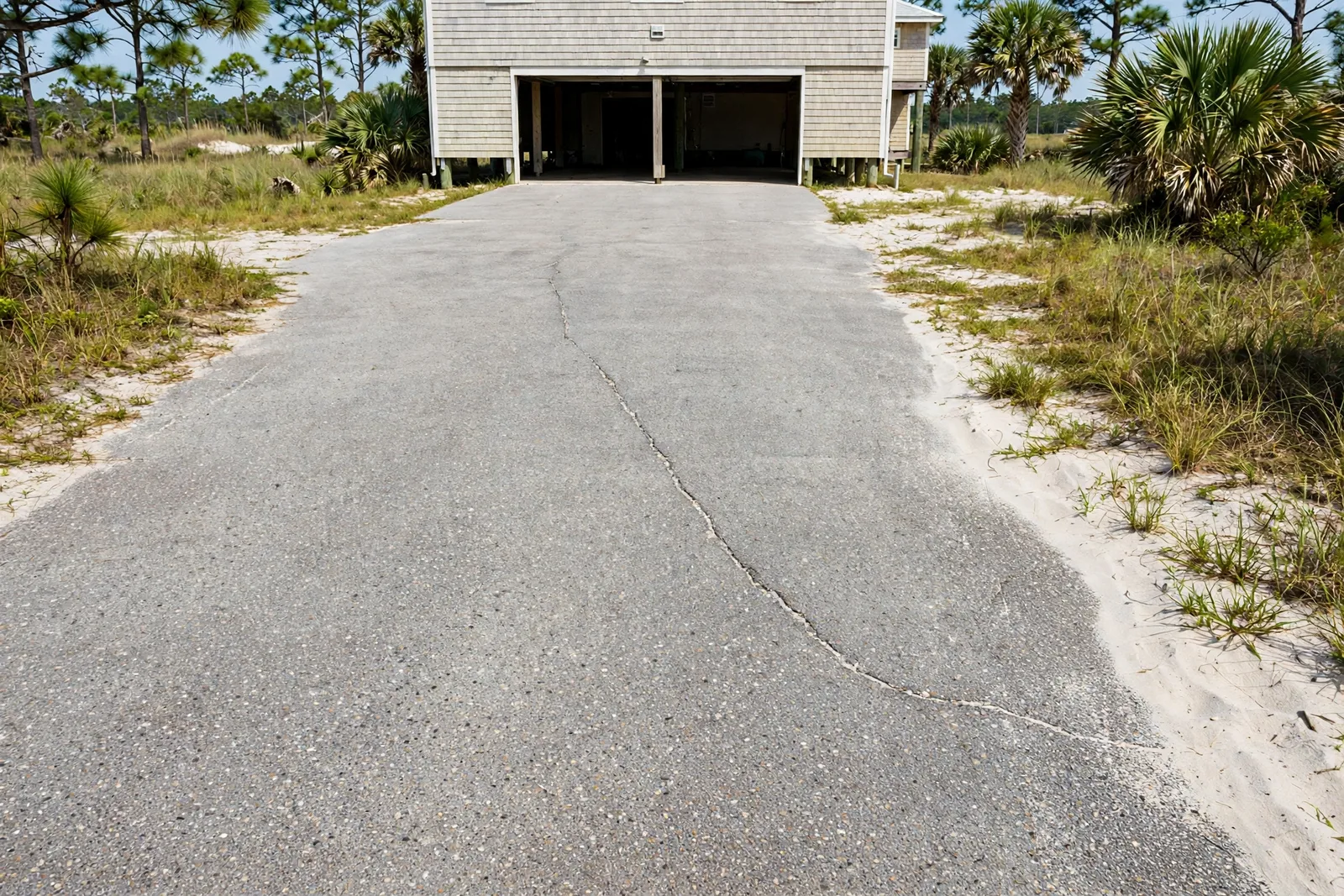
Chapter 1: The call. The first conversation was by phone, because the owners were not in town. The crew learned when they would next arrive, when they would leave, and where the car would be parked in between. The plan was to work in the days between visits and give the sealer its full cure before the owners returned.
Chapter 2: Sand and cracks. On the day, the crew blew and brushed the whole drive, then worked the sand out of each crack. The cracks were filled with hot-pour rubberized sealant, measured by the linear foot. One oil stain where the car parks was primed.
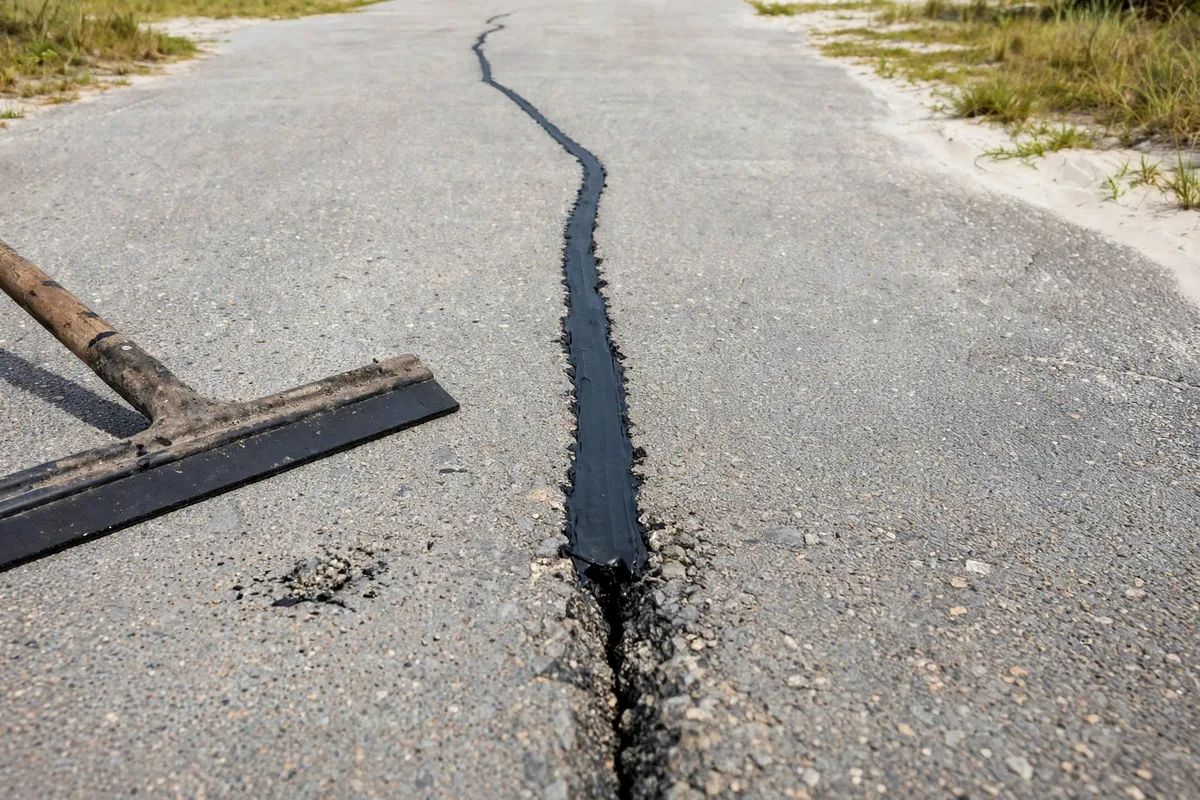
Chapter 3: The coat. With the cracks filled and the oil spot primed, the crew cut in the edges and squeegeed the sealer across the drive in even passes. The drive went from sun-bleached gray to a uniform dark finish, with crisp lines at the grass and the garage.
Chapter 4: The cure, and the phone. This was the part that took planning. The crew barricaded the entrance and called the owners when the coat was down. A few days later the owners moved their trip up, and a second call settled it. Their car stayed at the curb until the crew confirmed the drive had fully cured. Nobody drove on the sealer early, and the finish came through clean.
What it cost. The invoice came inside the driveway band of $600-$2,000: the sealer at $0.15-$0.25 per square foot across the whole drive, plus crack filling at $0.50-$3.00 per linear foot for the cracks that were open.
What to watch for. Sand returns. Look at the crack lines and drive edges after storms and on each visit. Hairlines that reopen get filled early while they are still cheap. And the spot where the car parks needs a look every time, since oil drips there first.
Plan your own visit-day
Wind-blown sand and loose grit keep sealer from bonding to the asphalt, so the drive is blown and brushed clean before anything else, and the cracks are cleared of packed sand.
Open cracks let rain into the sandy base under the drive. Cracks are filled with hot-pour rubberized sealant before the coat, priced at $0.50-$3.00 per linear foot.
Oil and fuel drips soften asphalt and keep sealer from sticking, so the spot where the car parks is cleaned and primed before the coat.
The crew sets the cure time by the product and that day's conditions and tells you when the drive can go back to use. Park at the curb until then.
Enter the drive's square feet and the length of cracks in linear feet. The tool shows the square feet at $0.15-$0.25 per square foot plus the cracks at $0.50-$3.00 per linear foot. Typical driveway sealcoating jobs run $600-$2,000, and small drives carry a minimum fee.

Getting a crew to Sunset Beach
Sunset Beach is about 50 minutes from central Leland, at the far edge of the ground we cover. We say that up front because it is true, and because it shapes how we plan: we group the work, confirm the day by phone, and make the trip count. It is a quiet town and most of our drives here are second homes and retirement houses, which is exactly why the phone call matters as much as the sealer.
Questions
Will you come all the way to Sunset Beach for one driveway?
Yes. Sunset Beach is about 50 minutes from Leland, at the far edge of our territory, and a single drive is a job we do here. We confirm the plan by phone before the crew heads down.
How much does it cost to seal a driveway in Sunset Beach?
Driveway sealcoating is $0.15-$0.25 per square foot, and typical jobs run $600-$2,000. Size and the condition of the pavement decide where your drive falls. Small drives carry a minimum fee.
What does crack filling cost on top of that?
Crack filling is $0.50-$3.00 per linear foot. A clean hairline sits toward the low end, and a long, wide crack costs more because it takes more material and more prep.
We only come down once a month. Can the job work around our visits?
Yes, and it is how a lot of our Sunset Beach jobs go. We talk by phone, find out when you arrive and leave, and plan the work so the sealer gets its full cure before the car goes back on the drive.
How long do we keep the car off the drive?
Until the crew tells you the cure is complete. We do not give one number for every day, because the time depends on the product and the conditions that day. Park at the curb, and we will call when the drive is ready.
Does salt air really hurt a driveway?
It is one part of what the coast does. Sun oxidizes asphalt fast, salt air rides in with the wind, and heavy rain gets into any crack. Sealcoating guards the surface and filled cracks keep the water out. The sandy soil under the drive is what makes open cracks costly.
Does the wind-blown sand matter if I just sweep it?
It matters. Sand on the surface keeps the sealer from bonding, and sand packed in the cracks keeps filler from reaching the sides. The crew blows and brushes the drive and clears the cracks before any filling or coating.
How often should I reseal?
Most owners reseal every two to three years. That is typical practice, not a guarantee, and a drive in full sun with regular parking may want it sooner than a shaded one. The crew tells you what they see when they walk it.
My drive is old and cracked. Is it worth sealing?
Often yes, if the cracks are filled first and the base underneath is sound. If there are soft spots, sunken patches or broken edges, that needs driveway repair or patching before any coat. We tell you which you have before we price it.
Can you fix a pothole before you seal?
Yes. A pothole is repaired first, cut out and patched, and then the drive is sealed. Sealer over an open pothole just hides a failing spot for a short time.
What about oil stains where the car parks?
Oil and fuel soften asphalt, so the stain is cleaned and primed before the coat. If the asphalt in that spot is soft enough to press with a fingernail, tell the crew when they walk the drive.
What if it rains on the day?
Sealer needs dry pavement and time to cure. The crew watches the forecast and the surface, and if the day is wrong, the work moves. We would rather call you and reschedule than coat a wet drive.
Do you pour concrete or put in a new driveway?
No. We care for asphalt: sealcoating, crack filling, patching and repair. We do not pour concrete or lay new drives.
Call about your Sunset Beach driveway
If your drive has gone gray, picked up cracks, or sat through another storm season, call (910) 370-1121 or send the form. Tell us about the drive and when you are next in town, and we will talk through the plan and the price.
The more details you give, the better we are able to help you.